Quick answer
A booze-free cocktail is a mixed drink with no alcohol that's built to taste like a real cocktail, not like juice or soda. It usually combines a distilled or botanical base, bitters or acids, and a sweet or aromatic layer to mimic the structure of a spirit-based drink. If you're new to alcohol-free drinking, start with a ready-to-serve bottle rather than building one from scratch, so you can taste what a well-balanced version actually tastes like before you experiment.
If you've ordered a mocktail and gotten a glass of orange juice with a maraschino cherry, you already know the gap between a sweet drink and a real cocktail. A booze-free cocktail is made to close that gap. It keeps the bitter, tart, herbal, and aromatic layers that make a drink interesting, and drops the ethanol.
This guide answers the questions people ask most when they're sober curious or just cutting back. It covers what's actually in these drinks, how they differ from mocktails and soda, how to serve them, and which ready-to-drink options give you a fair first impression.
What actually makes a drink a booze-free cocktail?
The defining feature is zero alcohol, but the more useful definition is structural. A real cocktail balances something bitter, something sour, something sweet, and something aromatic. A booze-free cocktail does the same job using non-alcoholic spirits, botanical extracts, tea, vinegar, or fruit acids instead of liquor. That's why a good one tastes dry and layered rather than syrupy.
The second feature is intent. A booze-free cocktail is meant to be sipped slowly from a proper glass, not chugged like a soft drink. Many brands also add functional botanicals, which is a separate claim from flavor. Treat those as a bonus, not the reason the drink tastes good.
- If a drink is mostly fruit juice with no bitter or herbal layer, it's a mocktail, not a booze-free cocktail.
- Check the label for a 0.0% ABV statement if complete alcohol avoidance matters to you.
How is it different from a mocktail or a soda?
Mocktail is a broad, informal term. It can mean anything from a virgin mojito to a flavored sparkling water. Booze-free cocktail usually signals a more deliberate build, closer to how a bartender would construct a spirit-based drink. The distinction matters when you're paying for something and want it to feel like an occasion.
Soda sits at the other end entirely. It's built for refreshment and speed, not complexity. A booze-free cocktail is typically lower in sugar than soda and has a bitter or savory edge that keeps you from finishing the glass in three sips. That slower pace is a big part of why people reach for them at dinner or after work.
- Use the word mocktail when you want something casual and fruity.
- Use booze-free cocktail when you want the ritual, the glassware, and the complexity.
Do booze-free cocktails contain any alcohol at all?
Many do contain trace amounts, often under 0.5% ABV, which is the same range as ripe fruit juice or kombucha. Products labeled 0.0% are made to contain none. If you're avoiding alcohol for medical, religious, or pregnancy-related reasons, read the specific product page rather than assuming, because formulations vary by brand and by flavor.
This is also where you should be honest about what the label does and doesn't tell you. If a product page doesn't state an ABV, that's a gap, not a guarantee. When it matters, contact the brand directly before you buy.
- Trace alcohol can appear naturally in fermented ingredients like vinegar or tea.
- 0.0% labeling is the clearest signal if you need zero.
How should you serve and store them?
Most ready-to-serve booze-free cocktails are best chilled and poured over ice into the glass the original drink would use, such as a rocks glass for an old fashioned style or a flute for anything sparkling. Garnish does real work here: a citrus peel or a sprig of herbs adds aroma, and aroma is a large part of why a drink reads as a cocktail.
Once opened, treat them like fresh juice or wine rather than shelf-stable soda. Keep the bottle sealed and refrigerated, and drink it within a few days. If you're only having one glass, a smaller bottle or a single-serve format will save you from pouring the rest down the drain.
- Chill the bottle before serving; ice alone won't fix a warm drink.
- Skip the ice if you want the full flavor concentration, especially with sparkling options.
Where should a beginner start?
Start with a style you already like in its alcoholic form. If you drink Negronis or spritzes, go bitter. If you drink champagne cocktails, go floral and sparkling. If you drink old fashioneds, go dark, smoky, and spirit-forward. Matching the profile you already enjoy removes most of the disappointment from a first purchase.
Buying a bundle rather than a single bottle is usually the smarter first move, because you get enough servings to try the drink two or three ways, over ice, chilled neat, or with a garnish, before you decide whether to reorder. It also gives you something to hand a guest who isn't drinking.
- Pick one bitter, one floral, and one dark option if you're unsure of your taste.
- Serve the first glass exactly as the brand recommends before you start improvising.
Beginner questions, answered in one line each
Is a booze-free cocktail just a mocktail?
Not quite. Mocktail is a loose term for any alcohol-free mixed drink, while booze-free cocktail usually implies a deliberately balanced build with bitter, sour, and aromatic layers. Expect a drier, more complex drink than a fruit-juice mocktail.
Will it taste like the real thing?
It can get close in bitterness, aroma, and mouthfeel, but it won't replicate the burn of alcohol. Judge it as its own drink rather than a substitute. Pick a style you already like, then compare within that style.
How many servings should I buy first?
A bundle of 8 cocktails in 4 bottles is enough to try a drink over ice, chilled neat, and with a garnish before you commit to a larger order. Buy enough to experiment, not just enough for one glass.
How long does an opened bottle last?
Treat it like fresh juice or wine: keep it sealed and refrigerated, and finish it within a few days. Sparkling styles lose their fizz fastest. Write the open date on the cap so you don't guess later.
Can I serve these to guests who drink?
Yes, and it works best when you pour them into proper glassware with a garnish instead of announcing them as alcohol-free. The presentation carries most of the impression. Keep one bitter and one sparkling option on hand for mixed crowds.
Ready-to-drink options worth knowing
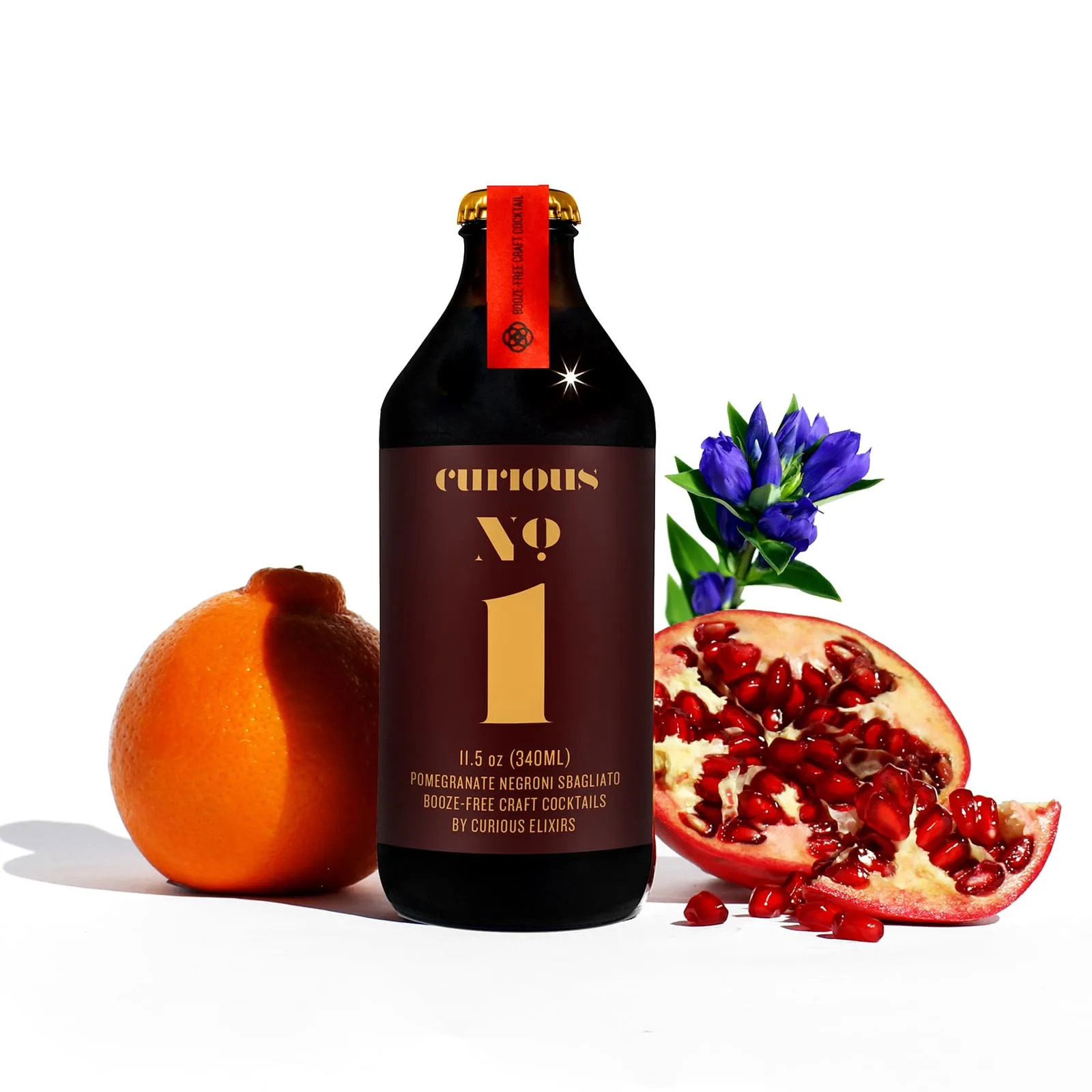
- Curious Elixir No. 1 Booze-Free Cocktails: A beautifully bitter booze-free pomegranate cocktail inspired by the Negroni Sbagliato, infused with rhodiola. The best starting point if you already drink bitter aperitivo-style cocktails, since the bitterness is the point rather than something to mask.
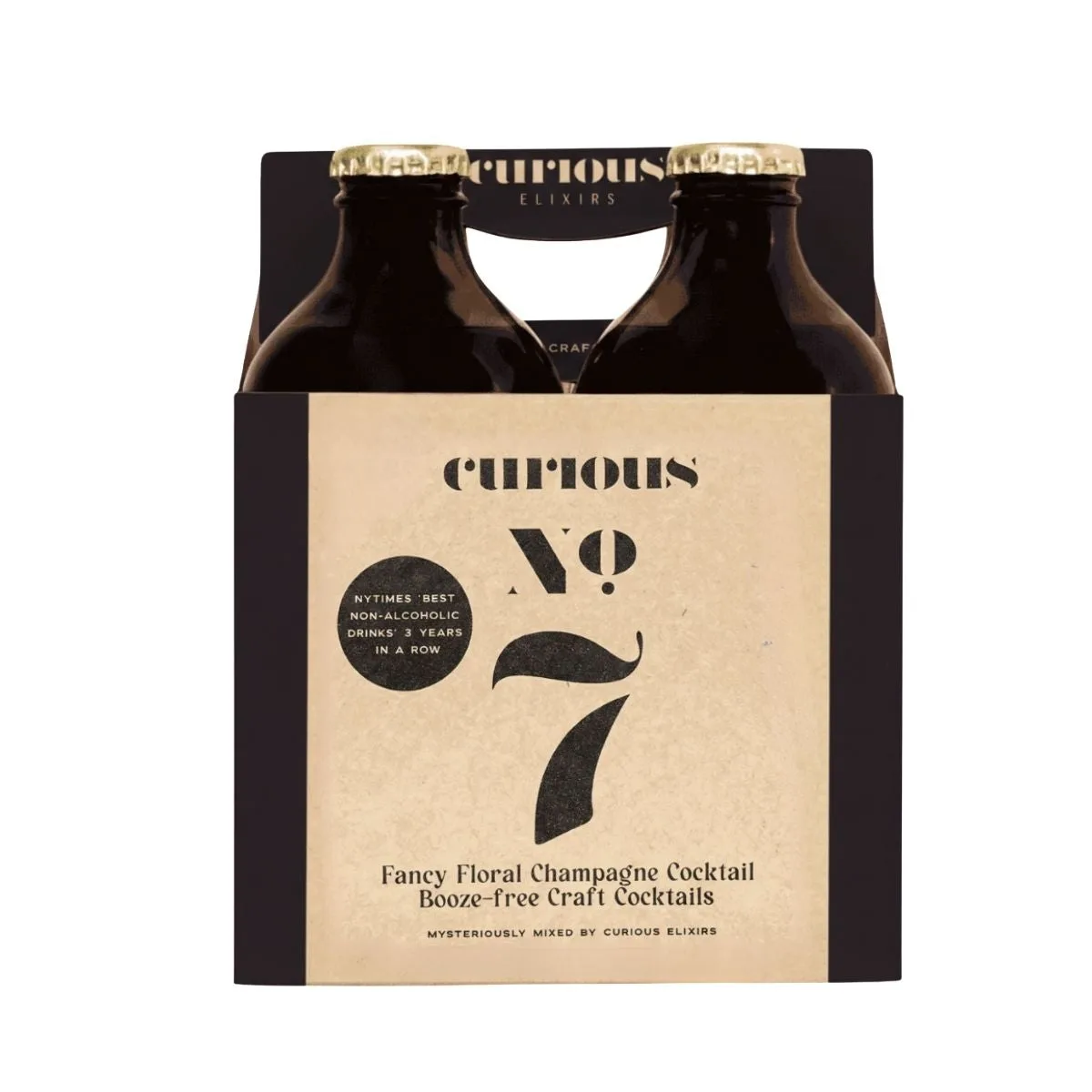
- https://curious-elixirs.com/products/curious-elixir-no-7-booze-free-cocktails-copy-13d52556c54fbcdee115e5b0-1309388Curious No. 7 Booze-Free Cocktails: A booze-free sparkling champagne cocktail crafted with elderflower and lavender, with a fancy, floral flavor profile designed to help you unwind. A good fit for celebrations and toasts, and the sparkling format means it works in a flute without any extra mixing.
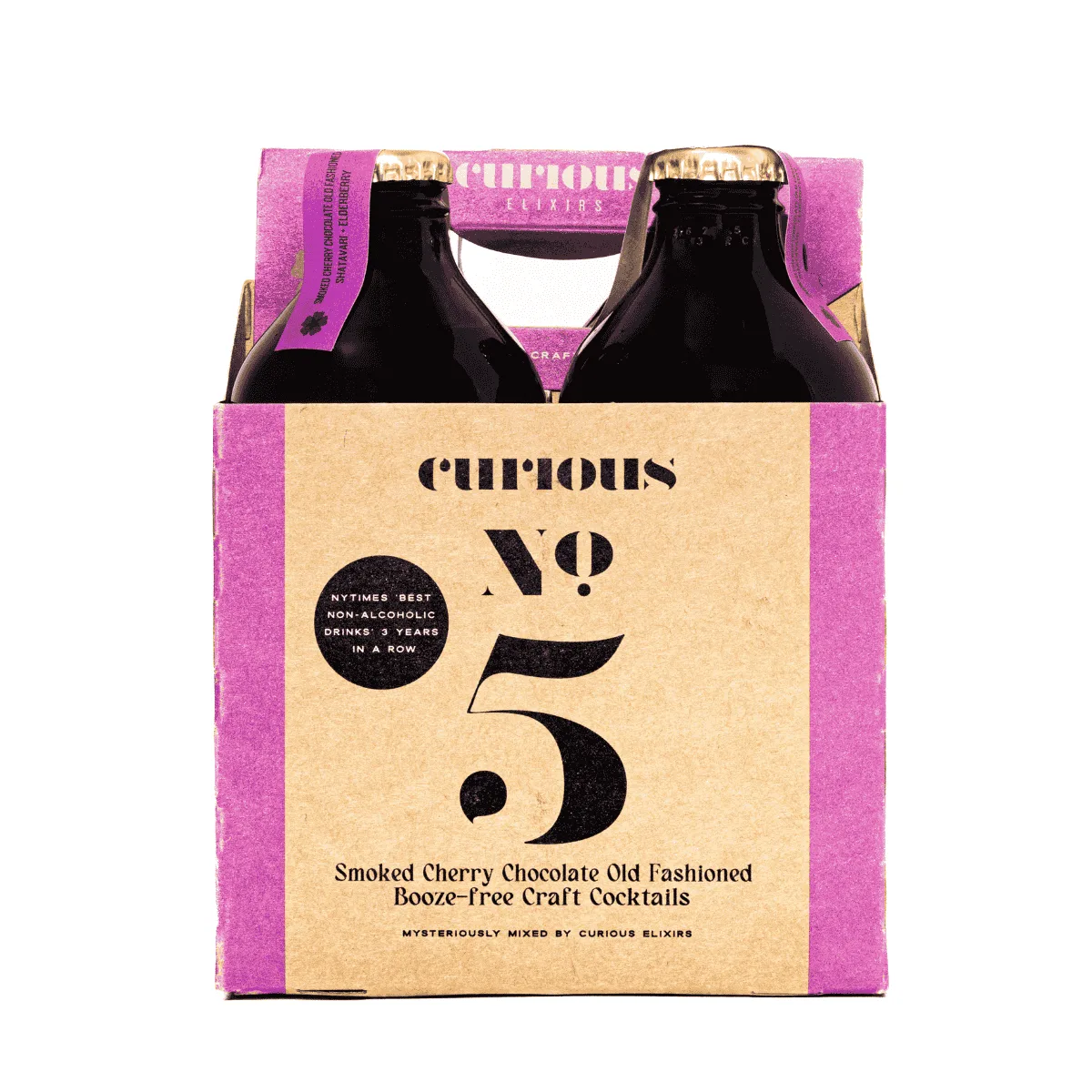
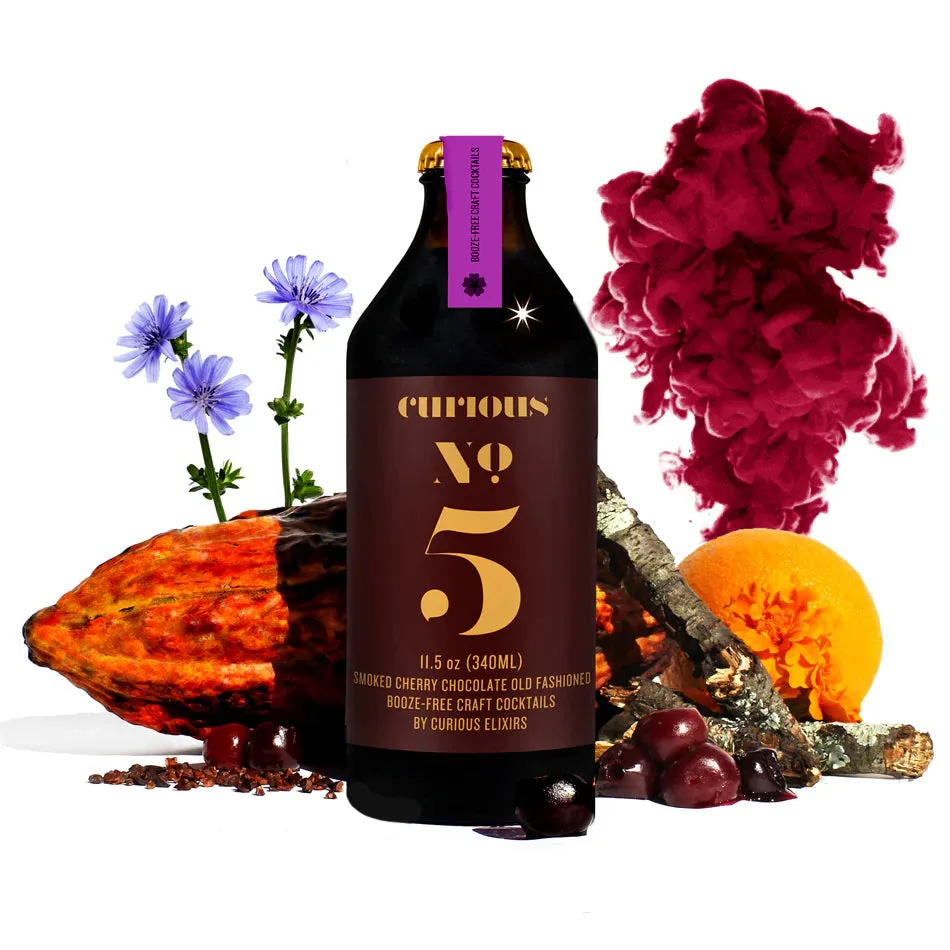
- https://curious-elixirs.com/products/curious-elixir-no-5-booze-free-cocktails-copy-f5e3717a6a5b0867adc77472-1309378Curious No. 5 Booze-Free Cocktails: A non-alcoholic twist on the classic old fashioned with a smoked cherry chocolate flavor profile, complemented by elderberry and ginger, sold as 8 ready-to-serve cocktails in 4 bottles. The pick for anyone who wants a dark, spirit-forward drink rather than something fruity or sparkling.
- Curious No. 8 Booze-Free Digestif: A booze-free amaro-inspired digestif with a 'Black and Blue' profile, sold as a bundle pack of 24 servings in 4 bottles. Useful after a meal when you want the amaro ritual without alcohol, and the larger serving count suits hosting.
A booze-free cocktail is simply a well-built drink without the alcohol, and the fastest way to understand that is to taste a good one. Pick a style you already enjoy, serve it cold in the right glass, and judge it on its own terms rather than as a stand-in for liquor.