Quick answer
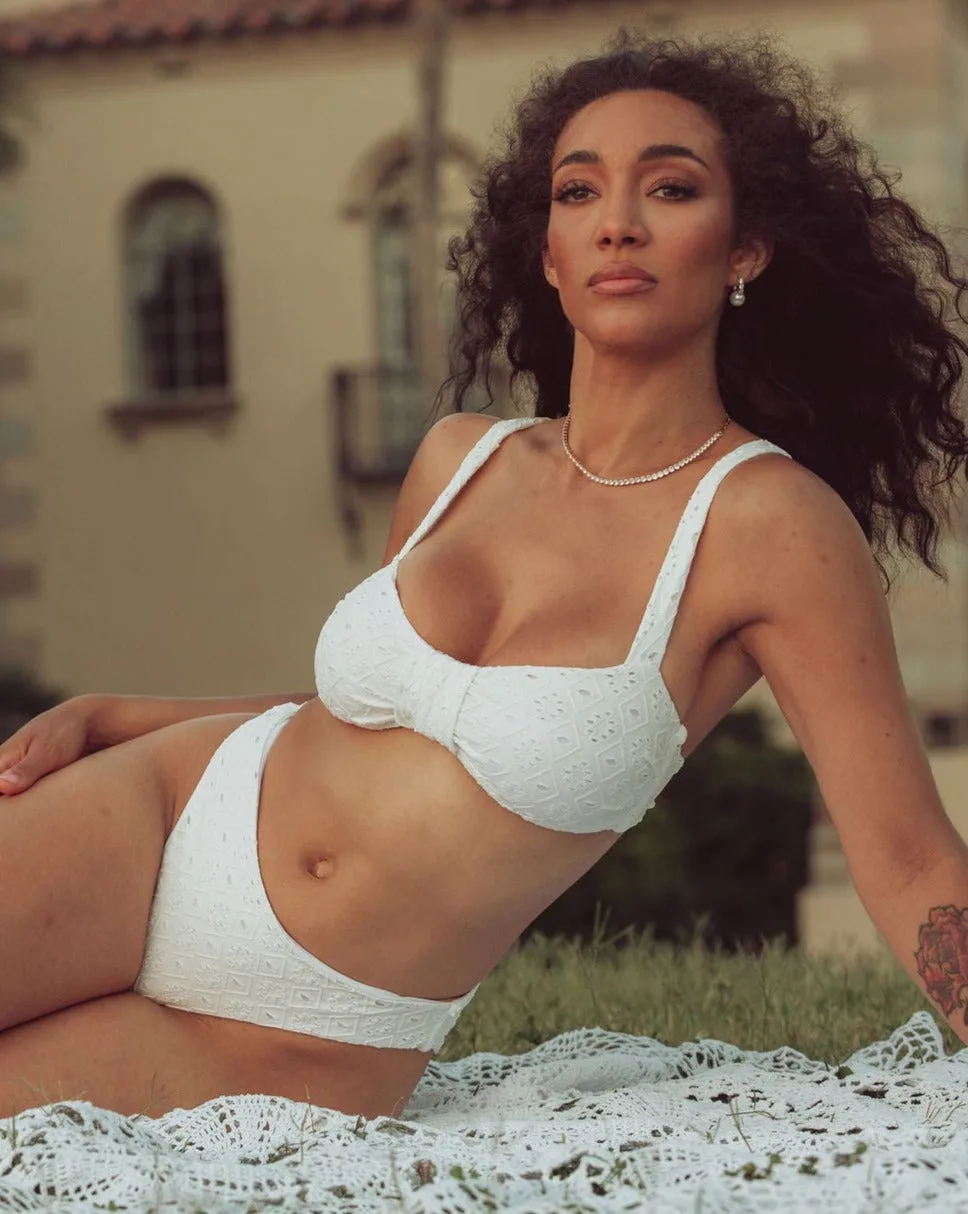
A bralette is a pull-on or hook-and-eye bra with no underwire, made from soft fabrics like mesh, modal, or lace, designed for light support and comfort rather than shaping. It suits small to medium busts, lounging, layering under loose clothing, and anyone who wants a break from underwire. If you need lift, separation, or full coverage under fitted tops, a structured bra will serve you better.
You have probably seen bralettes everywhere, from lingerie drawers to street style, but the term gets used loosely. A bralette is not just a pretty crop top or a bra without wires; it is a specific category with its own fit logic and limits. Knowing what it can and cannot do saves you from buying one that sits unworn.
This guide breaks down the real differences between a bralette and a bra, shows who gets the most from a bralette, and gives you concrete rules for choosing one that fits. We will use real examples from the KILO BRAVA catalog, including pieces from the Embroidery Collection, so you can see how the details play out in practice.
Bralette vs bra: the practical differences
The core difference is structure. A traditional bra uses an underwire, molded cups, and a band with multiple hook-and-eye closures to lift and shape. A bralette skips the wire and often the molded cups, relying on elastic bands, adjustable straps, and soft fabric to hold lightly. That makes bralettes more forgiving in fit but less supportive in the ways that matter for larger busts.
Support in a bralette comes from the underbust band and strap adjustment, not from cups. If the band is too loose, the bralette rides up; if the straps are too tight, they dig in. Because there is no wire, the shape is naturally softer and more relaxed. That is a feature for lounging or layering, but a limitation under a fitted blouse where you want a smooth, lifted line.
- Choose a bralette when comfort and ease matter more than shaping.
- Choose a bra when you need lift, separation, or a seamless finish under thin fabrics.
- Check that the underbust band stays level all the way around; if it hikes up, size down or look for a longer band.
Who should wear a bralette?
Bralettes shine for small to medium busts (roughly A to C cups, though band size matters too) because there is less weight for the fabric to support. They are also ideal for lounging, sleeping, working from home, and wearing under loose tops, sweaters, or backless designs where a traditional bra would show. If you have a larger bust, a bralette can still work for low-impact days, but you will want one with a wide underbust band and adjustable straps.
Another group that benefits: anyone recovering from underwire fatigue or sensitive skin. Without a wire, there is no digging or poking. The trade-off is real, though. If you need serious support for running, a full day on your feet, or a formal event, a bralette is not the right tool. Think of it as a comfort-first option, not a replacement for every bra you own.
- Small bust: bralettes can be your everyday choice, including under T-shirts if the fabric is smooth.
- Medium bust: look for wider bands and adjustable straps; test by raising your arms to see if the band stays put.
- Large bust: use bralettes for lounging or layering, not high-impact support.
- Anyone with wire sensitivity: a bralette removes the main source of irritation.
How to get the fit right
Start with the band. It should feel snug but not tight, and it should sit level around your ribcage. If you can pull it more than an inch away from your body, it is too loose and will ride up. Next, check the straps. They should be adjusted so they stay on your shoulders without digging in. If the straps fall down, the band is likely too big or the straps are too long for your torso.
Cup coverage matters too. A bralette should cover the breast tissue without cutting in or gaping. For pull-on styles, step into them rather than pulling over your head to avoid stretching the band. If you are between sizes, size up for comfort in modal or cotton, and size down for stretch mesh if you want a closer fit. Always check the product details for fabric content and adjustability.
- Band level and snug: the number one fit check.
- Straps adjusted to stay put without pressure.
- No spillage or gaping at the neckline.
- Pull-on styles: step in, don't tug over your head.
What to look for when buying a bralette
Fabric drives the experience. Modal and cotton blends feel soft and breathable for all-day wear. Stretch mesh with embroidery looks delicate and works well for layering or special occasions, but it offers less coverage. Lace can be beautiful but may feel scratchy if the lining is minimal. If you want a bralette for sleep, prioritize softness and a wide band. For under clothing, look for smooth seams and a color close to your skin tone.
Adjustability is the next checkpoint. Adjustable straps and a hook-and-eye closure at the back let you fine-tune the fit more than a pure pull-on style. Removable pads can add modesty and shape, but they also add bulk. Decide what matters more: a barely-there feel or a bit more coverage. Finally, consider how you will wear it. A bralette that doubles as a layering piece, like one with embroidery or a pretty back, can work under a sheer top or an open shirt.
- Modal or cotton for everyday comfort; mesh or lace for looks.
- Adjustable straps and back closure give a more custom fit.
- Removable pads add coverage but change the silhouette.
- Think about whether you want it hidden or seen.
Decision rules: is a bralette right for you?
- You want everyday comfort and have a small to medium bust: Choose a bralette with a wide underbust band and adjustable straps. Modal or cotton blends will feel best for all-day wear. This is the scenario where a bralette can fully replace a traditional bra. Verdict: bralette is a strong everyday choice.
- You need lift, separation, or a seamless look under fitted clothes: A bralette will not provide the structure of an underwire bra. If your top is thin or tailored, the soft shape and seams may show. Choose a bra with molded cups instead. Verdict: choose a structured bra for this job.
- You want a piece for lounging, sleeping, or layering: Prioritize softness and breathability. A bralette in modal or a stretch mesh with light support works well. Look for styles that you would not mind being seen, like the embroidered bralette above, if you plan to layer it under an open shirt. Verdict: bralette is ideal for low-impact, comfort-first wear.
- You have a larger bust and want to try a bralette: Look for a bralette with a wide, firm underbust band and fully adjustable straps. Test it by raising your arms and bending forward; if the band rides up or the bust spills out, size up or choose a different style. Use it for low-impact days only. Verdict: possible for lounging, but not a support solution.
Real bralettes and how they fit into this guide
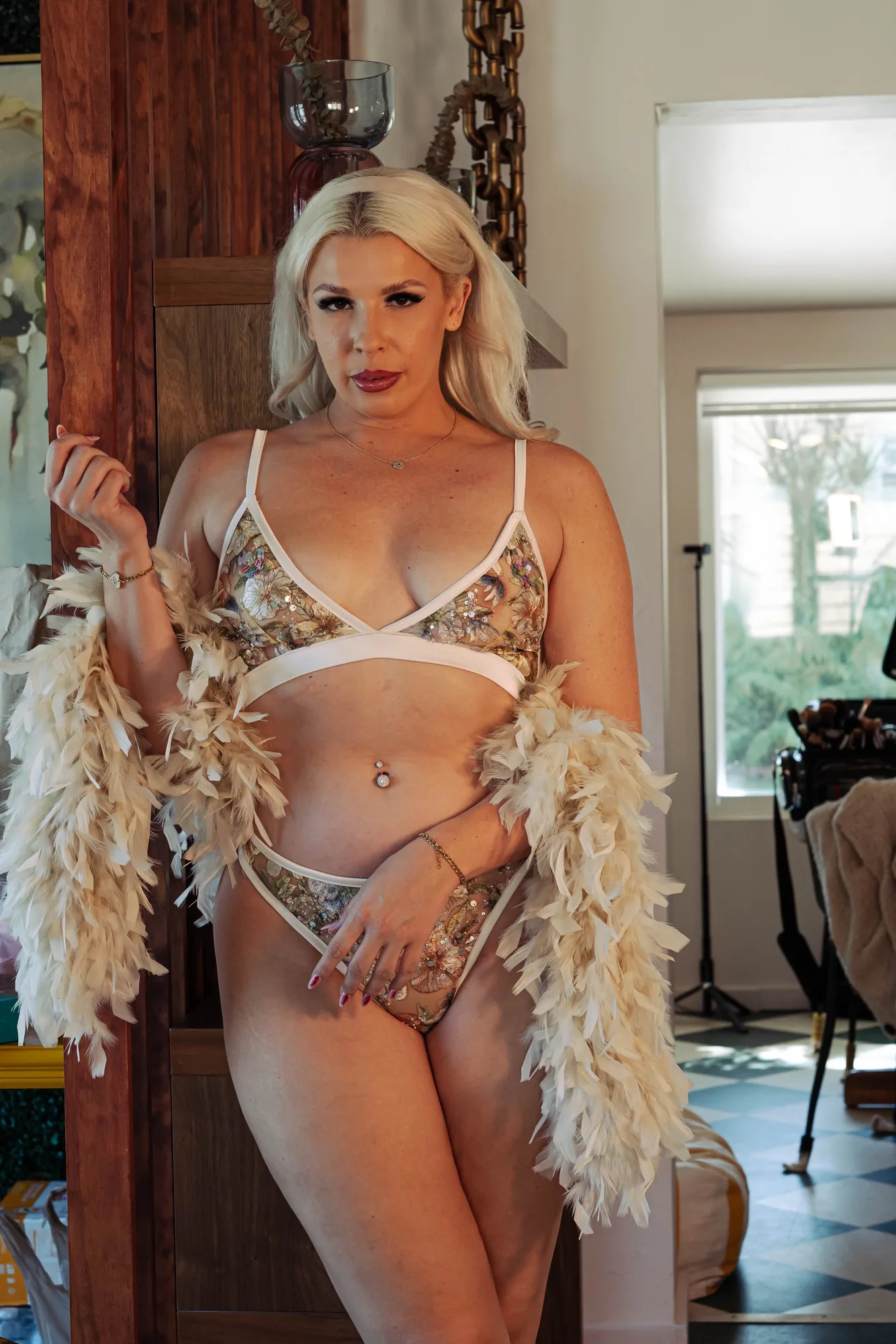
- KILO BRAVA EMBROIDERY COLLECTION- MULTI SPARKLE/CHAMPAGNE- BRALETTE: Crafted from sheer mesh with intricate multicolored embroidery and a subtle sparkle finish, light support, adjustable straps, and detailing that includes paillettes, sequins, and beading. This is a bralette for someone who wants a statement piece for layering or special occasions. The sheer mesh and embellishment mean it is not invisible under thin clothing, but it is beautiful when seen. Adjustable straps help you dial in the fit, and the light support suits small to medium busts.
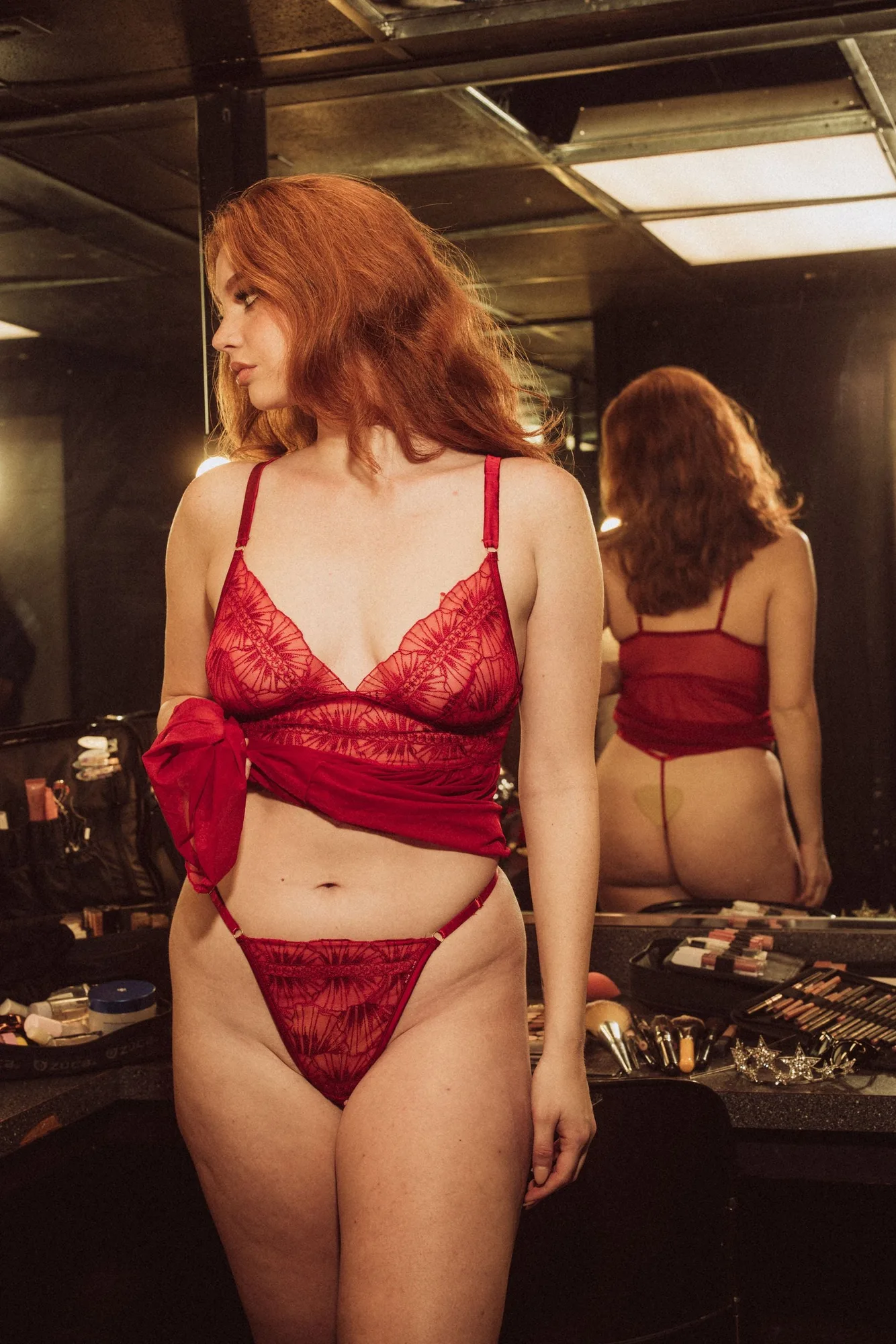
- KILO BRAVA EMBROIDERY COLLECTION- SCARLETT- G-STRING: Rendered in a rich scarlett red with custom embroidery detailing, designed for comfort without compromising on style, and meant to coordinate with a matching bralette or babydoll. If you are building a set, this g-string shows how a bralette can anchor a coordinated look. The embroidery ties it to the bralette above, so you get a cohesive outfit rather than mismatched pieces. It is a good example of choosing a bralette as part of a styling decision, not just a support decision.
Who a bralette is for (and who it is not)
Best for
- Small to medium busts looking for light, comfortable support
- Lounging, sleeping, and working from home
- Layering under loose tops, sweaters, or backless designs
- Anyone who wants a break from underwire or has sensitive skin
Not for
- High-impact activities like running or intense workouts
- Large busts needing significant lift and separation
- Fitted, thin clothing where you need a seamless, structured shape
- Formal events where a traditional bra's support is non-negotiable
A bralette is a comfort-first alternative to a traditional bra, best for small to medium busts and low-impact days. Use the decision rules above to match one to your needs, and check the fabric and adjustability before you buy. If you want a bralette that doubles as a layering piece, the embroidered styles from KILO BRAVA show how function and beauty can coexist.