Quick answer
A lenticular pin uses a ridged plastic lens over a printed image to create an illusion of movement or transformation when tilted. The Psycho-Portal pin combines this effect with a hinged door for a two-layer collectible experience.
How lenticular pins differ from regular enamel pins
Standard enamel pins use hard or soft enamel to create a fixed design with metal borders. A lenticular pin replaces part of that design with a special lens that shifts between two or more images as you move it. This adds a kinetic element that standard pins lack.
The trade-off is that lenticular pins are usually thicker and slightly heavier due to the plastic lens layer. They also require careful handling to avoid scratching the lens surface.
Why the Psycho-Portal pin uses both a hinge and a lenticular lens
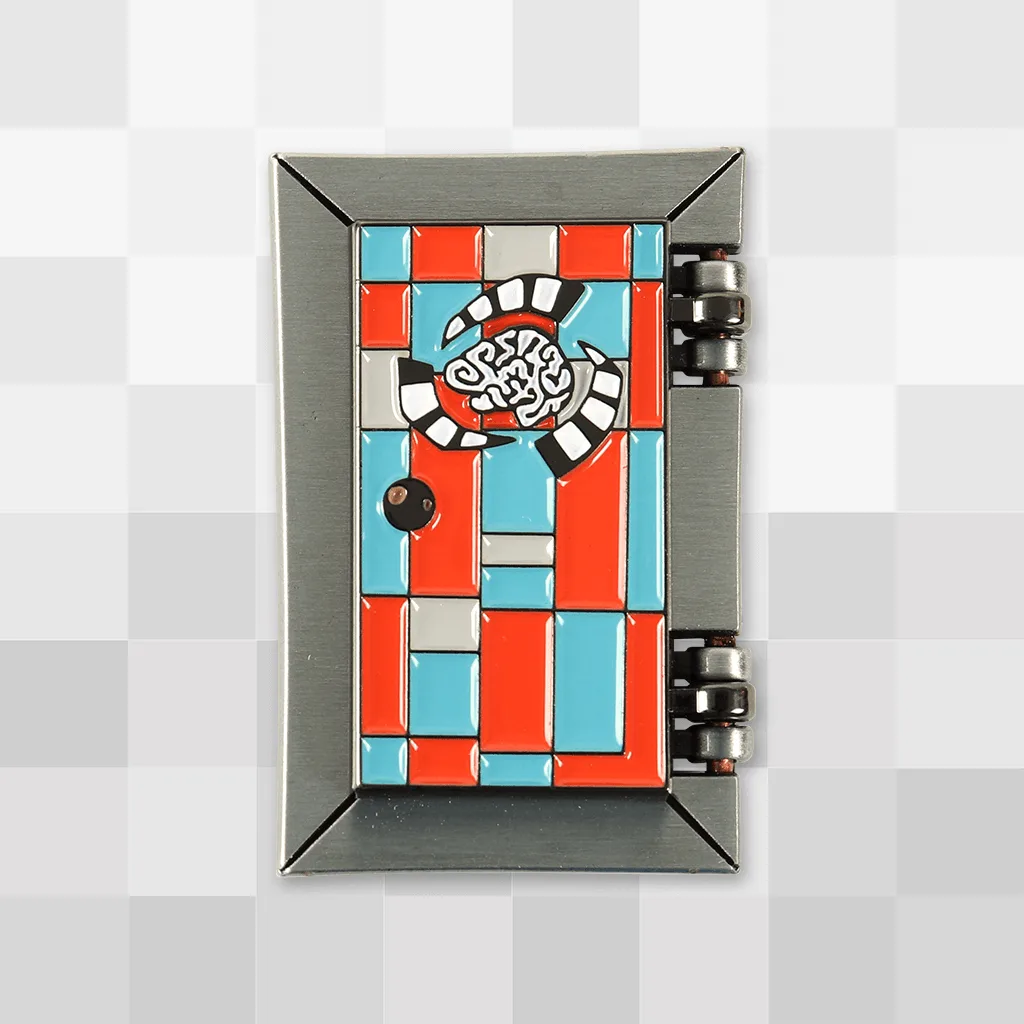
The Psycho-Portal pin is a hinged lenticular design, meaning it has a small door that opens to reveal a lenticular inner image. The hinge adds an interactive play element, while the lenticular lens makes the inner art change when you tilt the door. This is not a common combination—most hinged pins have a static inner design.
Frequently asked questions about lenticular pins
How does a lenticular pin work?
A lenticular lens is made of a clear plastic sheet with tiny parallel ridges. These ridges direct light at different angles, so each ridge shows a different slice of two or more printed images underneath. When you tilt the pin, your eyes see a different slice, creating the illusion of movement or a new image.
Can you open the Psycho-Portal pin?
Yes. The pin has a hinged door that swings open. Behind it is the lenticular section that shifts between two images when you tilt the door. The hinge is small but sturdy, designed for gentle play. Handle the hinge carefully—it's meant for occasional opening, not constant flipping.
Are lenticular pins more fragile than regular enamel pins?
The lens surface can scratch if rubbed against rough materials. The pin itself is still metal and enamel, so the base is durable. Store lenticular pins in a pin display case or on a soft backing to protect the lens. Avoid storing them loose in a pocket or bag with keys or coins.
How do I clean a lenticular pin?
Use a soft, dry microfiber cloth to gently wipe the lens. Do not use liquids or abrasive cleaners—they can damage the lens or seep into the enamel. For the metal parts, a slightly damp cloth works, but keep moisture away from the lens edge.
Product spotlight
-
Psycho-Portal Hinged Lenticular Pin: This official Psychonauts soft-enamel pin was designed by Brian Carmody and combines a hinged door with a lenticular inner design. It's about 1.7 inches tall. The dual mechanism gives you two ways to interact: open the door for a reveal, then tilt it to see the image shift.
Psycho-Portal Hinged Lenticular Pin