Quick answer
A toddler carrier is a baby carrier designed to comfortably support older babies and toddlers, typically from around 12 months up to 3-4 years. It offers better weight distribution, more leg room, and often an adjustable seat to accommodate growing children, making it a practical choice for parents who want to continue carrying their toddler hands-free.
Why choose a dedicated toddler carrier?
As your baby grows into a toddler, their weight and proportions change. A standard newborn or infant carrier may not provide enough support or comfort for a heavier child. Dedicated toddler carriers are built with wider seats, higher weight limits, and reinforced straps to distribute weight more evenly across your hips and shoulders. This reduces strain on your back and allows you to carry your toddler for longer periods without discomfort.
Another key advantage is the extended use. Many toddler carriers can hold children up to 40-60 pounds, meaning you can keep using the same carrier through the toddler years. This is especially helpful for travel, hiking, or navigating crowded places where a stroller is impractical. The extra leg room also prevents the 'hanging' position that can be uncomfortable for older babies.
What to look for in a toddler carrier
When shopping for a toddler carrier, focus on three main areas: weight capacity, seat width adjustability, and fabric durability. A carrier with an adjustable seat panel lets you widen the base as your toddler grows, ensuring their hips and thighs are properly supported. Look for padded shoulder straps and a supportive waist belt to handle the extra weight. Breathable fabrics like cotton or linen can help keep both you and your toddler cool during longer carries.
Also consider the carrier's ease of use. Toddlers are wiggly and impatient, so a carrier that is simple to put on and take off makes a big difference. Some carriers offer a quick-release buckle system or a front-facing option for curious toddlers who want to see the world. If you plan to use the carrier for naps, a detachable hood can provide head support and shade.
Decision rules for choosing a toddler carrier
- Weight capacity: Look for a carrier that supports at least 30-40 pounds to cover the toddler years. Some carriers go up to 60 pounds. Check the manufacturer's weight limit before buying.
- Seat width adjustability: A carrier with an adjustable seat panel allows you to widen the base as your toddler grows, promoting healthy hip positioning. Adjustable seat is a must for long-term use.
- Comfort features for the parent: Padded shoulder straps, a supportive waist belt, and breathable fabric reduce strain during longer carries. Try the carrier on with your toddler to assess comfort.
Product highlights for toddler carrying
- Luna - Signature Handwoven Standard Baby Carrier: Luna - Signature Handwoven Standard Baby Carrier is made from 100% cotton Half Signature Carrier with luxurious woven fabric on the front and soft brushed canvas on the front and back. Handmade and luxuriously soft. The soft woven fabric and brushed canvas provide a comfortable, breathable feel for both parent and toddler during extended carries. The structured design supports older babies well, though the standard size may suit toddlers on the smaller side.
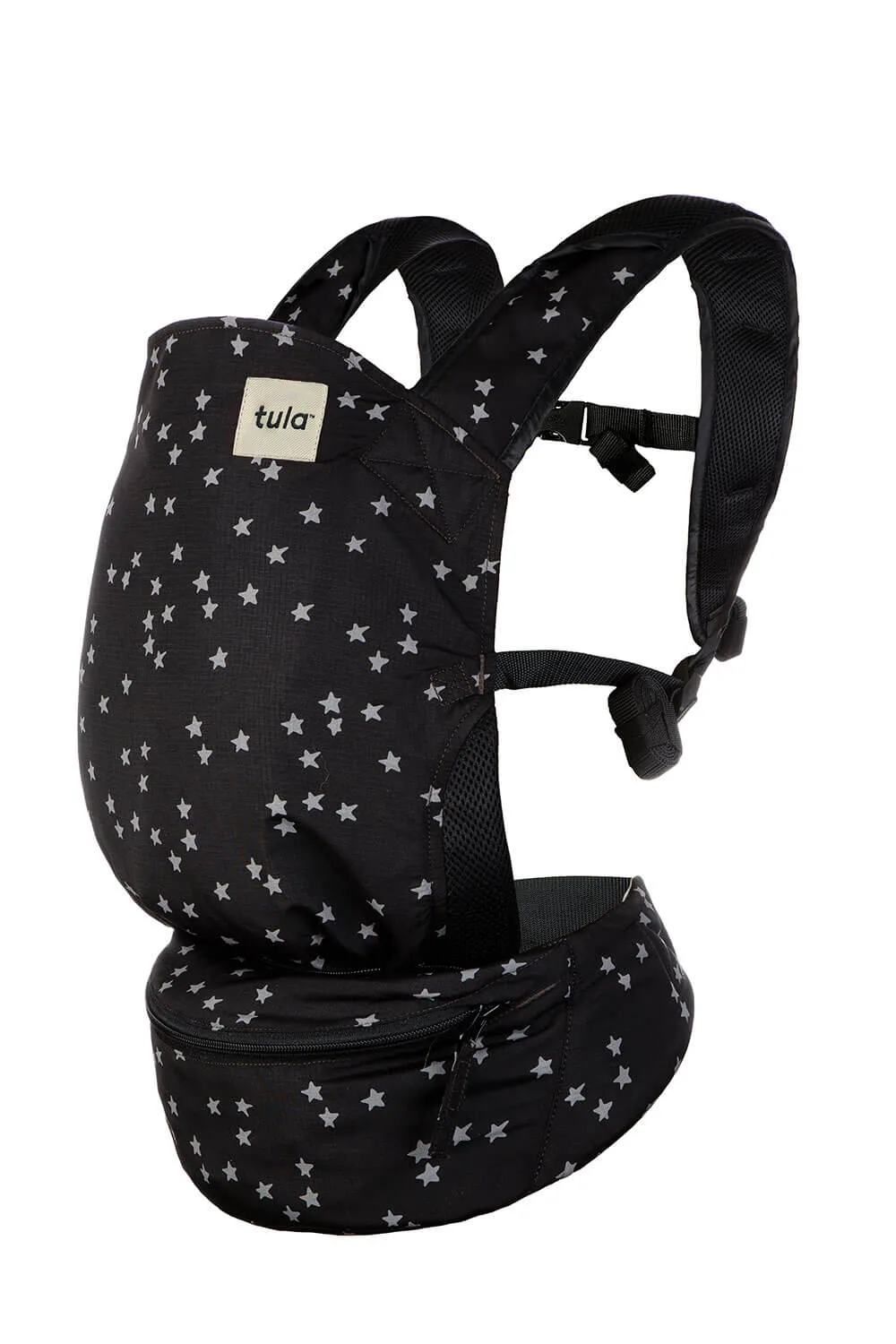
- Discover - Lite Baby Carrier: Discover - Lite Baby Carrier features a lightweight design with a gray star cluster pattern on a jet black background. It is part of the Compact Travel Carriers category. This carrier is ideal for parents who want a compact, travel-friendly option for their toddler. Its lighter weight makes it easier to pack and carry, but it may have a lower weight limit than full-sized toddler carriers, so check the specifications for your child's size.
Who is a toddler carrier best for?
Best for
- Parents who want to continue carrying their toddler hands-free beyond infancy
- Families who travel frequently or use public transport and need a compact carrying solution
- Toddlers who are at least 12 months old and weigh between 20-40 pounds
Not for
- Newborns or young infants who need a carrier with full head and neck support
- Parents who prefer a stroller for all outings and rarely need hands-free carrying