Quick answer
A limited edition deck is printed once in a fixed quantity and then not reprinted in that exact form. That fixed print run creates supply limits, but it does not guarantee rarity, high value, or that every copy is numbered. Before buying, check what the seller actually states about quantity, numbering, and whether a reprint is possible.
The only definition that holds up
Limited edition is a production decision, not a scarcity guarantee. It means the maker committed to a specific quantity or a single production window. Once that run is gone, the exact edition is gone—unless the maker chooses to reprint it, which would make the original run less exclusive but not necessarily less collectible if the reprint differs.
This is why two decks can both be called limited edition while only one becomes hard to find. The label describes the print run, not the outcome.
Print run size is the number that matters
A print run of 100 and a print run of 5,000 are both limited editions, but they behave differently in the market. The smaller the run, the faster it can sell out and the fewer copies exist for future collectors. A large limited run can stay available for years, which keeps resale prices close to retail.
When a listing gives a number, treat it as the most useful fact on the page. When it does not, assume the run size is unknown—not that it is small.
Numbered does not always mean numbered
Some limited decks are individually numbered on the tuck or seal, which lets you verify exactly how many were made. Others are limited by quantity but carry no number on the deck itself. Both can be legitimate; they simply offer different levels of proof.
If a seller claims numbering, ask where the number appears. If the answer is vague, treat the numbering claim as unverified.
Reprints and alternate editions change the picture
A reprint of the same design can reduce the premium on the first run, especially if the reprint is visually identical. An alternate edition—different tuck, different paper, different finish—can preserve the original's distinctiveness because it is a different product.
This is why collectors often care more about which version they hold than about the word limited on the box.
Myths vs. verdicts
- Myth: Limited edition means rare: Limited only means the run was capped or produced once. A run of several thousand can still be limited and remain easy to buy for years. Verdict: false. Check the stated quantity, not the label.
- Myth: Every limited deck is numbered: Numbering is an optional extra. Plenty of limited decks carry no individual number on the tuck or seal. Verdict: false. Ask where the number is printed before paying a premium.
- Myth: A reprint makes the original worthless: A reprint can soften demand for the first run, but an alternate edition with different paper, tuck, or finish remains a separate product. Verdict: false. Compare the exact version, not just the design name.
- Myth: Limited edition always means it will gain value: Value depends on demand, condition, and how many copies survive—none of which the limited label controls. Verdict: false. Buy what you want to own, not what you hope to resell.
How this plays out in real decks
- ACE FULTON'S PHOENIX CASINO PLAYING CARDS TOBACCO TEA LIMITED EDITION: ACE FULTON'S PHOENIX CASINO PLAYING CARDS TOBACCO TEA LIMITED EDITION is the limited edition alternate tuck of Phoenix, printed on WHEAT paper that gives the appearance of tobacco-stained paper. Only 100 of these exist and this paper is no longer made. A run of 100 with a discontinued paper stock is a concrete example of a fixed, non-repeatable print run—the kind of limitation that tends to matter to collectors over time.
- CITY OF THE ANGLES LIMITED EDITION PLAYING CARDS: CITY OF THE ANGLES LIMITED EDITION PLAYING CARDS is a limited edition Cardistry deck featuring 54 black-and-white photographs by Brad Fulton, originally released as a small zine in 2020. Limited here is tied to a specific creative project and photographic set, not just a quantity claim—so the edition is defined by its content as much as its run size.
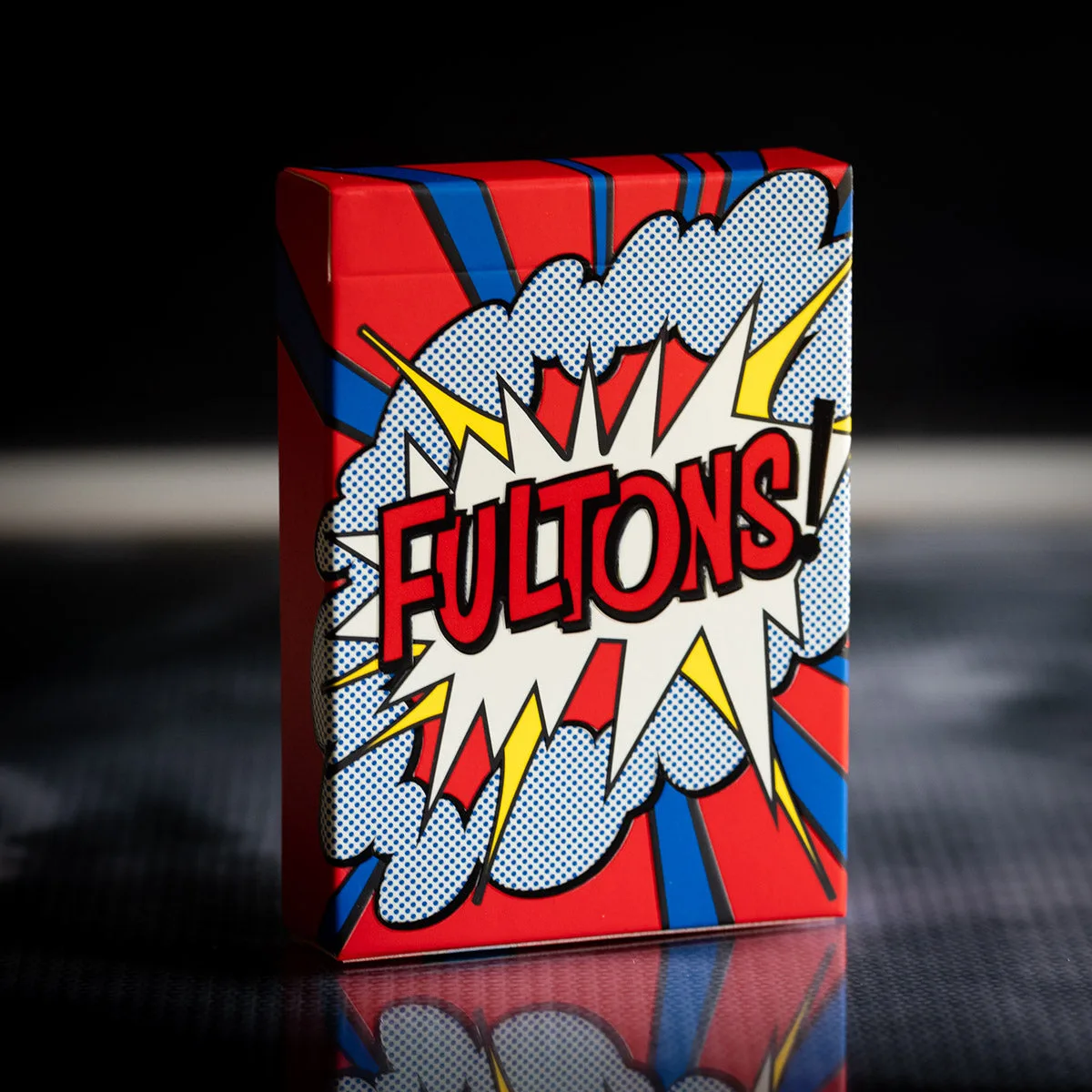
- ACE FULTON'S CASINO BOOTLEG EDITION: ACE FULTON'S CASINO BOOTLEG EDITION is the third installment of the Fulton's Bootleg Series, a deliberate knock-off of the original Fulton's Classic Deck. A bootleg edition shows that 'limited' can describe a concept or series entry rather than a strict scarcity play—useful when you are deciding what actually belongs in a collection.