Quick answer
A retro game book is worth collecting when it offers original research, high-quality production, and covers a system or era that has lasting cultural significance. Focus on books that teach you something new about the hardware, software, or industry history.
Why content depth matters more than rarity
A book that simply rehashes Wikipedia entries or lists game release dates adds little to a collector's library. The best retro game books dig into primary sources — interviews with developers, original design documents, or archival marketing materials. Atari Archive Vol. 1, for example, draws from legal papers and trade coverage to reconstruct the story behind Atari's Video Computer System, offering context you won't find in a typical retrospective.
Rarity alone doesn't make a book collectible. A limited print run of a shallow book will still feel hollow on the shelf. Prioritize substance over scarcity.
Production quality signals long-term value
Hardcover bindings, acid-free paper, and sewn signatures indicate a book built to last. These details matter because retro game books are often handled, displayed, and passed between collectors. A flimsy paperback with glossy pages may yellow or fall apart after a few reads.
Check the publisher's reputation. Limited Run Games ships books in sturdy literature mailers, which suggests they treat the physical object as part of the collectible experience.
The trade-off: breadth vs. depth
Some books try to cover an entire console library in a single volume. Others focus on a single year, company, or even a single game. The broader the scope, the thinner the coverage. For a collector, a deep dive into a specific system (like the Atari 2600) often holds more long-term value than a superficial survey of multiple platforms.
Decide what you want: a reference you'll flip through occasionally, or a definitive resource you'll read cover to cover.
How to decide if a retro game book is worth collecting
- Check the author's access: Did the author interview developers, visit archives, or use primary documents? If the bibliography only cites other books or websites, the content is likely derivative.
- Evaluate the physical build: Look for hardcover, sewn binding, and acid-free paper. A book that feels cheap now will degrade faster and hold less resale value. If the product page doesn't mention binding or paper quality, assume standard trade paperback construction.
- Match the scope to your interest: A book covering one console (like Atari 2600) in depth is usually more valuable to a focused collector than a multi-platform overview. If you collect broadly, a survey may still be useful — just know its limits. For deep dives, look for titles that promise 'archive' or 'complete history' in the subtitle.
- Consider the publisher's track record: Publishers that specialize in game history (like Limited Run Games) often invest in better materials and editorial rigor. A book from a general-interest publisher may cut corners on both. Check the publisher's website for details on shipping and packaging — it's a signal of how they treat the product.
- Read a sample before buying: Most reputable publishers offer a preview or sample chapter. Read it to assess writing quality, accuracy, and whether the tone matches your expectations (academic, conversational, or nostalgic). If no sample is available, search for independent reviews or unboxing videos.
Product facts
-
Atari Archive Vol. 1 (Hardcover): Atari Archive Vol. 1 draws from legal papers, trade industry coverage, and dusty memories to reconstruct the history behind Atari's Video Computer System and its games. This means the book offers original research rather than recycled online summaries, making it a genuinely useful resource for collectors who want to understand the system's place in gaming history.
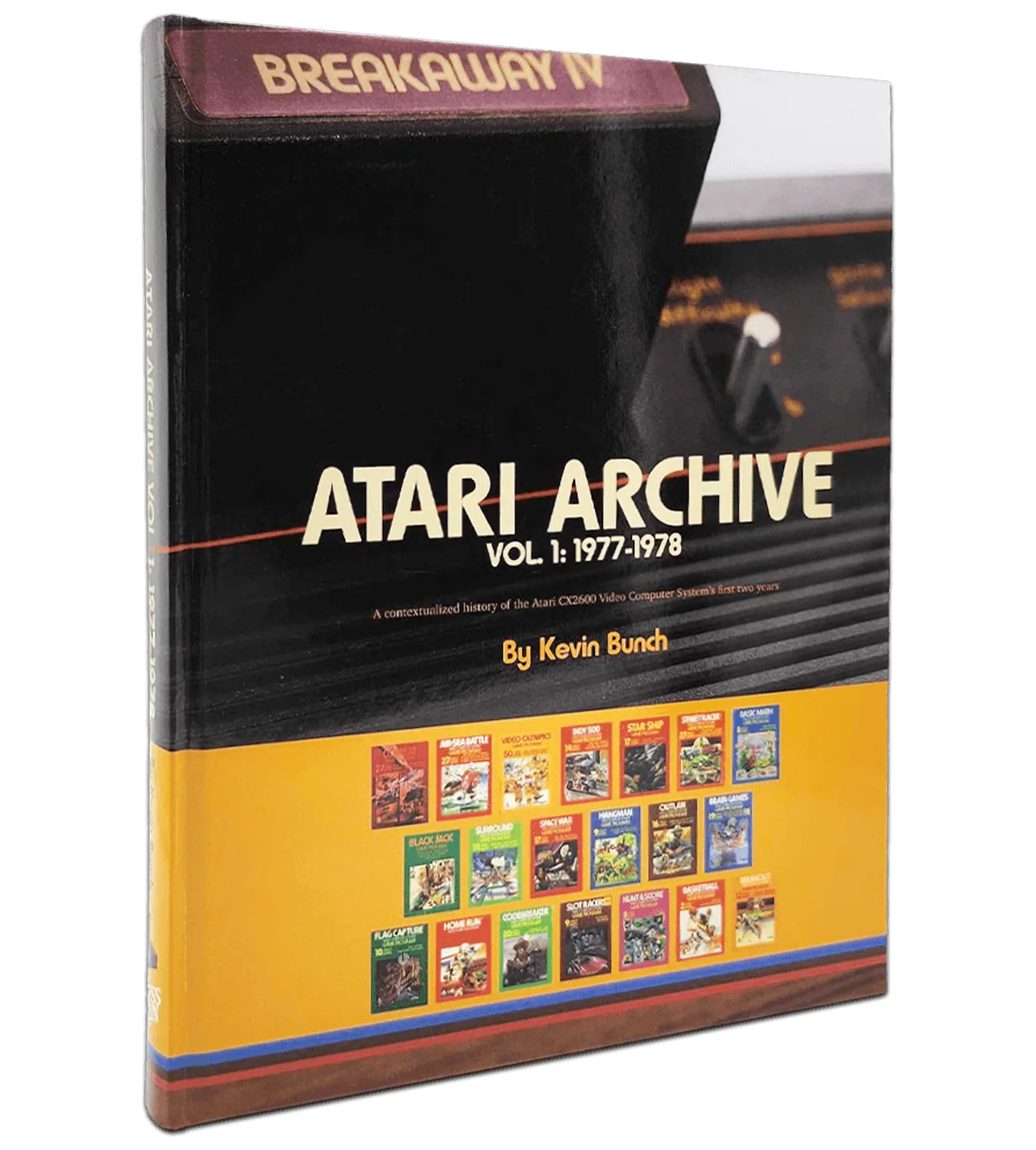
Atari Archive Vol. 1 (Hardcover)
Who should buy
Best for
- Collectors who want original research and archival content
- Retro gaming enthusiasts focused on a specific console or era
- Readers who value physical book quality (hardcover, sewn binding)
Not for
- Casual readers who only want a quick nostalgia fix
- Collectors seeking a comprehensive multi-platform reference in one volume