Quick answer
For most coffee drinkers, a 12oz cup is the safest single-size choice: it handles a standard small or medium drip coffee and a 12oz latte without being bulky. Choose 8oz only if you drink espresso-based smalls or cortados, and go 16oz if you regularly order large iced drinks or need one cup for both coffee and water. Match the listed capacity to the cup size you actually order, not to the biggest drink you might occasionally want.
Start with the cup size you order, not the ounces
Café sizes are the fastest shortcut. A small hot coffee is usually 8–12oz, a medium is 12–16oz, and a large iced drink can run 16–24oz. If you always order the same size, buy that capacity. If you bounce between small and medium, size up to 12oz so you are not leaving half an inch of room for milk.
Keep a mental note of the cups you already own. A standard mug is about 8–10oz, and a travel tumbler is often 16oz. That tells you which capacity already feels normal in your hand before you buy anything new.
How 8oz, 12oz, and 16oz behave in real use
8oz is the espresso and tea size. It is light, fits small bag pockets, and works for cortados, flat whites, and a single cup of tea. The trade-off is obvious: it cannot hold a medium latte or a large iced coffee, so you will need a second cup for those days.
12oz is the everyday compromise. It covers a standard drip coffee, a 12oz latte, and most tea servings, and it still fits most car cup holders and backpack side pockets. If you want one cup that does the most jobs, this is the capacity to start with.
16oz is the iced-drink and hydration size. It handles large iced coffees, cold brew, and water refills, but it is noticeably taller and heavier, and it may not fit shallow cup holders or small bag pockets. Buy it as a second cup rather than your only cup unless large iced drinks are your daily habit.
Check the lid and material before you commit to a capacity
Capacity only solves half the problem. A cup with a lid reduces spills on commutes, while a lidless cup is simpler to clean but riskier in a bag. Glass bodies stay clean-tasting and show you the fill level, but they are heavier than plastic and need a sleeve or band for comfortable handling with hot drinks.
If you carry your cup loose in a bag, prioritize a lid and a capacity that matches your most common order. If your cup mostly stays on a desk, a lidless 8–12oz glass cup is easier to rinse and refill.
Measure before you buy if you are between sizes
When you are torn between two capacities, measure the cup you use most at home. Fill it with water, pour that water into a measuring jug, and note the ounces. That number is your real target, and it is more reliable than guessing from a menu board.
Also measure your two tightest spots: your car cup holder and your bag's side pocket. A cup that fits your drink but not your holder will stay at home, which defeats the purpose of a reusable cup.
Decision rules for choosing your cup size
- If you order small hot coffees or espresso drinks: Choose an 8oz cup. It matches cortados, flat whites, and single tea servings without extra air space. Checkpoint: if you sometimes order a medium, size up to 12oz instead.
- If you want one cup for most hot drinks: Choose 12oz. It covers standard drip coffee and a 12oz latte and still fits most cup holders and bag pockets. Checkpoint: confirm your usual café's medium is not larger than 12oz.
- If you drink large iced coffees or cold brew: Choose 16oz. It holds the volume, but expect a taller, heavier cup that may not fit shallow holders. Checkpoint: measure your car cup holder before buying.
- If you carry your cup in a bag: Prioritize a lid over capacity, then pick the size that matches your most common order. Checkpoint: a lidless cup is a desk cup, not a commute cup.
- If you are between two sizes: Measure your current favorite cup with water and a jug, then buy the closer capacity. Checkpoint: your real usage beats any general size chart.
KeepCup® options that match common sizes
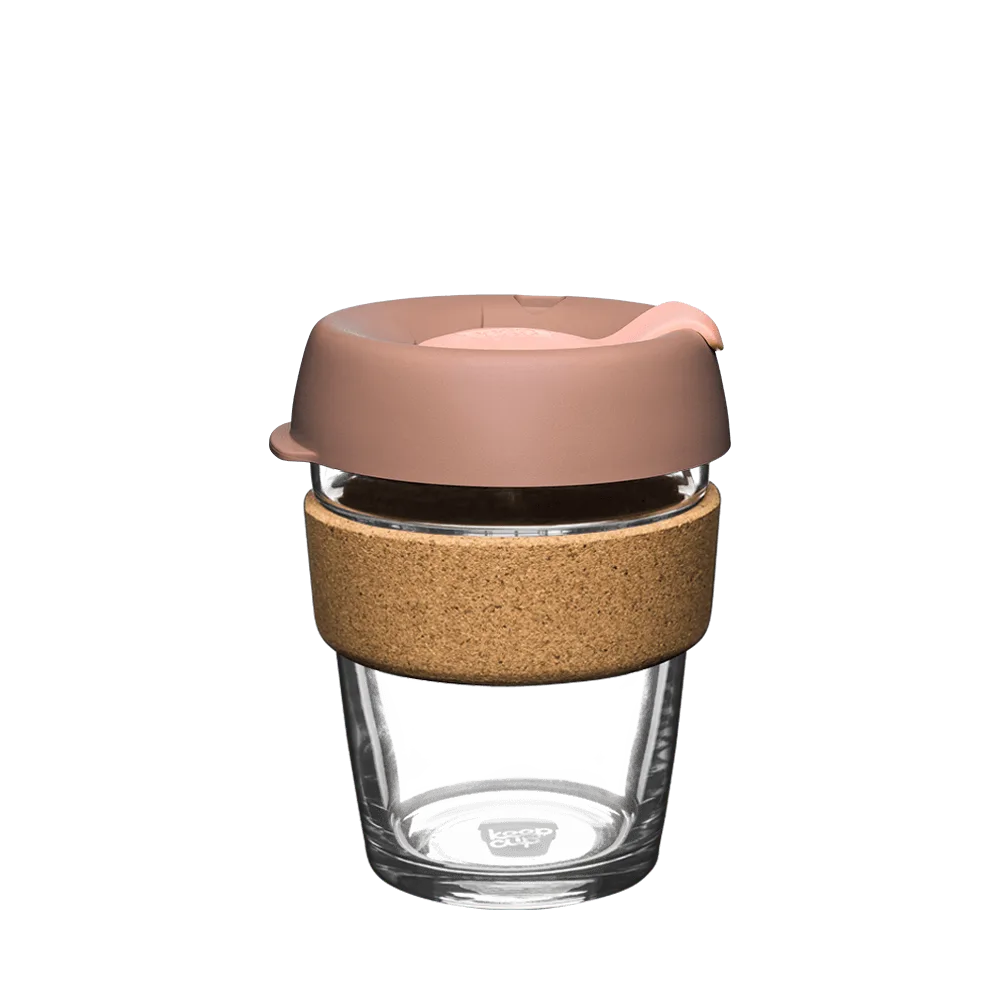
- Brew Cork Glass Cup: https://keepcupecj.com/products/brew-cork-glass-cup-305368https://keepcupecj.com/products/brew-cork-glass-cup-305369https://keepcupecj.com/products/brew-cork-glass-cup-305404https://keepcupecj.com/products/brew-cork-glass-cup-305405Brew Cork Glass Cup with a glass body and a natural cork band for a comfortable, secure hold, designed for everyday coffee, tea, or cold drinks. The cork band makes a hot 12oz-style cup easier to grip without adding a separate sleeve, and the glass body suits drinkers who want a clean-tasting cup.
- Ace Recycled Cork Glass Cup: Ace Recycled Cork Glass Cup is part of a range designed for repair, with easy replacement of lost or damaged parts. If you are unsure about committing to one capacity, a repairable cup lowers the risk because a damaged part can be replaced instead of forcing a whole new purchase.
- Brew Cork Glass Cup: Brew Cork Glass Cup with a glass body, cork sleeve for comfortable handling, and an included lid to help reduce spills. The included lid makes this the better pick for commuters and bag carriers, where an open cup is more likely to spill.
Who this size approach fits
Best for
- Coffee drinkers who order the same café size most days
- Commuters who need a cup that fits a car holder and a bag pocket
- Buyers choosing their first reusable cup and unsure between 8oz, 12oz, and 16oz
Not for
- Buyers who need a cup for 24oz or larger iced drinks, who should look at a bigger capacity
- People who want one cup to cover every drink size, who should expect to own two capacities
- Anyone prioritizing insulated heat retention over glass and cork, who should compare insulated steel options