Quick Answer
If your knife handle screws come loose, stop using the knife immediately. Tighten them with the correct Allen wrench, apply a thread-locker like blue Loctite, and allow it to cure. If screws won't stay tight or are stripped, stop and seek professional help to avoid injury or further damage.
A loose handle screw on your fixed-blade knife is more than a minor annoyance—it can compromise your grip, allow moisture to reach the tang, and even lead to the blade shifting during use. When you notice that wobble, the right response depends on the cause and the condition of the hardware.
This guide walks you through the quick fixes you can do at home, how to prevent the problem from recurring, and the critical point where you should stop and choose another option—like sending the knife to a professional or replacing it.
Why Handle Screws Loosen
Handle screws on fixed-blade knives can loosen for several reasons. Normal use—especially heavy cutting, batoning, or prying—creates vibration and torque that can gradually back out even well-seated screws. Temperature changes cause the handle material and metal to expand and contract at different rates, which can also reduce tension.
Another common cause is that the screws were never properly thread-locked at the factory. Many manufacturers use a thread-locker, but it can be absent or insufficient. Over time, the adhesive breaks down, and the screw begins to turn freely. If you carry your knife daily, the constant motion in your pocket or sheath can also contribute.
- Check screws after heavy use or long-term storage.
- Carry a small Allen wrench in your kit for on-the-go adjustments.
Quick Fix: Tightening Loose Screws
Before you do anything, stop using the knife. A loose screw can cause the handle to shift, and the blade could move unexpectedly. Then, identify the screw type. Many Half Face Blades models use Allen bolts, so you'll need a hex wrench that fits snugly. Use the correct size—forcing the wrong size can strip the head.
Clean the screw head and the surrounding area to remove any dirt or oil, which can affect grip and thread-locker adhesion. Insert the Allen wrench and turn clockwise to tighten. Go gently—over-tightening can strip the threads or crack the handle material. You want the screw snug, not torqued down.
- Use the correct Allen wrench size to avoid stripping.
- Tighten in a crisscross pattern if there are multiple screws.
Preventing Screws from Loosening Again
The most reliable way to keep screws from backing out is to apply a thread-locker. Blue Loctite (medium strength) is ideal for knife screws because it holds firmly but can still be removed with hand tools if needed. Red Loctite (high strength) is usually too aggressive for small screws and may require heat to break the bond.
To apply, remove the screw, clean both the screw threads and the hole with a degreaser or alcohol, then apply a small drop of thread-locker to the threads. Reinsert and tighten to the manufacturer's recommended torque if available. Let it cure for 24 hours before using the knife. This simple step can prevent loose screws for years.
- Use blue (medium-strength) thread-locker, not red.
- Clean threads thoroughly before applying thread-locker.
When to Stop and Choose Another Option
If you've tightened the screw and it still feels loose, or if the screw spins without catching, you may have stripped threads in the handle or the screw itself. Continuing to force it will only worsen the damage. At this point, stop and consider your options.
You can contact the manufacturer for replacement hardware or professional service. If the knife is under warranty, they may repair it at no charge. Alternatively, a local knife maker or gunsmith can often repair stripped threads by installing a helicoil or bushing. If the handle material is cracked or the tang is damaged, it may be more cost-effective to replace the knife entirely.
- If the screw won't stay tight, do not use the knife.
- Seek professional help for stripped threads or damaged handles.
Diagnosis: Is It a Simple Fix or a Red Flag?
- Symptom: Handle screw feels loose, or you hear a rattle when shaking the knife. Stop using the knife immediately to avoid injury.
- Likely Cause: Normal vibration, temperature changes, or missing thread-locker. This is usually a simple fix you can do at home.
- Corrective Action: Tighten with the correct Allen wrench, apply blue thread-locker, and let it cure. If it holds after 24 hours, you're good to go.
- Stop or Choose Another Option: If the screw won't stay tight or is stripped, don't force it. Seek professional repair or contact the manufacturer for service.
Knife Models with Allen Bolt Construction
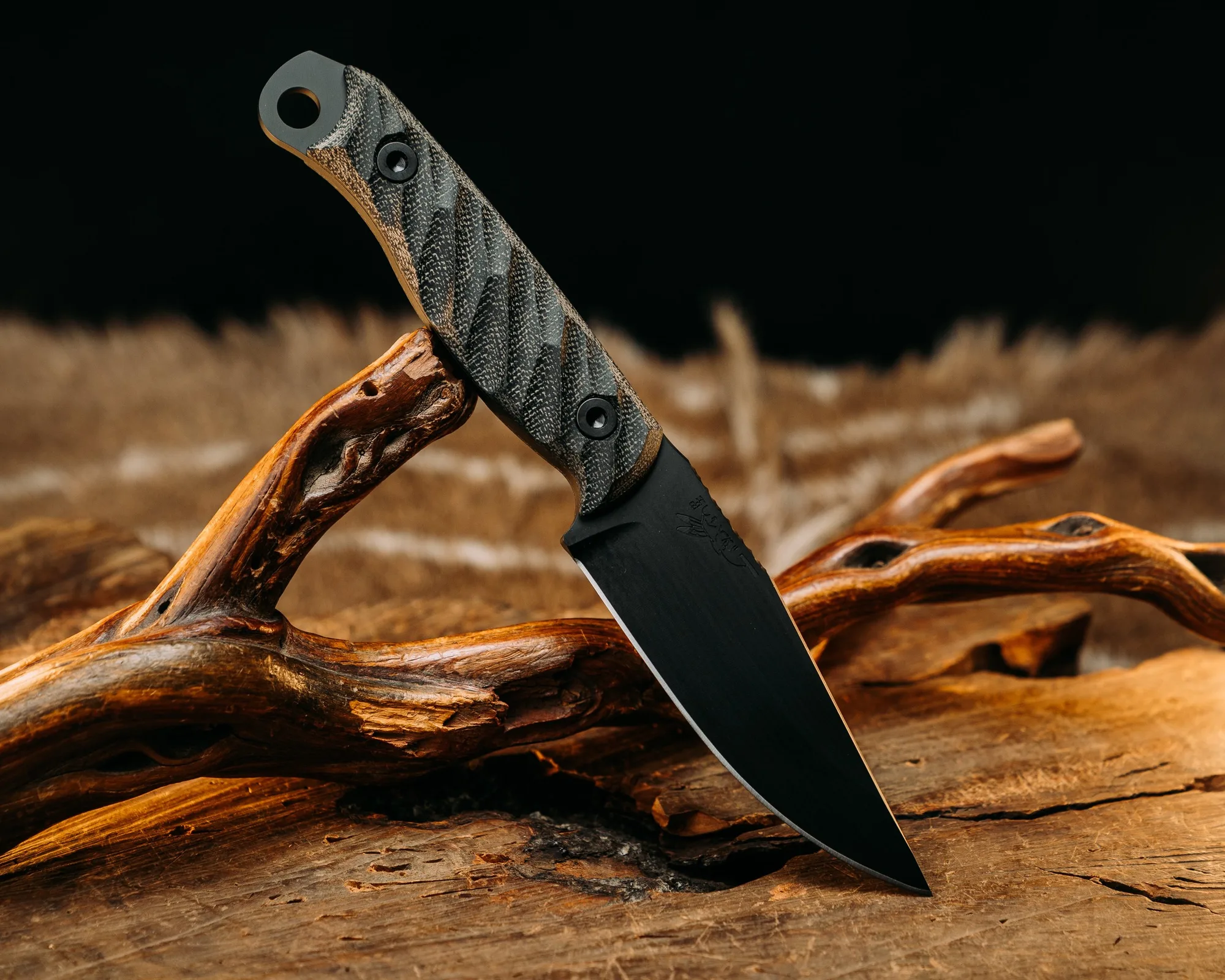
- Tosahwi - Black Burlap Micarta, Armor Black Cerakote, Allen Bolts, Textured Grip: This compact fixed blade features a black burlap Micarta handle with a textured grip, paired with an Armor Black Cerakote finish. The knife is assembled with Allen bolts for a secure and clean construction. Allen bolts are easy to tighten with a standard hex wrench, so you can maintain the handle yourself. The textured grip also helps you hold onto the knife securely, even if a screw is slightly loose.
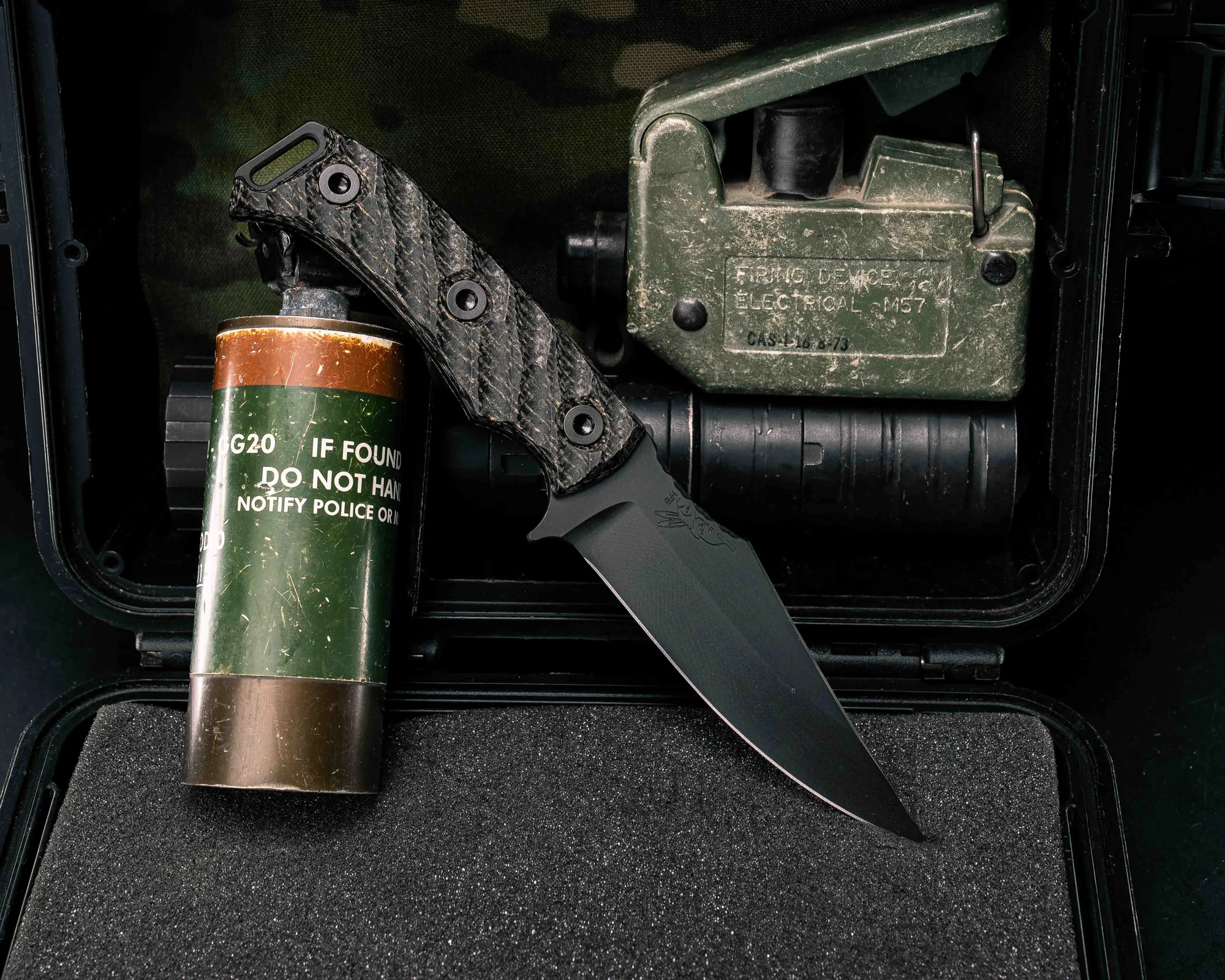
- Crow Jr- Black Canvas Micarta, Armor Black Cerakote, Allen Bolts, Textured Grip: The Crow Jr. is a compact fixed blade with a 4-inch blade and an overall length of 8.9 inches. It features S45VN steel and an Armor Black Cerakote finish, and is assembled with Allen bolts. Knowing your knife uses Allen bolts means you can carry the right tool for quick field adjustments. The durable S45VN steel and Cerakote finish are built for heavy use, so keeping the handle secure is key to long-term performance.
Loose handle screws are a common issue with fixed-blade knives, but with the right tools and a little maintenance, you can fix them quickly and prevent them from coming loose again. Always prioritize safety—if a screw won't stay tight or the handle is damaged, stop and seek professional help. With proper care, your knife will stay secure and ready for years of dependable use.