Quick answer
Start by shortening the strap so the bag rides at your hip or waist instead of hanging at your side, then empty the bag and remove anything you did not use that day. If the strap still digs in, add a padded strap sleeve or switch to a bag with a wider, adjustable strap. Persistent numbness, tingling, or a red groove that lasts after you take the bag off means it is time to change bags, not just adjust one.
Shoulder bag strap pain rarely means you bought a bad bag. More often, the strap is too narrow, the bag is loaded heavier than the strap was designed for, or the length puts the weight in the wrong place on your shoulder. The fix is usually a mix of adjusting, lightening, and occasionally adding padding.
This guide separates the symptom from the likely cause so you can act on the right thing first. If you want a bag that starts out more comfortable, the Todo 3L Shoulder Bag - Del Día is a useful reference point because its adjustable strap can be worn across your body or around your hips as a belt bag, which changes how the load sits.
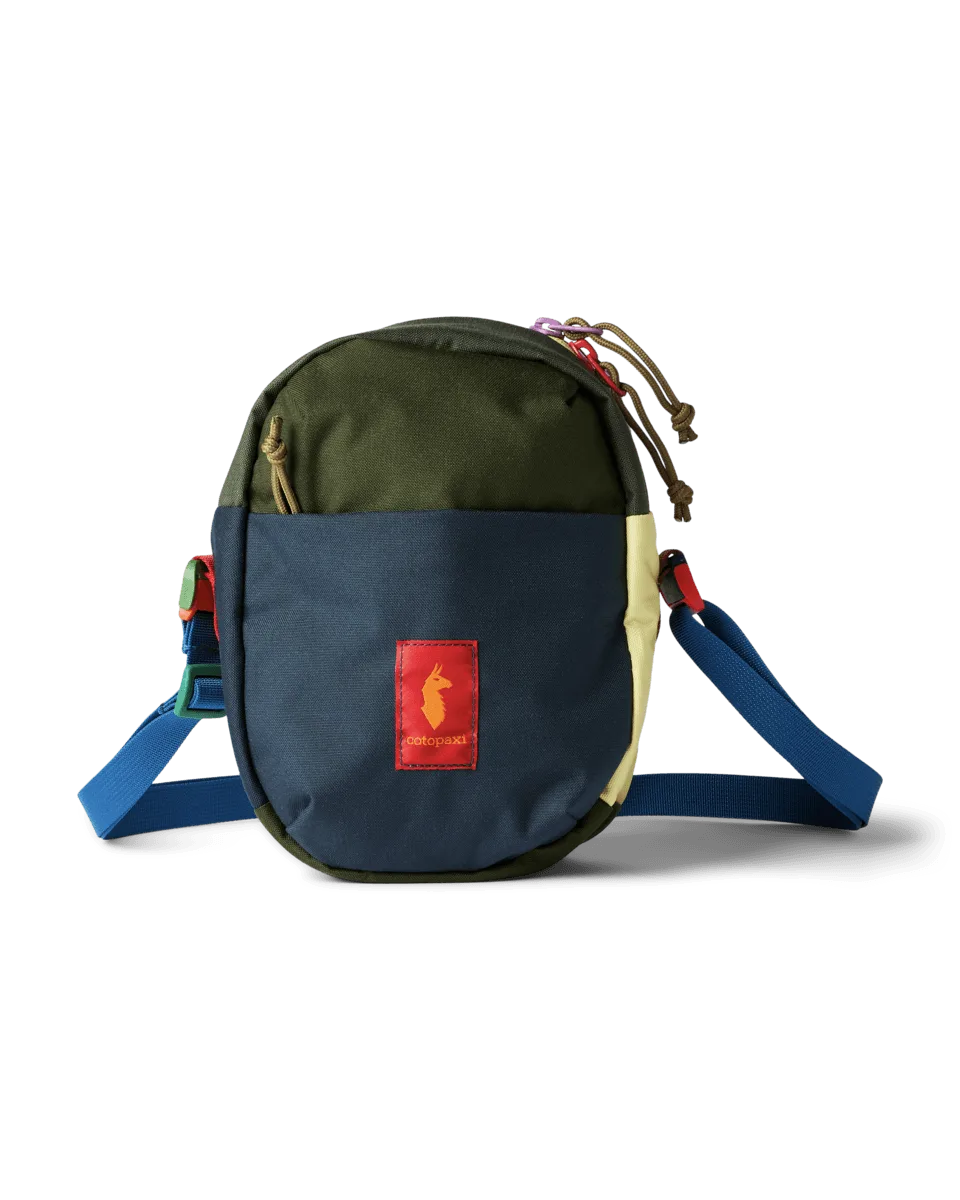
Todo 3L Shoulder Bag - Del Día
Check strap length before you blame the bag
A strap that is too long lets the bag swing and bounce, which concentrates force on a small spot on your shoulder with every step. Shorten the strap until the bag sits at your hip or waist, close to your body. You should be able to slide two fingers under the strap without it pressing hard into your shoulder.
If the strap is already at its shortest setting and the bag still hangs low, the strap length is the limitation, not your posture. That is a signal to look at a bag with a wider adjustment range or a different carry style, such as a belt bag or crossbody worn higher.
- Shorten the strap in small steps and walk around the room before deciding.
- If the bag swings when you turn, it is too long even if it feels fine standing still.
- Keep the bag close to your body; a bag that hangs away from you pulls harder on the strap.
Reduce and redistribute the load
Strap pain scales with weight. Take everything out of the bag, then put back only what you actually used in the last week. A water bottle, a heavy charger, and a thick notebook are common culprits. Moving the heaviest item to the bottom and against your body reduces the leverage that pulls the strap into your shoulder.
If you carry a laptop or a full water bottle every day, a single shoulder strap may be the wrong tool. A bag with two compartments, like the Todo 3L Shoulder Bag - Del Día, helps you separate heavy items from soft ones so the bag does not bulge and press unevenly, but it does not change the fact that a shoulder strap carries weight on one point.
- Weigh your bag on a kitchen scale; if it is over about 10 percent of your body weight, remove something.
- Put hard, heavy items against your back and soft items on the outside.
- Switch shoulders every 20 to 30 minutes on long walks.
Add padding or change the strap
Bag strap padding spreads pressure over a larger area, which is often enough to make a narrow strap tolerable. A padded sleeve or a wider replacement strap is a low-cost fix. Look for padding that is at least an inch wide and does not slide along the strap, because a pad that moves is a pad that stops helping.
If the strap attaches with plastic loops or buckles, check that the hardware is not the part digging in. Sometimes the pain point is the adjuster, not the strap itself. Rotating the adjuster so it sits away from your collarbone can solve the problem without buying anything.
- Choose padding that stays put; a sliding pad is worse than no pad.
- Check the buckle or adjuster position before assuming the strap is too narrow.
- A wider strap helps most when the bag is moderately loaded, not when it is packed heavy.
When to stop adjusting and choose another bag
If you have shortened the strap, lightened the load, and added padding, and you still get numbness, tingling, or a deep red groove that lasts more than a few minutes after you take the bag off, stop adjusting. Those are signs that the carry style itself does not fit your body or your daily load.
At that point, look for a bag that distributes weight differently: a crossbody worn high and close, a belt bag that puts weight on your hips, or a backpack for heavier days. The goal is not to endure a bag but to match the bag to the load and the distance you actually carry it.
- Stop and switch if you feel tingling or numbness in your arm or hand.
- A bag that leaves a mark for more than a few minutes is too heavy for that strap.
- For daily heavy loads, a two-strap bag or a hip-carried bag is the more honest fix.
Strap pain diagnosis: symptom, cause, action, stop point
- Symptom: red groove or sore spot on one shoulder: The strap is too narrow or the bag is too heavy for a single point of contact. Shorten the strap so the bag rides at your hip, remove non-essential weight, and add a padded strap sleeve that stays in place. If the groove fades within a few minutes of taking the bag off, adjustment and padding are usually enough.
- Symptom: bag swings and bounces while you walk: The strap is too long or the bag is not held close to your body. Shorten the strap in small steps and test it while walking, not standing still. If it still swings at the shortest setting, the strap length is the limitation. A bag that swings is a fit problem, not a padding problem.
- Symptom: numbness or tingling in your arm or hand: The strap is pressing on nerves or blood vessels, and no amount of padding reliably fixes that. Switch to a crossbody worn high and close, a belt bag carried on your hips, or a backpack for heavier days. Stop adjusting and change carry style; this is the point where a different bag is the right answer.
Product facts that matter for strap comfort
- Todo 3L Shoulder Bag - Del Día: The adjustable strap can be worn across your body or around your hips as a belt bag, and it has two zippered compartments. Wearing it around your hips moves weight off your shoulder entirely, and two compartments help you separate heavy items from soft ones so the bag does not bulge and press unevenly.
- Otero Fleece Half-Zip Pullover - Women's: It has a fitted silhouette, a recycled polyester blend, and a raised grid back for warmth and breathability. A fitted fleece layer adds a small amount of cushioning between the strap and your shoulder without adding bulk that shifts the bag around.
Most shoulder bag strap discomfort comes down to three levers: strap length, load weight, and contact area. Adjust the length first, lighten the load second, and add padding third. If numbness or lasting marks persist after all three, the carry style is the problem, and a bag that puts weight on your hips or both shoulders is the more comfortable choice.