Quick answer
Buy a check-in set when you want coordinated packing and easier storage, but decide the shell material and wheel quality before the price. For most travelers, a polycarbonate or hybrid shell with a zipperless aluminum frame offers the best balance of light weight and durability. Choose an aluminum check-in only if you accept patina and extra weight in exchange for a premium feel.
Start with size, not style
A check-in set usually includes one or two checked cases sized for trips of one to three weeks. Before comparing finishes, confirm the largest case fits your most common trip length and that the smaller case is still useful for shorter getaways. If you fly on regional aircraft or travel by train, measure the packed case against your carrier's checked baggage limits rather than relying on a generic 'large' label.
- One checked case: best for solo travelers who pack light.
- Two checked cases: useful for couples or families sharing packing.
- Skip a set if you already own a checked case you like and only need a carry-on.
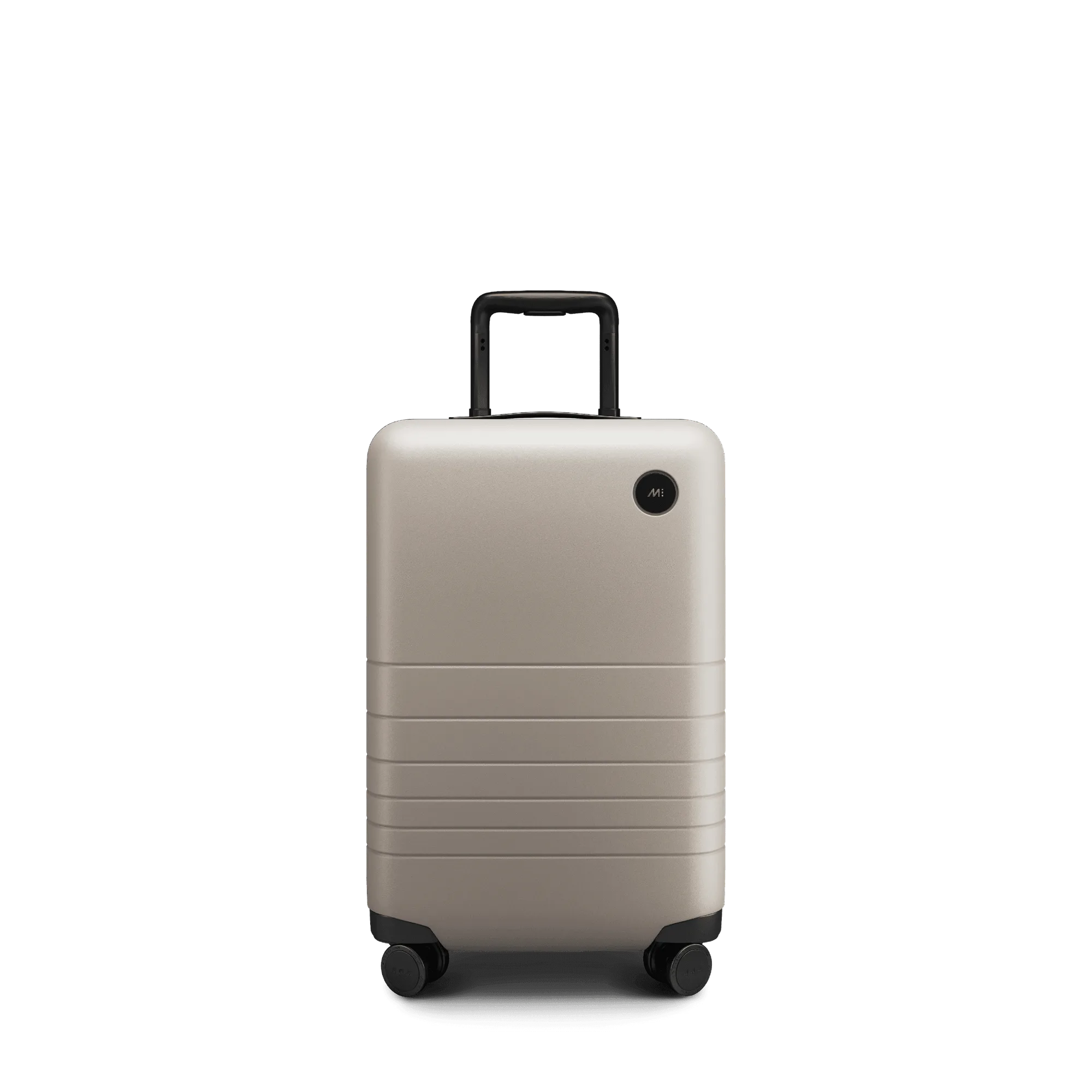
carry-on
Shell material decides weight and repair
Polycarbonate shells flex on impact and stay light, which helps on stairs and in overhead lifts. Aluminum shells resist compression and look sharp, but they dent and develop a patina over time. Hybrid designs combine a polycarbonate shell with an aluminum frame and corner guards, aiming for the impact resistance of plastic with the structural rigidity of metal. There is no universally best material; match it to how you travel and how much you care about scratches.
Wheels, handles, and interior compression
Wheel quality affects effort more than shell material on smooth airport floors. Look for smooth-rolling wheels and a telescoping handle that extends without wobble. Inside, a compression system helps you fit more into a checked case and keeps clothes from shifting. These features are harder to upgrade later, so treat them as buying criteria rather than nice-to-haves.
Decision rules for buying checked luggage
- If you want the lightest option: Prioritize a polycarbonate or hybrid shell over solid aluminum. Hybrid designs add an aluminum frame and corner guards without the full weight of a metal shell. Check the listed weight before buying; a few pounds matter on stairs and trains.
- If you check bags often: Look for reinforced corners and a frame that resists compression. Anodized aluminum corner guards protect the areas most likely to hit conveyor belts and curbs. Corner protection is a better durability signal than a glossy finish.
- If you want a set that matches: A coordinated check-in set keeps packing cubes, handles, and wheels consistent across trips. Buy the set only if you will use at least two of its pieces regularly. A set you use twice a year is worse value than one case you use monthly.
- If you dislike visible wear: Skip aluminum if scratches bother you. Aluminum will patina; polycarbonate and hybrid shells hide scuffs better. Match the finish to your tolerance for marks, not to a showroom photo.
How the Monos check-in options compare
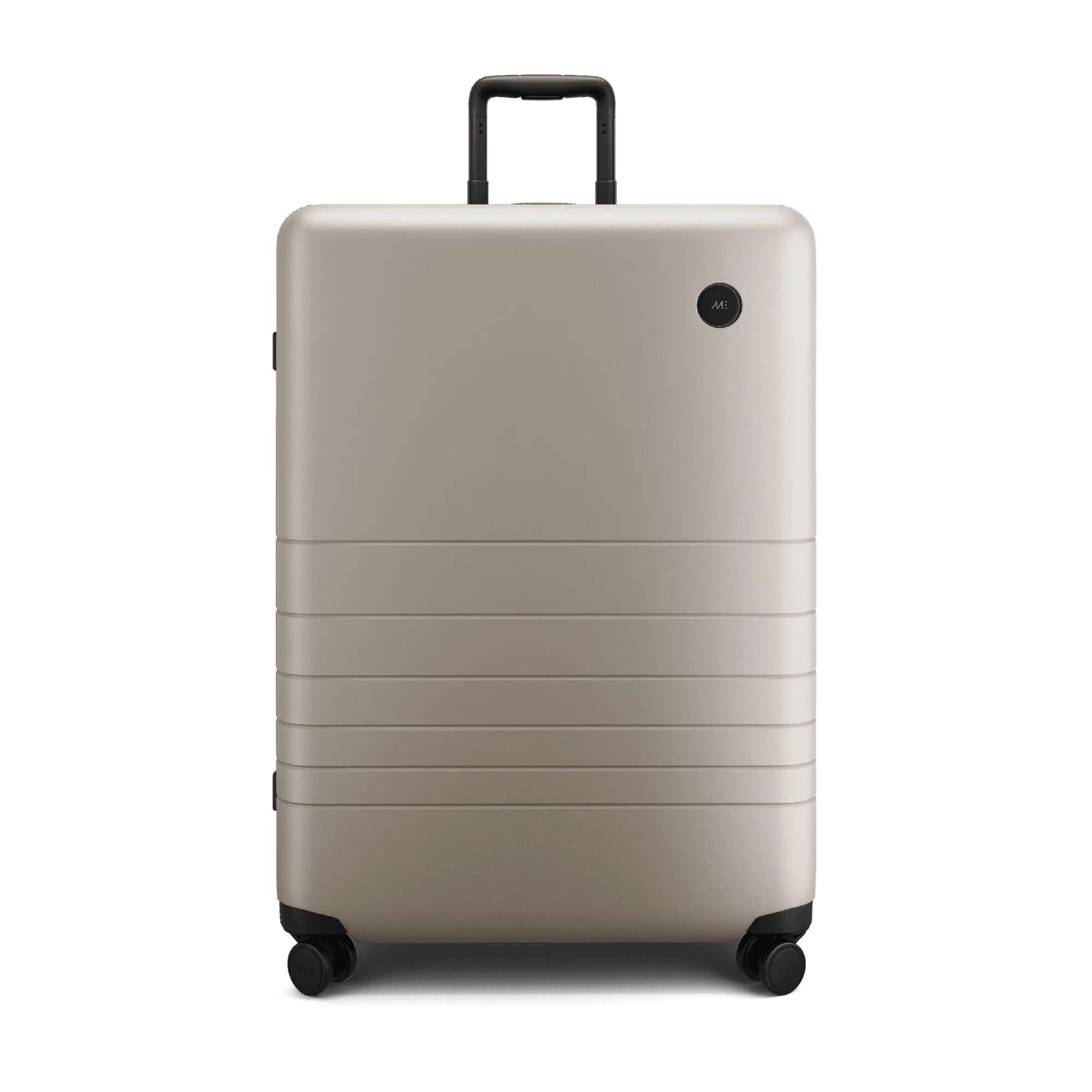
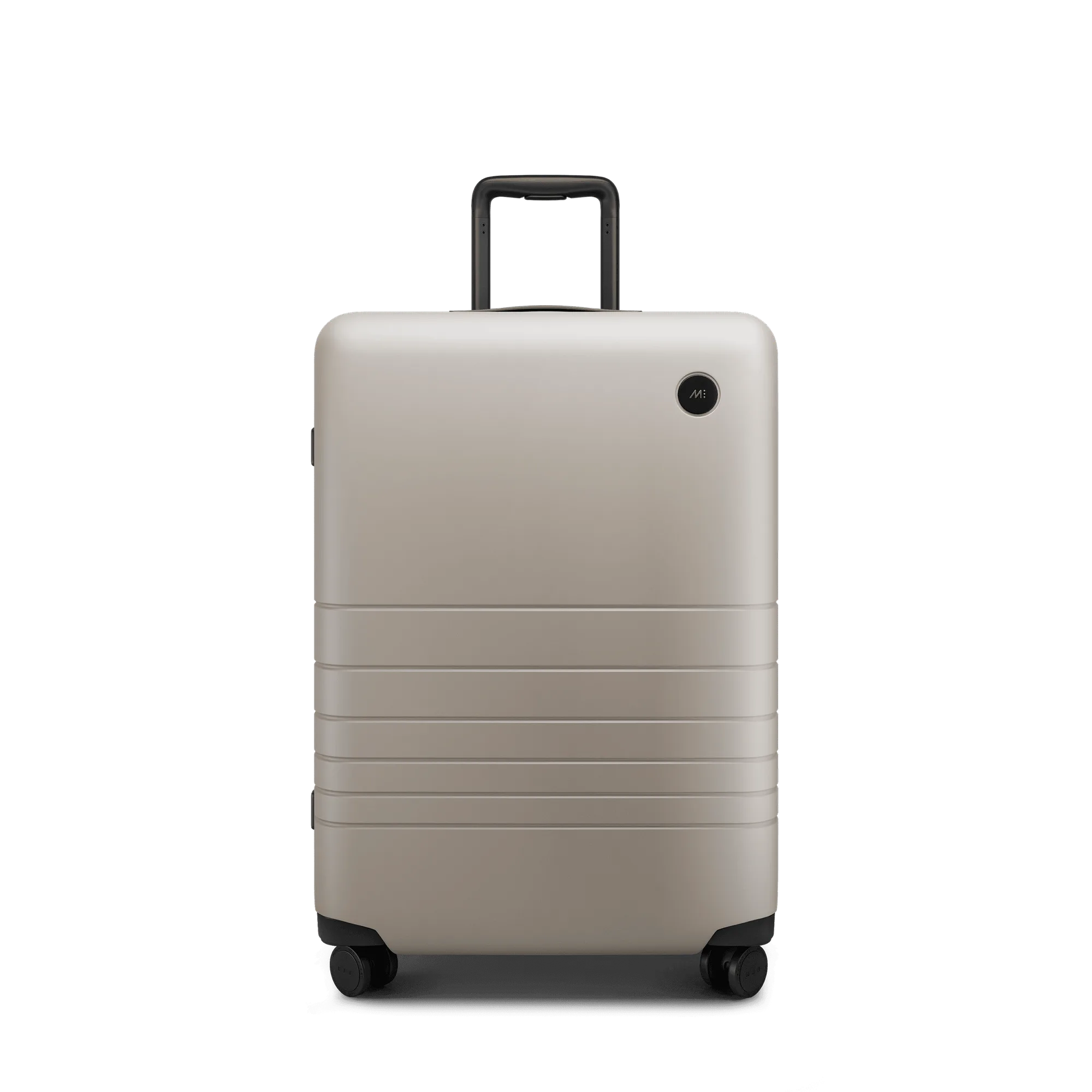
- Check-In Set: The Check-In Set is designed in-house to bring together essential pieces that help you stay organized from curbside check-in to hotel arrival. A coordinated set simplifies packing and storage if you want one system for business trips and leisure getaways.
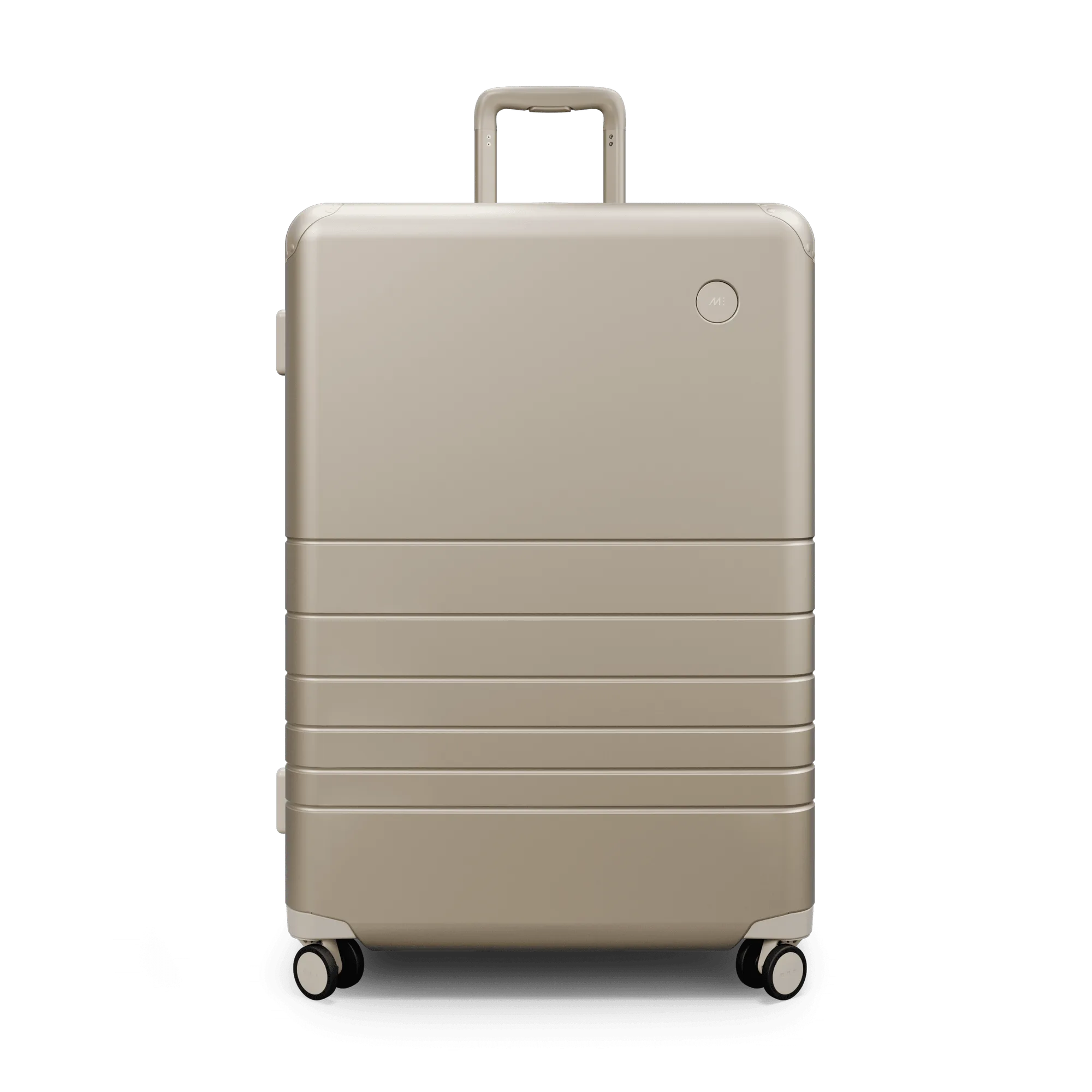
- Hybrid Check-In Large: The Hybrid Check-In Large uses a hard polycarbonate shell with a metallic finish, a zipperless aluminum frame, and anodized aluminum corner guards. This combination targets travelers who want a light case that still resists impact at the corners, where damage often starts.
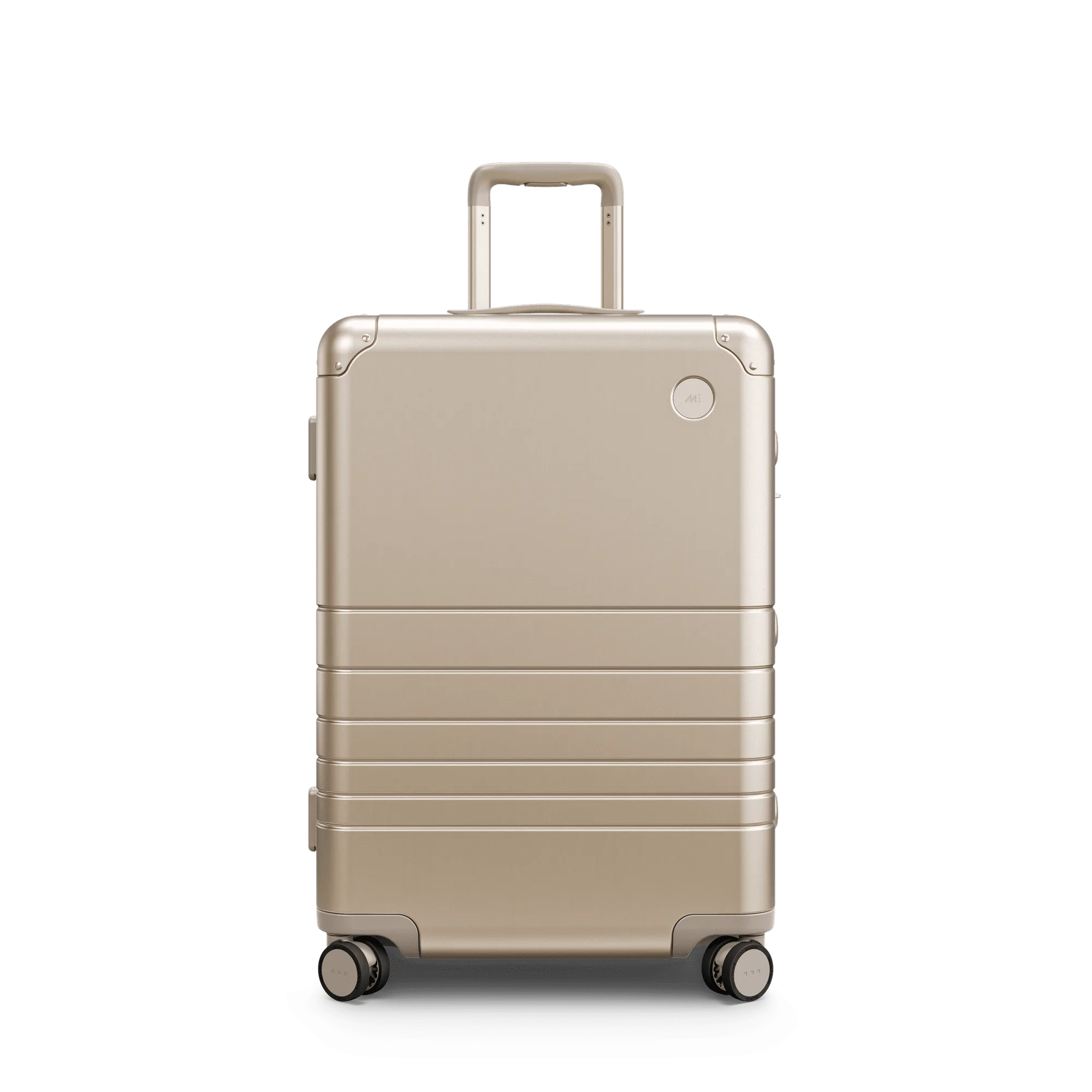
- Aluminum Check-In Medium: The Aluminum Check-In Medium is crafted from anodized and electroplated aluminum with a brushed finish, and the surface will develop a patina over time. Choose this if you prefer a rigid, premium shell and accept that marks become part of the case's character.
Who each check-in option fits
Best for
- Travelers who want a coordinated set for one- to three-week trips
- Frequent flyers who need a light case with corner protection
- Buyers who prefer a rigid, premium shell and accept patina
Not for
- Travelers who only need a carry-on and never check a bag
- Buyers who want a scratch-free finish after every trip
- Anyone who packs ultralight and can fit everything in a personal item