Quick answer
Buy a cooperative board game by matching four things to your actual group: supported player count, difficulty and failure rate, replayability, and table footprint. If your group is two people, prioritize games that scale down cleanly; if you host five or six, check the upper player count before anything else. Then read the rulebook complexity and setup time, because a co-op game that takes 20 minutes to set up often stops hitting the table.
Cooperative games live or die by the group you bring to the table. A tense, punishing co-op can feel electric with four experienced players and miserable with two casual ones. That is why the useful question is not which co-op game is best overall, but which co-op game fits your players, your space, and the amount of time you actually have.
This guide walks through the features that matter most when buying co-op board games: player count, difficulty curve, replayability, table footprint, and how the game handles alpha players. It also shows how those features play out in real catalog examples, so you can compare concrete games instead of abstract categories.
Player count is the first filter, not the last
Most co-op games list a range like 1-4 or 2-5, but the experience at each end is rarely equal. A game balanced for three may feel loose and easy at two, or slow and crowded at five. Before you buy, decide your realistic player count: the number of people who will actually sit down on a typical game night, not the maximum your table could theoretically hold.
If you regularly play with two, look for games designed around that count or that include dedicated two-player rules. If you host larger groups, check whether the upper player count adds meaningful decisions or just more downtime between turns. A co-op game that keeps everyone engaged at five players is a different product from one that merely tolerates five.
- Write down your typical player count and your maximum player count separately.
- Check whether the game supports solo play if you sometimes play alone.
- For larger groups, look for simultaneous action or shared planning to reduce downtime.
Difficulty and failure rate: how punishing do you want it?
Co-op games range from relaxed puzzle-solving to brutal survival where losing is the default. Neither is better, but they suit different moods. A high failure rate creates tension and memorable stories, while a gentler difficulty lets newer players contribute without feeling blamed for a loss.
Look for games with adjustable difficulty, variable scenarios, or modular challenges. That flexibility lets you start easy and scale up as your group learns the system. If a game has only one difficulty setting, read player discussions about win rates before buying, because a co-op that feels unwinnable can drain enthusiasm fast.
- Choose adjustable difficulty if your group mixes experienced and new players.
- Match the failure rate to your group's tolerance for losing.
- Avoid games with no difficulty scaling if you play with younger or casual players.
Replayability: how much game is in the box?
A co-op game's value comes from how many distinct sessions it supports. Some games offer a fixed campaign you play once, while others generate varied setups through randomized objectives, modular boards, or different character abilities. Both can be worth it, but they serve different buying goals.
If you want a game that stays in rotation for years, prioritize variable setup and asymmetric roles. If you prefer a story-driven experience with a clear ending, a campaign game may be the better fit even if you play it fewer times. Be honest about which one your group actually finishes.
- Check whether the game includes multiple scenarios, characters, or randomized setups.
- Campaign games offer a strong arc but limited replay once completed.
- Asymmetric roles add replayability by changing how each player contributes.
Table footprint, setup, and teardown
Co-op games often use more table space than competitive games because they include shared boards, decks, and player areas. Measure your table before buying, especially if you play on a small dining table or a coffee table. A game that barely fits leaves no room for drinks, rules, or player boards.
Setup and teardown time matter just as much. A game with dozens of components can take longer to prepare than to play, which reduces how often it hits the table. Look for insert trays, labeled bags, or streamlined setup rules. If storage is tight, check the box dimensions and whether expansions fit inside the base box.
- Measure your table and compare it to the game's listed footprint if available.
- Prefer games with organized inserts or clear setup steps.
- Consider whether expansions fit in the base box before buying them.
Watch for alpha player problems
In co-op games, one experienced player can end up dictating everyone's moves. That is the alpha player problem, and it can make the game feel like a solo experience for everyone else. Games reduce this in different ways: hidden information, simultaneous decisions, limited communication, or player-specific goals.
When comparing co-op games, think about how your group communicates. If one person tends to take over, look for mechanics that restrict table talk or give each player private information. If your group is collaborative by nature, a fully open-information game can be a great fit.
- Hidden information and simultaneous turns reduce one-player dominance.
- Open-information co-ops reward discussion but can invite alpha players.
- Discuss the alpha player issue with your group before buying.
Decision rules for buying a co-op board game
- If your group is two players: Prioritize games that explicitly support two players well, or that include solo rules you can adapt. Avoid games where the two-player experience is described as a watered-down version of the full game. Check the two-player experience before buying, not just the player count range.
- If your group hates losing repeatedly: Choose a co-op with adjustable difficulty or a gentler puzzle structure. Games where the main challenge is organizing and optimizing tend to produce fewer frustrating losses than survival games. Match the failure rate to your group's patience, not to review scores.
- If one player tends to take over: Look for hidden information, simultaneous decisions, or programmed actions that prevent one person from directing every move. Fully open co-ops can amplify the alpha player problem. Pick mechanics that distribute decision-making across the table.
- If your table is small: Measure your play space and compare it to the game's footprint. Prefer games with compact boards, player mats instead of large personal boards, or digital companions that reduce table clutter. A game that does not fit your table will not get played.
- If you want long-term value: Prioritize variable setup, multiple scenarios, and asymmetric roles over a single fixed campaign. These features create different experiences across sessions without requiring expansions. Replayability comes from variability, not from box size.
Catalog examples that show these features in practice
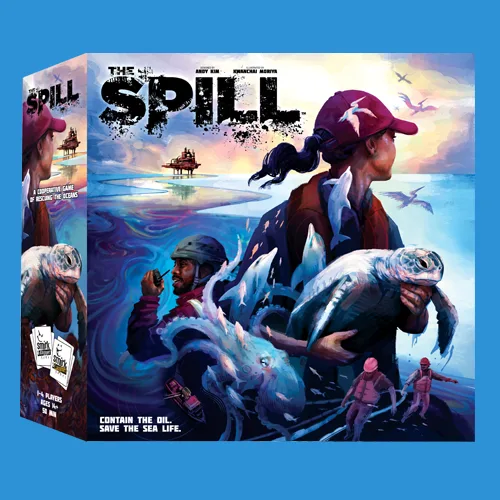
- The SPILL: a dynamic co-op game of saving our oceans from a disaster: A fully co-op game featuring a 4-way dice tower pouring oil into the ocean, where the response team must work together to avert an ecological disaster. The dice tower creates a visible, escalating threat that keeps every player focused on the same shared problem, which is a strong fit for groups that want constant coordination rather than individual puzzle-solving.
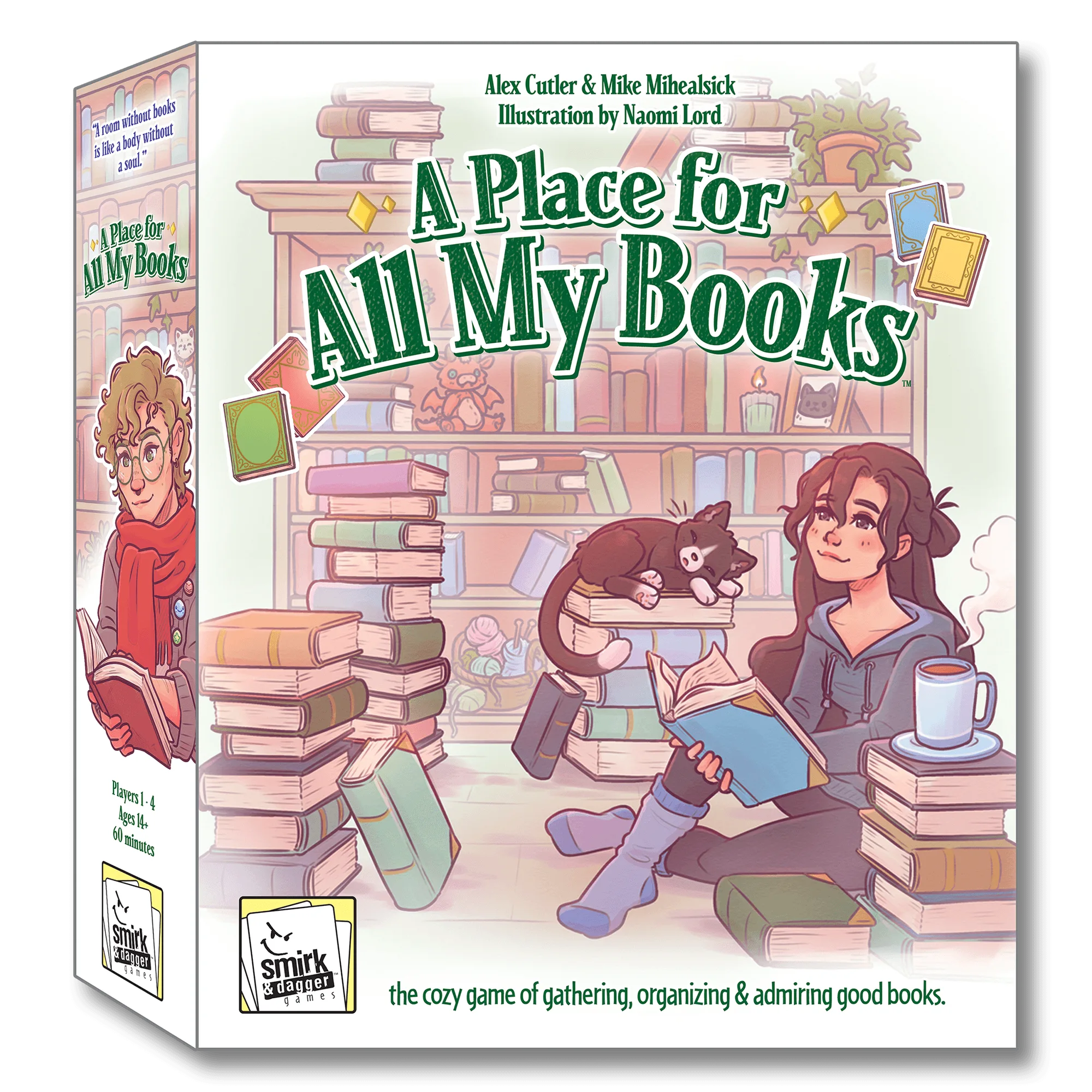
- A Place for All My Books: A puzzley book gathering, sorting and organizing strategy game where players arrange stacks of books in different rooms of their apartment as personal projects. This shows the gentler, lower-conflict end of co-op design, where the challenge is organizing and optimizing rather than surviving a monster, making it a good match for casual or newer players.
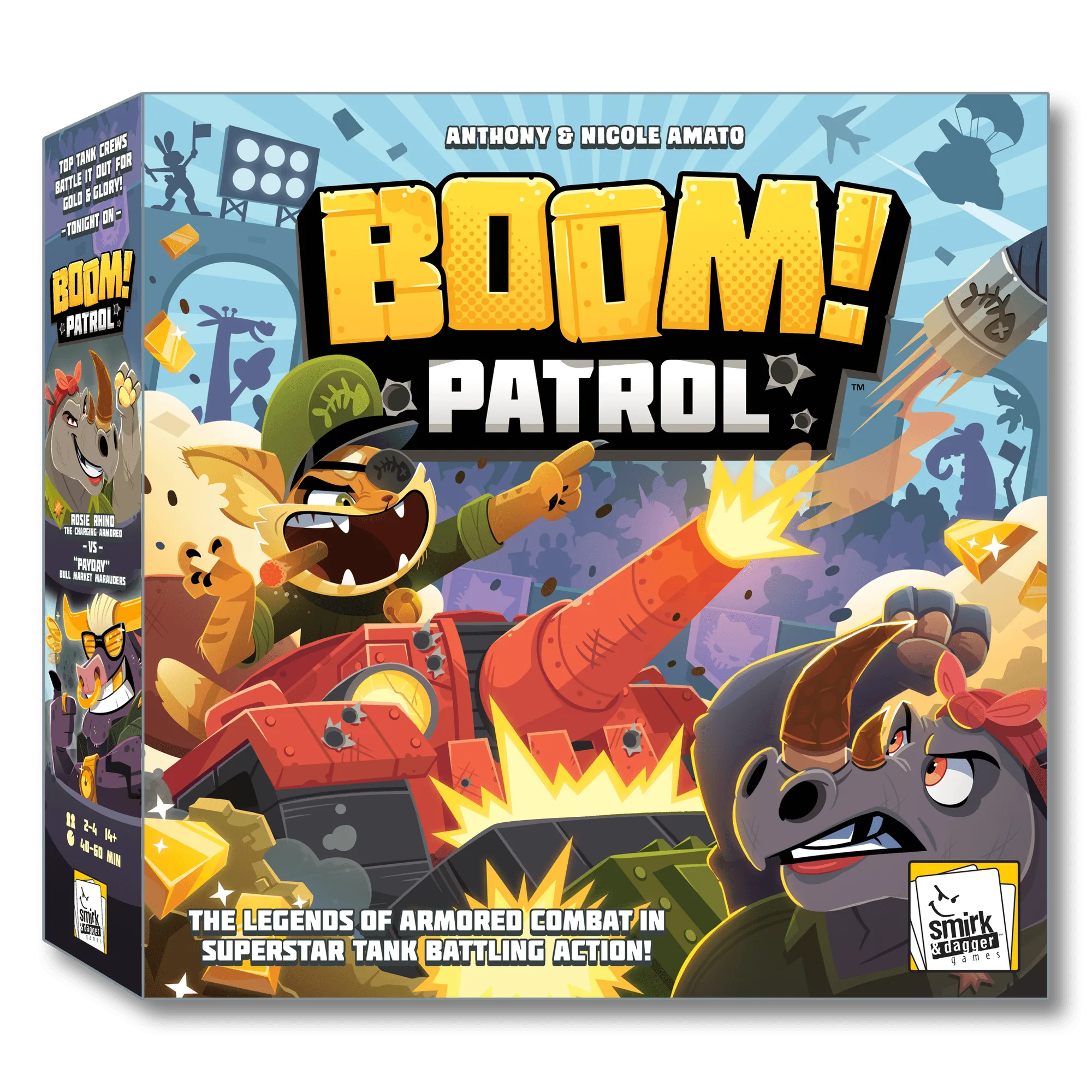
- Boom Patrol - Superstar Tank Battling Action!: An all-out battle for gold and glory in fantasy spectator sport, with animal tank commanders and programmed command cards. Programmed command cards add a planning layer that can reduce alpha player dominance because everyone commits to moves before seeing the outcome, a useful feature if your group has one player who tends to run the table.
Who should buy a cooperative board game
Best for
- Groups that enjoy solving a shared puzzle and discussing options together.
- Players who prefer winning or losing as a team rather than competing directly.
- Mixed-experience tables where a cooperative structure lets newer players contribute.
Not for
- Players who want direct competition and individual victory conditions.
- Groups where one person consistently dictates everyone else's turns.
- Tables with very limited space or very short play windows.
Buying a cooperative board game comes down to fit: player count, difficulty, replayability, and table space. Use the decision rules above to narrow your options, then pick the game that matches your group's habits rather than the one with the loudest hype. If you are unsure, start with a flexible, adjustable co-op and expand once you know what your table enjoys.