Quick Answer
Match the fall count and fall style to the sensation you want. Wide suede falls in a high count, like the 75-fall cowhide suede flogger, spread impact into a heavy thuddy feel. Fewer, braided falls concentrate force into a sharper stingy snap, like the 50-fall steel-handle flogger or the 15-fall finger flogger. Buy genuine cowhide, check that the falls are securely attached, and choose a handle that gives you the control your play requires.
Fall Count and Width: The Biggest Sensation Lever
Fall count and fall width decide how impact spreads across the skin. More, wider falls distribute force over a larger area, which reads as a broad, heavy thud. Fewer, narrower falls concentrate the same swing into a smaller contact patch, which reads as a sharp sting. A 75-fall flogger with wide suede tails will feel very different from a 12-fall flogger even if both are swung with the same effort.
- High fall count with wide, soft tails: broad thud, more forgiving for warm-up and full-body work.
- Low fall count with narrow or braided falls: focused sting, better for precision and sharp accents.
- Braided falls add density and a more defined snap than flat suede tails of the same width.
Thuddy vs Stingy: Decide the Sensation Before the Specs
Thuddy and stingy are not quality tiers; they are different tools. Thuddy impact lands deep and heavy, which suits longer sessions, larger muscle groups, and bottoms who prefer pressure over bite. Stingy impact lands sharp and electric, which suits short, precise strikes and players who want a biting accent. If you are unsure, start with a thuddy flogger because it gives you more room to build intensity gradually.
- Choose thuddy for warm-up, broad back work, and a heavier, massage-like feel.
- Choose stingy for pinpoint accuracy, quick accents, and a sharper surface sensation.
- A braided fall flogger sits toward the stingy end because braiding stiffens and concentrates each fall.
Construction Checks That Predict Longevity
Genuine cowhide is the baseline. Full-grain cowhide holds up better than split leather or bonded leather because the fibers are intact, so the falls resist stretching and fraying. Check the fall attachment: falls should be locked into the handle or knot so they cannot pull free during a swing. Also check the handle for a secure grip and a weight that lets you control the follow-through rather than fight it.
- Look for genuine cowhide or full-grain cowhide, not generic 'genuine leather' without a hide type.
- Tug-test the falls gently before use to confirm they are anchored, not just tucked in.
- A steel handle adds authoritative weight and control, but it also changes balance and requires a firm grip.
- A finger loop handle gives intimate, tip-of-the-finger control for short, precise strokes.
Handle Style and Control
The handle decides how the flogger moves in your hand. A weighted steel handle puts mass behind the swing, which makes follow-through more authoritative but less forgiving if your aim drifts. A finger loop handle keeps the tool close to your hand for tight, accurate flicks. Neither is better in the abstract; pick the one that matches the distance and precision your play uses.
- Steel handle: more momentum, better for deliberate, weighty swings.
- Finger loop: more precision, better for close-range and detailed work.
- Grip comfort matters more than handle material if you plan long sessions.
Decision Rules for Buying a Cowhide Flogger
- If you want a heavy thuddy feel: Choose a high fall count with wide suede tails, such as a 75-fall cowhide suede flogger. Thuddy is the more forgiving starting point for longer sessions.
- If you want a sharp stingy feel: Choose a lower fall count with braided or narrow falls, such as a 50-fall steel-handle flogger or a 12-fall braided flogger. Stingy rewards accuracy and shorter, more deliberate strokes.
- If precision matters most: Choose a finger flogger with a finger loop handle and braided falls, like the 15-fall braided finger flogger. Finger loops trade reach for close-range control.
- If you want authoritative follow-through: Choose a weighted steel handle, but confirm you can grip and control it comfortably before buying. Handle weight changes balance; test the feel in your hand.
- If you are buying your first cowhide flogger: Prioritize genuine cowhide and secure fall attachment over fall count, then pick a thuddy build to learn control. Construction quality outlasts sensation preferences.
Catalog Examples That Show the Trade-Offs
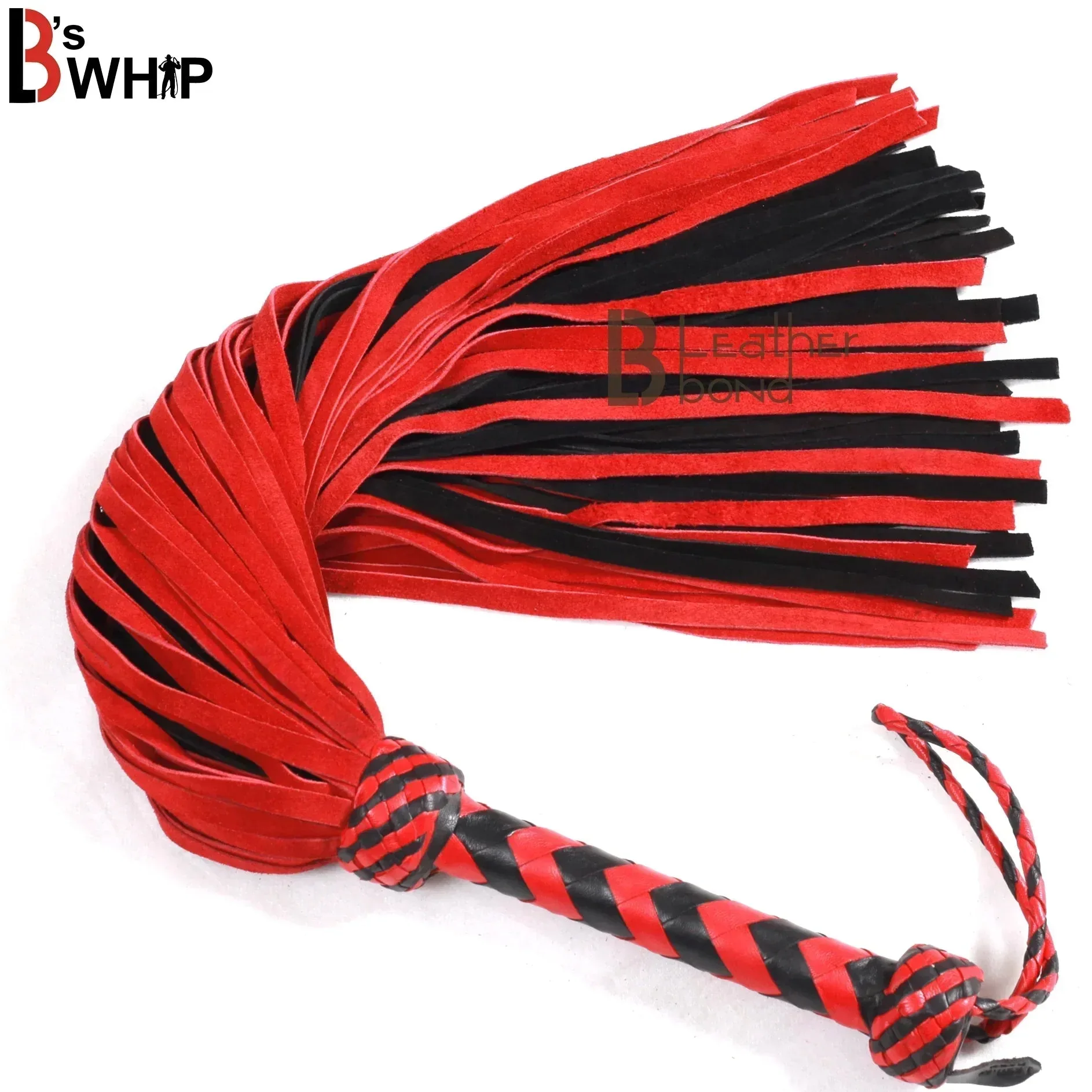
- ❤️🖤 Real Genuine Cowhide Suede Leather Flogger 75 Falls Red & Black Heavy Duty Thuddy Whip: Genuine cowhide suede flogger with 75 wide, soft tails in red and black, described as heavy duty and thuddy. The high fall count and wide suede tails spread impact for a full-body thud, making it a strong first heavy duty flogger for thuddy play.
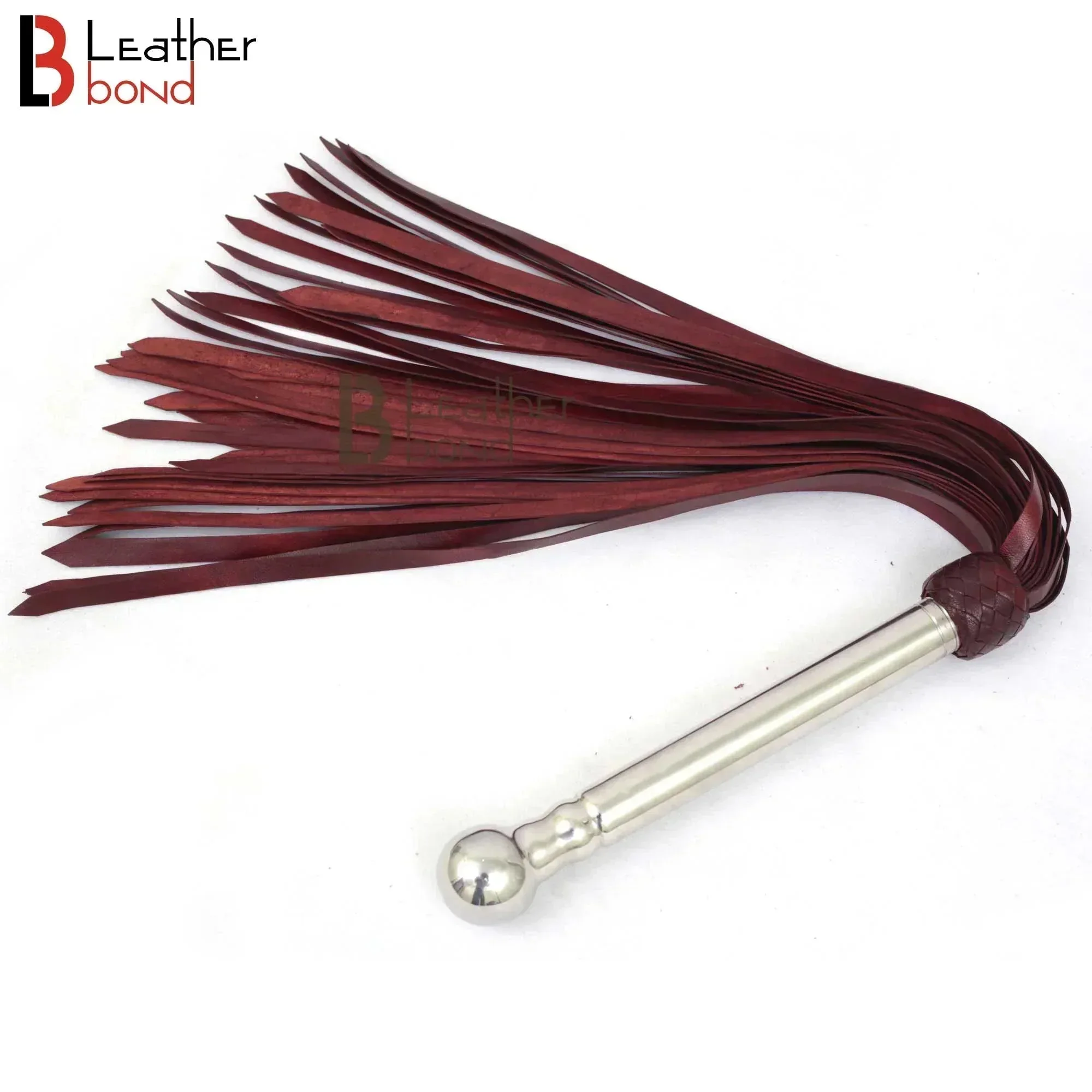
- Real Cowhide Leather Flogger 50 Stingy Falls & Steel Handle | Fully Handmade Heavy Duty BDSM Whip: Full-grain cowhide flogger with 50 falls and a cold weighted steel handle, described as stingy. The steel handle adds authoritative control and the 50 falls deliver focused sting, suiting players who want sharper, more directed impact.
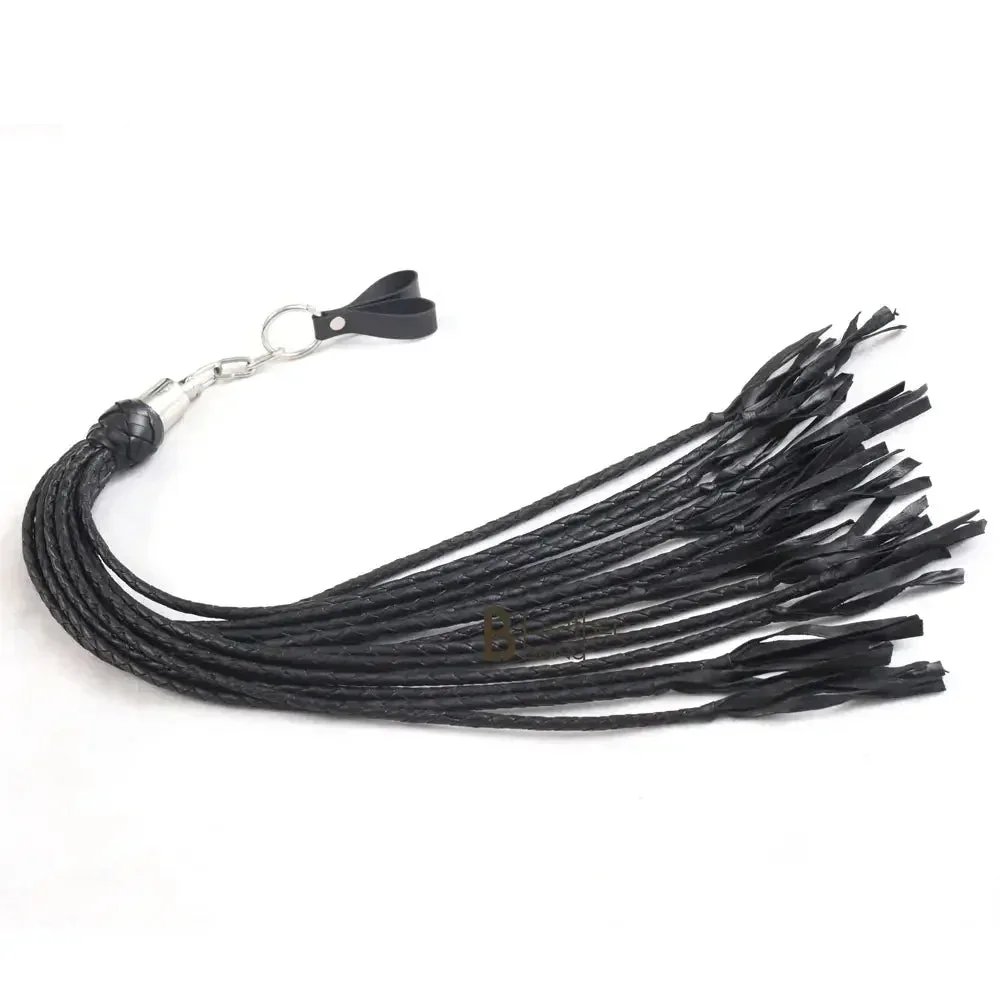
- Real Cowhide Leather Finger Flogger 15 Braided Black Falls Heavy Duty Thuddy Whip | BDSM Impact: Full-grain leather finger flogger with 15 individually braided heavy duty cowhide falls and a finger loop handle. The low, braided fall count concentrates force into a pinpoint sting, and the finger loop keeps control at the tip of the dominant hand.
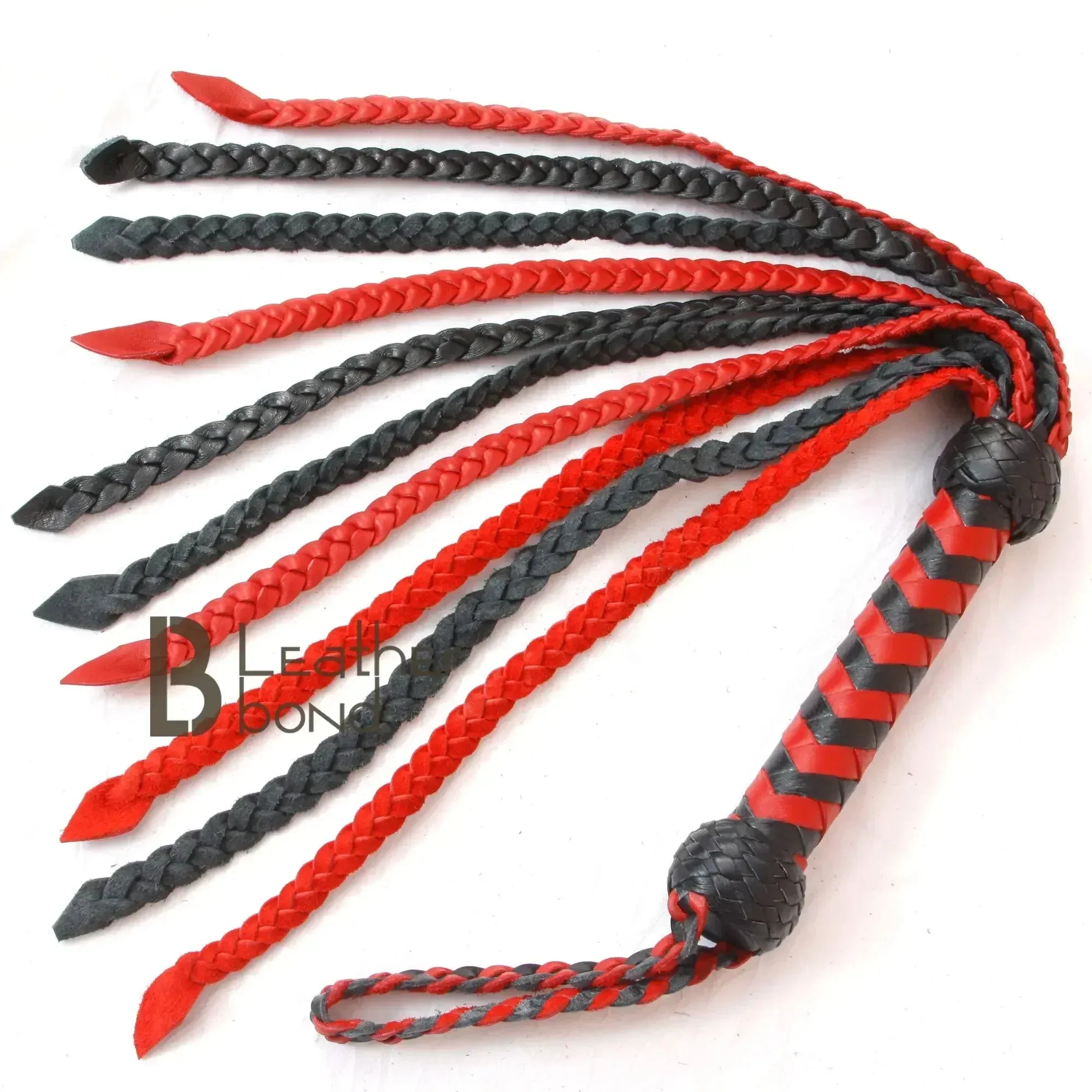
- Real Cowhide Leather Flogger 12 Braided Falls Heavy Duty | Red & Black Whip: Full-grain cowhide flogger with 12 individually braided red and black falls, described as a heavy duty BDSM impact tool. Twelve braided falls give a defined, deliberate strike with bold visual character, a good match for players who want sting with lower fall count.
Who This Cowhide Flogger Buying Approach Fits
Best for
- Players who want one cowhide flogger that matches a specific thuddy or stingy sensation.
- Buyers comparing fall counts and handle styles before committing to a heavy duty flogger.
- Anyone upgrading from a generic leather flogger to genuine cowhide or full-grain cowhide.
Not for
- Shoppers looking for a lightweight, beginner-priced synthetic flogger.
- Players who need a whip rather than a flogger for single-tail precision.
- Buyers who cannot confirm the hide type or fall attachment before purchase.