Quick answer
To choose a high-protein snack stick, check three things in order: protein per serving relative to calories, the first few ingredients for whole meat versus fillers, and whether the label lists allergens or additives you avoid. A stick with 9–10g protein and 90–110 calories is a solid everyday pick. For a trusted starting point, Chomps Original Beef delivers that balance with a short ingredient list.
Start with protein density, not just protein grams
A stick that says '10g protein' sounds great until you see it also packs 200 calories. The useful number is protein per 100 calories. Divide protein grams by calories, then multiply by 100. Anything above 8g protein per 100 calories is a strong high-protein snack. For example, 9g protein in a 100-calorie stick is excellent; 6g in a 150-calorie stick is mediocre. This single ratio cuts through most marketing claims.
Read the ingredient list like a priority list
Ingredients are listed by weight. The first one or two should be a recognizable meat—beef, turkey, venison, chicken. If sugar, corn syrup, or a starch appears before the meat, you are mostly buying a candy bar with protein. Also scan for nitrates/nitrites, MSG, and artificial colors if you avoid them. A short list (five to eight items) usually signals a simpler product. Chomps sticks, for instance, list beef or turkey first and skip added nitrates.
Check the serving size against your real snacking
A 'serving' might be one stick, two sticks, or half a stick. If you routinely eat two, double the protein, calories, sodium, and fat. That matters for sodium especially: many meat sticks run 300–500mg per stick. If you eat two, you could hit a third of your daily sodium limit. Mini sticks like Chomplings are often 50–60 calories each, so you can eat two and still stay under 120 calories—useful if you want a lighter snack but still want 5–6g protein per stick.
Look for grass-fed and source claims only when they are specific
Terms like 'grass-fed' and 'pasture-raised' are meaningful only if the label says '100% grass-fed' or names a certifying body. 'Grass-fed' alone can mean the animal had some grass at some point. If sourcing matters to you, look for '100% grass-fed' or a third-party seal. Chomps Sea Salt Beef Chomplings, for example, use grass-fed beef and list sea salt and garlic—no vague sourcing language. If a label makes no sourcing claim, treat it as conventional and decide if that is acceptable for your budget.
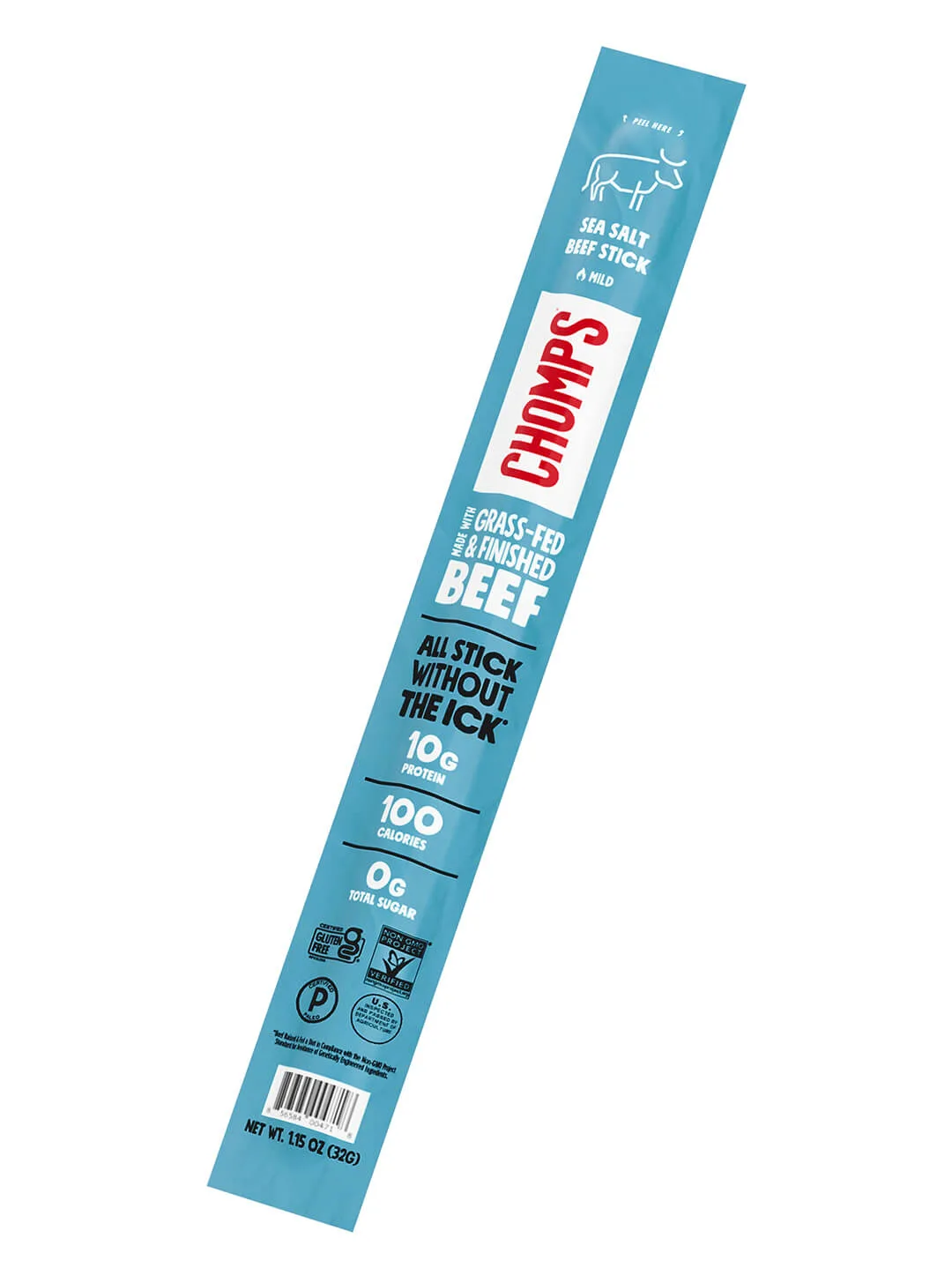
Sea Salt Beef
Match the format to your use case
Full-size sticks (about 1 oz) suit a meal replacement or post-workout snack. Mini sticks (Chomplings) fit lunchboxes, desk drawers, or portion-controlled snacking. Trial packs let you test flavors before committing to a full box. If you eat on the go, check if the wrapper is easy to open without scissors. If you pack them for kids, confirm the sodium per stick is under 300mg. These practical details often matter more than a small protein difference.
Decision rules for reading any snack stick label
- Protein density rule: Aim for at least 8g protein per 100 calories. If a stick has 10g protein but 180 calories, it is only 5.5g per 100 calories—skip it unless you need the calories. Check the ratio before you check the front-of-pack claim.
- Ingredient order rule: If sugar, syrup, or starch is listed before the meat, treat it as a candy-style snack, not a protein snack. If meat is first or second, you are on the right track. The first three ingredients tell you more than the nutrition panel alone.
- Sodium per serving rule: For everyday snacking, look for under 400mg sodium per stick. If you eat two sticks, that doubles. If you are sodium-sensitive, choose minis or halve your portion. Multiply sodium by how many sticks you actually eat.
- Sourcing claim rule: Only trust 'grass-fed' if it says '100% grass-fed' or carries a third-party seal. Vague claims are not worth a premium. If the label does not specify, assume conventional and decide if that is fine for you.
Product facts
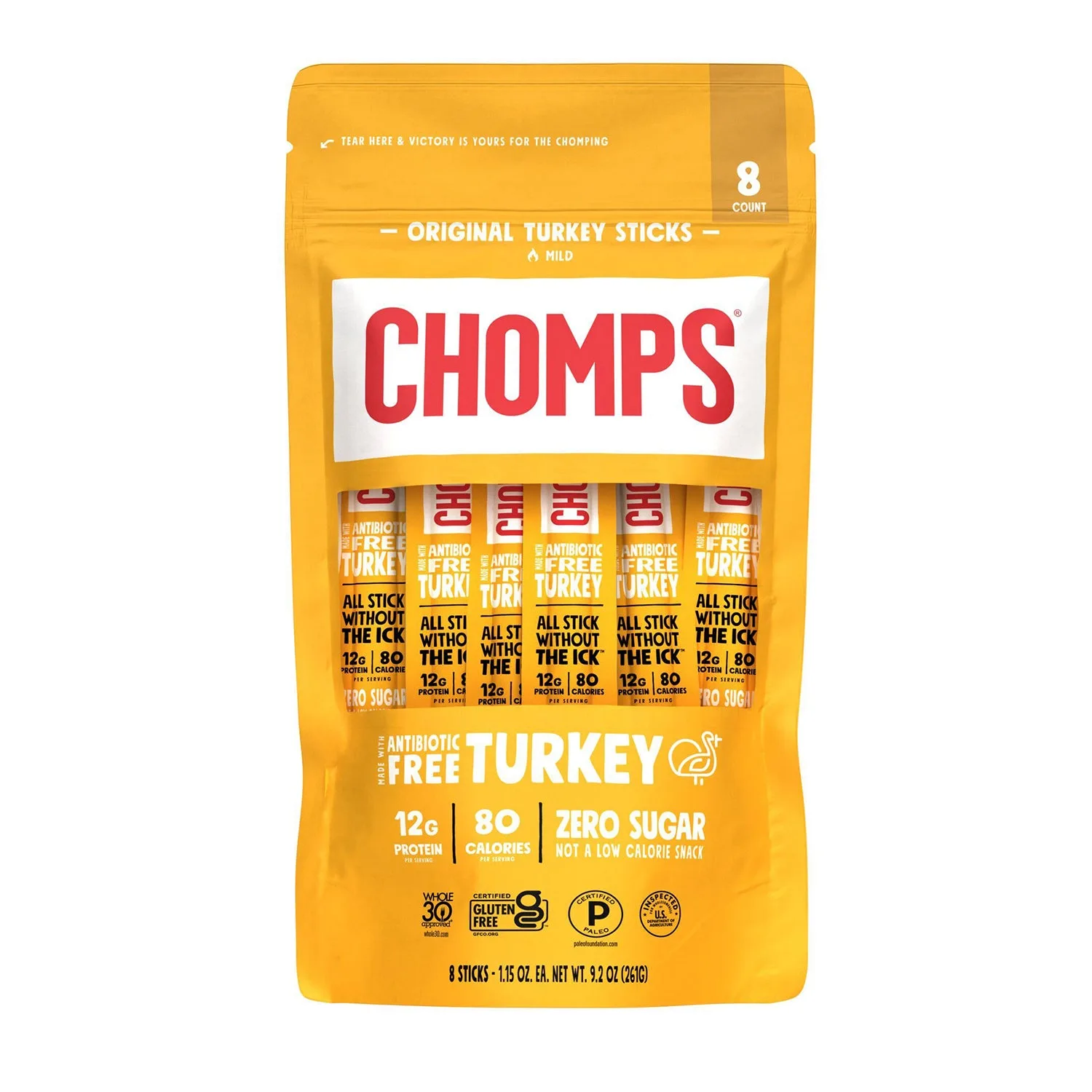
- Original Beef: Original Beef is the OG smoky beef jerky stick with black pepper spice. A straightforward, beef-first option for anyone who wants a classic flavor with no novelty ingredients.
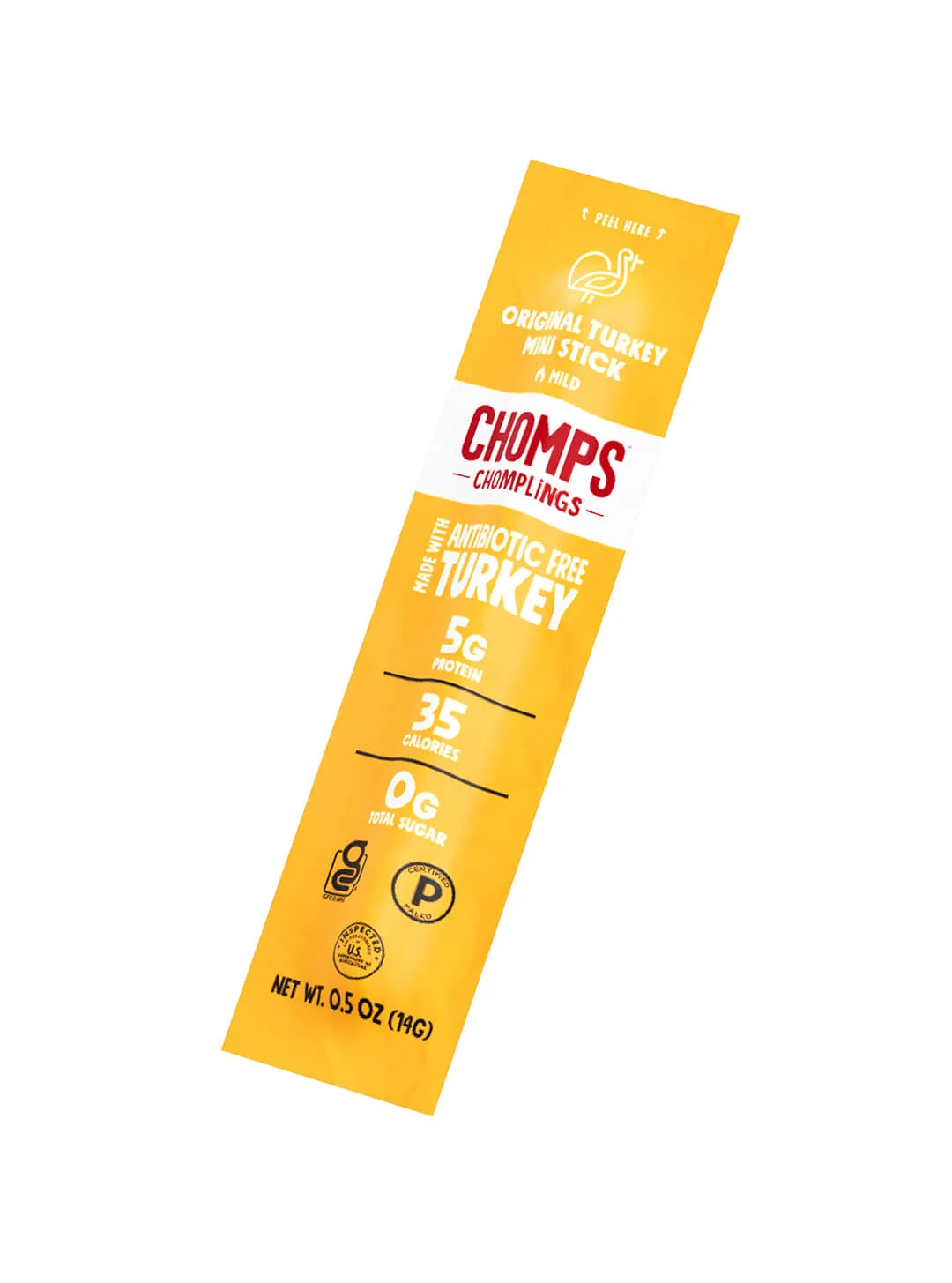
- Original Turkey Chomplings: Original Turkey Chomplings are mini jerky sticks with a slightly smoky, slightly spicy taste. Good for portion control or lunchboxes when you want a smaller stick that still delivers protein.
- Trial Pack: Trial Pack includes one each of Original Beef, Jalapeno Beef, Sea Salt Beef, Taco Seasoned Beef, Smoky BBQ Beef, and Salt & Pepper Venison. Lets you compare protein, sodium, and flavor across six varieties before buying a full box.
- Sea Salt Beef Chomplings: Sea Salt Beef Chomplings are mini sticks made with grass-fed beef, sea salt, and a hint of garlic. A pick for label readers who want a short ingredient list and a mild, savory flavor in a smaller format.
Who this guide is for
Best for
- Shoppers who want a quick, repeatable way to compare snack stick labels in the store
- People building a high-protein snack routine who need 9–10g protein per stick
- Parents or office snackers who want portion-controlled mini sticks with clear ingredient lists
Not for
- Anyone looking for a full meal replacement—snack sticks are a snack, not a complete protein source
- Shoppers who prioritize the lowest price per gram of protein above all else
- People who need certified organic or specific allergen-free certifications not listed on the label