Quick Answer
A quality stitch guide should match your exact canvas, name each stitch, and give you thread guidance you can actually follow. Buy a guide when you want to expand your stitch repertoire or tackle a detailed painted canvas, and skip it when you would rather choose your own stitches. Check that the guide covers your canvas's mesh count and design, and that it includes a clear diagram, thread list, and stitch order.
You have a painted canvas in front of you, and you are deciding whether to buy a stitch guide or stitch it your own way. A good guide can turn a beautiful canvas into a satisfying, well-stitched project. A poor one can leave you more confused than when you started. The difference usually comes down to a few concrete features, not the price tag.
This buying guide walks through what separates a useful stitch guide from a frustrating one. You will learn which features matter for your canvas, how to check fit before you buy, and when a guide is worth the extra cost. Along the way, we will look at how guides pair with real canvases and tools, including a few from our own shop.
What a Stitch Guide Actually Does
A stitch guide is a set of instructions for stitching a specific painted canvas. It tells you which stitch to use in each area, which thread to use, and often the order to stitch in. Unlike a general stitch dictionary, a guide is tied to one design, so it can make decisions for you. That is its main value: you spend less time second-guessing and more time stitching.
The best guides also teach. They explain why a stitch suits a particular area, so you build judgment you can reuse on future canvases. If a guide only lists stitches without reasoning, it still works, but it will not help you grow as a stitcher. Decide which outcome you want before you buy.
- A guide is canvas-specific; a stitch dictionary is general-purpose.
- Look for reasoning, not just stitch names.
- A guide should reduce decisions, not add them.
Features That Separate a Quality Guide from a Weak One
Start with the diagram. A clear, labeled diagram or chart that matches your canvas layout is the single most important feature. If the guide uses photos only, make sure they are large enough to see stitch direction and compensation. Next, check the thread list. A useful guide names specific threads or at least gives fiber type and color guidance, so you can shop with confidence.
Stitch order matters more than many stitchers expect. A guide that tells you what to stitch first, second, and last helps you avoid distorting the canvas and keeps your work clean. Finally, look for notes on compensation, those partial stitches at edges and curves. Guides that skip compensation leave you solving the hardest parts alone.
- Diagram or chart with clear labels
- Thread list with fiber and color guidance
- Stitch order and compensation notes
- Mesh count compatibility stated up front
How to Choose a Stitch Guide for Your Canvas
Match the guide to your exact canvas, not just the designer or theme. Two canvases can share a subject but have different painted details, and a guide written for one may not fit the other. Check the mesh count as well. A guide written for 18 mesh assumes smaller stitches and finer threads than one written for 13 mesh, and the thread list will reflect that.
Consider your skill level honestly. If you are new to decorative stitches, choose a guide that includes diagrams and explains each step. If you already stitch confidently, a guide that focuses on thread selection and color planning may be enough. Either way, read the guide's description for what it covers and what it assumes you already know.
- Confirm the guide covers your exact canvas design.
- Check that mesh count matches your canvas.
- Match guide depth to your current skill level.
When a Guide Is Worth It, and When It Is Not
A guide earns its cost when the canvas has many distinct areas, when you want a cohesive thread plan, or when you are stitching a gift or keepsake and want a polished result. It also pays off when you are learning: a guide that explains its choices is effectively a lesson attached to a project you already love.
Skip the guide when the canvas is simple, when you enjoy improvising, or when you already have a clear plan and a well-stocked thread stash. Guides are also less useful if you plan to change the design or colors significantly, since the guide's thread and stitch choices assume the original artwork.
- Worth it: complex canvases, gifts, skill-building
- Skip it: simple designs, confident improvisers, heavily modified canvases
Pairing Guides with Canvases and Tools
A guide works best when it matches the canvas it was written for. If you are buying a canvas and a guide together, confirm the guide is written for that specific design. You can also buy a canvas that includes a stitch pamphlet, which gives you a starting point without a separate purchase. For example, our 12 Dozen Oysters Tote - Day 12 is an 18 mesh canvas that can be purchased with one of seven stitch pamphlets, so you get guidance built around the design.
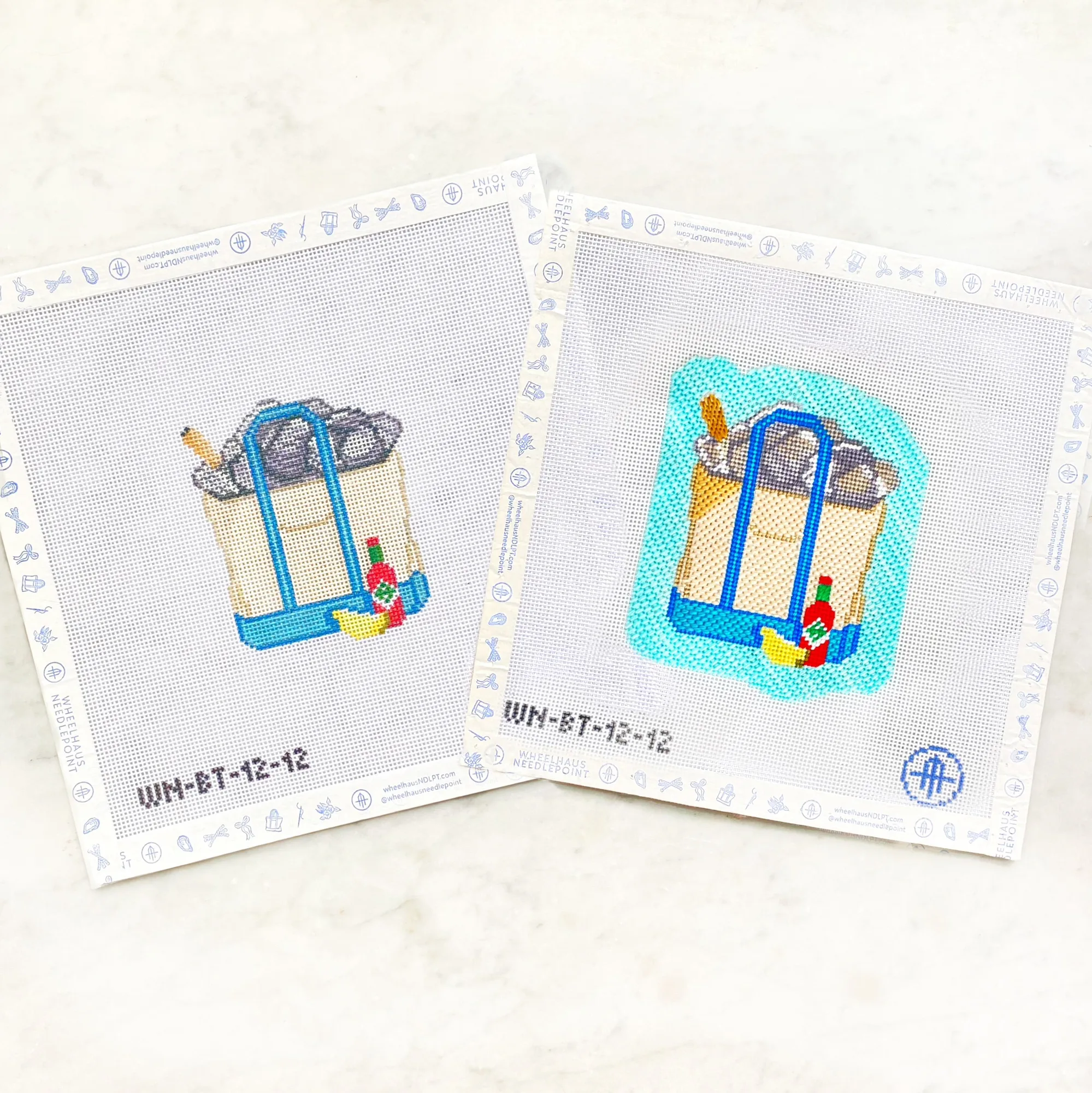
12 Dozen Oysters Tote - Day 12
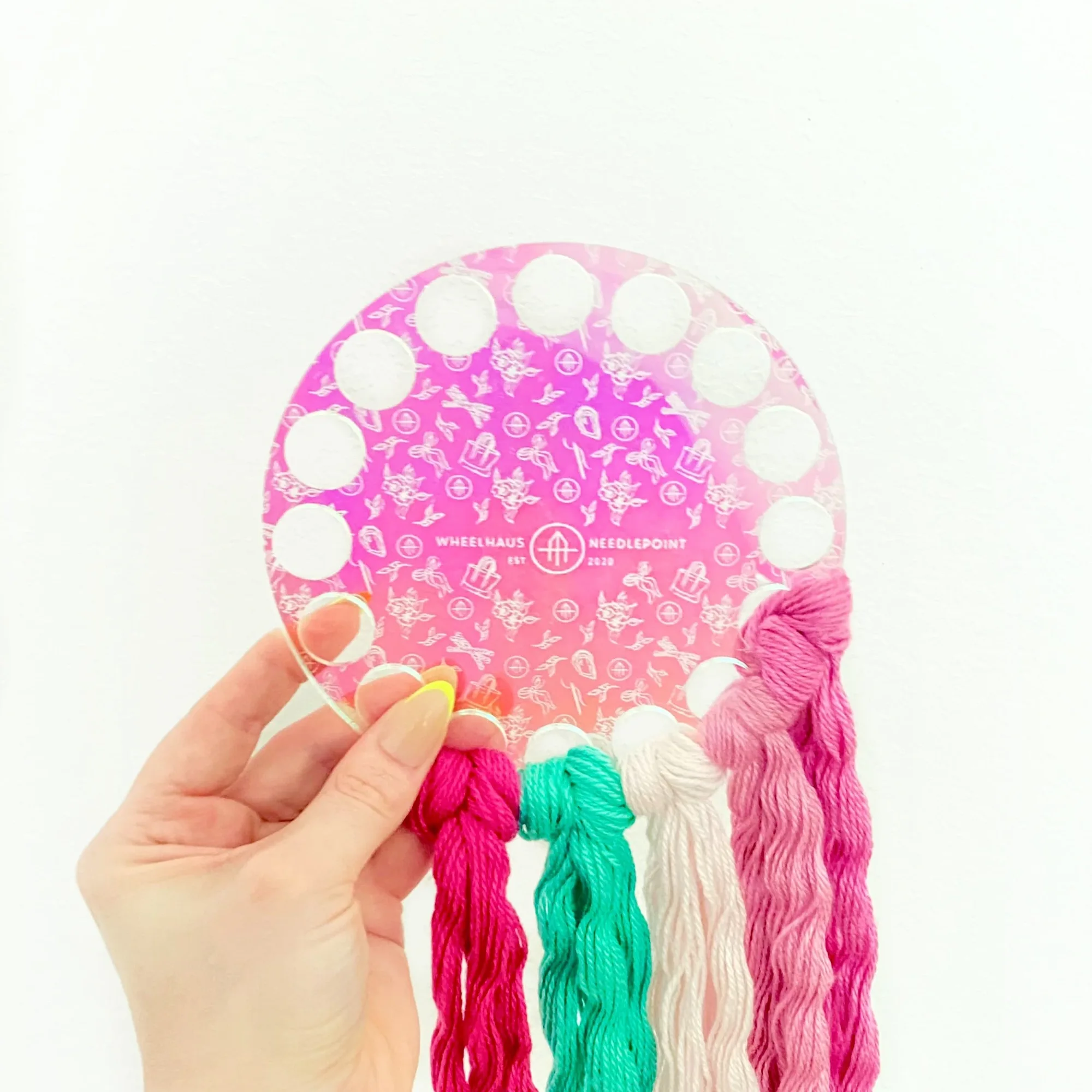
Tools matter too. A needleminder keeps your place and holds your needle when you set the project down, which is especially helpful when following a multi-page guide. Our Crawfish Boil Needle Minder is a small, practical add-on for any guided project. And if you are organizing threads for a guide's thread list, an acrylic fiber organizer keeps full skeins tidy and ready.
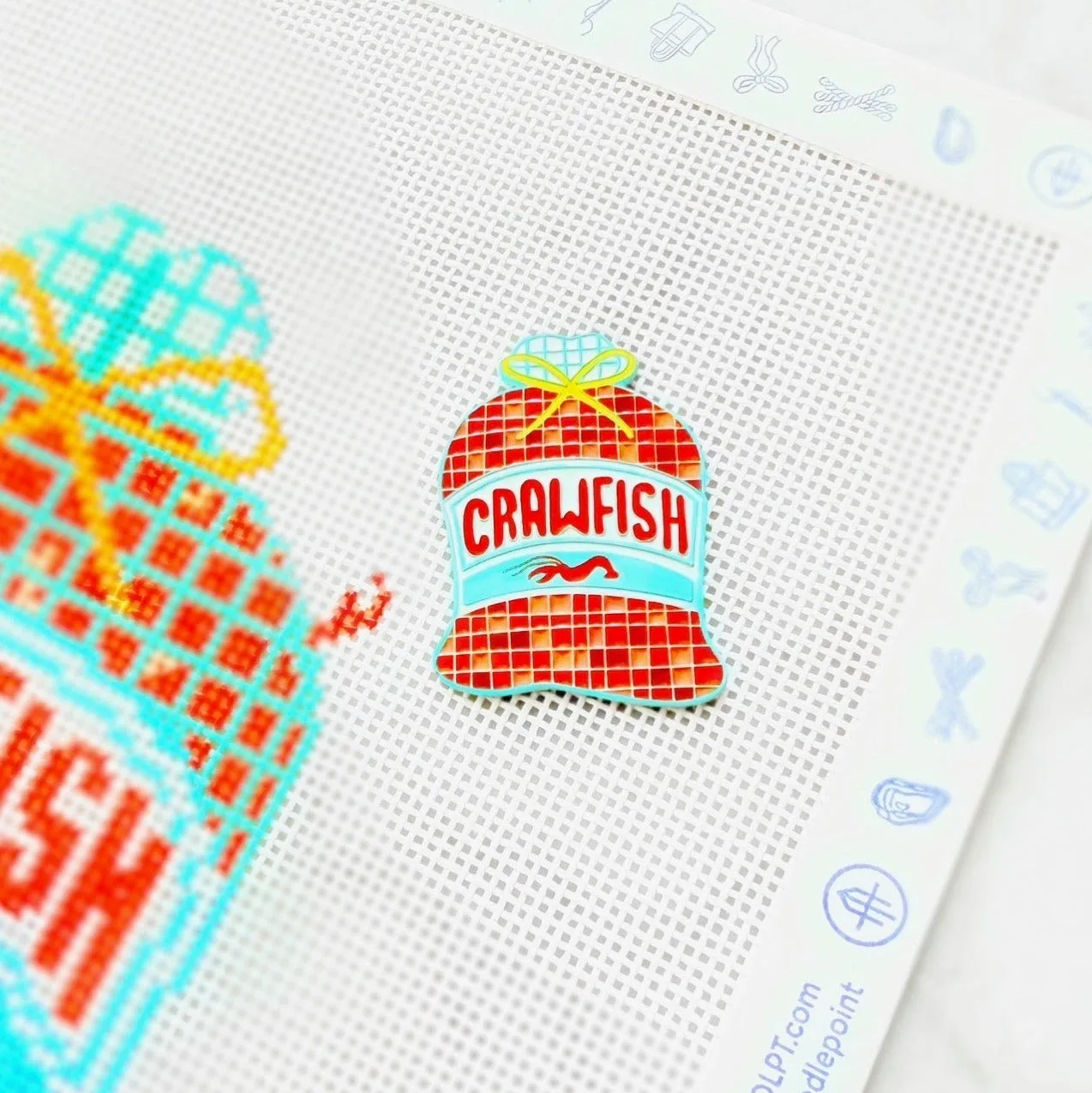
Crawfish Boil Needle Minder
- Confirm the guide is written for your exact canvas.
- Some canvases include a stitch pamphlet option.
- A needleminder and fiber organizer support guided stitching.
Decision Rules for Buying a Stitch Guide
- Match the guide to the exact canvas: Check that the guide names your specific design, not just the designer or theme. Guides are written for one painted layout. If the guide does not name your canvas, keep looking.
- Verify mesh count compatibility: A guide written for 18 mesh assumes finer threads and smaller stitches than one written for 13 mesh. Confirm the mesh count before buying. Mesh mismatch is the most common reason a guide disappoints.
- Check for a diagram, thread list, and stitch order: These three features separate a usable guide from a vague one. Compensation notes are a bonus that saves you the hardest decisions. If any of the three is missing, expect to fill the gap yourself.
- Decide whether you want a guide or a kit: A guide tells you what to buy; a kit supplies it. If sourcing threads is a barrier, a canvas with a thread kit option may serve you better. Choose the format that removes your biggest obstacle.
Product Facts That Matter for Guide Buyers
- 12 Dozen Oysters Tote - Day 12: 18 mesh canvas, design 3.5"W x 3.75"H, available with one of seven stitch pamphlets as a purchase option. The 18 mesh count tells you the guide or pamphlet will assume fine threads and small stitches. The stitch pamphlet option means you can get guidance built for this exact design without buying a separate guide.
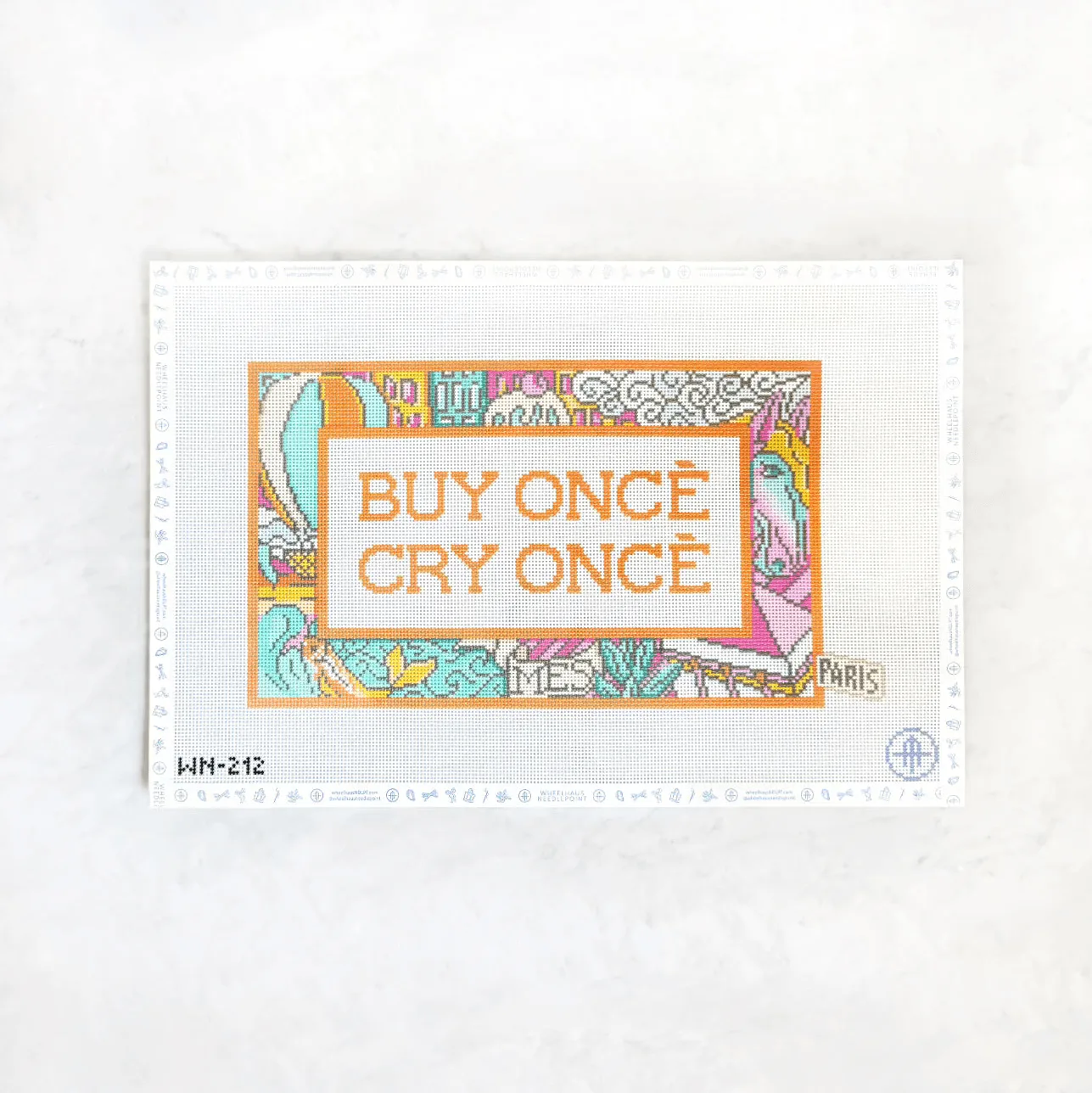
- Buy Once Cry Once: 13 mesh canvas, design 14"W x 8"H, available as canvas only or as a thread kit that includes a curation of silk and wool fibers, a thread ring, a tapestry needle, and a stitch brochure. The larger 13 mesh canvas and included thread kit show how a guide's thread list translates into a real purchase. If you want the guide's thread plan without sourcing fibers yourself, a kit option removes that step.
- Crawfish Boil Needle Minder: Measures approximately 1.5 x 1.5 inches. A needleminder holds your needle and marks your place while you consult a guide, which keeps your thread from wandering and your chart from getting lost.
- Our Story Print Holographic Acrylic Fiber Organizer: Made of durable, non-snagging holographic acrylic with 16 larger holes sized for full skeins and bulky fibers. When a guide calls for multiple threads, an organizer sized for full skeins lets you keep every color labeled and ready instead of setting aside half skeins.
Who Should Buy a Stitch Guide
Best for
- Stitchers tackling a detailed painted canvas with many distinct areas
- Anyone who wants a cohesive thread and color plan without designing it themselves
- Stitchers who want to learn new stitches on a project they already love
Not for
- Stitchers working a simple canvas with few color or stitch decisions
- Confident stitchers who prefer to improvise their own stitch and thread choices
- Anyone planning to significantly change the canvas colors or design
A stitch guide is worth buying when it matches your exact canvas, states its mesh count, and gives you a diagram, thread list, and stitch order you can follow. Check those features first, then decide whether you want guidance alone or a kit that supplies the threads too. With the right guide in hand, your next canvas becomes a project you can start with confidence.