Quick answer
Choose a passport cover that fits your passport's exact dimensions with a little room to spare, closes securely, and adds less bulk than you think. Prioritize fit and closure first, then decide whether you want RFID shielding, leather, or a lighter synthetic finish. If you carry a passport plus cards and a boarding pass, a slim cover with an interior slip pocket will serve you better than a thick wallet-style holder.
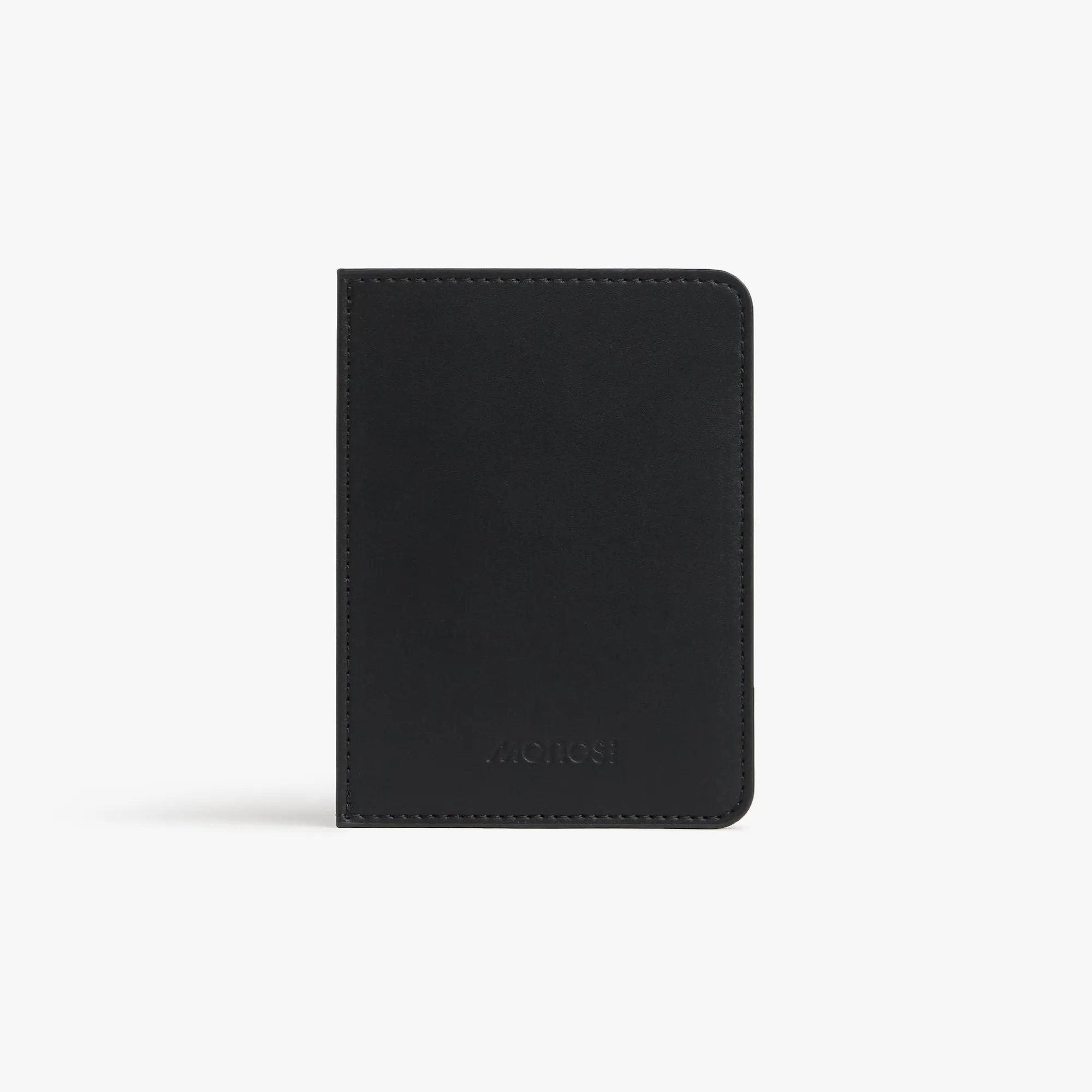
passport cover
A passport cover is one of those small purchases that can either simplify your travel day or add friction every time you reach for your passport. The wrong one is too tight, too bulky, or falls open in your bag. The right one protects the cover, keeps your documents together, and slides into the same pocket you already use.
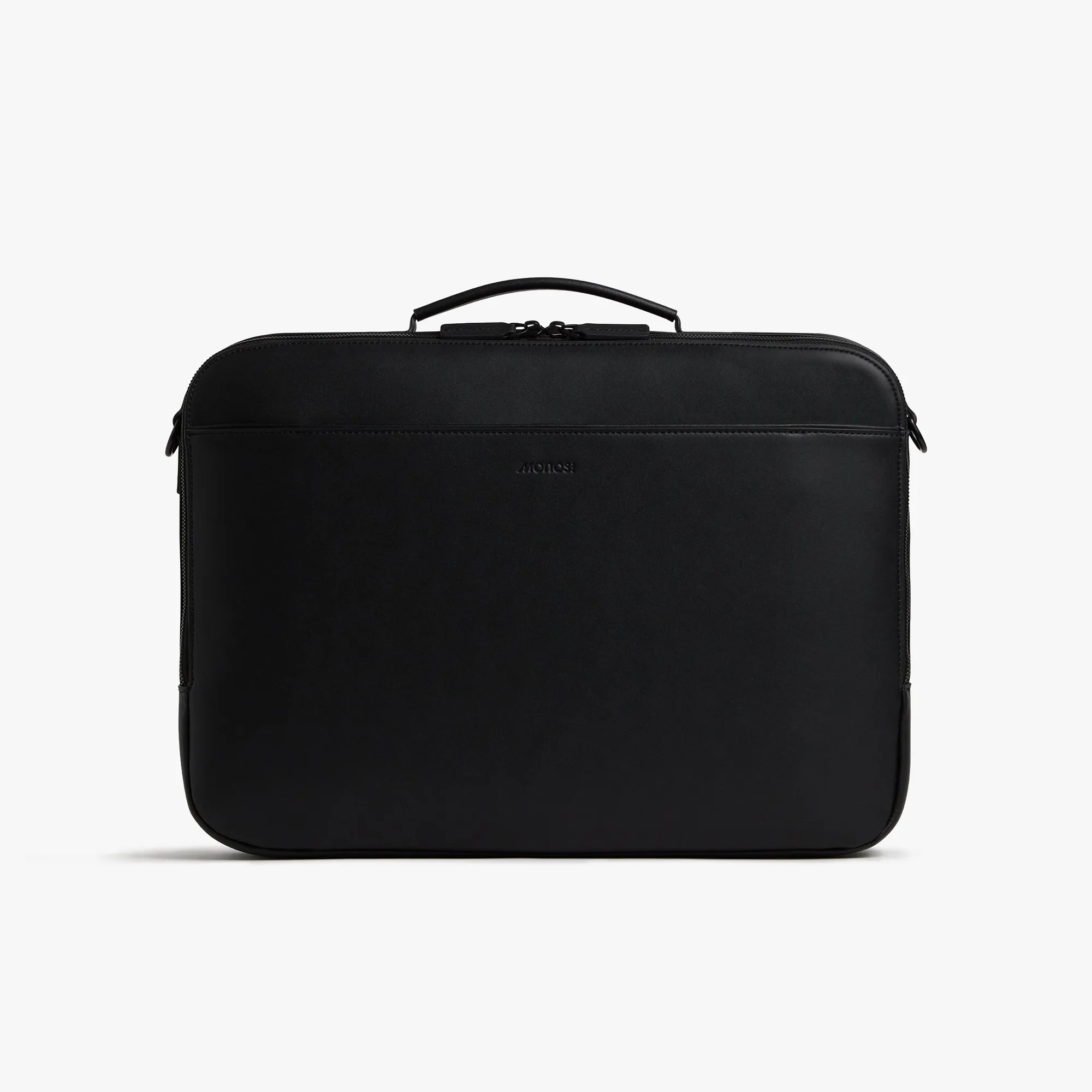
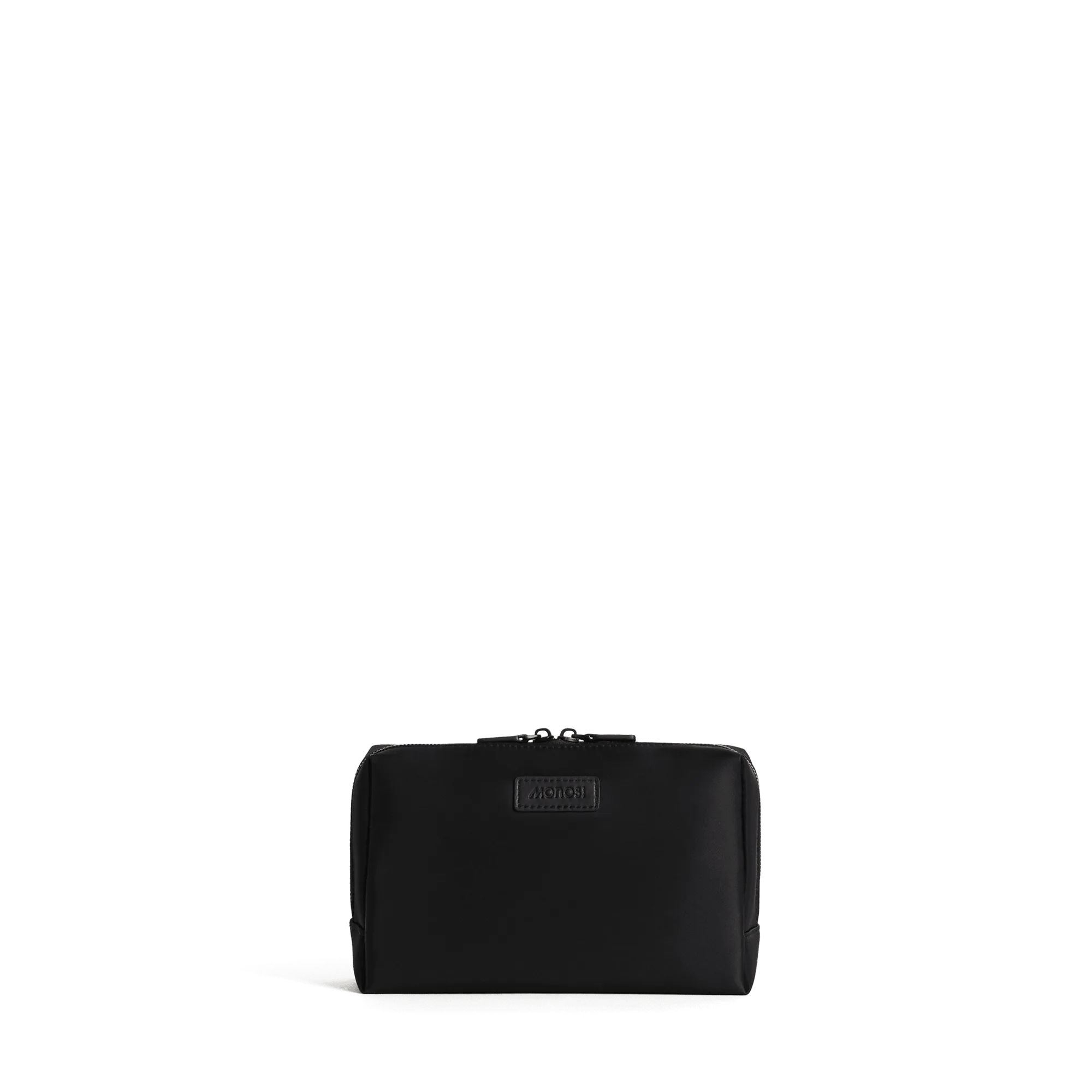
This guide walks through the features that actually matter when you are deciding how to choose a passport cover: fit, closure, material, RFID shielding, and how it interacts with the rest of your carry. You will also see how two Monos travel pieces, the Metro Toiletry Case and Metro Briefcase, approach organization so you can judge whether a cover belongs in your setup at all.
Fit comes before everything else
Passport dimensions vary by country, and even within one country they can shift slightly between editions. Before you buy, measure your closed passport and compare it to the cover's stated internal dimensions. A cover that is too tight stresses the binding and makes the passport hard to remove; one that is too loose lets the passport slide around and pick up edge wear.
Look for a cover that holds the passport snugly with roughly a few millimeters of clearance on each side. If the listing does not give internal dimensions, treat that as a limitation and consider a different option rather than guessing. A cover that fits well will feel secure in hand and still let you pull the passport out without wrestling it.
- Measure your closed passport before shopping, not after.
- Prefer a cover with stated internal dimensions over one that only lists a generic size.
- Test removal: you should be able to slide the passport out with one hand.
Closure and access: how you will actually use it
Most passport covers close with a fold, a snap, an elastic band, or a zipper. A simple fold or elastic keeps the profile thin and is easy to open at a counter. A snap or magnetic closure feels more deliberate but can add a little bulk. Zippered covers keep everything enclosed but take longer to open and can be fussy in a security line.
Think about where you will open it most: at a check-in desk, a border counter, or in a car. If you frequently need one-handed access, a slim fold or elastic closure is usually the least frustrating. If you want the cover to double as a small document holder, a closure that stays shut on its own matters more than speed.
- Elastic or fold closures are fastest for frequent access.
- Snap and magnetic closures stay closed but add a little thickness.
- Zippered covers protect best but slow you down at counters.
Materials: leather, vegan leather, and synthetic finishes
Leather passport covers age well and develop a patina, but they can be heavier and need occasional conditioning. Vegan leather and coated synthetic finishes are often lighter, water-resistant, and easier to wipe clean, which matters if you travel in humid or rainy conditions. Neither choice is automatically better; it depends on whether you value longevity and feel or low maintenance and weight.
If you choose a leather passport cover, check whether the interior is lined. An unlined leather interior can transfer dye or feel rough against the passport page edges over time. A soft lining, such as cotton twill, reduces friction and helps the cover hold its shape.
- Leather: best for feel and aging, but heavier and needs care.
- Vegan leather and coated synthetics: lighter, easier to clean, often water-resistant.
- Check for a soft interior lining to protect the passport edges.
RFID shielding: useful, but understand the limits
An RFID passport holder blocks radio-frequency signals to the chip inside a biometric passport. That can reduce the chance of someone reading the chip without your knowledge in a crowd. It does not protect against physical theft, and it does not shield a passport that is removed from the cover. Treat RFID as one layer, not a complete security solution.
If you carry contactless cards alongside your passport, an RFID-blocking cover can also reduce accidental reads from those cards. The trade-off is that some RFID covers are slightly thicker because of the shielding layer. If you want the thinnest possible cover and you are not worried about electronic reads, a non-RFID cover is a reasonable choice.
- RFID shielding blocks chip reads but not physical theft.
- It only works while the passport is inside the cover.
- Expect a small thickness penalty for the shielding layer.
Size and bulk: matching the cover to your carry
A passport cover should fit the pocket or pouch where you already keep your passport. If you carry a sling, a jacket pocket, or a small crossbody, measure that space before buying. A cover that is a few millimeters too wide can turn a smooth pocket into a tight squeeze. Passport cover size is not just about the passport; it is about the whole carry system.
If you also carry a toiletry case or a briefcase, think about how the cover sits against other items. A flat cover slides into a laptop compartment or an interior slip pocket without adding a lump. A bulky wallet-style cover competes for space with chargers, cables, and pouches. In most travel setups, flatter is easier.
- Measure the pocket or pouch you plan to use, not just the passport.
- Flat covers slide into laptop sleeves and interior pockets more easily.
- Wallet-style covers take up space that could go to cables or a charger.
Decision rules for buying a passport cover
- If your passport must come out fast: Choose a slim fold or elastic closure with a snug fit and no extra pockets. Speed at the counter matters more than storage. Prioritize access over capacity.
- If you carry cards and a boarding pass too: Choose a cover with at least one interior slip pocket and a closure that stays shut. Keep it flat rather than wallet-style so it still slides into a pocket. One or two pockets is the sweet spot; more adds bulk.
- If you want the lowest maintenance: Choose a water-resistant vegan leather or coated synthetic finish with a soft lining. Wipe it clean instead of conditioning it. Match the material to your climate and cleaning habits.
- If you are unsure about RFID: Decide based on whether you carry contactless cards and how much thickness you can tolerate. RFID shielding is a layer, not a replacement for keeping the passport secure. Skip RFID only if thinness matters more than chip blocking.
- If the listing does not state internal dimensions: Treat that as a real limitation. Without internal measurements you cannot confirm fit, and a cover that is too tight or too loose defeats the purpose. No dimensions, no purchase.
Monos pieces that show how organization works in practice
- Metro Toiletry Case: The Metro Toiletry Case has an interior zippered pocket and a slip pocket, and the Large size adds an exterior pocket with a magnetic snap. If you already organize small items in dedicated pockets, a flat passport cover fits that same habit: one defined place for one document, rather than loose in a bag.
- Metro Briefcase: The Metro Briefcase is made with water and scratch resistant ultra-microfibre vegan leather and is lined with a soft cotton twill fabric, with a top grab handle and a removable strap. It shows the same material trade-off you face with a passport cover: a coated vegan leather exterior for easy cleaning and a soft lining to reduce friction on what is inside.
Who a passport cover is for, and who should skip it
Best for
- Frequent travelers who want one defined place for a passport, cards, and a boarding pass
- Anyone whose passport cover is showing wear and wants to protect the original binding
- Travelers who carry contactless cards and want an RFID-blocking layer
Not for
- Minimalists who want the absolute smallest carry and do not need extra pockets
- Travelers who prefer to keep the passport loose in a dedicated pouch or organizer
- Anyone who cannot confirm the cover's internal dimensions before buying
Start with fit and closure, then choose material and RFID based on how you actually travel. A passport cover should make your documents easier to reach and harder to damage, not add a step to every counter visit. Measure your passport, measure your pocket, and pick the flattest cover that still does what you need.