Quick Answer
Focus on ease of threading, stitch versatility, and differential feed. For most beginners, a model with air threading—like the Bernette B62 AIRLOCK—reduces frustration and speeds up learning.
Why Threading Matters Most for Beginners
Sergers have multiple loopers and needles, making manual threading a common pain point. Air threading uses a burst of air to guide the thread through the looper, turning a fiddly task into a one-step process. This feature alone can save you 10–15 minutes per setup and reduce skipped stitches from incorrect threading.
The trade-off: air threading models cost more upfront. If your budget is tight, a manual-thread serger is still workable—but expect a steeper learning curve and more patience during setup.
Stitch Options: Coverstitch vs. Overlock Only
Not all sergers are the same. A basic overlocker trims, sews, and finishes edges in one pass. A combo machine that also does coverstitches and chainstitches lets you hem knits professionally and sew decorative topstitching. The Bernette B62 AIRLOCK, for example, offers 4 coverstitches and 3 chainstitches, making it versatile for stretchy fabrics and garment finishing.
If you sew mostly woven fabrics and simple hems, an overlock-only serger may be enough. If you plan to make T-shirts, activewear, or children's clothes, a combo machine pays off over time.
Differential Feed: Not Optional for Knits
Differential feed controls how fast the front and rear feed dogs move fabric through the machine. It prevents wavy seams on stretchy knits and puckering on lightweight wovens. Nearly every modern serger includes this, but check that the adjustment is easy to reach and clearly marked.
Without differential feed, you'll struggle with fabrics that stretch or slip. For a first serger, this feature is a must-have, not a nice-to-have.
Your First Serger Decision Rules
- Threading ease: Choose air threading if you value speed and hate re-threading. Accept manual threading only if budget is the top concern and you're willing to practice. Watch a threading video of any model you're considering before buying.
- Stitch versatility: If you sew knits or plan to hem garments, get a machine with coverstitch capability. For straight edge finishing only, an overlocker is sufficient. List the three fabric types you sew most often, then match stitch options to those fabrics.
- Differential feed: Always verify the machine has differential feed. It prevents wavy seams on stretch fabric and puckers on thin fabric. No exceptions for a first serger. Test the differential feed dial at the store—it should feel smooth and have clear markings.
Serger Features in Practice
-
Bernette B62 serger AIRLOCK overlocker: The Bernette B62 AIRLOCK has automatic air threading for the looper, 4 coverstitches, and 3 chainstitches. Air threading removes the biggest frustration for new serger users, while the stitch variety lets you finish knits and wovens in one machine.
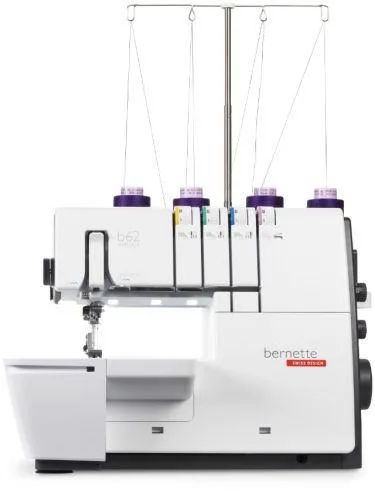
Bernette B62 serger AIRLOCK overlocker
Which Serger Fits You?
Best for
- Sewists who want to avoid threading frustration and learn quickly
- Home sewers making garments from knits and stretch fabrics
- Anyone planning to hem T-shirts, leggings, or children's clothes
Not ideal for
- Strict budget shoppers who can accept a manual-thread learning curve
- Sewists who only finish seams on woven fabrics and never use coverstitch