Quick Answer
Choose a peg puzzle with extra-thick wooden pieces, jumbo pegs, and a small piece count (4–8) that matches your child's age and grip strength.
Why Thick Pieces and Jumbo Pegs Matter
Extra-thick wooden pieces are easier for small hands to pick up and less likely to bend or break. They also sit higher above the puzzle board, which helps toddlers see the shape and match it to the cutout.
Jumbo pegs are sized for a toddler's fist, so a child who hasn't yet mastered a pincer grip can still grab and lift the piece. That makes the puzzle more satisfying and less frustrating for early learners.
Piece Count and Age Fit
A 4-piece puzzle is usually the right starting point for a 1-year-old, while an 8-piece puzzle suits a 2- or 3-year-old who has already done simpler puzzles. Choosing a count that's too high can lead to frustration; too low may not hold their interest for long.
If you're buying for a 1-year-old, look for a puzzle with large, distinct shapes and a mirror or other engaging detail to keep their attention. For an older toddler, more shapes and a slightly higher piece count offer a better challenge.
Shape Variety and Learning Value
Puzzles that include a mix of shapes—circle, square, triangle, and more—help toddlers practice shape recognition and matching. Bright colors and bold outlines make it easier to see the differences between pieces.
Some peg puzzles add a playful element like a mirror or familiar characters. That can boost engagement, especially for younger toddlers who are still building their puzzle stamina.
Decision Rules for Choosing a Peg Puzzle
- Age 1: Start with 4 pieces: Look for a 4-piece puzzle with extra-thick pieces and jumbo pegs. A mirror or familiar characters can help hold attention. Check that the pegs are truly jumbo—about the size of a toddler's fist—so your child can grab them without help.
- Age 2–3: Move to 8 pieces: Choose an 8-piece puzzle with a variety of shapes and bold outlines. This adds challenge while still being manageable. Confirm the pieces are extra-thick so they're easy to lift and durable enough for repeated play.
- Check the peg design: Jumbo pegs or knobs should be easy to grasp and securely attached. Avoid puzzles with small or slippery pegs that are hard to hold. Test the peg grip yourself: if you can't grab it easily, your toddler probably can't either.
- Match piece count to skill level: If your toddler is new to puzzles, start with 4 pieces. If they've mastered that, move to 8 pieces for a next step. Watch for signs of frustration: if your child loses interest quickly, drop back to a simpler puzzle.
Peg Puzzles to Consider
-
Ms. Rachel™ Wooden Peek-a-Boo Jumbo Peg Puzzle – 4 Pieces: This 4-piece peg puzzle features extra-thick wooden pieces, jumbo pegs, and a child-safe mirror. The mirror and familiar characters keep a 1-year-old engaged while the jumbo pegs make it easy to grasp.
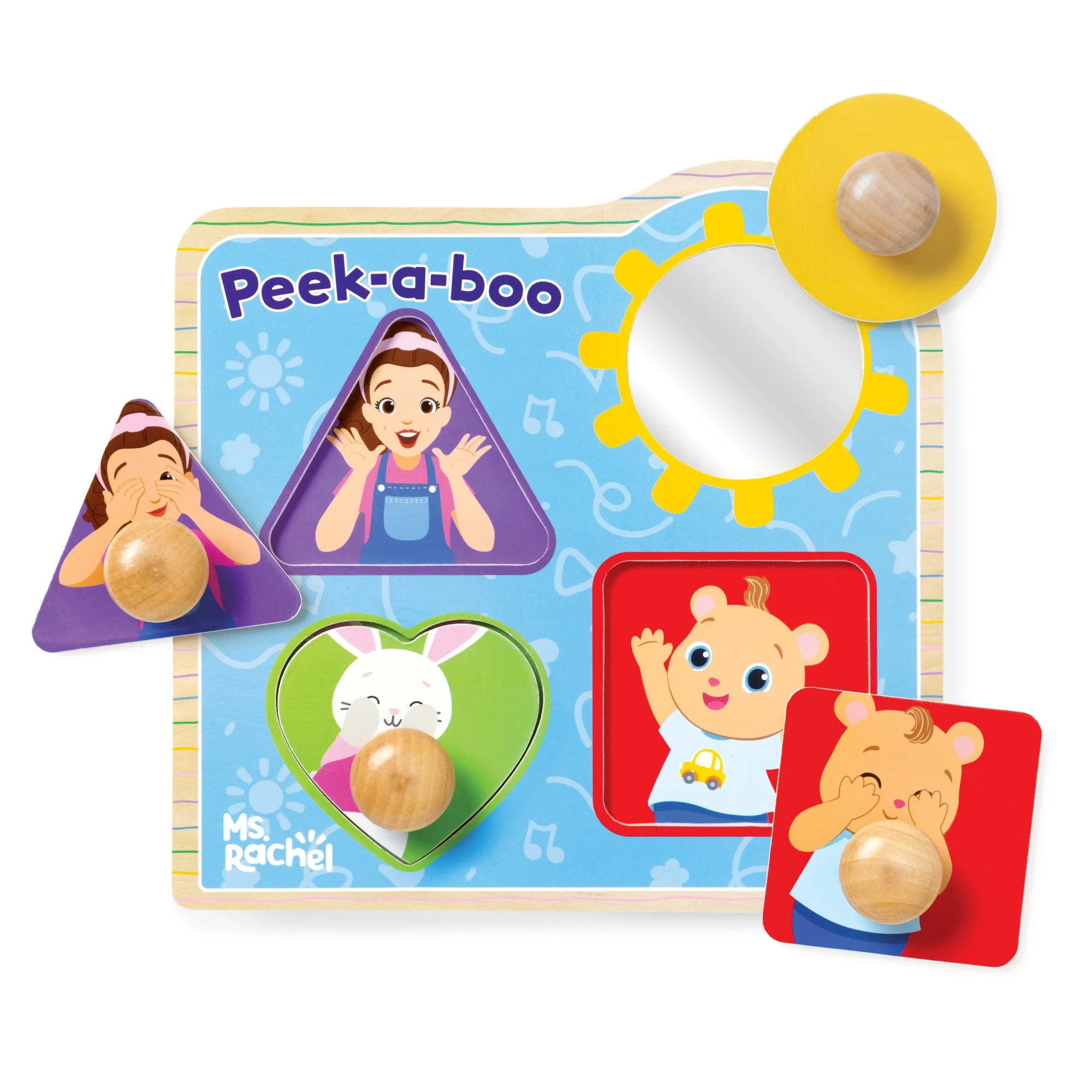
Ms. Rachel™ Wooden Peek-a-Boo Jumbo Peg Puzzle – 4 Pieces
-
Geometric Shapes Deluxe Jumbo Peg Puzzle - 8 Pieces: This 8-piece puzzle includes eight shapes (circle, square, rectangle, octagon, triangle, diamond, oval, pentagon) with bold outlines and jumbo knobs. The variety of shapes and higher piece count give an older toddler more challenge while the jumbo knobs remain easy to grip.
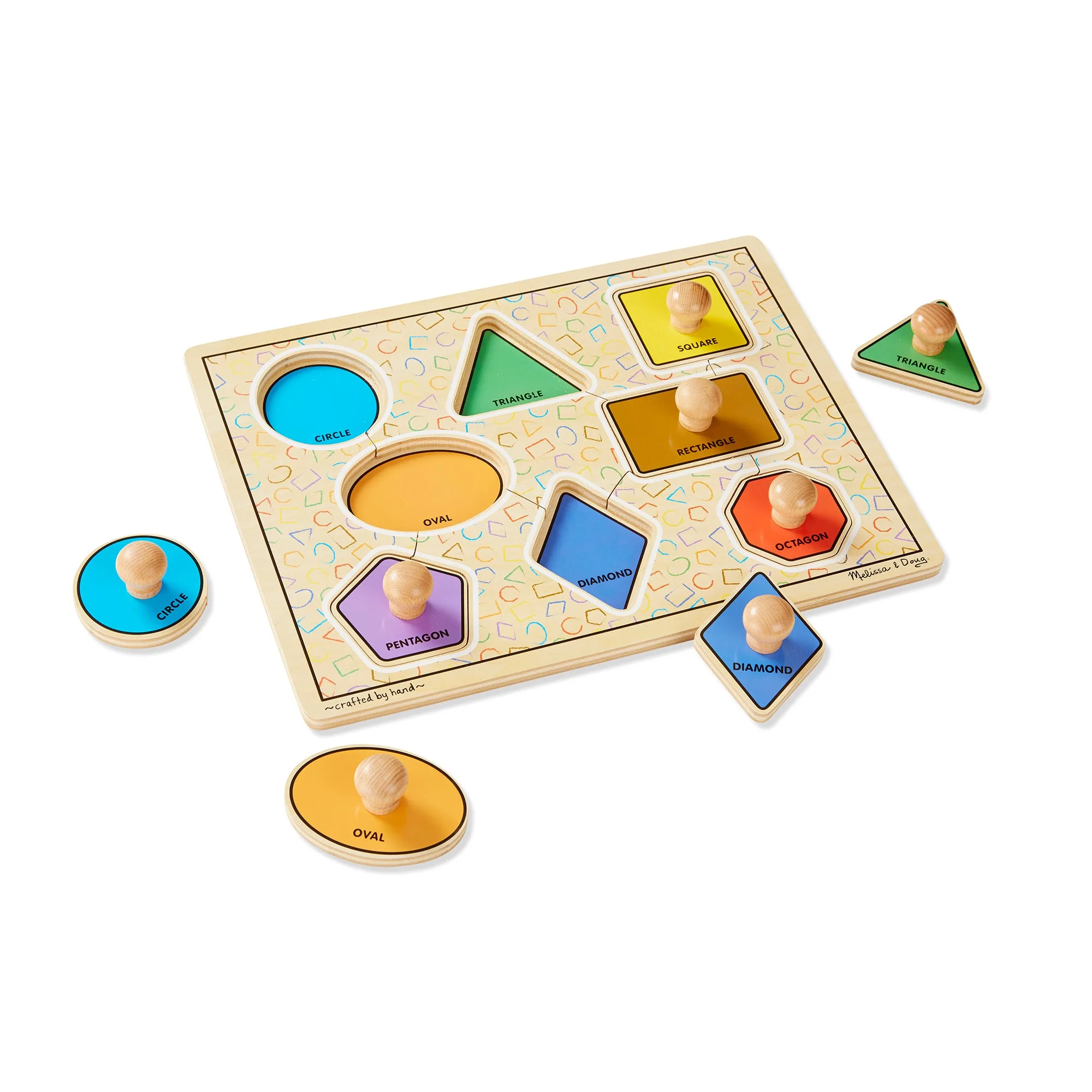
Geometric Shapes Deluxe Jumbo Peg Puzzle - 8 Pieces
Who Should Choose Which Puzzle
Best for
- A 1-year-old who is just starting with puzzles and needs a simple, engaging first peg puzzle
- A 2- to 3-year-old who has mastered 4-piece puzzles and is ready for more shape variety and an 8-piece challenge
Not for
- A toddler who is already solving 12+ piece puzzles and needs a higher difficulty level
- A child who still mouths toys heavily—wooden pieces with small parts could be a choking risk