Quick Answer
Focus on sensor condition, cooling system health, and full compatibility with your gear. A used camera like the QHY268C can be a great value if you verify these points.
Sensor Health Matters Most
The sensor is the heart of any astronomy camera. On a used model, check for dead pixels, hot pixels, and amp glow. Most sellers will provide a dark frame or flat frame sample; if not, ask for one. A few hot pixels are normal and can be mapped out, but clusters or persistent amp glow indicate wear or damage.
For CMOS cameras like the QHY268C, back-illuminated sensors offer high sensitivity, but they can also show microlens artifacts if mishandled. Ask about the camera's storage history—exposure to humidity or extreme temperatures can degrade the sensor over time.
Cooling System Condition
Cooling is critical for reducing thermal noise in long exposures. On a used camera, test that the TEC cooler reaches its rated delta (e.g., 35-40°C below ambient) and holds it steadily. Listen for fan noise or vibration, which can ruin guiding. If the camera has a sealed chamber, check for condensation or fogging on the window.
Some older CCD cameras use Peltier coolers that degrade with age. If the seller cannot confirm the cooler's performance, budget for a potential replacement or look for a camera with a well-documented history.
Compatibility and Accessories
A used camera may come without original accessories like the USB cable, power supply, or T-ring. Verify that the camera uses a standard connection (e.g., USB 3.0, 12V DC) and that drivers are still available for your operating system. Some older CCD models require proprietary software or 32-bit drivers that may not work on modern systems.
Also confirm the optical back focus and thread size (e.g., M42 or M48) to ensure it fits your telescope or reducer. The QHY268C uses a standard M42 thread, but adapters may be needed for some setups.
Decision Rules for Buying a Used Astronomy Camera
- 1. Inspect the Sensor: Request a dark frame at the camera's longest exposure and highest gain. Look for hot pixels, dead columns, or amp glow. Acceptable: a few isolated hot pixels. Dealbreaker: widespread defects or bright amp glow.
- 2. Test the Cooling: Ask the seller to run the cooler at max power for 10 minutes and report the temperature delta. If possible, verify that the fan runs smoothly and the chamber stays dry. If the cooler cannot reach at least 30°C below ambient, the camera may have degraded thermal performance.
- 3. Verify Compatibility: Check that the camera's connection type (USB, power), back focus, and thread size match your telescope and computer. Confirm driver availability for your OS.
- 4. Check the Shutter (if applicable): For cameras with a mechanical shutter (common on older CCDs), ask for a test sequence to ensure the shutter opens and closes reliably. A stuck shutter can ruin flats. CMOS cameras like the QHY268C typically lack a shutter, so this step is not needed for them.
- 5. Review the Seller's Return Policy: Buy from a seller who offers a return window (e.g., 14–30 days) so you can test the camera under real sky conditions. Avoid 'as-is' sales unless you are experienced with repairs. A short return period is better than none; use it to capture a full night of data.
Featured Product
-
USED - QHY268C: The QHY268C is a back-illuminated CMOS camera with low readout noise and high-speed readout, ideal for deep-sky imaging. The used unit shows minor cosmetic wear but should not affect use. Back-illuminated sensors capture more light, making the QHY268C a strong choice for faint nebulae and galaxies, even in a used condition.
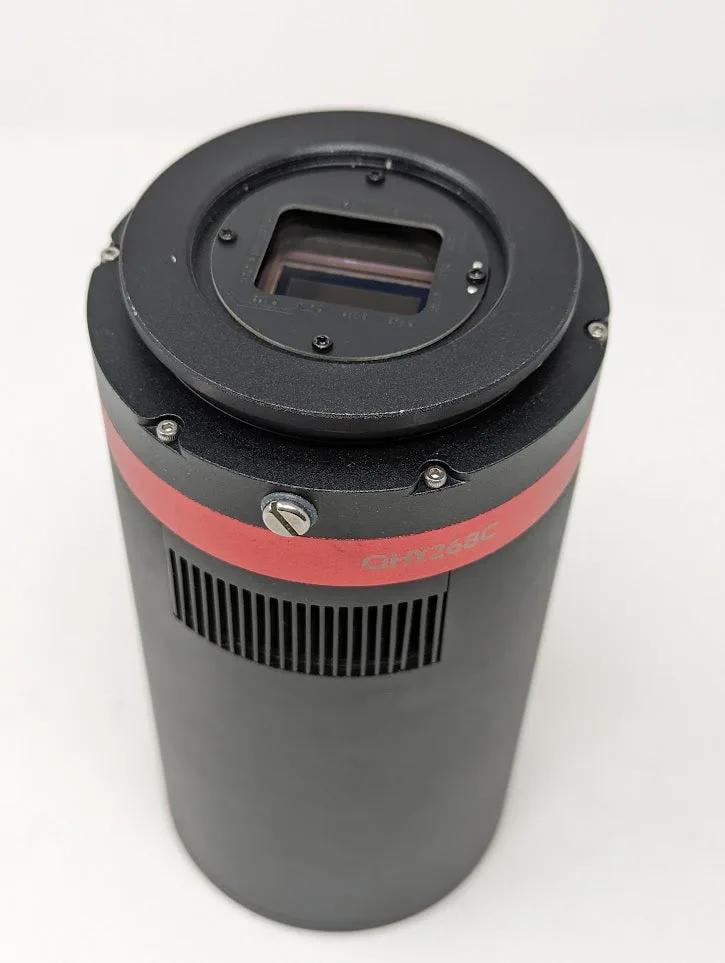
USED - QHY268C
Who Should Buy a Used Astronomy Camera?
Best for
- Astrophotographers on a budget who want a higher-end sensor than they could afford new
- Hobbyists upgrading from a DSLR who are comfortable with basic troubleshooting
- Imagers who already own compatible accessories (filters, adapters, power supplies)
Not for
- Beginners who want a plug-and-play experience with full warranty support
- Users who need the latest sensor technology or low-noise performance at very high gain
- Anyone unable to test the camera within a return window or without technical support from the seller