Quick Answer
Start by matching the bag to your trip length and transport mode: a 40–45L holdall suits two to three nights, while a 60L hybrid duffle backpack covers longer trips or gear-heavy travel. Then check whether you need a shoulder strap, backpack straps, or both, and confirm the material and opening style before you buy. If you fly underseat, prioritize a bag designed to meet underseat airline restrictions rather than a standard duffle.
A weekender bag has to do one job well: carry two to three nights of clothing and essentials without becoming a burden between the car, the train, and the hotel room. That sounds simple, but the category ranges from soft holdalls to hybrid duffle backpacks, and the wrong choice shows up fast on a crowded platform.
This guide walks through the decisions that actually change how a bag performs: capacity, carry system, material, opening style, and the small features that separate a bag you keep for years from one you tolerate for a season. Use the decision rules below to narrow your shortlist before you compare specific products.
Capacity: Match Litres to Trip Length
For a two-night trip, 35–45L is the sweet spot for most people: enough for two outfits, a pair of shoes, a toiletry bag, and a laptop without forcing you to sit on the bag to close it. If you routinely pack for three or more nights, or you carry bulky gear like camera equipment or gym kit, look at 55–60L. The trade-off is weight and bulk — a 60L bag is harder to carry through a crowded train aisle than a 40L holdall.
Don't assume a bigger number is automatically better. A 60L bag that you only half-fill sags and shifts on your shoulder, while a well-packed 40L bag carries more comfortably. If you're between sizes, choose the smaller bag and add packing cubes to compress clothing rather than sizing up.
- 2 nights: 35–45L
- 3+ nights or bulky gear: 55–60L
- If you fly underseat, check the airline's underseat dimensions before trusting a litre figure
Carry System: Shoulder Strap, Backpack Straps, or Both
A single shoulder strap is fine for short walks from a car park to a hotel lobby, but it concentrates weight on one side and gets uncomfortable after about 15 minutes. A padded, adjustable shoulder strap with a removable design gives you the option to switch sides or stow the strap when you check the bag. If you'll walk more than a few blocks, backpack straps distribute weight far better across both shoulders.
Hybrid duffle backpacks give you both options, which is why they suit mixed trips — flying, then hiking, then a city day. The trade-off is that convertible strap systems add a little weight and hardware, and the backpack mode on a large bag can feel bulky if the bag isn't full. Decide honestly how far you'll carry the bag loaded before you pay for a convertible design.
- Car-to-hotel only: single shoulder strap is enough
- Train, bus, or long walks: prioritize backpack straps
- Mixed transport: a hybrid duffle backpack earns its keep
Material and Weather Resistance
Recycled polyester is the common choice for soft weekenders because it's lightweight, packs down, and handles light rain when treated with a water-repellent finish. It won't survive a downpour the way a hard shell will, but for a bag that lives in a car boot or overhead bin, it's a sensible balance of weight and durability. Look for a water-repellent finish rather than assuming all polyester is weatherproof.
If you travel with electronics or camera gear, prioritize water-repellent recycled fabrics and a full side opening so you can see and reach everything without unpacking the whole bag. If your trips are mostly dry and urban, a lighter fabric saves weight. There's no single right answer — just match the material to the weather you actually travel in.
- Light rain and city trips: water-repellent recycled polyester is sufficient
- Heavy rain or checked transport: consider a hard case instead
- Gear-heavy travel: prioritize a full side opening for access
Opening Style and Interior Access
A top-loading duffle makes you dig for items, while a full side opening lays the bag flat like a suitcase and lets you pack in layers. If you repack often — moving between hotels every night, for example — a full side opening saves real time and reduces the chance of leaving something behind. Compression straps inside or outside the bag help keep a partially filled load from shifting.
Interior organization matters more than most buyers expect. A few well-placed pockets for keys, chargers, and a water bottle prevent small items from migrating to the bottom. If the product listing doesn't specify pocket layout, treat that as an unknown and plan to add a packing cube or pouch rather than assuming the bag has the organization you want.
- Frequent repacking: choose a full side opening
- One-bag travel: add packing cubes to create structure
- If pocket details aren't listed, don't assume they exist
Weekender vs Duffle: What's the Real Difference
In practice, the terms overlap. A weekender is usually a soft holdall sized for two to three nights with a clean, less sporty look, while a duffle often implies a more utilitarian shape and sometimes a larger capacity. The distinction matters less than the features: carry system, opening style, and capacity. Don't pay a premium for the label — pay for the strap setup and access you need.
Where the difference does show up is in shape. A structured weekender holds its form when half-empty and looks appropriate for a hotel lobby or a work trip. A softer duffle collapses for storage and squeezes into tight spaces. If you want one bag for both gym and travel, a hybrid duffle backpack covers more ground than a dedicated weekender.
- Hotel or work trips: structured weekender
- Gym plus travel: hybrid duffle backpack
- Storage space is tight: softer, collapsible duffle
Decision Rules for Choosing a Weekender Bag
- Rule 1: Choose capacity by nights, not by looks: Two nights fits in 35–45L; three or more nights, or bulky gear, needs 55–60L. If you're between sizes, take the smaller bag and use packing cubes. Checkpoint: can you close the bag comfortably with two outfits, shoes, and a toiletry bag?
- Rule 2: Match the carry system to your longest walk: Single shoulder strap for car-to-hotel trips; backpack straps for train, bus, or walks over 15 minutes; hybrid duffle backpack for mixed transport. Checkpoint: how far will you carry this bag fully loaded?
- Rule 3: Prioritize a full side opening if you repack often: A full side opening lays the bag flat and saves time on multi-stop trips. Compression helps keep a partially filled bag from shifting. Checkpoint: will you unpack and repack more than twice on the trip?
- Rule 4: Verify underseat fit before you buy: If you fly underseat, look for a bag explicitly designed to meet underseat airline restrictions, and check your specific airline's dimensions. Checkpoint: does the listing state underseat compatibility, or are you assuming it?
- Rule 5: Treat unlisted specs as unknowns: If pocket layout, strap padding, or warranty details aren't in the listing, don't assume they're included. Plan to add a pouch or packing cube instead. Checkpoint: what will you need to buy separately to make this bag work?
Product Facts to Compare
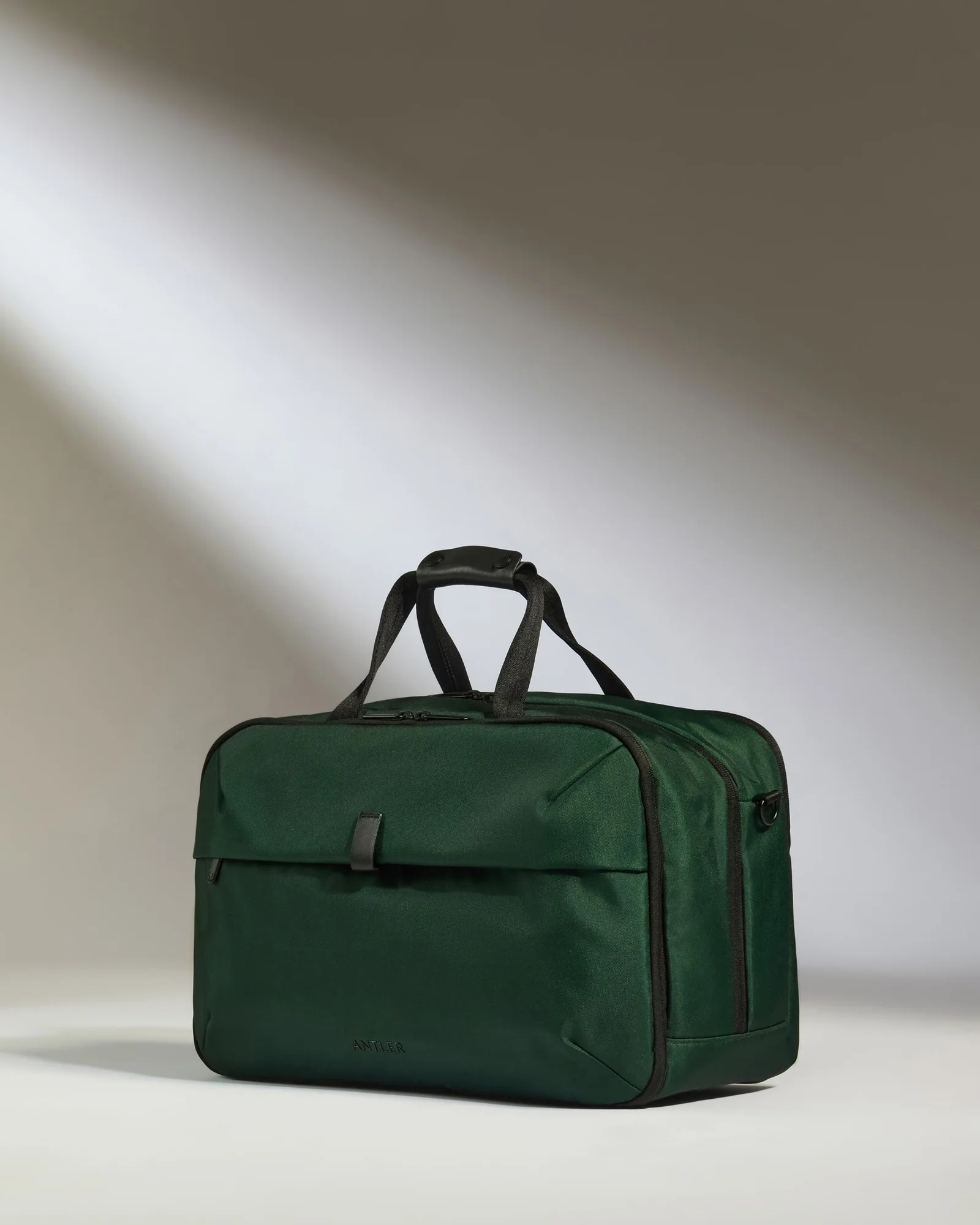
- Overnight Bag in Antler Green - Urban Light: Designed for travellers who need more space while keeping things compact and easy to carry, with a versatile holdall design for short trips and weekend getaways. Made from 100% recycled polyester and designed to meet underseat airline restrictions. This is the underseat-friendly option: if you fly on carriers with strict personal-item limits, the design intent matters more than a generic litre rating.
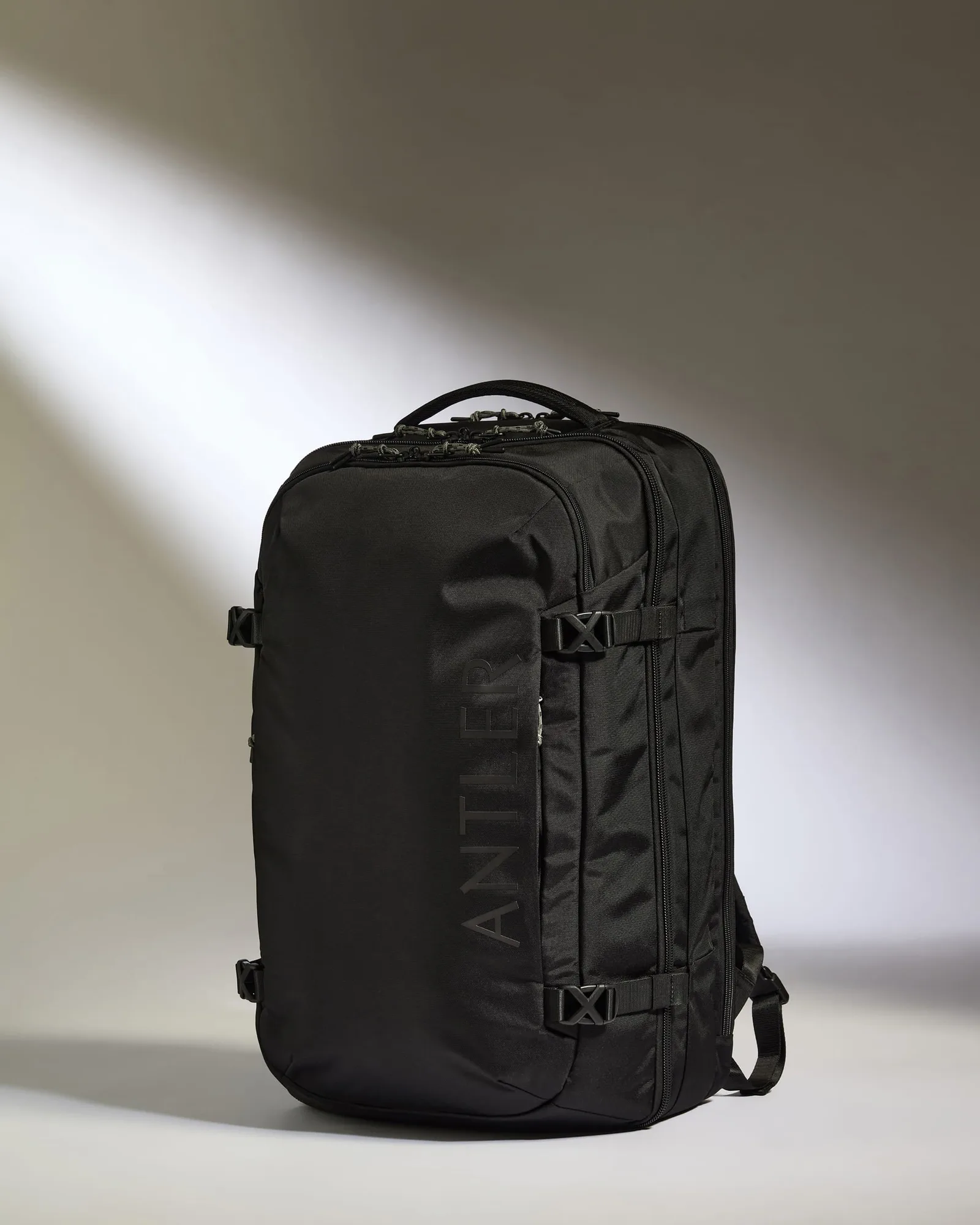
- Discovery 60L Hybrid Duffle Backpack in Black: Made with durable, water-repellent recycled fabrics and matches the capacity of a cabin suitcase in a flexible backpack form, with a full side opening and compression. The 60L capacity and backpack carry suit longer trips or gear-heavy travel where a single shoulder strap would be uncomfortable.
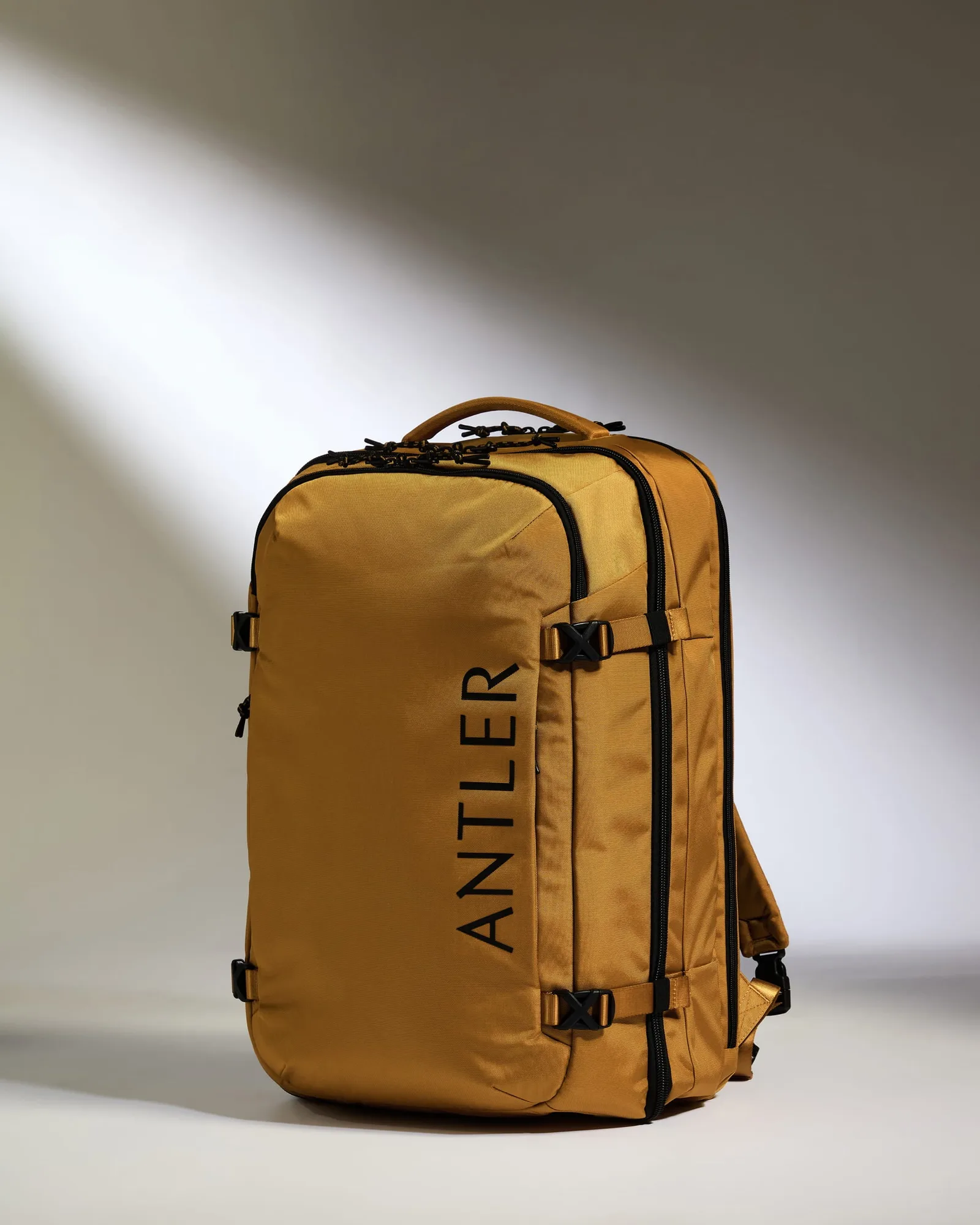
- Discovery 60L Hybrid Duffle Backpack in Mustard Yellow: Adventure-ready and everyday smart, with the packing power of a cabin suitcase and a full side opening with compression, built for hands-free travel. Same capacity and carry system as the black version, so the choice comes down to color preference rather than function.
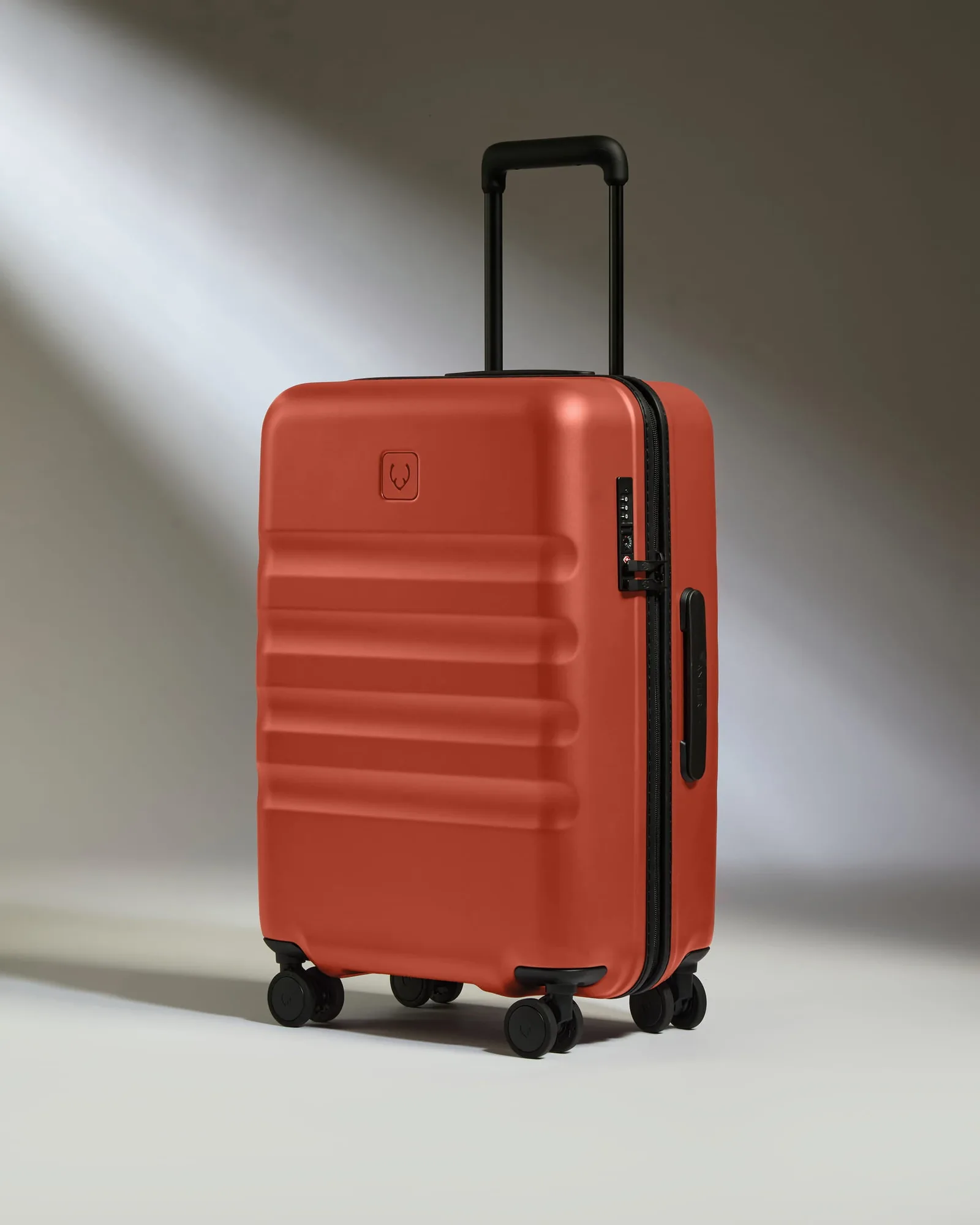
- Large Carry-on Luggage in Buckthorn Red - Icon Stripe: Described as the biggest cabin suitcase, generously sized with carry-on convenience, crafted from recycled polycarbonate with a hardwearing shell. If your weekend trips involve checked-size packing but you still want cabin convenience, a large cabin hard case is the alternative to a soft weekender — with the trade-off of no shoulder or backpack carry.
Who This Bag Type Is For
Best for
- Two- to three-night trips where you want one bag instead of a suitcase
- Travelers who fly underseat and need a bag designed for airline restrictions
- Mixed-transport trips where you'll walk with the bag loaded
- Gear-heavy travel that benefits from a full side opening and backpack straps
Not for
- Trips longer than a week with formal clothing that needs to stay crease-free
- Travelers who check luggage and want maximum protection for fragile items
- Anyone who prefers rolling a case rather than carrying weight on their shoulders
Pick the capacity for your typical trip, the carry system for your longest walk, and the opening style for how often you repack. Those three decisions matter more than brand names or litre counts alone. If you fly underseat, verify the restriction claim before you buy — that single check prevents most weekender bag regrets.