Quick answer
Start with the ingredient list, not the label. A useful immunity tea blend names its base tea or herb and its fruit or botanical additions, so you know what you are actually steeping. Then check caffeine: rooibos and fruit blends are naturally caffeine free, while green tea blends are not. Finally, match the flavor profile to how often you will drink it, because a blend you enjoy daily beats one you save for special occasions.
Immunity teas sit at an awkward intersection: they are sold like supplements but brewed like tea. That makes the buying decision harder than it needs to be. You cannot rely on front-of-pack claims, and you should not expect a tea to replace sleep, food, or medical care. What you can do is read the blend the way you would read any recipe, then decide whether it fits your day.
This guide walks through the practical checks: what belongs in the ingredient list, how caffeine changes when you can drink it, which flavors hold up hot versus iced, and how to brew a cup that actually tastes good. It uses real Tiesta blends as examples so the advice stays concrete rather than abstract.
Read the ingredient list before the health claims
A well-built immunity blend tells you what is inside and in what proportion. Look for a named base, such as rooibos, green tea, or hibiscus, followed by recognizable fruit pieces, spices, or herbs. If the list is mostly "natural flavors" with no whole ingredients, you are buying aroma rather than a blend. Tiesta's Immunity blends, for example, combine rooibos, herbal, and fruit teas, which gives you a mix of vitamins and nutrients rather than a single note.
The second check is whether the blend leans on one hero ingredient or several. A single-ingredient tea like Organic Yerba Maté is flexible because you can steep it alone or add it to another blend. A composed blend like Fireberry already has its flavor and function built in. Neither is better; they solve different problems. Buy single ingredients when you want control, and composed blends when you want convenience.
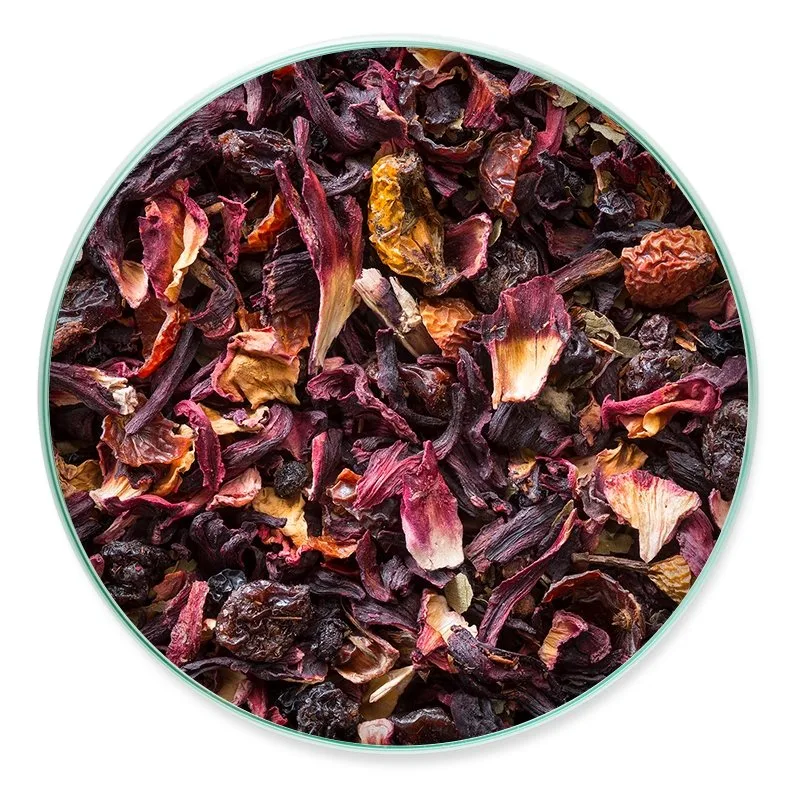
Fireberry
- Scan for whole fruit pieces, petals, or spices, not just flavoring.
- Check whether the base is a true tea (caffeine) or an herb and fruit blend (usually caffeine free).
- If a blend lists an ingredient you dislike, assume you will taste it.
Match caffeine to the time of day you will drink it
Caffeine is the most common reason an immunity tea gets abandoned. A green tea blend is energizing but a poor choice at 9 p.m., while a rooibos or fruit blend works any hour. Pineapple Blues is a blueberry pineapple green tea, so it carries green tea's caffeine and fits a morning or early afternoon slot. Fireberry is a cranberry hibiscus rooibos blend, and rooibos is naturally caffeine free, which makes it an easier evening cup.
If you want one blend to cover the whole day, choose caffeine free and add a separate caffeinated tea when you need it. Organic Yerba Maté is a traditional organic green yerba maté that works as an energy tea on its own or steeped alongside a fruit or herbal blend. That layering approach keeps your immunity blend consistent while letting you adjust lift separately.
- Morning and early afternoon: green tea or yerba maté bases are fair game.
- Evening: choose rooibos, hibiscus, or fruit blends.
- Want one blend for all day? Pick caffeine free and add caffeine only when needed.
Judge flavor by how you will actually drink it
Most people buy an immunity tea intending to drink it daily, then discover they only like it hot, or only iced. Decide the format first. Tart, fruit-forward blends like Fireberry stay bright over ice because cranberry and hibiscus hold their edge when chilled. A green tea blend like Pineapple Blues is smooth and tropical, which reads well either way but can turn bitter if you steep it too long or too hot.
Sweetness matters too. If you usually add honey or sugar, a blend that is already sweet from fruit will need less. If you drink tea plain, a tart blend may be too sharp without a little sweetener. Buy a small size first when you are unsure, then commit to a larger format once you know the flavor works in your routine.
- Iced drinkers: favor hibiscus, berry, and citrus-forward blends.
- Hot drinkers: rooibos and oolong bases stay smooth as they cool.
- Unsure? Start with a sampler or the smallest size available.
Brewing immunity tea without wrecking the flavor
Brewing immunity tea is mostly about restraint. Green tea bases like Pineapple Blues do best with water below a rolling boil and a shorter steep, because green tea turns bitter when it is over-extracted. Rooibos and fruit blends like Fireberry are forgiving and can handle a full boil and a longer steep, which is one reason they are popular as evening cups. When in doubt, under-steep and taste.
For iced tea, brew a concentrate first: steep the leaves in half the water you would normally use, then pour over ice or dilute with cold water. This keeps the flavor strong without watering it down. If you are steeping Organic Yerba Maté alongside another blend, treat the maté as the base and add the fruit or herbal tea for flavor, then adjust the ratio to taste rather than following a fixed recipe.
- Green tea: cooler water, shorter steep, taste early.
- Rooibos and fruit: boiling water, longer steep, hard to overdo.
- Iced: brew a concentrate, then dilute over ice.
Decision rules for choosing an immunity tea blend
- If you drink tea after dinner: Choose a rooibos or fruit-based blend such as Fireberry rather than a green tea blend, because rooibos is naturally caffeine free. Checkpoint: can you drink it at 9 p.m. without regret?
- If you want one blend to do everything: Pick a caffeine-free base and add Organic Yerba Maté only on days you want an energy tea, instead of buying a single caffeinated blend and limiting when you can drink it. Checkpoint: does the blend fit more than one time of day?
- If you mostly drink iced tea: Favor tart, fruit-forward blends and brew a concentrate before diluting over ice; avoid long, hot steeps on green tea bases like Pineapple Blues. Checkpoint: does the flavor survive chilling?
- If you are unsure about the flavor: Buy the smallest size or a sampler first, then move to a larger format once you know you will finish it. Checkpoint: will you actually drink this weekly?
Real blends and what they tell you
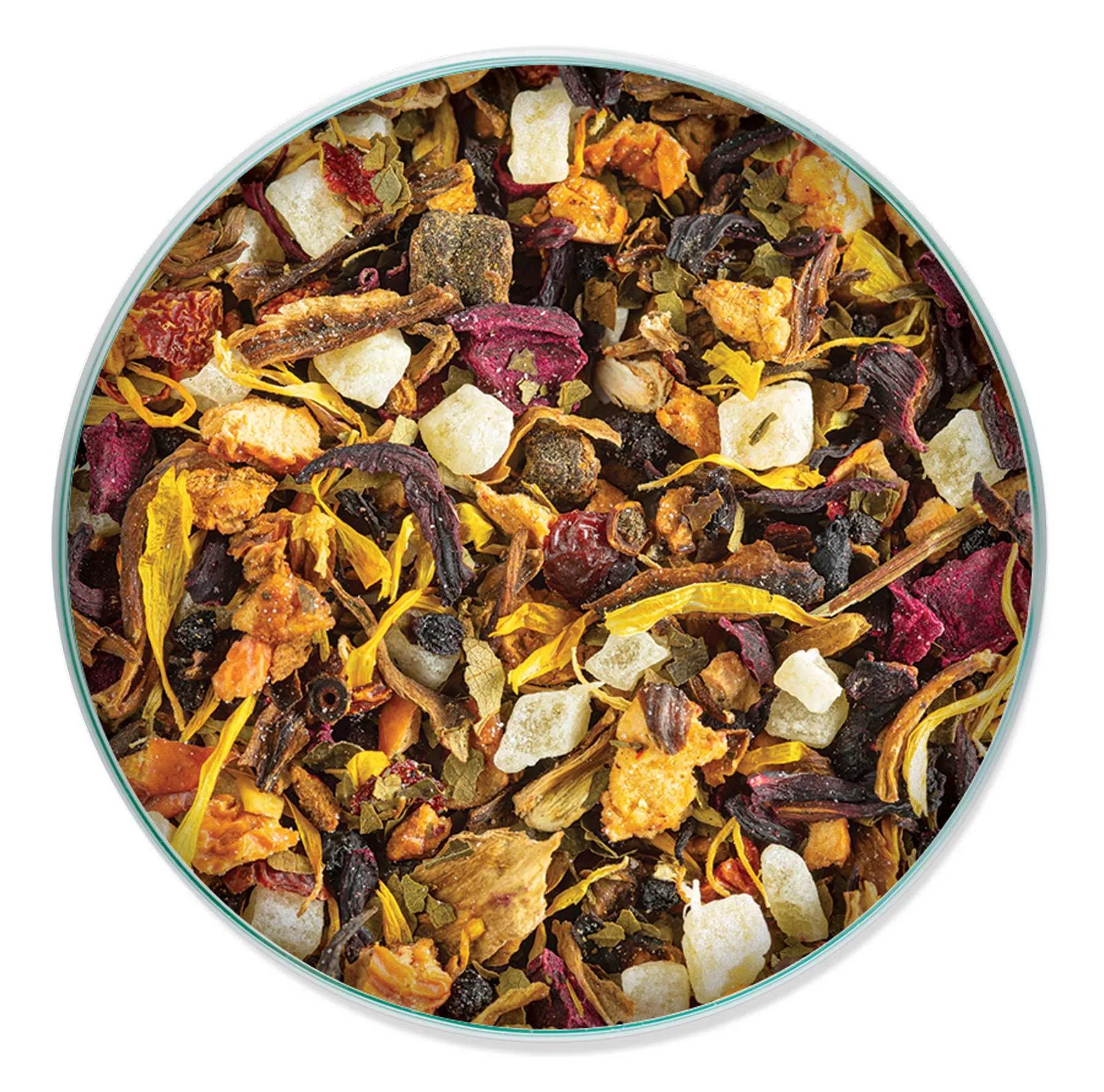
- Fireberry - Wholesale: A cranberry hibiscus rooibos blend described as a little sweet and a little tart, part of an Immunity line that combines rooibos, herbal, and fruit teas. Rooibos is caffeine free, so this is a workable evening cup, and the cranberry-hibiscus profile stays bright when iced.
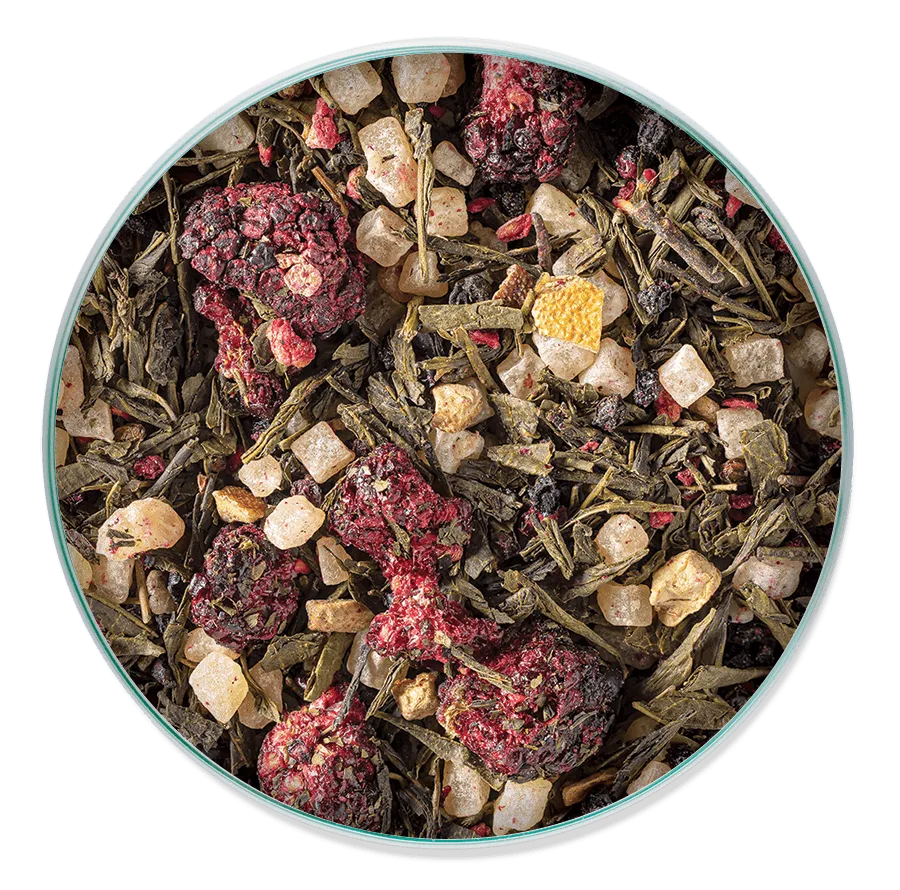
- Pineapple Blues - Wholesale: A blueberry pineapple green tea from the Slenderizer line, where blends contain green teas. Because the base is green tea, it carries caffeine and needs a cooler, shorter steep than a rooibos blend; it suits a morning slot rather than a late-night one.
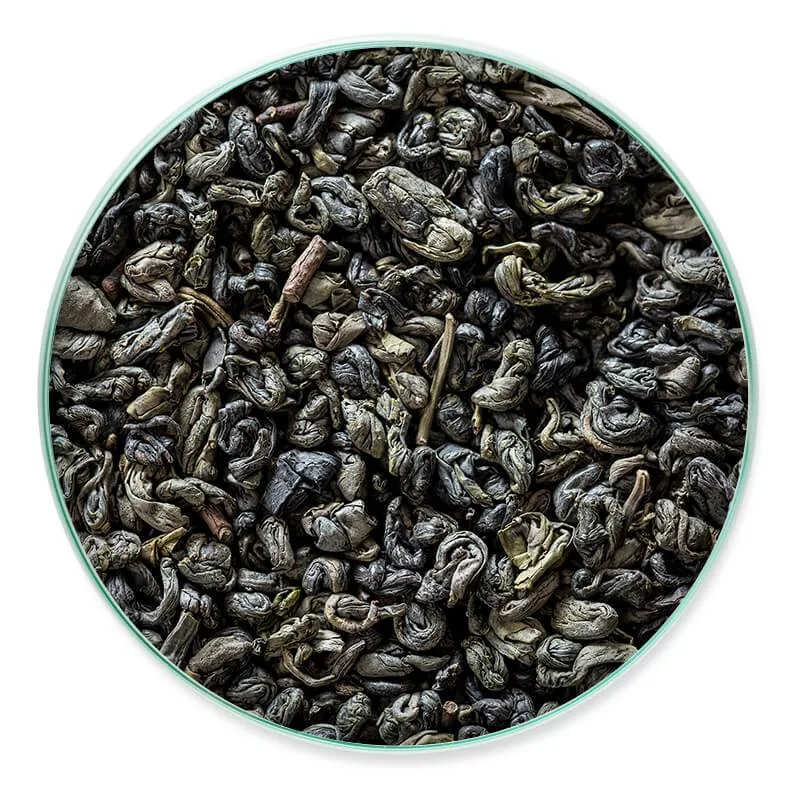
- Organic Yerba Maté - Wholesale: A traditional organic green yerba maté that can be enjoyed as an iced tea, hot tea, on its own, or steeped alongside a fruit or herbal tea. This is the flexible add-on: keep a caffeine-free immunity blend as your base and use maté when you want lift without changing your whole routine.
Who should buy which kind of immunity blend
Best for
- Evening drinkers who want a caffeine-free cup, such as a rooibos and hibiscus blend like Fireberry
- Morning drinkers who want caffeine and fruit flavor, such as a green tea blend like Pineapple Blues
- People who want to build their own routine by layering a caffeine-free blend with Organic Yerba Maté
Not for
- Anyone looking for a tea to replace medical treatment, sleep, or a balanced diet
- Shoppers who want a single blend to be both caffeine free and energizing at the same time
- People who dislike tart fruit or hibiscus flavors and would prefer a milder base
Choosing an immunity tea blend comes down to three readable facts: what is in it, whether it has caffeine, and how you will brew and drink it. Get those right and the blend becomes a habit rather than a shelf ornament.