Quick answer
Prioritize formulas with joint-supporting ingredients like glucosamine and chondroitin, heart-healthy nutrients like taurine, and a kibble size that encourages chewing. A chicken-based recipe is a common, well-tolerated protein source for many large breeds.
Why large breeds have different nutritional needs
Large breed dogs grow faster and carry more weight than smaller dogs, which puts extra stress on their joints and heart. Their food needs to support bone and joint development without encouraging rapid growth that can lead to skeletal problems. Adult large breeds also benefit from controlled calorie density to help maintain a healthy weight and reduce pressure on hips and elbows.
Key ingredients to look for
Glucosamine and chondroitin are widely recognized for supporting joint structure and mobility. Taurine is an amino acid that helps maintain heart function, which is especially important in larger breeds prone to certain cardiac conditions. A named animal protein, like chicken, provides essential amino acids and is usually easy to digest. Vegetables and botanicals add antioxidants and fiber for overall health.
Kibble size and texture matter
Large breed dogs have bigger mouths and stronger jaws. A larger kibble size encourages them to chew rather than gulp, which can aid digestion and reduce the risk of bloat. Some dogs may prefer a slightly crunchy texture that helps clean teeth as they eat.
Decision rules for choosing large breed dry dog food
- Check for joint support: Look for glucosamine and chondroitin listed in the guaranteed analysis or ingredients. These help maintain cartilage and joint fluid, which is critical for dogs prone to hip and elbow dysplasia.
- Confirm heart health nutrients: Taurine and L-carnitine are common heart-supporting additives. Large breeds, especially Dobermans and Great Danes, have higher risks of dilated cardiomyopathy, so these nutrients are a priority. If the bag does not list taurine, consider a supplement or a different formula.
- Match protein source to your dog's tolerance: Chicken is a lean, widely available protein that most large breeds tolerate well. If your dog has known sensitivities, look for a single-protein recipe or a novel protein like duck or fish.
- Select appropriate kibble size: Choose a formula with larger kibble pieces designed for big jaws. This slows down eating and can reduce the risk of gastric dilatation-volvulus (bloat), a life-threatening condition more common in deep-chested large breeds. If your dog still gulps, use a slow feeder bowl as an extra precaution.
- Evaluate calorie density: Large breed dogs need controlled calories to avoid obesity. Look for a moderate fat content (around 12-15%) and avoid high-calorie 'performance' formulas unless your dog is very active. Check the feeding guide and adjust portions based on your dog's condition, not just the bag recommendation.
Product highlights
-
Dry Large Breed Adult Dog Food Rich in Chicken 14kg: Harringtons Dry Large Breed Adult Dog Food Rich in Chicken 14kg includes taurine to support heart health and a glucosamine & chondroitin blend to help support joint structure and movement. These two additions directly address the most common health concerns for large breed dogs, making this a well-rounded choice for owners who want targeted support in a single kibble.
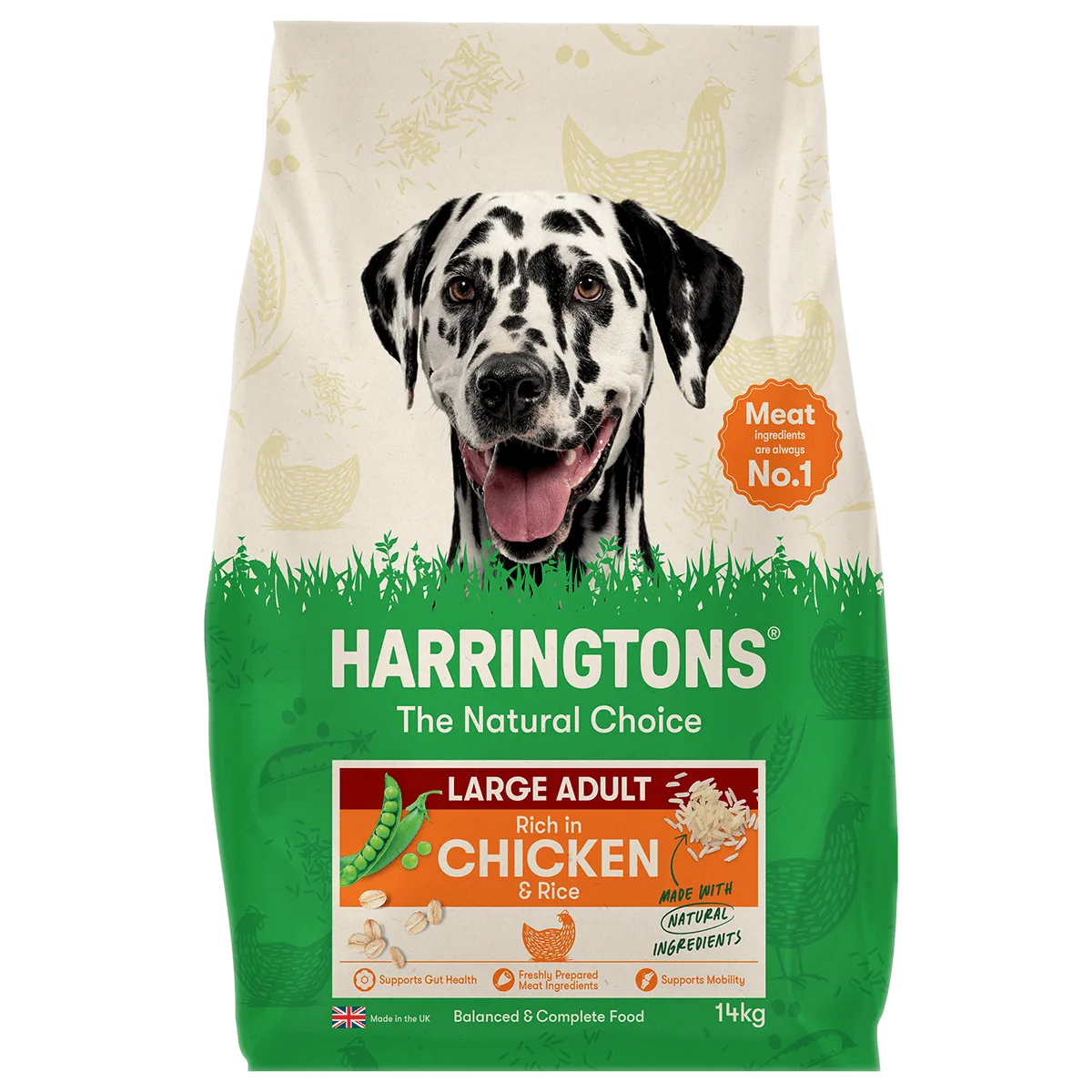
Dry Large Breed Adult Dog Food Rich in Chicken 14kg
Who this advice is for
Best for
- Owners of large breed puppies transitioning to adult food
- Adult dogs weighing over 50 pounds (23 kg) with moderate activity levels
- Dogs that tolerate chicken well and need joint and heart support
Not ideal for
- Small or toy breed dogs that need smaller kibble and different nutrient ratios
- Dogs with confirmed chicken allergies or sensitivities requiring a limited-ingredient diet
- Highly active working dogs that may need higher calorie density