Quick answer
Pack small, high-value treats in a pouch with a closure you can open one-handed, then wear it where your hand naturally falls—at your waist or across your shoulder. Keep the pouch light, refill it before every session, and test the attachment with a few jumps before you rely on it on a walk.
Choose treats that work from a pouch, not a bag
Treats for pouch training should be small enough to swallow quickly and dry enough not to turn the inside of the pouch into a paste. Pea-sized pieces of soft training treats or broken kibble work well for repetition; reserve larger or crumbly treats for rewards at home. If your dog is easily distracted, use a higher-value treat only for recalls and new skills, and a ordinary treat for easy repetitions.
Match the pouch closure to your training style
A magnetic or quick-open closure lets you reach in without looking, which matters when you are marking a behavior. A drawstring or zip closure is more secure but slower. For puppy training and fast-paced sessions, prioritize one-handed opening; for hikes or off-leash work, prioritize a closure that stays shut if the pouch tips over.
Decide between waist and shoulder carry before you leave
Waist carry keeps treats centered and stable for obedience work; shoulder carry keeps the pouch out of the way when you need to bend or jog. Try both with an empty pouch first. A pouch that swings or bounces will distract you and may spill treats, so adjust the strap or belt before adding weight.
Keep the load light and the pouch clean
Overfilling makes a pouch bulky and noisy. Carry only what you need for the session, plus a small reserve. Wipe the inside after greasy treats, and empty the pouch after walks so crumbs do not attract pests or turn stale. A pouch that is easy to turn inside out saves time here.
Step-by-step: pack and wear your treat pouch
- Portion the treats: Count out small pieces for the session and put them in the pouch. Leave room to reach in without scraping your knuckles. Checkpoint: the pouch should close easily with one hand and not bulge.
- Test the closure: Open and close the pouch several times with one hand while wearing it. If you have to look down, adjust the position or choose a different closure style. Common mistake: wearing the pouch too low, so you fumble during quick reward timing.
- Set the carry position: Try waist carry first for training; switch to shoulder carry if the pouch interferes with bending or if you are walking briskly. Checkpoint: the pouch stays in place when you jog a few steps or bend to pick something up.
- Do a dry run: Put on the pouch with treats and practice a sit or recall in your yard or hallway before a real walk. If treats spill or the pouch swings, empty it slightly or change the attachment point.
- Refill and reset after the session: Empty leftover treats, wipe the inside if needed, and leave the pouch open to dry. Refill fresh before the next walk. This prevents stale crumbs and keeps the pouch ready for the next training moment.
Product facts
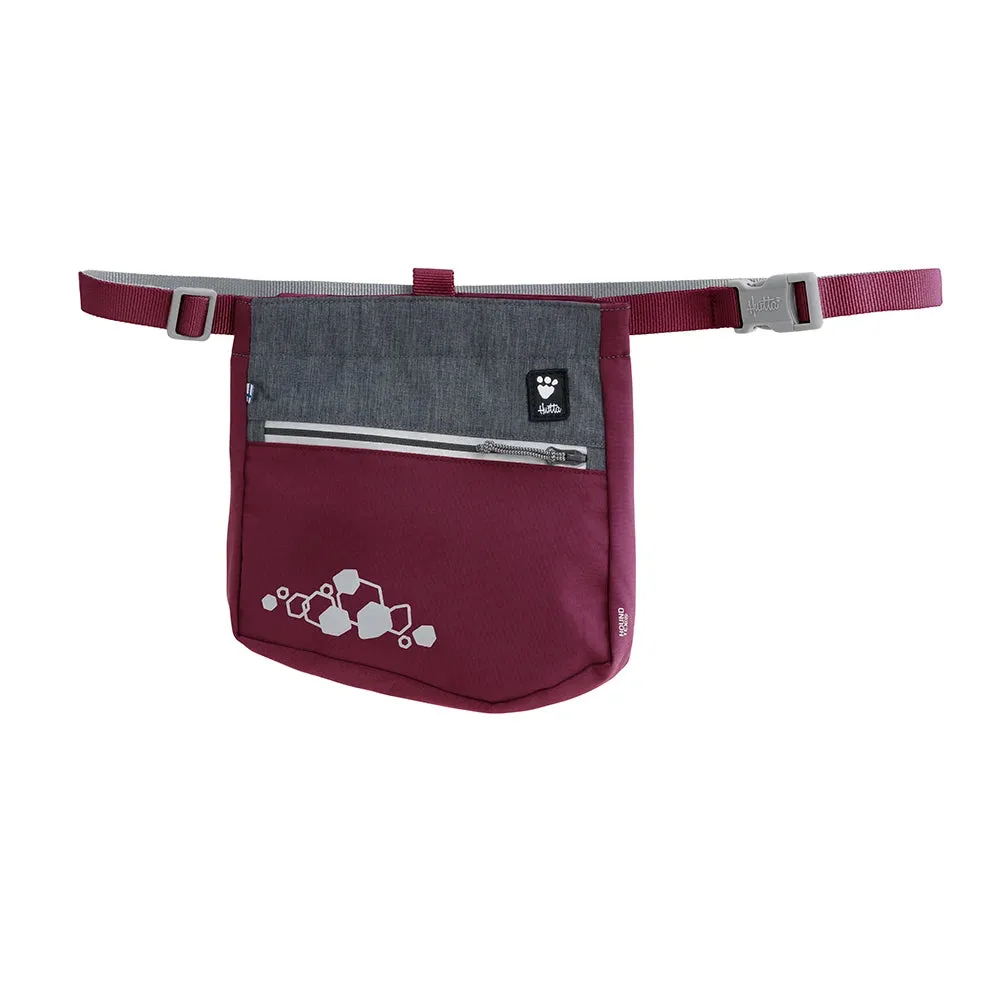
- Herkkutasku: Hurtta Herkkutasku is designed for active training with a magnetic closure that stays shut during performance and opens quickly for rewards. You can keep the pouch closed while your dog works and still reach a treat fast when you mark the behavior.
- Herkkutasku: The Herkkutasku is lightweight and unobtrusive, and can be worn on the waist or over the shoulder. It suits both structured training sessions and everyday walks where you want your hands free.