Quick answer
Pack your personal item as a one-sitting survival kit, not a second suitcase. Fill it with what you need within arm's reach during the flight: travel documents, medications, a water bottle, snacks, a charger, a thin layer, and a small pouch of toiletries. Everything else, especially clothing and shoes, belongs in your carry-on, since the under seat bag is the one piece you cannot easily dig through once the plane is boarded.
The bag that slides under the seat in front of you is the only one you can reach without standing up, so it should hold what you actually need in the air, not everything you packed. That distinction is what separates a useful personal item packing list from a second, smaller suitcase that just adds weight.
The trick is deciding what earns a spot in the underseat bag and what stays in the overhead bin. Below are the questions travelers ask most often, answered in short form so you can pack fast and stop second-guessing.
What counts as a personal item versus a carry-on?
A personal item is the small bag that fits under the seat in front of you, typically a backpack, tote, crossbody, or briefcase. A carry-on is the larger bag that goes in the overhead bin. Airlines usually allow one of each, and the personal item is often the only bag you can access mid-flight without getting up.
Because the space under the seat is fixed, the practical test is whether the bag slides in without force and still leaves room for your feet. If it only fits sideways or blocks your legroom, it is too big for the role, even if the airline technically allows it.
- Keep the personal item soft-sided so it can compress into the underseat space.
- Check your airline's stated dimensions before you pack, since they vary by carrier and fare class.
What should go in the under seat bag?
Think in categories: identity, comfort, and contingency. Identity covers your passport or ID, boarding pass, wallet, and phone. Comfort covers a thin layer, a water bottle, snacks, headphones, and a small pouch with lip balm, hand sanitizer, and any medication you take on a schedule.
Contingency covers the things you would regret leaving in the overhead bin: a charger and cable, a power bank, a pen for customs forms, and a change of underwear or a clean shirt if you are on a long-haul flight. If a delay or a lost checked bag would ruin your day without it, it belongs within reach.
- Use a small compression cube or pouch to keep small items from migrating to the bottom.
- Keep liquids in a clear quart-size bag at the top so security is a one-motion stop.
What should stay in your carry-on instead?
Bulky clothing, shoes, a laptop you will not open mid-flight, and full-size toiletry bottles belong in the carry-on. The personal item should stay light enough that you can hold it on your lap or tuck it at your feet without discomfort. Every extra pound in the underseat bag is a pound you carry through the airport and lift into the bin when you board.
A useful rule is one in, one out. If you add something to the personal item, move something of similar size to the carry-on. That keeps the under seat bag functional rather than just full.
- Weigh your personal item once at home; if it feels heavy in your hand, it will feel heavier by hour three.
- Reserve the carry-on for anything you will not touch until you reach your destination.
How do you organize a small underseat space?
The under seat area is dark, tight, and hard to search, so organization matters more than capacity. Use one main compartment for the items you touch often and one smaller pocket for documents and your phone. Pouches and cubes let you pull out a single bundle instead of unpacking the whole bag on your lap.
If you carry a tote or backpack as your personal item, keep the opening facing you and place the most-used items at the top. A dedicated pouch for cables and chargers prevents the classic tangle that happens when everything shares one pocket.
- Pack the bag once at home, then rehearse reaching for your passport and charger without looking.
- Keep a small pouch for receipts and loose items so they do not end up in the seat pocket.
Underseat bag essentials at a glance
Documents and wallet
Passport or ID, boarding pass, wallet, and a pen for any forms you need to fill out. Keep these in one pocket you can reach without standing up.
Comfort layer
A thin jacket or wrap, headphones, and a refillable water bottle you can fill after security. Cabin air gets cold; a layer is the most-used item on most flights.
Power and cables
Charger, cable, and a power bank in a single pouch so nothing tangles or disappears. Charge the power bank before you leave home, not at the gate.
Snacks and medication
A small snack and any medication you take on a schedule, kept separate from checked bags. Never put medication in a bag that goes in the overhead bin.
Toiletry pouch
Lip balm, hand sanitizer, and travel-size essentials in a clear bag for security. Keep it at the top so you are not repacking at the checkpoint.
Products that fit this packing approach
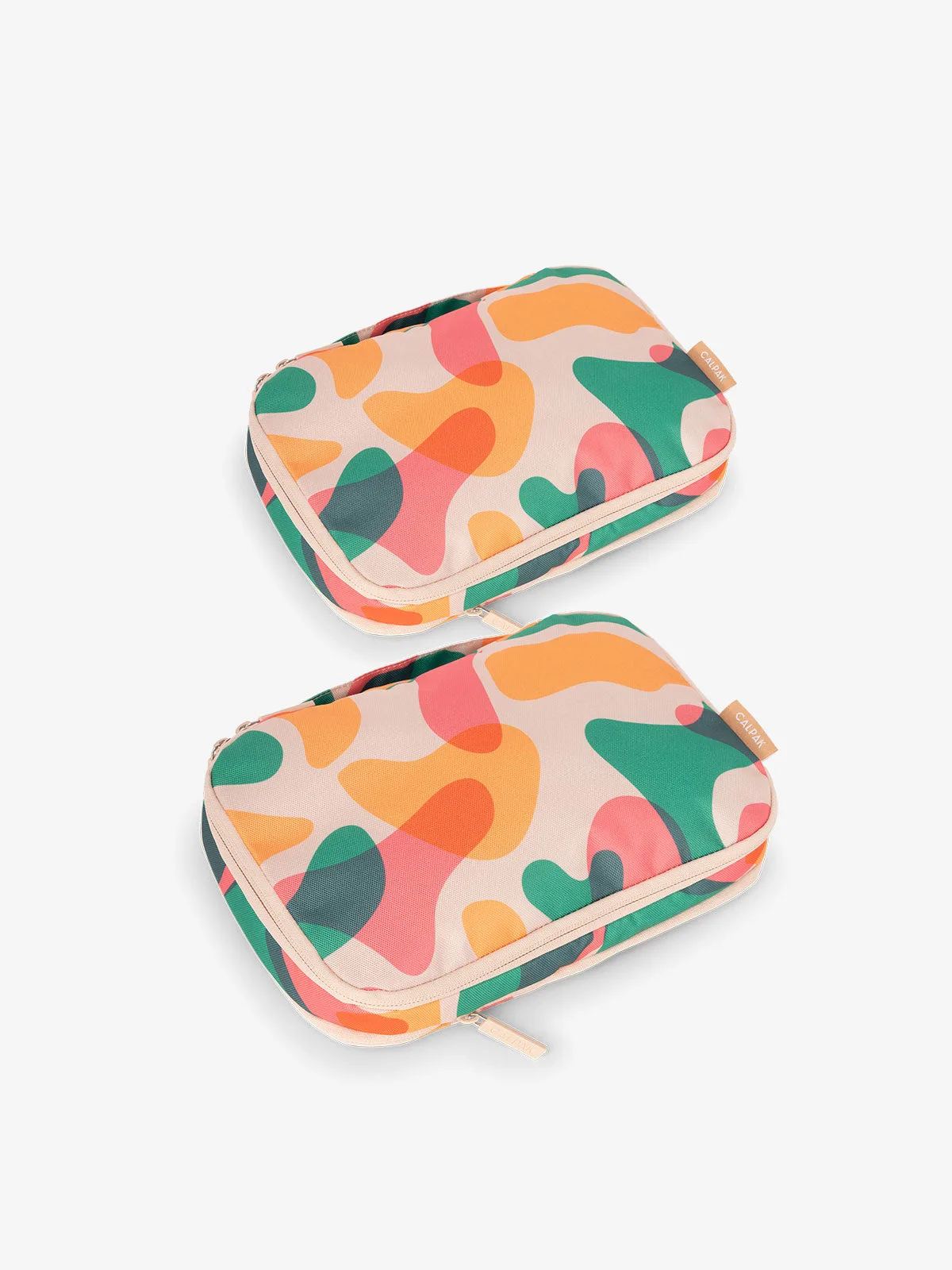
- Small Compression Packing Cubes: A two-piece set with expandable storage and space-saving compression zippers, designed for weekend trips, carry-on travel, and organizing intimates and activewear. Compressing soft items keeps the personal item from bulging, which is what usually pushes a bag out of the underseat space.
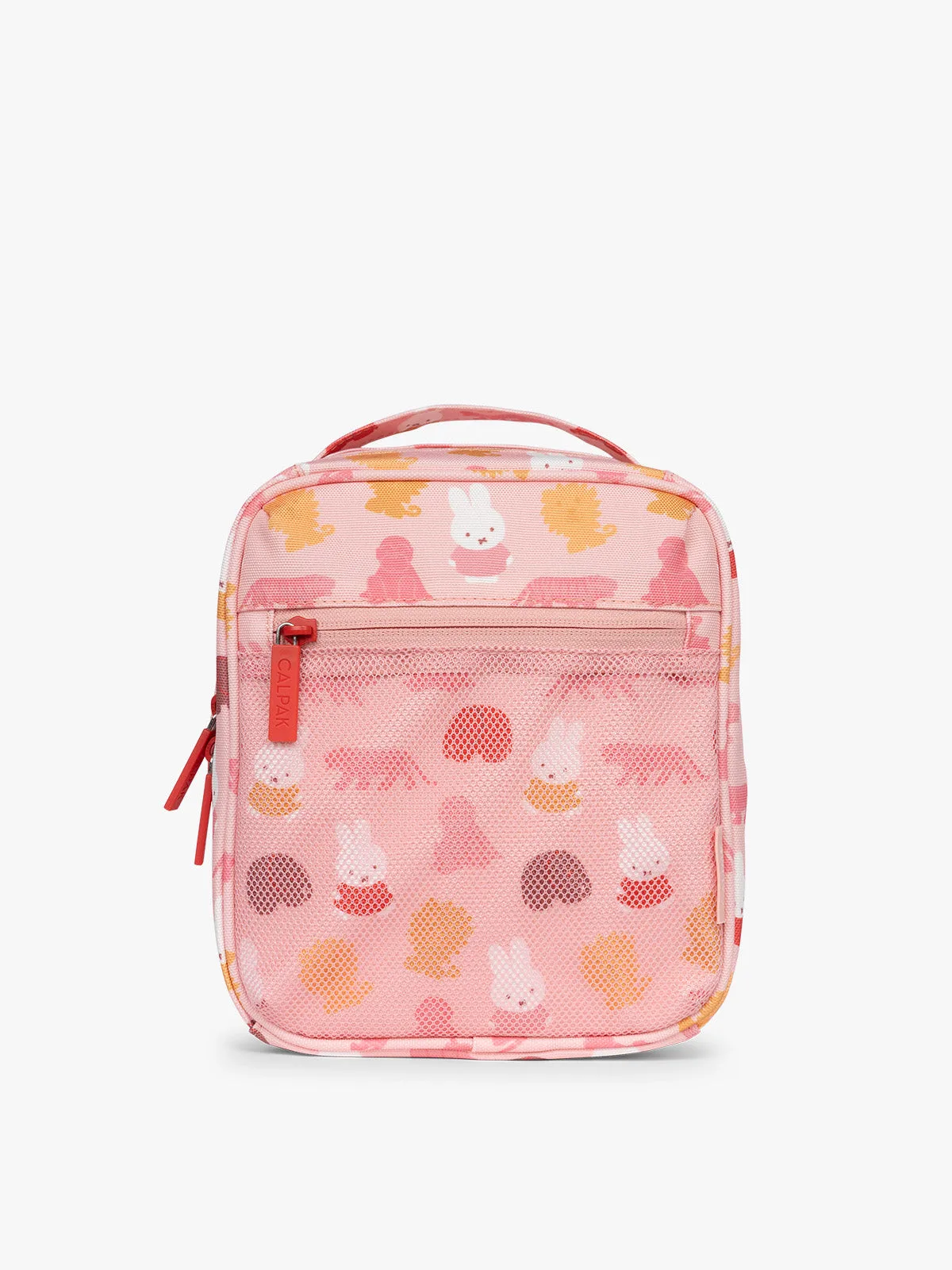
- Miffy Everything Cube: A packing organizer with multiple compartments for separating and finding essentials from packing to unpacking. Multiple compartments make it easier to pull one bundle out in a tight seat instead of searching the whole bag.
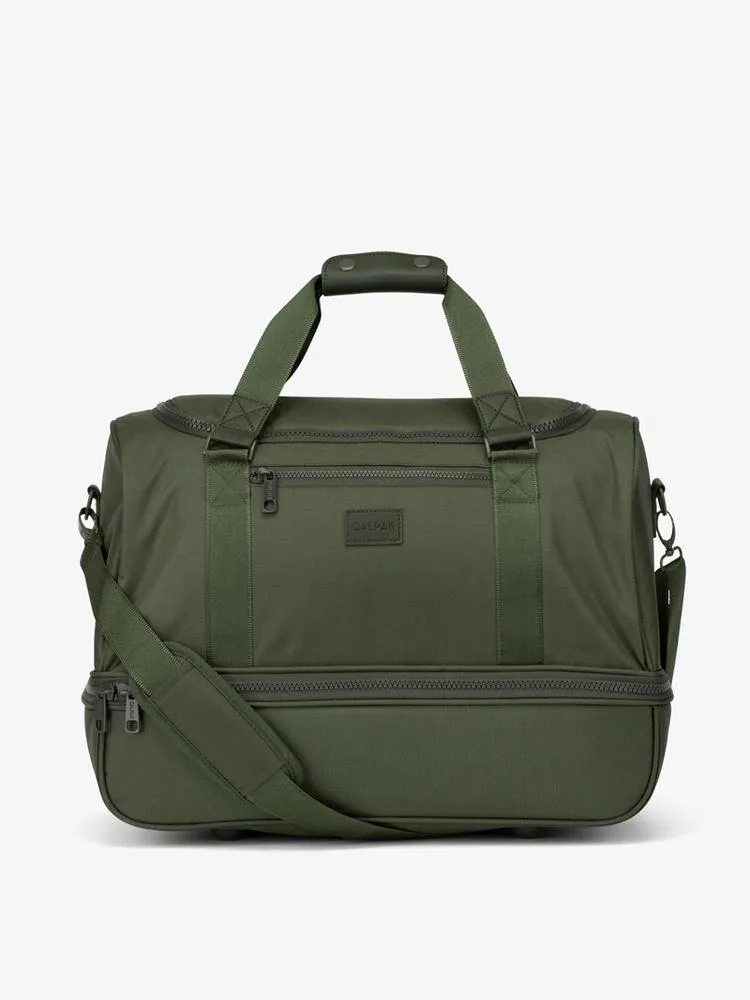
- Stevyn Duffel Bag with Shoe Compartment: A lightweight duffel with a dedicated shoe compartment, interior pockets, and a luggage sleeve, described as best for gym sessions and weekend trips. The shoe compartment keeps footwear away from clean clothes, and the luggage sleeve lets you stack it on a rolling bag through the airport.
Pack the personal item for the flight, not for the trip. If it holds your documents, a layer, a charger, a snack, and a small toiletry pouch, you have everything you need within reach, and the carry-on can handle the rest.