Quick answer
For a Journeys notebook, focus on capturing the emotional texture of your travels and daily life—record what you felt, what surprised you, and what you learned, rather than just listing activities.
Why a Journeys notebook is different from a standard travel diary
A Journeys notebook isn't just for documenting where you went and what you saw. It's designed to help you make sense of your inner landscape—your thoughts, worries, and aspirations—especially when you're on the move or in transition. The Writing as Therapy Notebook - Journeys is a linen-bound companion that encourages you to pause and reflect, even when life feels busy and fragmented.
Instead of a chronological log, think of it as a space to untangle the emotions that travel and change stir up. This makes it a valuable tool for personal growth, not just a souvenir.
Balancing practical details with emotional reflection
While it's tempting to record every detail of a trip, the real value comes from connecting those details to how you felt. A Journeys notebook invites you to move beyond the surface and explore the 'why' behind your experiences.
A simple framework is to note one practical detail, one emotional reaction, and one insight you gained. This keeps entries grounded but meaningful.
Frequently asked questions
What if I don't know where to start?
Begin with a single prompt: 'What is the strongest emotion I felt today?' Write freely for two minutes without stopping. This lowers the barrier and gets you into a reflective flow. Set a timer for two minutes to prevent overthinking.
How can I use the notebook for travel journaling?
Instead of listing sights, capture a moment that moved you—a conversation, a view, a meal. Ask: 'Why did this stay with me?' and write the answer. This turns your travel journal into a personal narrative. Choose one meaningful moment per day rather than summarizing the whole day.
Can I use it for daily reflection, not just trips?
Absolutely. The notebook is for any journey, including internal ones. Use prompts like 'What am I avoiding thinking about?' or 'What small thing brought me joy today?' to build a consistent practice. Keep it beside your bed for a nightly check-in.
What if I'm not a good writer?
You don't need to be. Write in bullet points, doodle, or use single words. The goal is to make sense of your feelings, not to produce polished prose. The notebook's structure supports any style. Try a mind map if linear writing feels intimidating.
Product spotlight
-
Writing as Therapy Notebook - Journeys: A linen-bound notebook designed to accommodate ideas, aspirations and worries in the therapeutic activity of your thoughts. The durable, tactile cover invites you to treat it as a trusted space for honest self-reflection, not just a travel log.
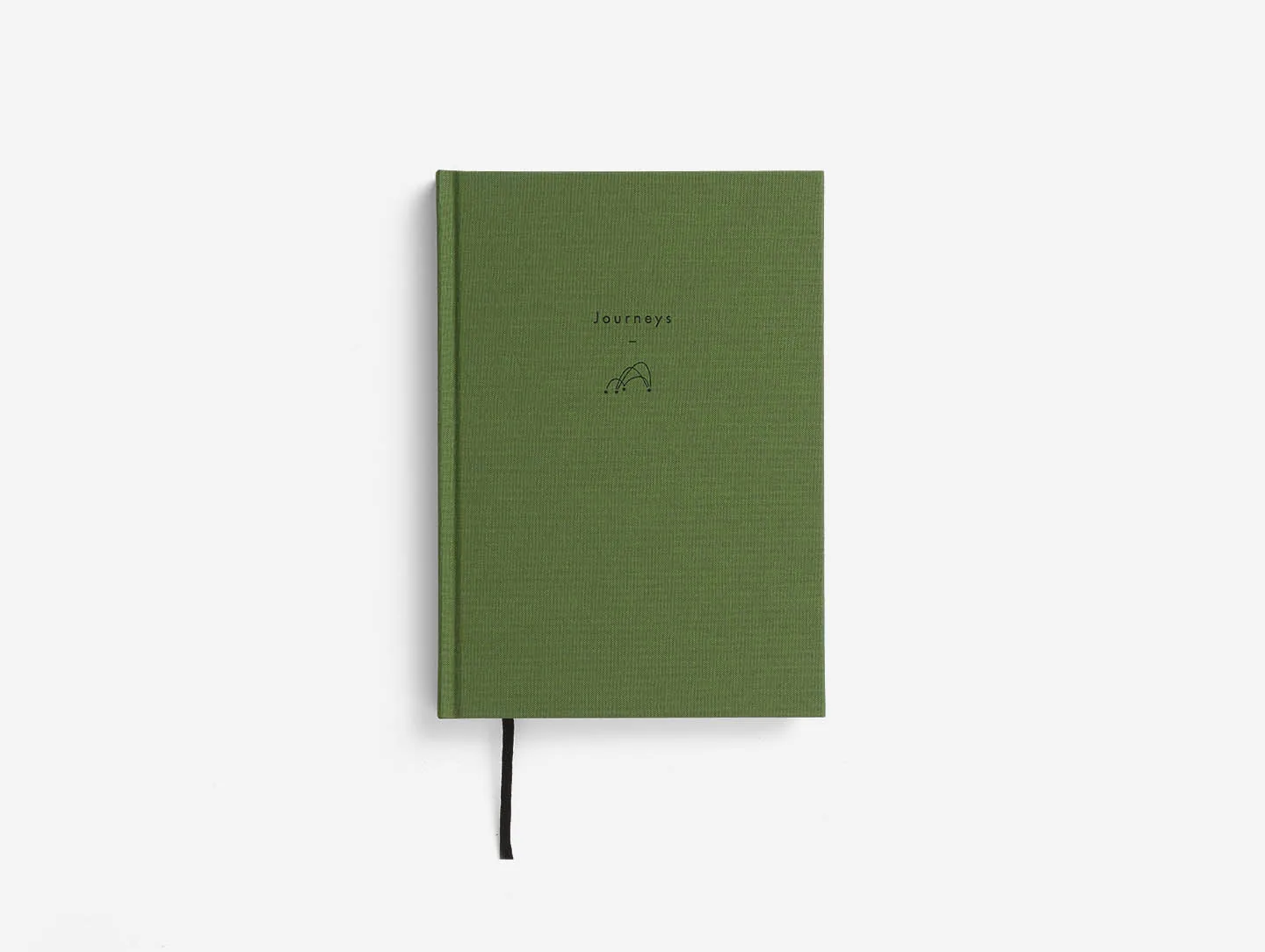
Writing as Therapy Notebook - Journeys