Quick answer
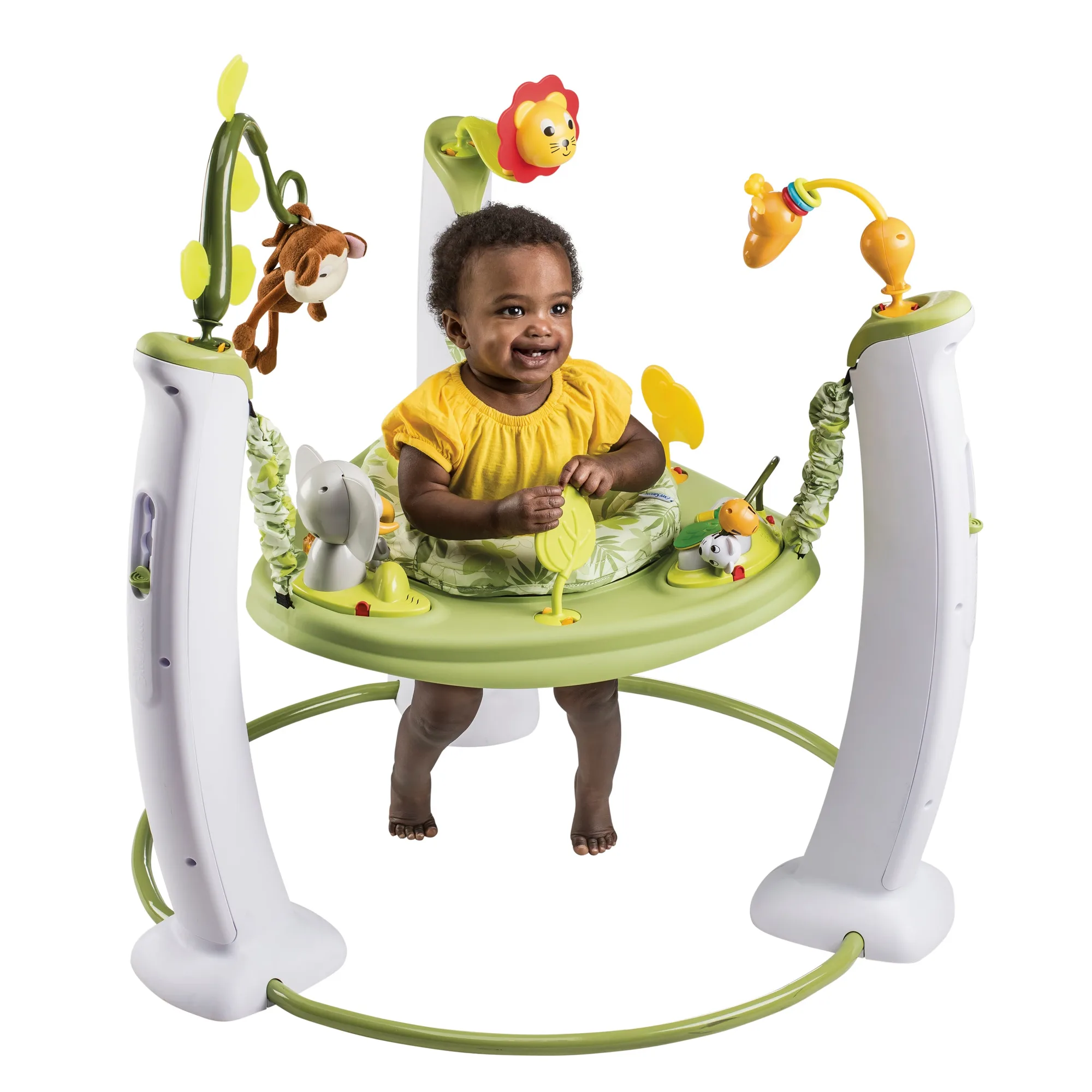
Most babies are ready for a stationary jumper between 4 and 6 months, once they can hold their head up without support and their feet reach the floor or platform. Always check the product's weight limit and height requirements before use. If your baby slumps, seems frustrated, or cannot touch the floor, wait a few weeks and try again.
What age do pediatric therapists suggest for a stationary jumper?
There is no universal rule, but many pediatric physical therapists suggest waiting until your baby is at least 4 months old and has strong head and neck control. Some babies may be ready closer to 6 months, especially if they are on the smaller side or still working on core strength. Premature babies often need extra time; adjust for their corrected age rather than their birth age. The American Academy of Pediatrics does not endorse any specific age, so your baby's individual development matters more than the calendar.
Signs your baby is developmentally ready
Watch for these cues before placing your baby in a stationary jumper. If several are missing, give it a few more weeks.
- Holds head up steadily without bobbing or slumping
- Has good neck and trunk control when sitting with support
- Feet can touch the floor or the jumper's platform with slightly bent knees
- Shows interest in batting at toys and reaching for objects
- Can push down with legs when held in a standing position
Door jumper vs stationary jumper: which one fits your home?
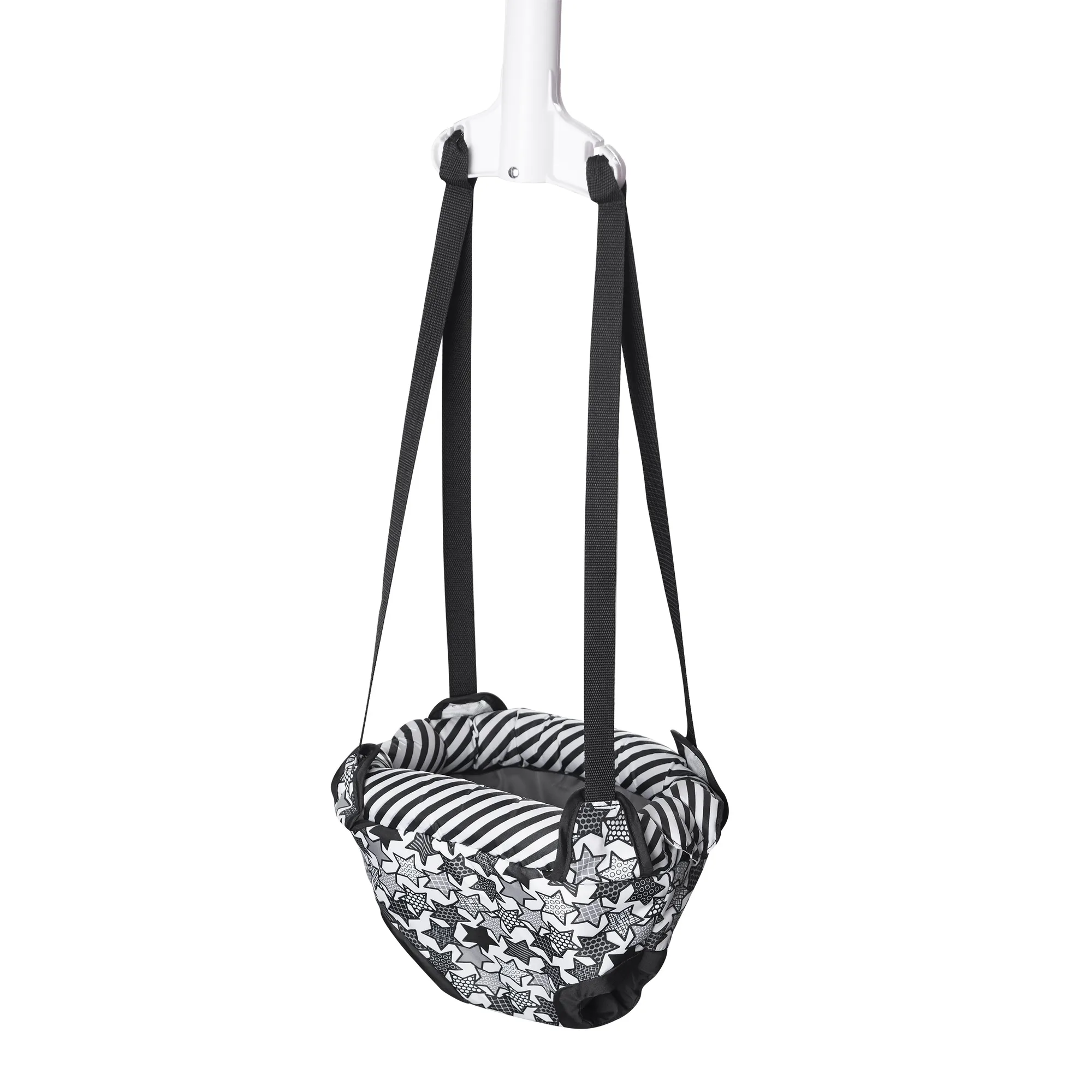
Door jumper
A door jumper clamps to a door frame and lets your baby bounce in place without taking up floor space. It is a good option for small apartments or rooms where a full activity center would be in the way. A stationary jumper sits on the floor and often includes a seat that spins and a tray with toys. It tends to offer more adjustable height positions and a sturdier base, but it takes up more room. Neither type is safer than the other when used correctly; the best choice depends on your space and how often you plan to use it.
Weight limits and height requirements you should check
Every jumper has a maximum weight limit, and some also have a height limit. Exceeding either can make the jumper unstable or cause it to tip. Check the label on your specific model before each use, especially as your baby grows quickly. If your baby is close to the limit, it is time to transition to a different activity, such as a play yard or floor play. Never add extra weight or let an older sibling bounce in a baby jumper.
Baby jumper safety tips every parent should follow
Supervision is the most important rule. Stay within arm's reach the entire time your baby is in a jumper. Use the jumper only on a flat, stable surface away from stairs, heaters, and blind cords. Limit sessions to 15–20 minutes at a time to avoid overstimulation and give your baby plenty of floor time for crawling and rolling. Check the clamp or base before each use to make sure it is secure. If the jumper has a seat, make sure both feet are inside and the fabric is not twisted.
Frequently asked questions
Can a 3-month-old use a stationary jumper?
Most 3-month-olds do not yet have the head and neck control needed for a jumper. If your baby cannot hold their head up steadily, wait. Placing them in too early can strain the neck and back. Wait until head control is consistent.
How long should a baby stay in a jumper each day?
Keep sessions short—about 15 to 20 minutes at a time, a few times a day. Longer sessions can overstimulate your baby and limit time for floor play, which builds crawling and rolling skills. Short, supervised sessions work best.
What if my baby's feet don't touch the floor?
If your baby's feet dangle or they cannot push off, the jumper is not adjusted correctly for their height. Many stationary jumpers have adjustable height settings; check your manual. If it is already at the lowest setting, your baby may need more time to grow. Adjust height or wait until they grow.
Is a door jumper or a stationary jumper better for development?
Both types encourage similar leg movements and cause-and-effect learning. A door jumper saves space; a stationary jumper often has more toy options and adjustable heights. Choose based on your home layout and your baby's temperament. Pick the one that fits your space and routine.
When should I stop using a jumper?
Stop when your baby reaches the weight or height limit listed on the product, or when they start trying to climb out. Most babies outgrow jumpers between 12 and 18 months, but always follow the specific limits for your model. Follow the product's limits, not just age.
Products that fit this stage
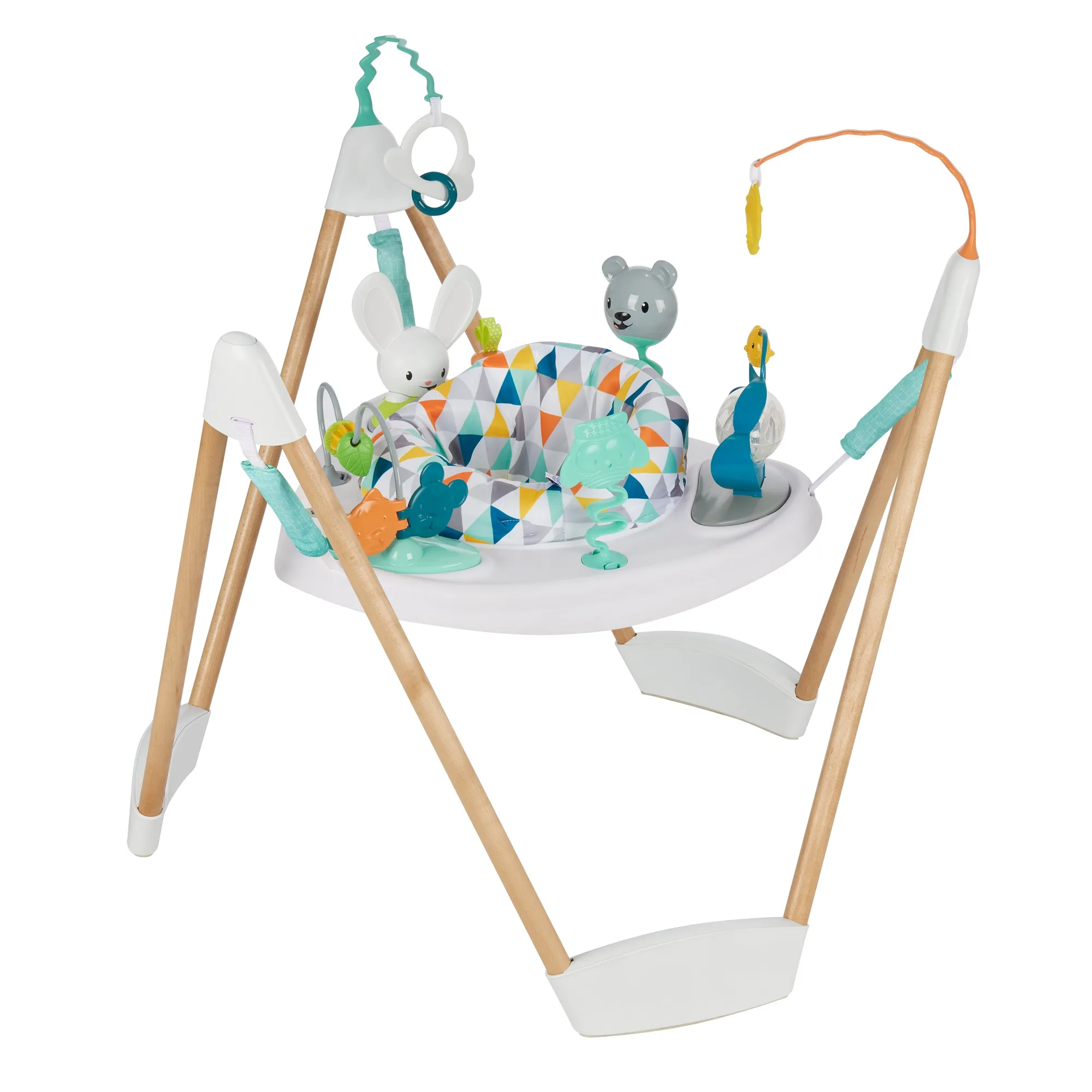
- Polar Playground Activity Center Support: ExerSaucer® Polar Playground Activity Center Support features a spinning seat with 360 degrees of oversized toys, a lightweight base for easy movement, and a seat cushion that is machine washable. The spinning seat and lightweight base let you move the activity center from room to room, and the washable cushion simplifies cleanup after spit-up or snack time.
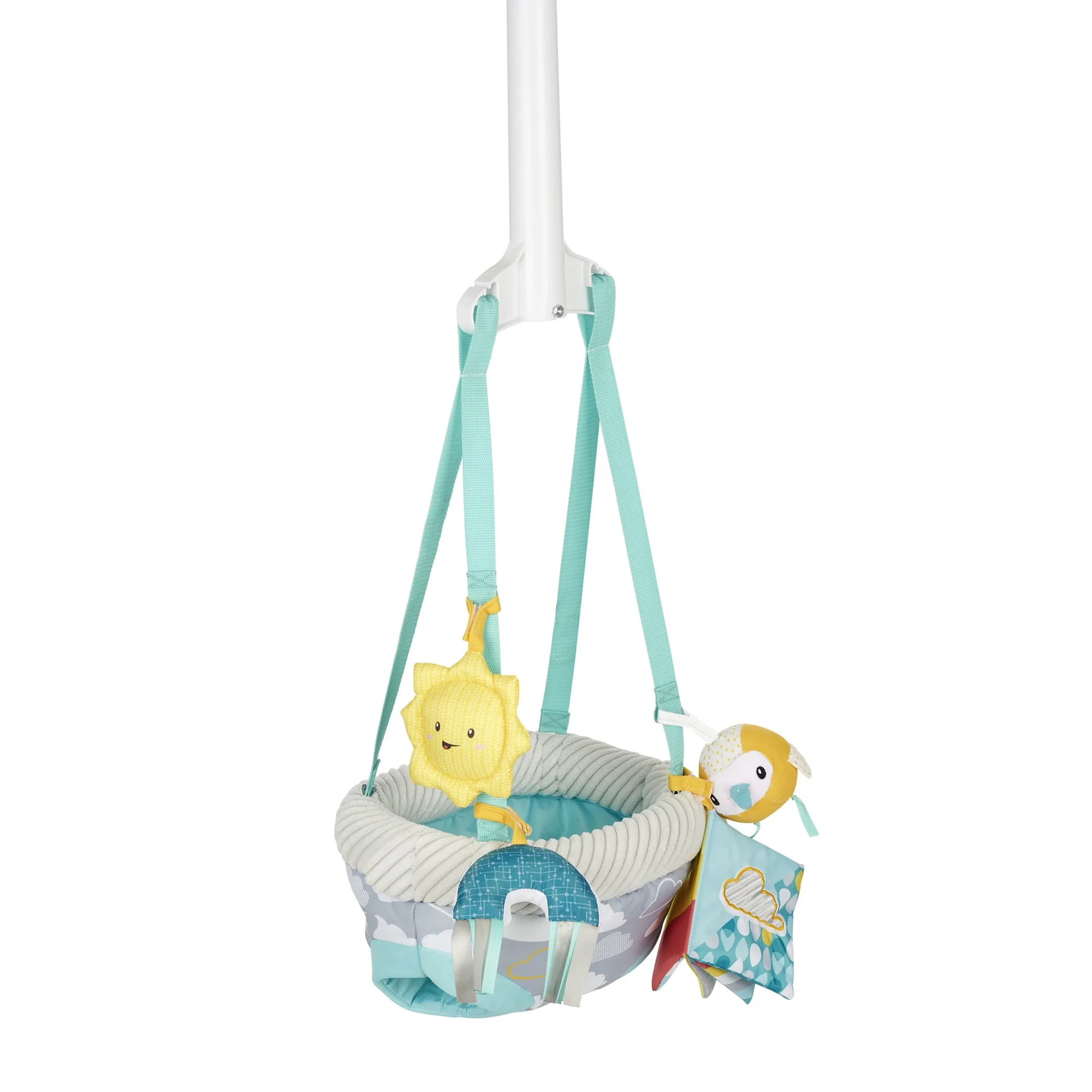
- Sweet Skies Door Jumper with Toys: ExerSaucer® Sweet Skies Door Jumper with Removable Toys includes four removable plush toys—a self-discovery mirror, tag rainbow, plush rattle, and peek-a-boo flip book—and an easy-to-use clamp. The removable toys can be taken off for floor play or travel, and the door clamp saves floor space in smaller homes.