Quick answer
If your dog still struggles to walk, drags front legs, or tires quickly despite using a rear harness or rear wheelchair, rear support is not enough. The next step is a full support wheelchair or a front wheel attachment, depending on whether the weakness is in the front legs or the whole body. Stop adding rear-only gear when you see front-leg involvement or whole-body fatigue.
Symptom: Front legs start dragging or knuckling
When a dog begins to drag or knuckle the front paws, the problem has moved beyond the hind end. A rear harness or rear wheelchair supports only the back half, so the front legs still carry the full weight and steering. If they are now weak or uncoordinated, the dog may stumble, scrape the tops of the paws, or refuse to walk. This is a clear sign that rear support is not enough.
Likely cause: Neurological or orthopedic changes in the front limbs
Front-leg dragging often points to a neurological condition such as IVDD, degenerative myelopathy, or a cervical issue, or to an orthopedic problem like arthritis in the shoulders or elbows. It can also happen when a dog overcompensates for weak rear legs by shifting weight forward, eventually fatiguing the front limbs. Because these causes are different from rear-only weakness, the solution must also change.
Corrective action: Add front wheel support or switch to full support
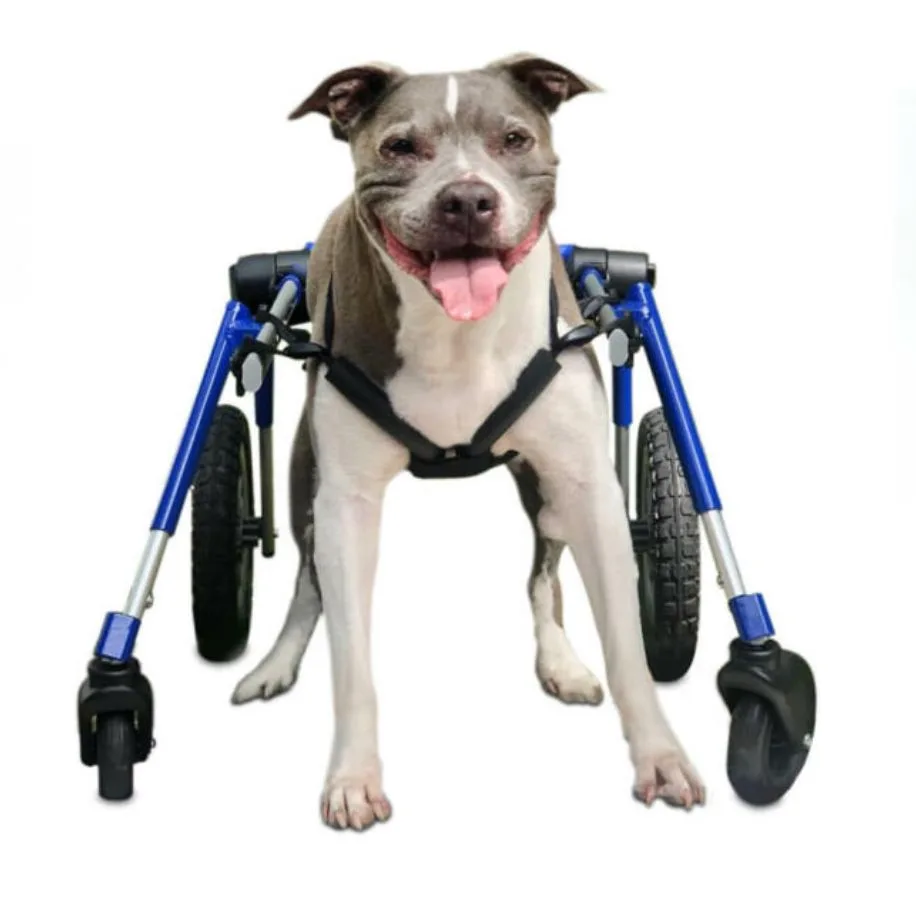
If the front legs are weak but still have some function, a front wheel attachment added to a rear wheelchair can provide the missing support. If the dog needs help standing, balancing, and walking with all four limbs, a full support wheelchair is the better choice. The goal is to match the support to the limbs that are failing, not to keep adding rear-only equipment.
Stop point: When to stop adjusting rear gear and choose another option
Stop trying to make a rear harness or rear wheelchair work when your dog can no longer bear weight on the front legs, when the front paws knuckle consistently, or when walking becomes exhausting even with rear support. At that point, continuing with rear-only gear can cause sores, frustration, and loss of mobility. Choose a front wheel attachment or a full support wheelchair instead.
Diagnosis: Is rear support still enough?
- Front paws knuckle or drag: Watch your dog walk on a non-slip surface. If the tops of the front paws scrape or the paws fold under, the front legs are involved. Rear support is no longer enough; consider front wheels or full support.
- Whole-body fatigue during short walks: If your dog used to walk 10 minutes with rear support and now wants to stop after 2-3 minutes, the front legs may be overworked. Evaluate for full support wheelchair.
- Rear-only gear causes sores or shifting: When a dog tries to compensate for weak front legs, they may lean or slide in the rear wheelchair, causing rubbing. Stop using rear-only gear and switch to a full support option.
Rear wheelchairs that can be upgraded with front support
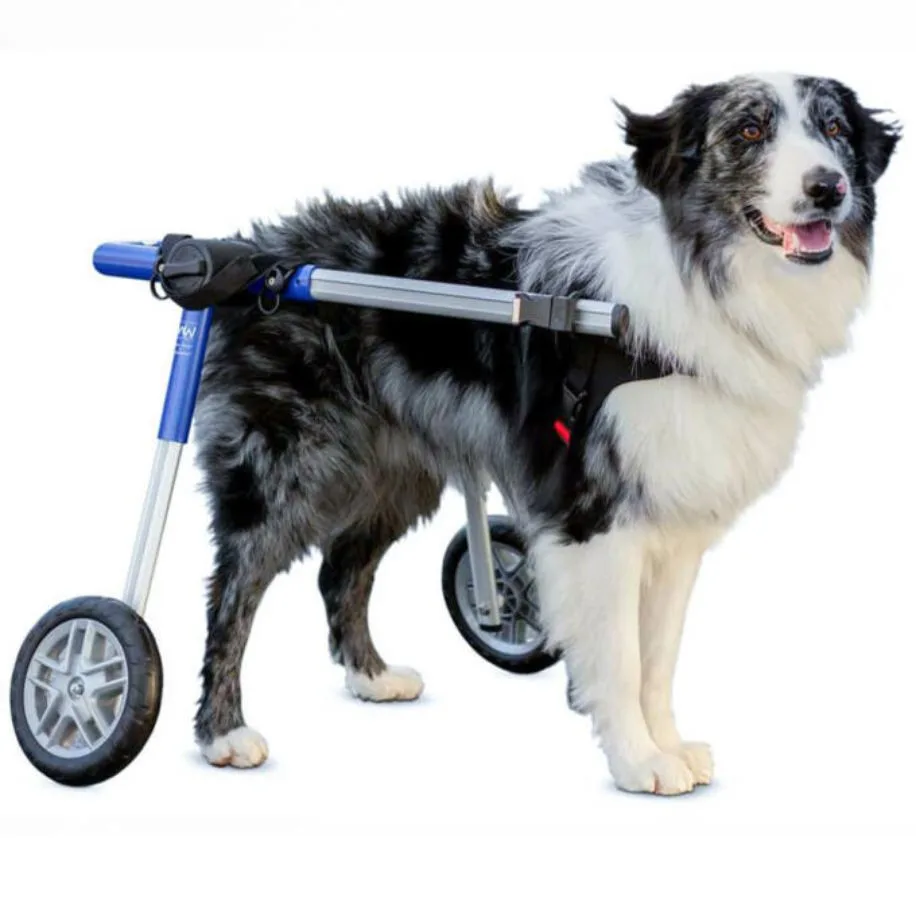
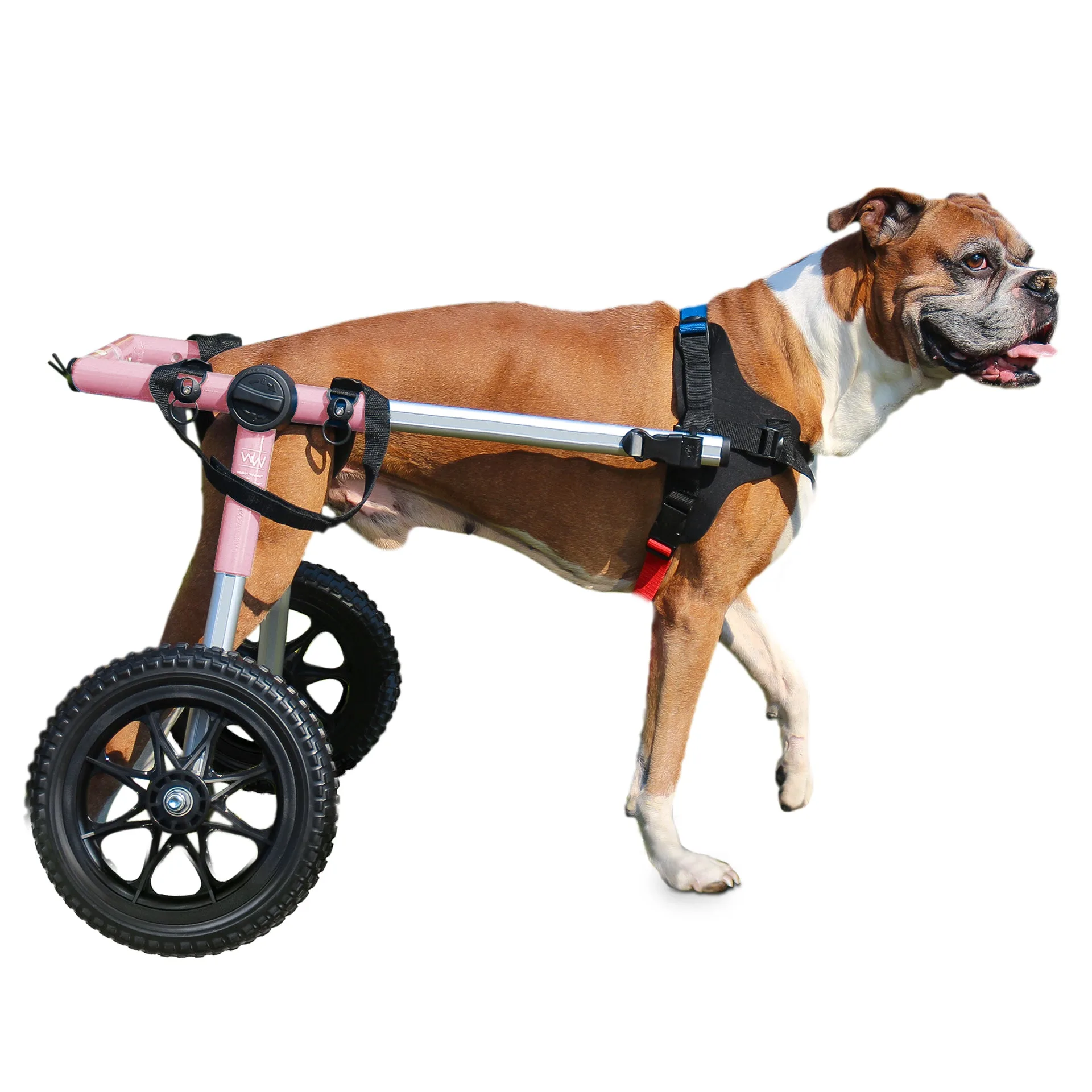
- Walkin' Wheels MEDIUM Dog Wheelchair: The Walkin’ Wheels Medium dog wheelchair provides rear support for paralyzed and injured pets weighing between 26 to 49 lbs. If your dog is in this weight range and only has rear weakness, this is a starting point. If front legs are also affected, you will need to add front wheels or choose full support.
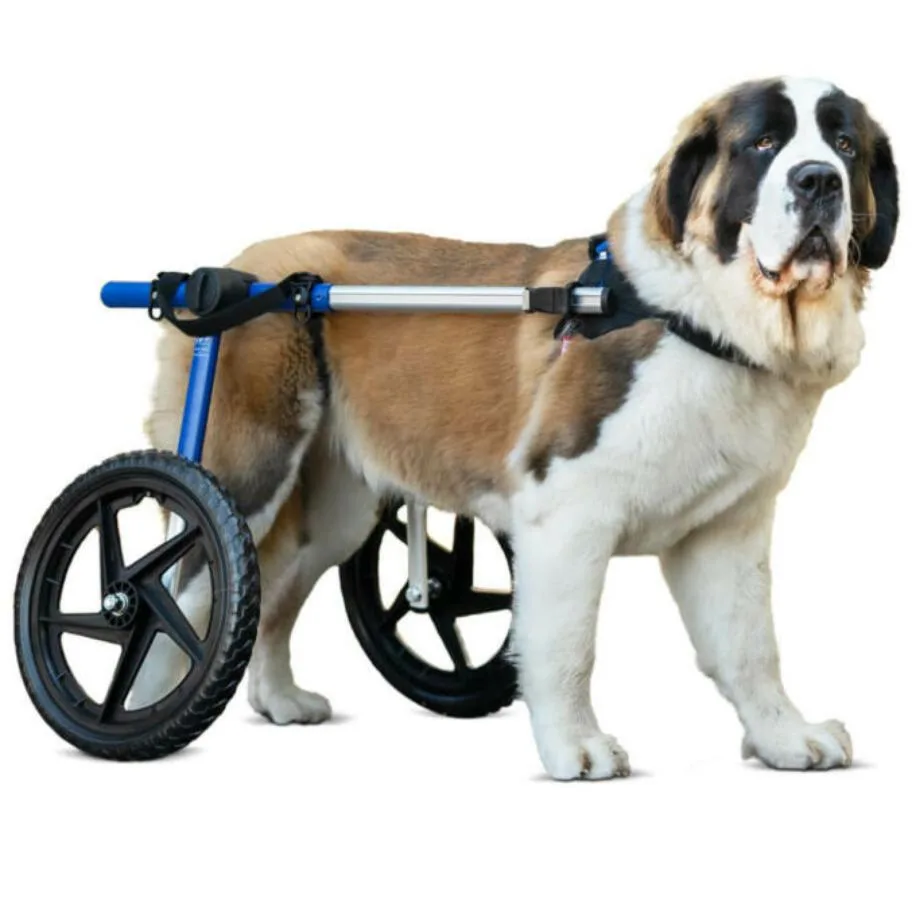
- Walkin' Wheels LARGE Dog Wheelchair: The Walkin’ Wheels Large dog wheelchair is built to support large or giant breed dogs with rear support for hind leg weakness, paralysis, cruciate injuries, or joint pain. Large dogs with front-leg involvement need more than this rear-only cart; plan for a front wheel attachment or a full support configuration.
- Walkin' Wheels Med/Large Dog Wheelchair: The Walkin’ Wheels Medium/Large Dog Wheelchair supports medium-sized dog breeds between 50 to 69 lbs with rear support for weakening back legs, difficulty walking, paralysis, or neurological conditions. This size is for dogs that still have adequate front-leg strength. If your dog is dragging front legs, rear support alone will not be enough.