Quick answer
Replace cardboard scratcher refills when the surface stops gripping: visible paper dust, a fuzzy or flattened texture, or a cat that sniffs and walks away. For Sisal posts, replace when strands are loose or the post feels spongy. If the refill or post is still structurally solid, a swap restores the scratch; if the base or frame is broken, replace the whole unit.
Symptom: Your cat scratches the floor or furniture instead
A cat that suddenly ignores a scratcher and attacks the sofa is often telling you the surface has lost its grip. Cardboard refills compact and polish with use, so claws slide instead of catching. Run your fingernail across the pad: if it glides without resistance, the texture is spent even if the cardboard still looks intact.
Before replacing anything, check placement. A scratcher that wobbles or sits in a high-traffic spot gets abandoned regardless of condition. If the unit is stable and still ignored, the refill is the likely culprit.
Symptom: Cardboard dust and loose flakes collect under the scratcher
Some dust is normal; cardboard scratchers shed as cats dig in. The signal to replace is volume and texture. When you sweep up piles of fine powder after every session, or find large curled flakes instead of tight corrugation, the pad is breaking down faster than it can support scratching.
Compare the center to the edges. A pad worn hollow in the middle but still tight at the edges has a short window left. Once the hollow reaches the frame or the cardboard lifts, swap it.
Symptom: The refill shifts, lifts, or will not sit flat
A refill that rocks, slides, or pops out mid-scratch is a safety and habit problem. Cats avoid unstable surfaces, and a shifting pad can pinch paws. Remove the insert and inspect the tray or frame. If the frame is cracked or the locking tabs are broken, a new refill will not fix it; that is the point to replace the scratcher itself rather than keep refilling.
If the frame is sound but the insert is warped from moisture or heavy use, a fresh refill restores a flat, quiet surface in minutes.
Symptom: Sisal strands are loose or the post feels soft
Sisal posts fail differently from cardboard. Watch for frayed strands that hang loose, a post that compresses under thumb pressure, or exposed adhesive where the rope has unwound. Loose strands can catch claws, so trim them only if the post is otherwise tight; if the rope is unwinding in multiple places, replace the post.
On a modular tree, replacing just the post is usually cheaper and less disruptive than replacing the whole tree, and it keeps your cat's familiar climbing layout intact.
Diagnosis: refill, post, or whole unit?
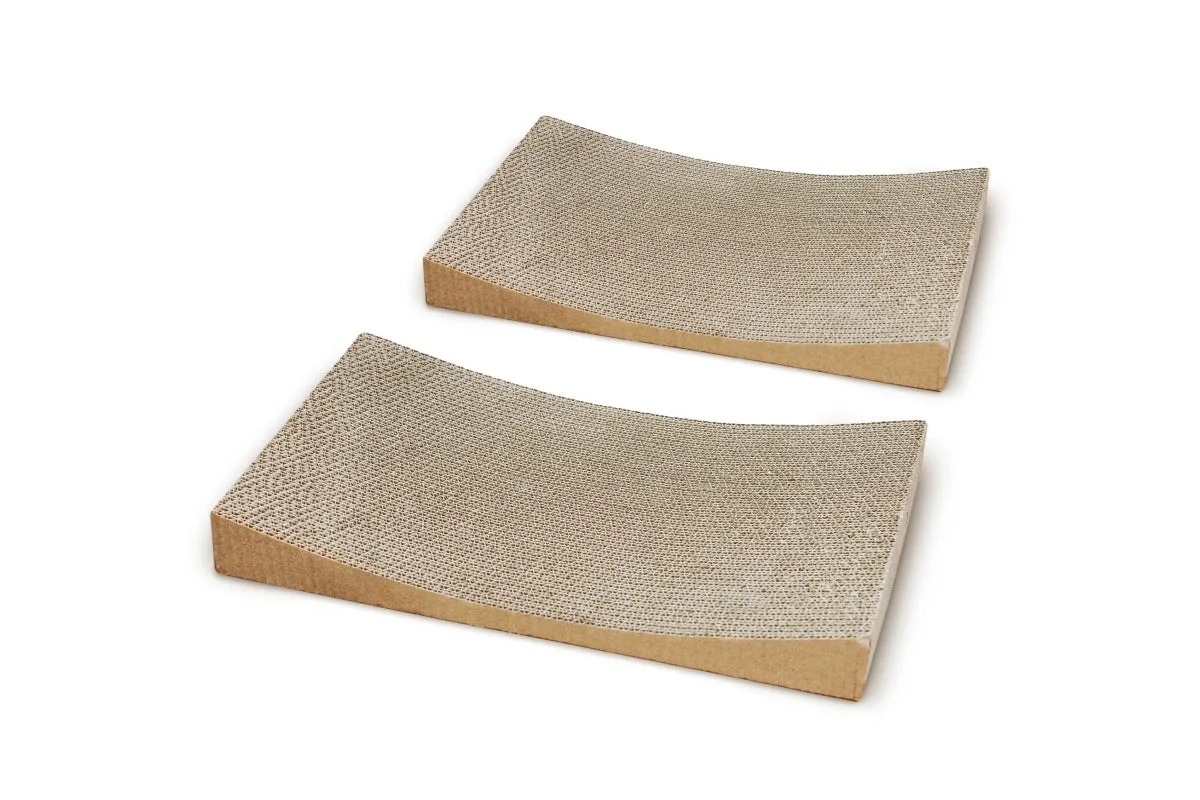
- Polished, dusty cardboard pad on a sound frame: The pad has compacted and lost grip; the frame and tray are intact and the insert sits flat. Replace the refill. A two-pack keeps a spare on hand so you are not caught mid-cycle.
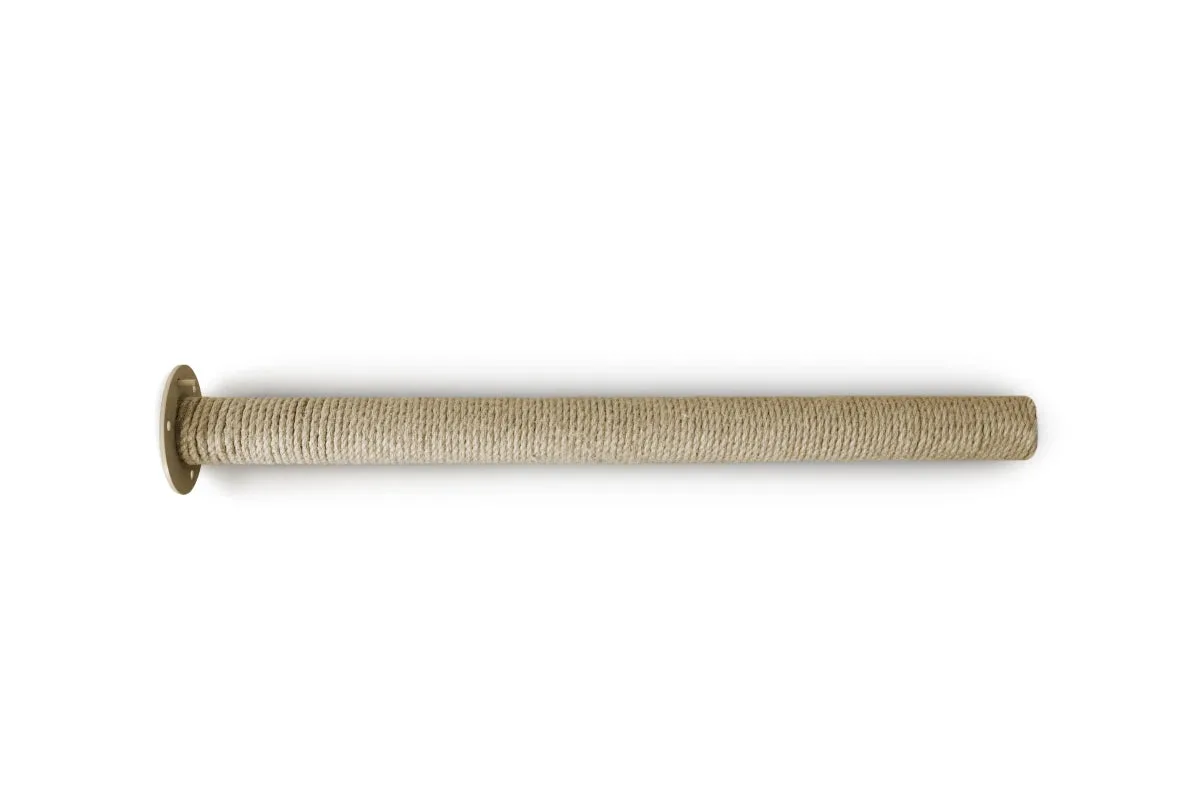
- Frayed or spongy sisal post on a modular tree: Strands hang loose, the post compresses under pressure, or adhesive is exposed, but the tree frame and platforms are stable. Replace the post only. Match the part to your tree model so the fit and height stay consistent.
- Cracked frame, broken tray, or refill that will not seat: The insert rocks or lifts no matter how you position it, or the surrounding structure is damaged. Stop refilling. Replace the scratcher or unit; a new insert will not correct a broken base.
Refills and parts that match these fixes
- 2x Kona Scratcher Refills: 2x Kona Scratcher Refills are designed for the Kona scratcher, a wooden side table with a built-in scratcher on its backside. If your Kona pad is polished or shedding heavily, this two-pack lets you refresh the scratching surface without replacing the furniture piece.
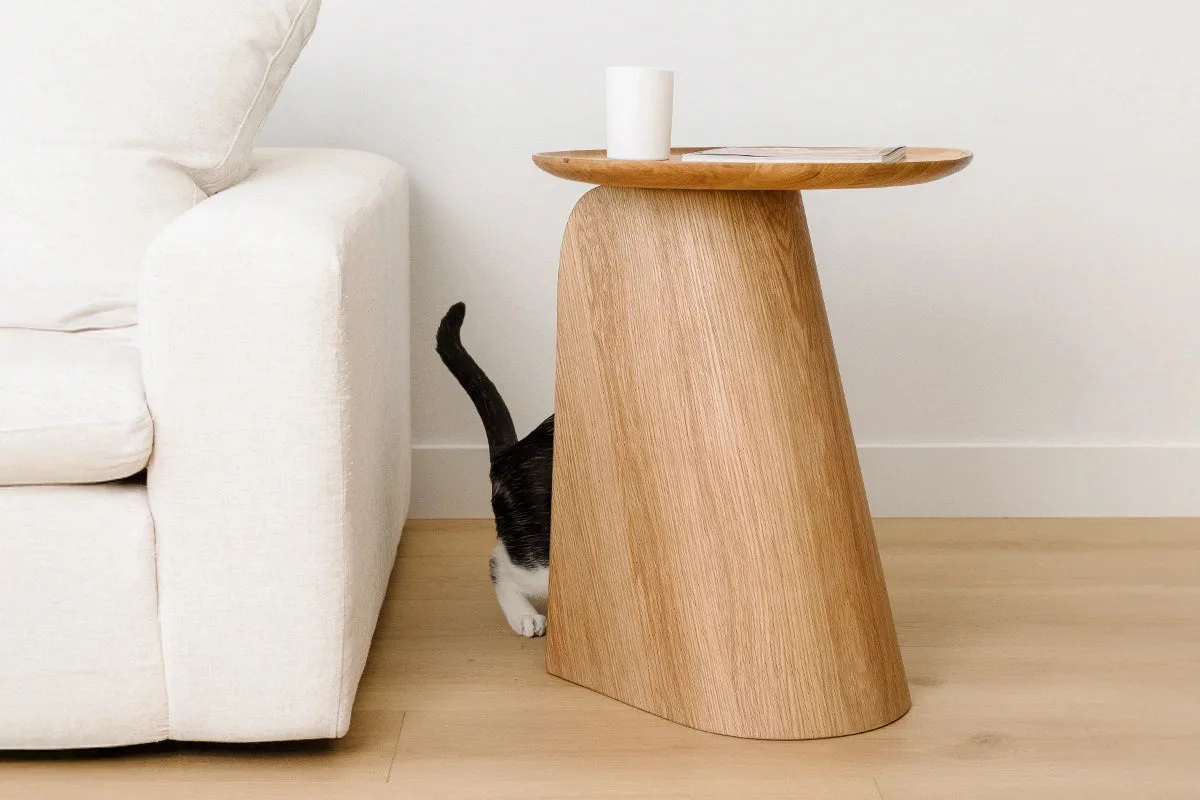
Kona Scratcher
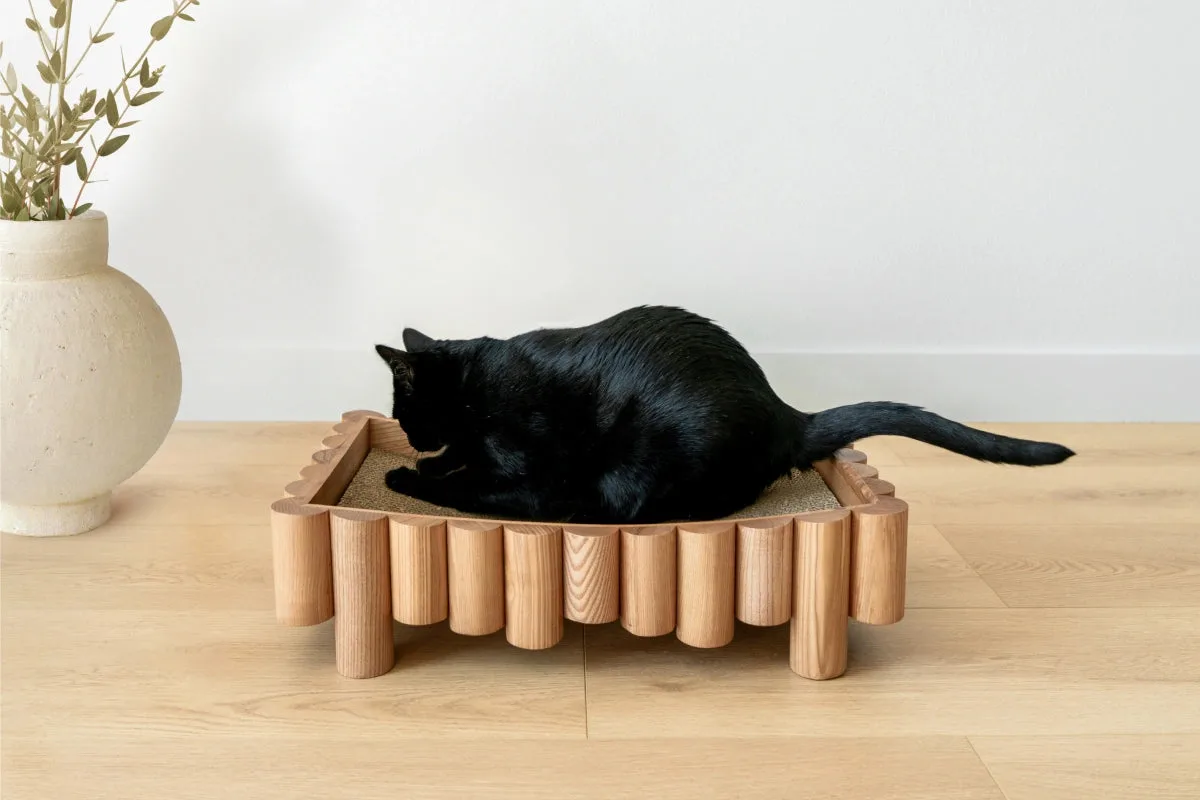
- 2x Bambu Refills: 2x Bambu Refills are a two-pack of cardboard inserts made specifically for the Bambu scratcher, installed by removing the old insert and placing the new one in. A straightforward swap for a worn Bambu pad, and the second refill gives you a spare for the next replacement cycle.
- Lua Scratching Post: Lua Scratching Post is a direct replacement part for the Lua cat tree, providing a dedicated scratching and stretching surface. Choose this when the sisal post, not a cardboard pad, is the worn component, so you extend the life of the existing tree instead of replacing it.