Quick answer
Your child is ready for a booster seat when they outgrow the height or weight limit of their forward-facing harnessed seat—typically around age 4 and 40 pounds—and can sit properly without slouching or playing with the seat belt.
Why waiting until your child is truly ready matters
Moving to a booster too early can compromise safety because the vehicle's lap and shoulder belt are designed for older children and adults. A harnessed seat distributes crash forces across the strongest parts of the body, while a booster relies on the child staying in position and the belt fitting correctly.
Every child develops at a different pace. Age is a guideline, but the real deciding factors are your child's height, weight, and ability to sit still for the entire ride.
Common transition mistakes to avoid
One common mistake is switching because the child complains or because a sibling already uses a booster. Another is assuming a child is ready as soon as they turn 4. Always check the specific limits of your current car seat first.
A harnessed booster like the Evenflo Chase LX gives you extra flexibility: it works as a 5-point harness for children 30-40 pounds and later converts to a belt-positioning booster. This lets you keep your child in a harness longer without buying a new seat.
Frequently Asked Questions About the Transition
What is the minimum age for a booster seat?
Most booster seats have a minimum age of 4 years, but age alone is not enough. Your child must also meet the weight and height requirements—usually at least 40 pounds and 38 inches tall—and be mature enough to sit properly without leaning or playing with the belt. Check your car seat's label for exact limits; don't rely on age alone.
How do I know my child has outgrown their forward-facing harnessed seat?
Your child has outgrown the seat when either their shoulders reach the top harness slots or their ears reach the top of the seat shell. Also check the weight limit—most forward-facing seats max out at 40-65 pounds. If any of these limits are exceeded, it's time to move to a booster or a combination seat with a higher harness weight limit. Measure your child's seated shoulder height and compare it to the top harness slot position.
Can I use a harnessed booster instead of switching straight to a high-back booster?
Yes. A harnessed booster, such as the Evenflo Chase LX, lets you continue using a 5-point harness until your child reaches the booster's minimum requirements. This is often a safer choice because the harness keeps your child secure even if they fall asleep or fidget. Once they outgrow the harness, the same seat converts to a belt-positioning booster. A harnessed booster is a good option if your child is close to the minimum booster requirements but not quite ready.
What if my child is tall but still under 40 pounds?
If your child has exceeded the height limit of their forward-facing seat but is still under 40 pounds, you need a seat with a higher harness weight limit—not a booster. Look for a combination seat that harnesses up to 50-65 pounds. Using a booster before your child reaches the minimum weight can lead to poor belt fit and increased injury risk. Never move to a booster based on height alone; weight is equally important.
How do I know the seat belt fits correctly in a booster?
The lap belt should lie flat across your child's upper thighs, not on the stomach. The shoulder belt should cross the center of the shoulder and chest, not the neck or face. If the belt touches the neck, try a high-back booster with belt guides. Your child must keep the shoulder belt behind their arm at all times—never tuck it under their arm or behind their back. Do a 5-second fit check every time your child gets in the car.
Product that supports a longer harness use
-
Chase LX Harnessed Booster Car Seat: The Evenflo Chase LX Harnessed Booster converts from a 5-point harness booster for use 30-40 lb to a belt-positioning booster. This means you can keep your child in a harness until they reach the minimum booster weight, then switch to booster mode with the same seat—no need to buy a separate booster later.
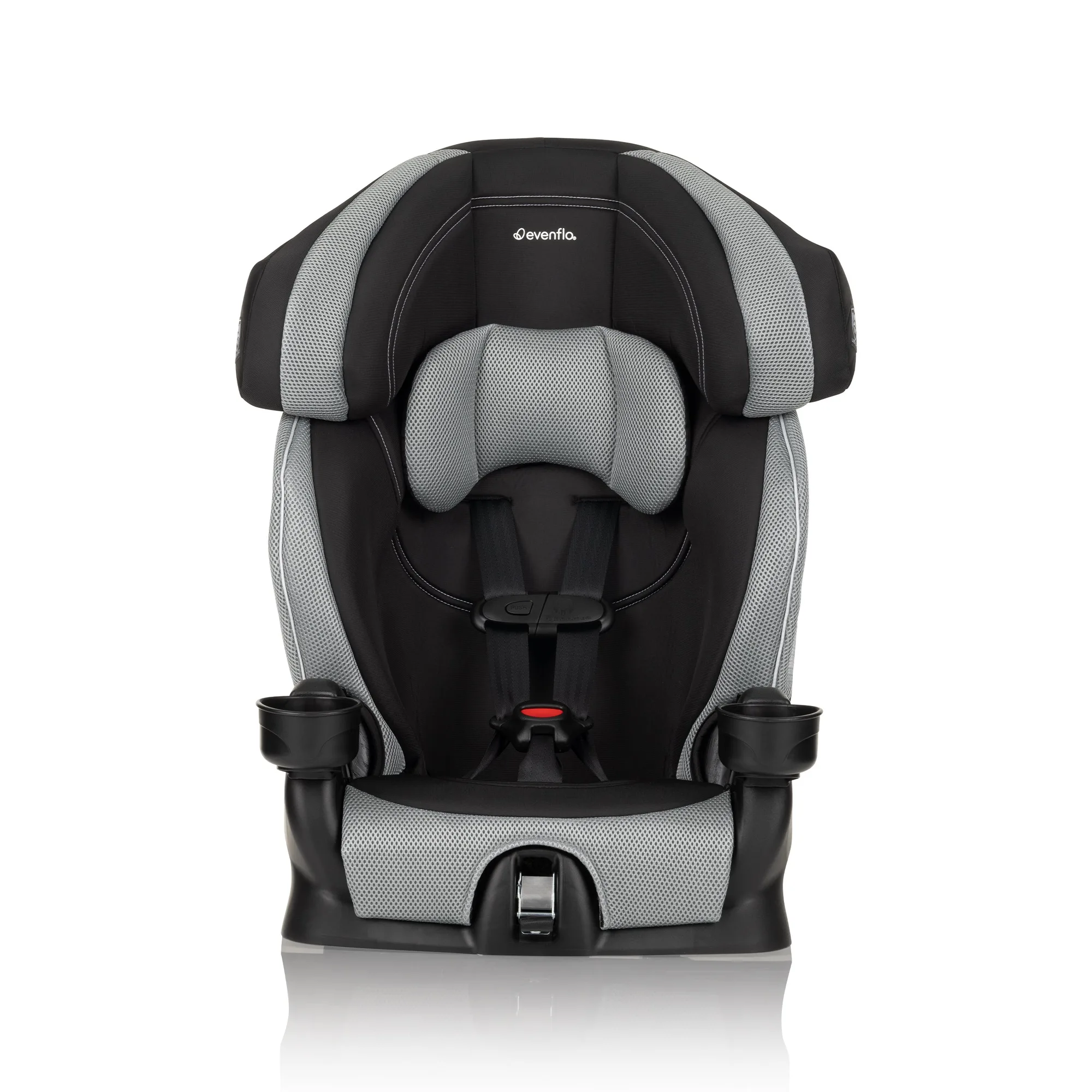
Chase LX Harnessed Booster Car Seat