Quick answer
Upgrade when fit breaks down, not when a birthday arrives. If your child's knees rise above the saddle at the bottom of the pedal stroke, they stand over the frame with no clearance, or they can no longer steer and brake comfortably, it's time to size up. A geared bike like the Prevelo Alpha Three or Alpha Four fits that next stage.
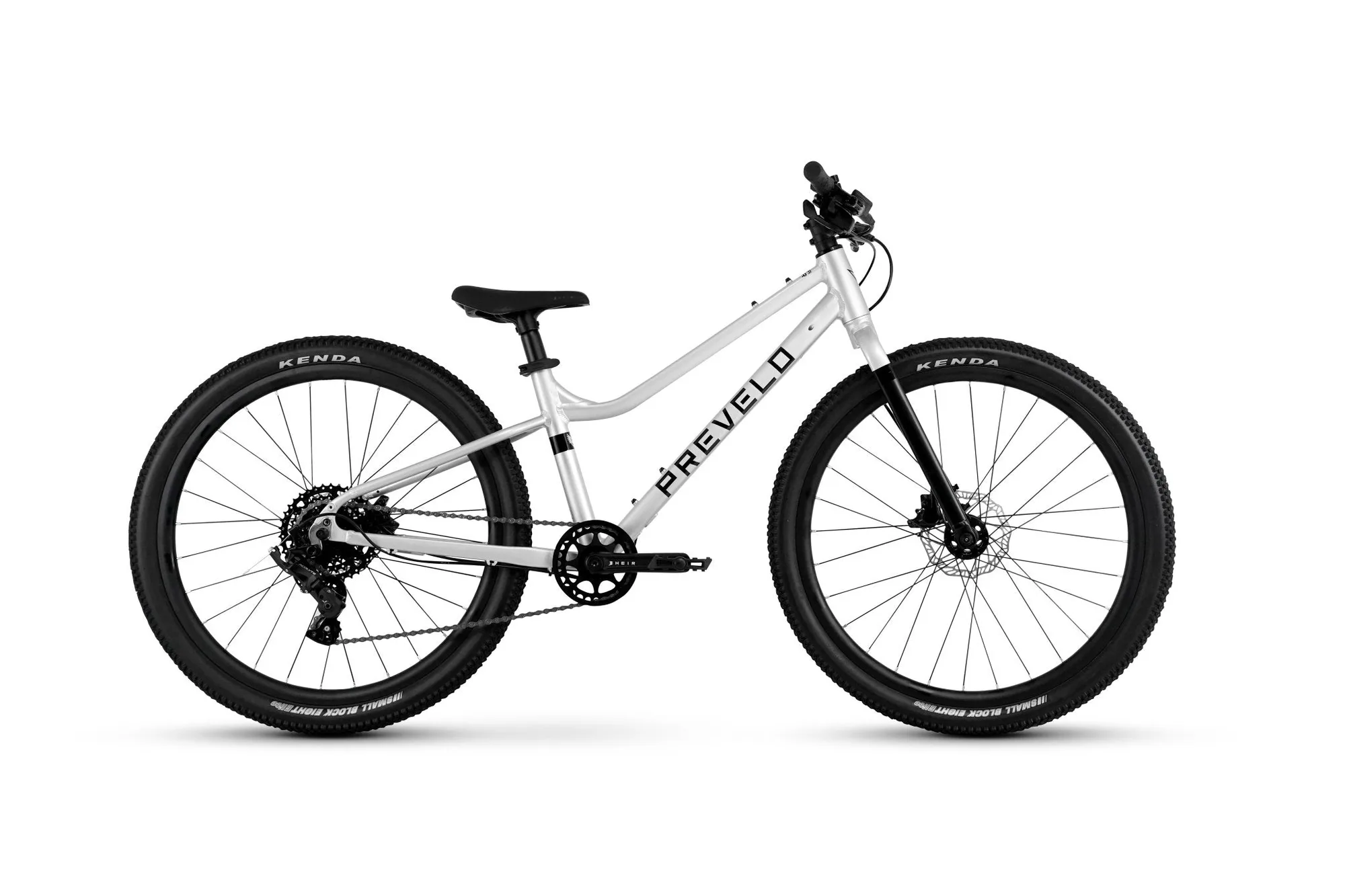
Alpha Four
Kids grow in spurts, and bikes don't. The tricky part is that a bike can look fine in the driveway while your child is quietly working around a fit that stopped working months ago. Parents often ask when to upgrade kids bike setups, and the honest answer is that the calendar matters less than what you see when your child actually rides.
This guide walks through the real symptoms of an outgrown bike, what each one means, and what to do about it. It also covers the point where a size-up is the right call and when a simple adjustment, or a different bike altogether, makes more sense.
Why fit matters more than age or wheel size
A bike that's too small forces your child into awkward positions: knees splaying out, arms locked straight, weight shifted too far forward. That's uncomfortable, but it also makes steering and braking harder, which is exactly when confidence drops. A bike that's too big brings its own problems, like tiptoeing at stops and reaching for levers that are too far from small hands.
This is why kids bike sizing should be judged from the saddle, not the spec sheet. Two children the same age can need different sizes. Watch how your child sits, reaches, and stops. Those three things tell you more than height alone, and they're the fastest way to spot a child outgrew bike situation before it turns into a safety issue.
- Check fit with the child on the bike, feet on the pedals, not standing next to it.
- Have them squeeze the brake levers while you watch their hand position.
- Re-check after every growth spurt, roughly every few months.
Symptom: knees ride high and the saddle is maxed out
If the seat post is near its limit and your child's knees still come up high at the top of the pedal stroke, the frame is simply too small. Raising the saddle further only makes the reach to the ground worse. This is the clearest sign that a bigger frame, not a bigger seat post, is the answer.
A properly sized bike lets the leg extend with a slight bend at the bottom of the stroke while the child can still touch down at stops. When those two things can't happen at the same time, you've hit the limit of that frame.
- Look for a minimum insertion line on the seat post. If you're near it, stop raising.
Symptom: no standover clearance and wobbly stops
Standover height is the space between your child and the top tube when they straddle the bike. When that gap disappears, every stop becomes a balancing act. You'll see it as hesitant stops, feet dragging, or your child putting a foot down early because they don't trust the bike underneath them.
This is also where braking confidence erodes. If your child has to shift their whole body to reach the levers, they'll brake later and softer than they should. That's a fit problem, not a bravery problem, and it usually resolves the moment they're on the right size.
- Have your child straddle the bike flat-footed. There should be visible clearance above the top tube.
Symptom: the bike feels heavy and slow on every ride
Sometimes the issue isn't size at all. A heavy bike with worn tires, dragging brakes, or a drivetrain that needs service will feel slow no matter how well it fits. Before you shop, check tire pressure, spin the wheels, and test the brakes. If the bike rolls freely and still feels like a chore, weight and geometry may be the real problem.
This is common when a child moves from neighborhood riding to longer paths and light trails. A lighter, geared bike changes the experience because the gearing lets them keep a comfortable cadence instead of mashing one gear up every rise.
- Inflate tires to the pressure printed on the sidewall before judging the bike.
- Spin each wheel and watch for brake rub or a wobble.
Symptom: your child avoids the bike or asks for a different one
Behavior is data. A child who used to ride daily and now finds excuses is often telling you the bike stopped being fun. Sometimes that's fit. Sometimes it's that the terrain changed and the bike didn't. Either way, it's worth taking seriously before riding becomes something they used to do.
Ask a simple question: what feels hard about the bike? Kids are surprisingly specific. 'My knees hit the handlebars' or 'I can't stop fast' tells you more than any measurement you'll take in the garage.
- Ride alongside your child once and watch what they do at corners and stops.
Symptom: the drivetrain can't keep up with the rides you're doing
A single-speed bike is perfect for flat neighborhoods and learning to pedal. It becomes a limitation when your rides include hills, longer distances, or light trails. That's not a size issue, it's a capability issue, and it's the point where a geared bike earns its place.
This is the natural moment for a prevelo bike upgrade. A bike with real gearing and reliable brakes lets a growing rider take on routes that were previously out of reach, and it usually resets their enthusiasm at the same time.
- If your child stands and grinds on every small hill, gearing is the missing piece.
Fit diagnosis: symptom, cause, action, and when to stop
- Knees high, saddle maxed out: The frame is too small. Raising the saddle further compromises reach to the ground and control at stops. Move up a wheel size. If your child is on a 20-inch bike, the Alpha Four is the logical next step.
- No standover clearance, hesitant stops: The child can no longer straddle the bike comfortably, so every stop feels unstable and braking confidence drops. Size up rather than lowering the saddle, which only worsens pedaling position.
- Bike feels heavy and slow despite good fit: Check tire pressure, brake rub, and wheel spin first. If it still feels like work, the bike's weight or gearing is the limit. Fix the maintenance issues before buying. If they're already fine, a lighter geared bike is the answer.
- Child avoids riding or asks for something different: Ask what feels hard. The answer usually points to fit, braking reach, or terrain the current bike can't handle. Address the specific complaint instead of guessing at a whole new bike.
- Hills and longer rides have become the norm: A single-speed bike can't keep a comfortable cadence on varied terrain, and your child ends up grinding instead of riding. This is a capability upgrade, not a size upgrade. Gearing is the deciding factor.
- Stop and reconsider if the child is between sizes: If your child fits the smaller bike with room to spare and rides it confidently, another season on it is usually better than jumping ahead. Size up when fit breaks, not when a growth chart says so.
Prevelo options that match each stage
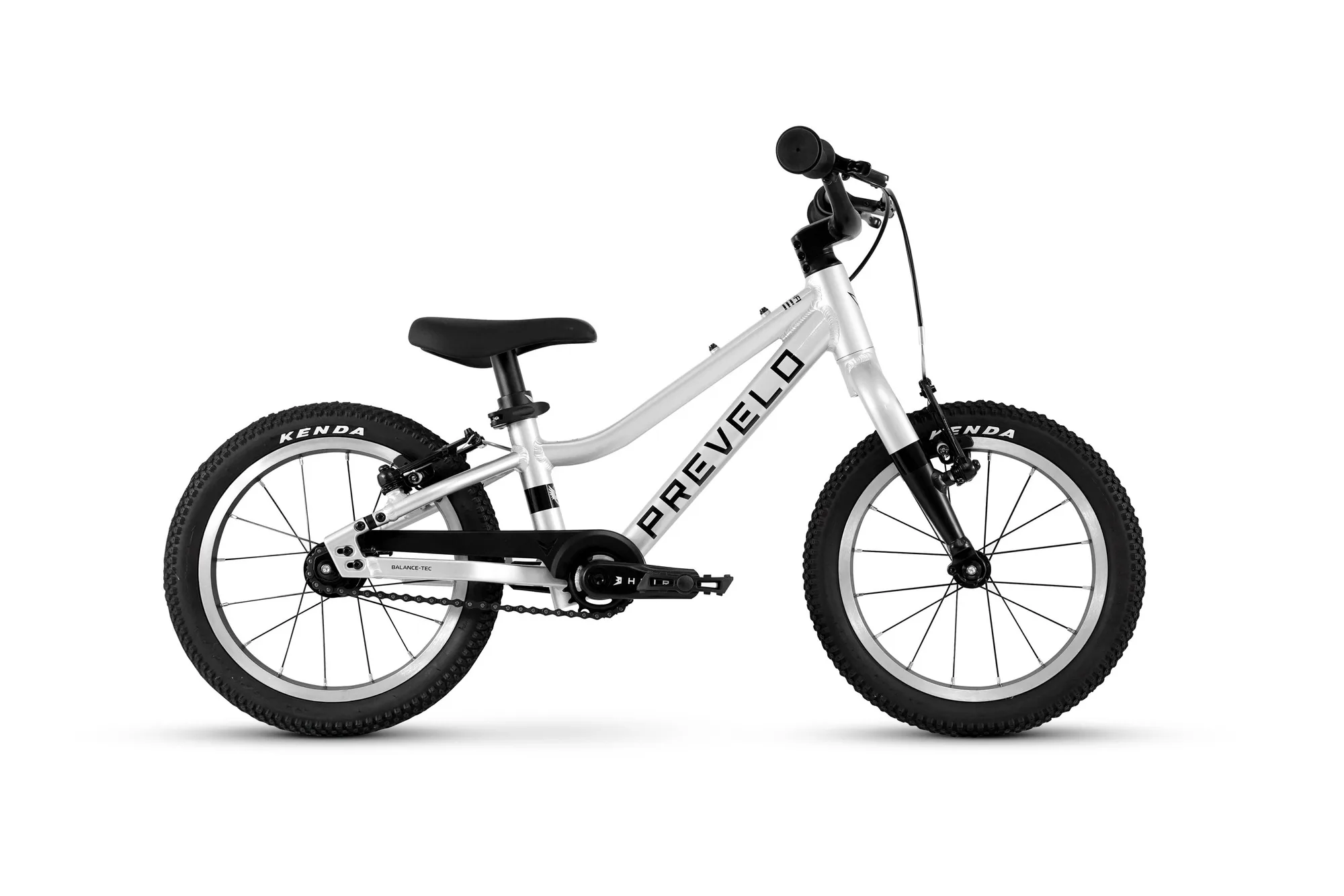
- Alpha One: The Alpha One is the smallest pedal bike in the Prevelo lineup, built to help young riders transition confidently to pedaling, with front and rear V-brakes, a narrow Q-factor crank, and a rear wheel with a freewheel. The BALANCE-TEC kit converts it to a balance bike. This is the right starting point for a child who is still learning to pedal. The balance bike conversion extends its useful life instead of forcing an early upgrade.
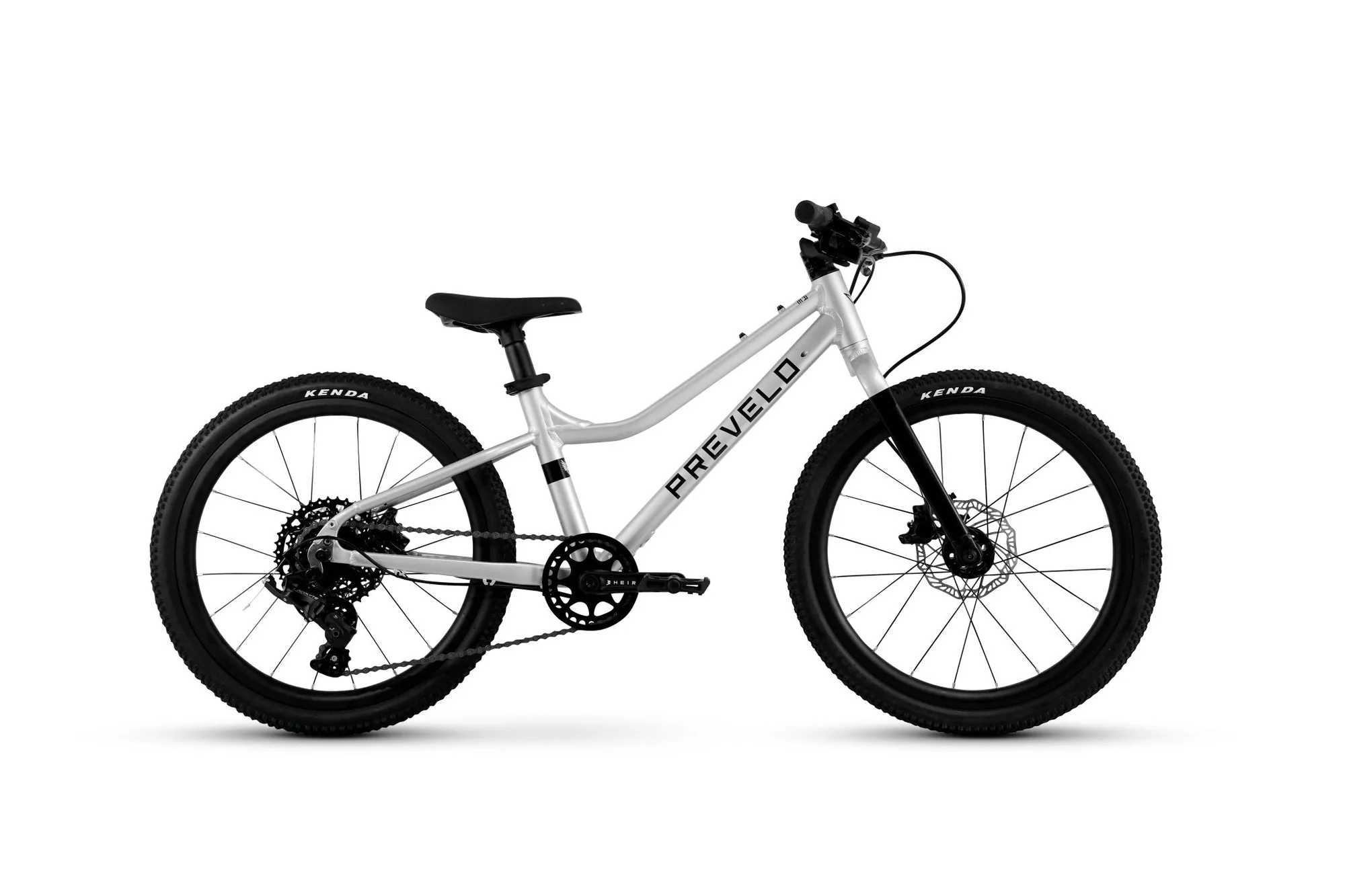
- Alpha Three: The Alpha Three Mk III is a lightweight 20-inch geared bike for confident riders ages 5 to 9, with an 8-speed Microshift drivetrain, wide 11-38T gearing, a clutched derailleur, and Promax hydraulic disc brakes. This is the size-up for a rider who has outgrown a first pedal bike and is ready for hills, paths, and light trails with brakes that are easy for small hands to use.
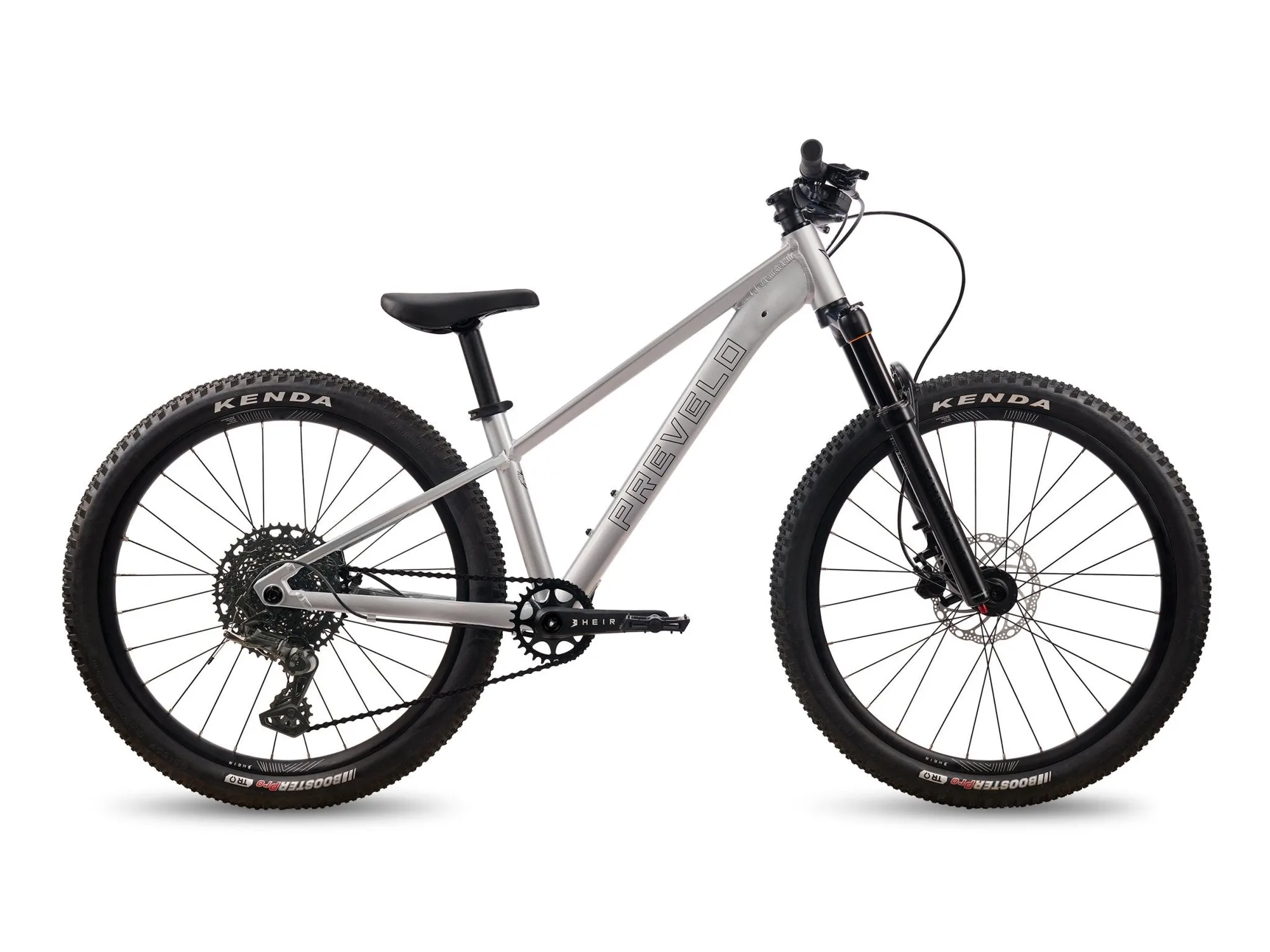
- Alpha Four: The Alpha Four Mk III is a versatile 24-inch geared bike for confident riders ages 7 to 11, with an 8-speed Microshift Acolyte drivetrain, an 11-38T cassette, a clutched derailleur, Promax hydraulic disc brakes, and tubeless-ready double-wall 24-inch rims. This is the next step when a 20-inch bike is maxed out. The wider gearing and hydraulic brakes support longer rides and rougher surfaces without pushing the child onto an adult bike too soon.
- Zulu Four: The Zulu Four packs high-performance mountain bike features into a 24-inch wheel size package, with every component chosen to keep it light and capable for young riders on trails. If your child's riding has moved toward real trails rather than paths, this is the option that matches that intent instead of a general-purpose bike.
Measure less and watch more. The signs that your child has outgrown their bike show up in how they sit, stop, and talk about riding, not in a number on a wall. When those signs stack up, size up to a bike that matches where they're actually riding, whether that's the Alpha Three, the Alpha Four, or a trail-focused Zulu Four.