Quick Answer
Use antimicrobial hydrogel on clean, minor wounds, burns, rashes, or itchy skin to protect and soothe while healing. Skip it for deep, bleeding, or infected wounds that need veterinary attention.
Why Hydrogel Beats Ointments for Some Wounds
Unlike thick ointments that can trap heat and debris, a hydrogel creates a moist environment that supports natural healing while letting the wound breathe. It adheres to the site and forms a protective layer, which is especially useful on areas that rub against surfaces or get licked.
For dogs that lick or chew at their skin, a non-toxic formula matters. Antimicrobial hydrogel is safe if ingested, so you don't have to worry if your dog manages to reach the spot before the cone goes on.
When to Choose a Different Product
Hydrogel is not a substitute for veterinary care. If the wound is deep, gaping, heavily bleeding, or shows signs of infection like pus, swelling, or a foul odor, call your vet first. Similarly, if the wound is from an animal bite or a puncture, it needs professional cleaning and possibly antibiotics.
For chronic or widespread skin issues, a medicated shampoo or oral medication may be more appropriate. Hydrogel treats the surface; it doesn't address underlying allergies or systemic infections.
Diagnosis Guide: When to Use Hydrogel
- Symptom: Minor scrapes, abrasions, small cuts, superficial burns, rashes, or itchy, dry skin patches. If the wound is clean and not deep, hydrogel is a reasonable first aid.
- Likely Cause: Surface damage to the skin barrier from friction, heat, or mild irritation—not a systemic or deep-tissue problem. If the cause is a known allergy or infection, treat the underlying issue instead.
- Corrective Action: Clean the area gently with a pet-safe antiseptic, pat dry, then apply a thin layer of antimicrobial hydrogel. Reapply as directed, usually 1–2 times daily, and monitor for improvement. Watch for increased redness, swelling, or discharge—these signal the need to stop and call your vet.
- Stop and Choose Another Option: Stop using hydrogel and seek veterinary care if the wound is deep, bleeding heavily, has been present for more than 24 hours without improvement, or shows signs of infection (pus, heat, odor, or fever). Also choose another option for puncture wounds or animal bites. Hydrogel is for minor surface issues only; anything more serious requires professional assessment.
Product Facts
-
Vetericyn Antimicrobial Hydrogel: Vetericyn Antimicrobial Hydrogel adheres to the application site, forming an extra protective layer to support healing and prevent further irritation. This means the gel stays where you put it, protecting the wound from dirt and friction while your dog moves around.
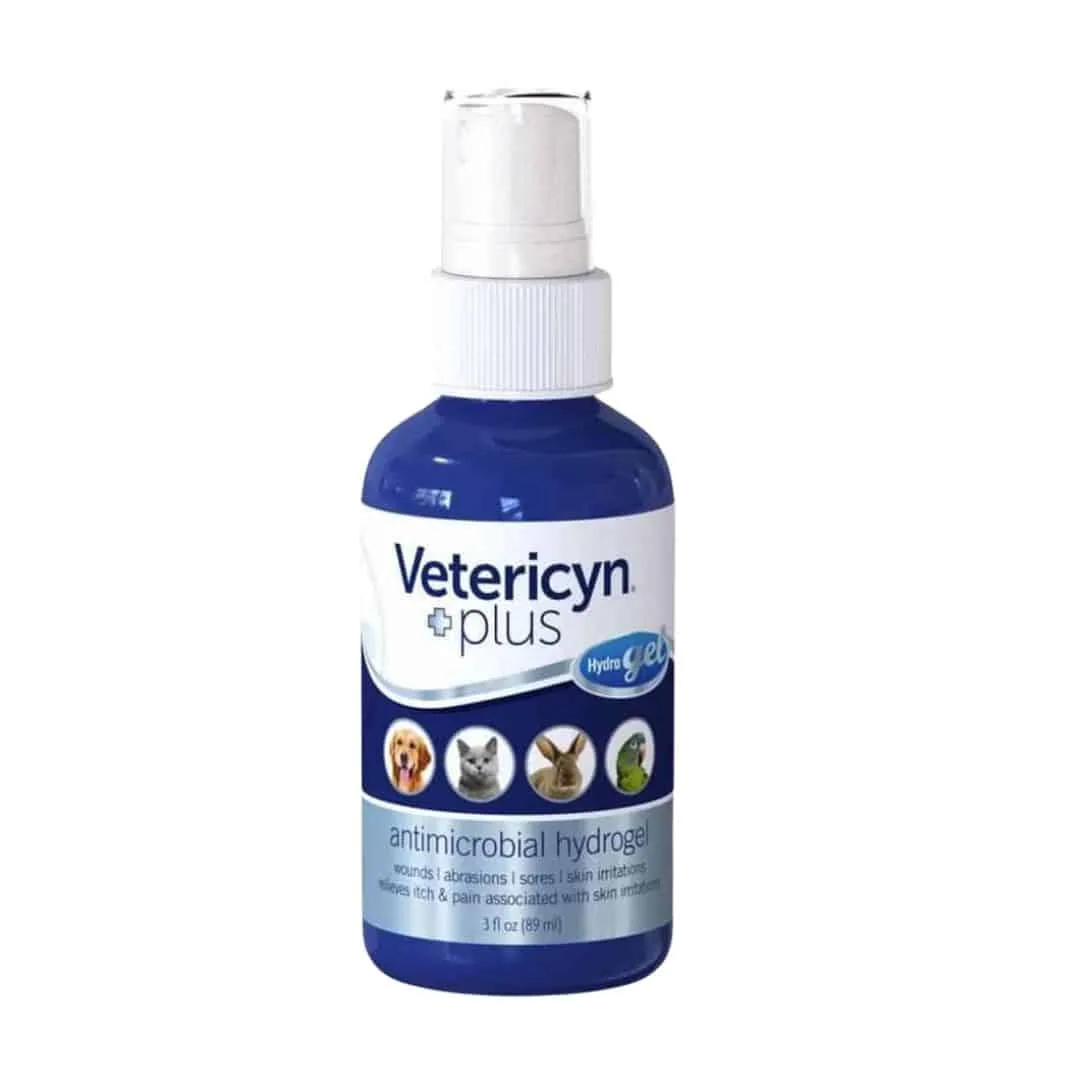
Vetericyn Antimicrobial Hydrogel
-
Vetericyn Antimicrobial Hydrogel: It is safe and non-toxic if licked or ingested, making it suitable for all animals and all life stages. You can apply it without worrying about harmful effects if your dog licks the area—a common challenge with topical treatments.