Quick Answer
Aphakic contact lenses need special fittings because they correct extreme refractive errors and often fit eyes that are still developing or have unusual curves. A standard off-the-shelf lens won't provide the precise alignment and vision correction needed.
Why High Power Changes the Fitting
Aphakic lenses correct the absence of the eye's natural lens, which means the prescription is typically very high. High-power lenses have thicker optics and different edge profiles than standard contacts, so the fit must be evaluated to avoid pressure points or excessive movement.
The base curve and diameter must match the cornea's shape closely. A lens that's too flat or too steep can cause discomfort, poor vision, or even corneal damage. That's why your eye care provider measures your eye carefully before ordering.
Pediatric Considerations
For children, especially infants, the eye is still growing. The corneal diameter and curvature change over time, so the fitting process often includes more frequent follow-ups to ensure the lens continues to fit well.
Pediatric patients may not be able to communicate discomfort clearly, so the fitter relies on objective signs like lens centration, movement, and the child's behavior. This makes the fitting process more involved than for adults.
Aphakic Lens Fitting FAQ
Why can't I just order my aphakic prescription online without a fitting?
Aphakic lenses have high power and specific fitting characteristics. Without a proper fitting, you risk poor vision, discomfort, or corneal complications. A fitting ensures the base curve, diameter, and power are correct for your eye. Always get a fitting before ordering aphakic lenses, even if you have a current prescription.
How often should a child with aphakic contacts be refitted?
Children's eyes grow rapidly, so fittings may be needed every few months or at least annually. Your eye care provider will monitor corneal changes and adjust the lens parameters as needed. Schedule regular follow-ups to ensure the lens continues to fit safely as your child grows.
What happens during an aphakic contact lens fitting?
The fitter measures your cornea (or your child's) using a keratometer or topographer, evaluates the tear film, and may place a trial lens to assess movement and centration. They'll also check vision and comfort before finalizing the order. Expect a thorough evaluation; don't rush the process—it's key to a successful fit.
Product Spotlight
-
Silsoft Super Plus Aphakic Pediatric Contact Lenses: Silsoft Super Plus Aphakic Pediatric Contact Lenses are a custom annual lens for aphakia, available by order through Bausch & Lomb. Because each lens is custom-made, your fitting determines the exact parameters Bausch & Lomb will use, making the fitting essential for a successful outcome.
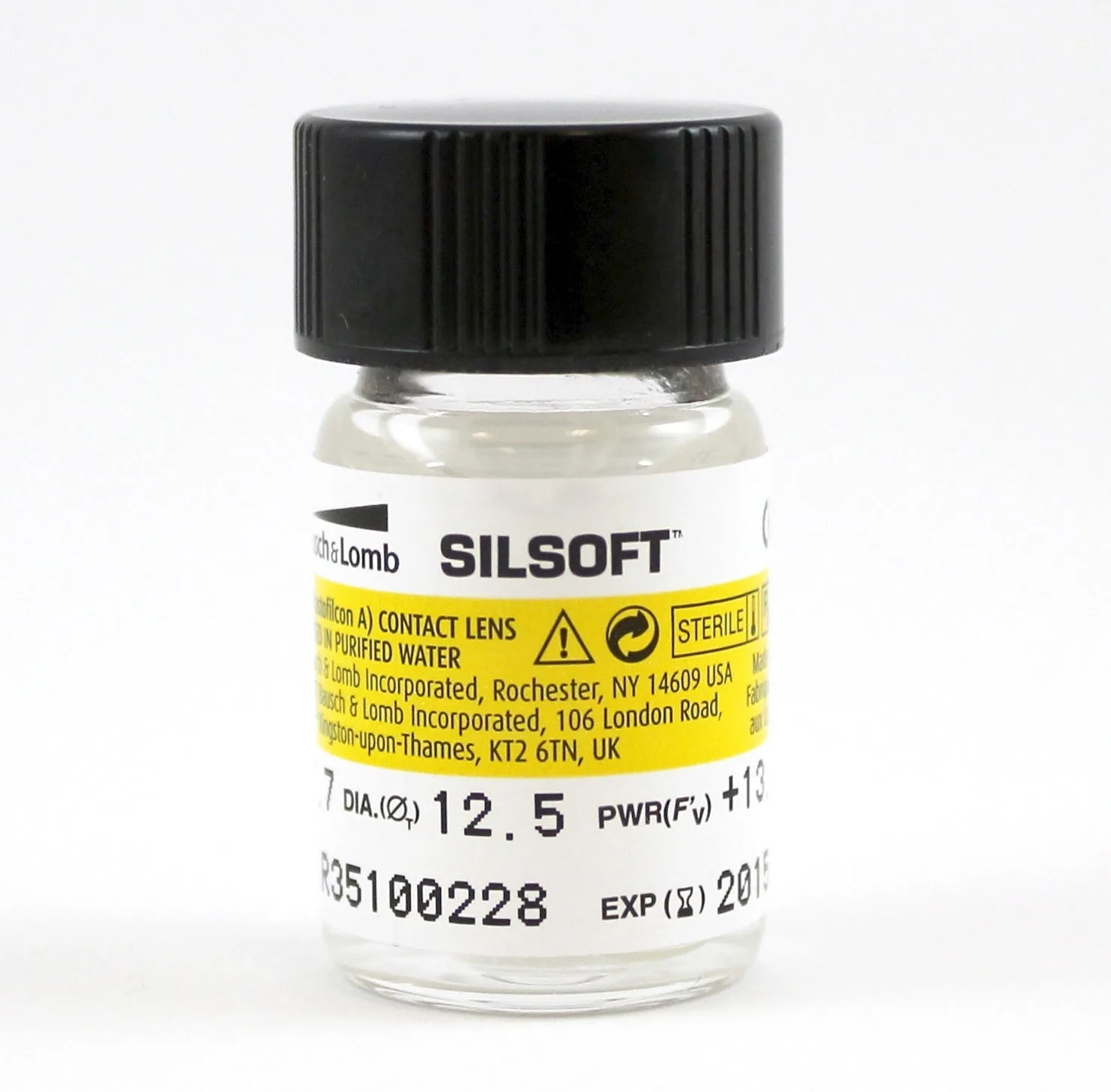
Silsoft Super Plus Aphakic Pediatric Contact Lenses