Quick answer
Aprons fade because dye molecules break down from UV light, bleach, hot water, and friction. Wash in cold water with a color-safe detergent, dry away from direct sun, and skip chlorine bleach. If the fabric has already lost most of its color, no product will restore it—replace the apron instead of trying to fix it.
What Actually Breaks Down Apron Dye
Cotton and canvas aprons are dyed with molecules that sit on or inside the fiber. Three things attack those molecules: ultraviolet light from the sun, oxidizing agents like chlorine bleach, and heat above roughly 120°F. Friction from repeated washing and drying also wears away surface dye, which is why the center of an apron often fades faster than the edges.
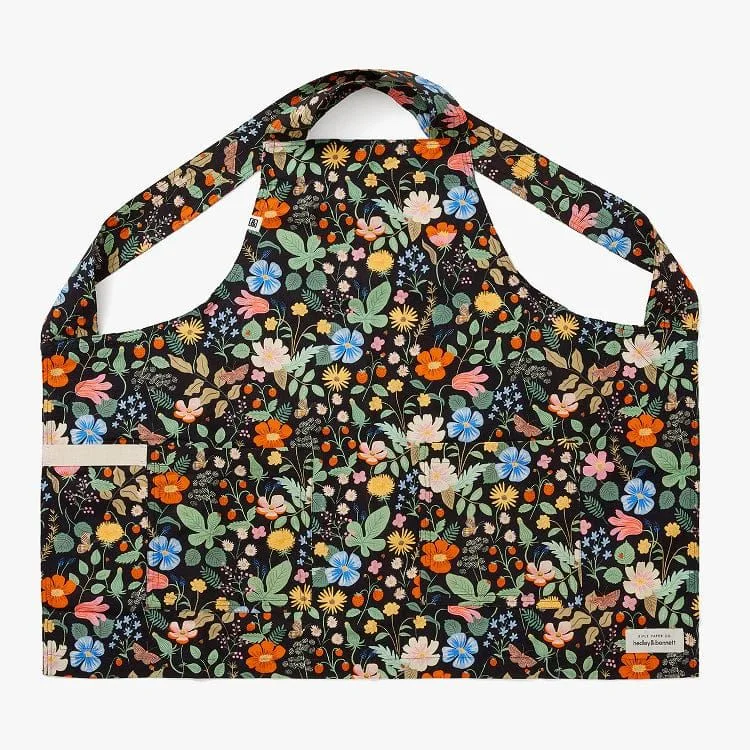
Printed patterns—like the Liberty Fabric and Rifle Paper Co. designs in Hedley & Bennett's collection—fade differently than solid dyes. The ink sits on top of the fabric, so it dulls from abrasion first, while solid-dyed canvas fades from the inside out as UV and chemicals penetrate the fiber.
How to Wash Aprons to Prevent Fading
Turn the apron inside out before washing. This puts the wear surface against itself instead of against the drum, cutting friction on the visible side. Use cold water on a gentle or normal cycle with a detergent labeled color-safe or free of bleach and optical brighteners. Measure the detergent—using more than the label recommends leaves residue that can dull color over time.
Skip fabric softener. It coats fibers and can trap detergent residue, which makes colors look dingy. If you need to soften canvas, add a half-cup of white vinegar to the rinse cycle instead. Wash aprons separately from items with zippers, hooks, or heavy hardware that can abrade the fabric.
Drying and Storage Choices That Protect Color
Air-dry aprons whenever possible. If you use a dryer, choose the lowest heat setting and remove the apron while it is still slightly damp. High heat does two things: it sets wrinkles and it accelerates dye loss. Line-drying in direct sun is the fastest way to fade an apron, so dry indoors or in shade if color matters to you.
Store aprons out of direct sunlight. A hook inside a cabinet door or a drawer works better than a sunny wall peg. If you hang aprons in a bright kitchen, rotate them so one apron is not always facing the window.
When Fading Is Actually Staining or Bleach Damage
Not every color change is fading. Grease splatter can darken fabric, and bleach splashes leave white or pink spots that look like fading but are chemical burns to the dye. If the color loss is patchy and follows a splash pattern, it is bleach damage, not wear. That damage is permanent.
If the whole apron has lightened evenly, that is normal UV and wash fade. If only the edges or pocket areas are lighter, that is friction. Matching the pattern to the cause tells you whether a color-care routine will help or whether you are looking at irreversible damage.
Fading Diagnosis: Symptom, Cause, Fix, Stop Point
- Even, overall lightening: Caused by UV exposure and repeated hot-water washing. Switch to cold water, color-safe detergent, and shaded drying. If the apron is more than a few shades lighter, the dye is gone. Prevention works going forward; it will not bring back lost color.
- Patchy white or pink spots: Bleach or cleaning-spray splash. This is chemical damage to the dye, not fading. No wash routine reverses it. Retire the apron or repurpose it for messy tasks.
- Lighter edges and pocket outlines: Friction from washing and daily wear. Wash inside out on gentle, and avoid overloading the machine. Some edge fade is normal on canvas. If edges are fraying too, replace rather than repair.
Aprons Built for Color Longevity
- Made with Liberty Fabric Emma & Georgina Essential Apron: Made with Liberty Fabric Emma & Georgina Essential Apron, part of the Essential Apron collection and designed for durability and everyday use. A durable everyday apron holds up to frequent washing, which is the main time color loss happens.
- Made with Liberty Fabric Betsy Meadow Navy Smock: Made with Liberty Fabric Betsy Meadow Navy Smock, a smock-style apron with a navy colorway and a floral Liberty print. Darker navy grounds hide early fading better than pale pastels, so you get more wear before color loss shows.
- Rifle Paper Co. Artichoke Forest Smock: Rifle Paper Co. Artichoke Forest Smock, a smock-style apron with a botanical print from the Rifle Paper Co. collaboration. Printed patterns mask uneven fade because the eye reads the design, not a flat color field.