Quick Answer
Astigmatism contacts need a stability design to keep the lens oriented correctly on your eye, so your vision stays sharp and consistent. If you notice blurry or shifting vision, the lens may be rotating or fitting improperly—time to see your eye care professional.
How Stability Design Works
Unlike regular spherical contacts, astigmatism lenses have different powers in different meridians of the lens. If the lens rotates, the corrective power shifts out of alignment, causing blur. To prevent this, toric lenses use a stability design—like a ballast or prism—that uses gravity and eyelid pressure to keep the lens in the correct orientation.
The stability design is built into the lens geometry, so it doesn't require any extra effort from you. But it does mean the lens must fit well; a poor fit can lead to rotation and inconsistent vision.
What Can Go Wrong
If your astigmatism contacts feel comfortable but your vision is blurry or fluctuates, the lens may be rotating. This can happen if the lens is too loose or too tight, or if your prescription has changed. Other signs include discomfort, redness, or the lens moving when you blink.
A proper fitting is essential. Your eye doctor measures the curvature of your eye and the axis of your astigmatism to choose a lens that fits well and stays in place.
Diagnosing Your Astigmatism Contact Lens Issues
- Symptom: Blurry or fluctuating vision, especially when you blink or look in different directions. If you notice this, your lens may be rotating or not fitting properly.
- Likely Cause: The lens's stability design isn't keeping it aligned, possibly due to an improper fit, a changed prescription, or dry eyes. Check your lens for damage or debris, and ensure your eyes are well-lubricated.
- Corrective Action: Schedule a contact lens fitting with your eye care professional. They can assess the fit and adjust your prescription or recommend a different lens design. Do not continue wearing lenses that cause blurry vision; it can strain your eyes and affect your daily activities.
- Stop or Choose Another Option: If you experience pain, redness, or sudden vision changes, remove the lenses immediately and contact your eye doctor. If your prescription is stable and the fit is good, but you still have issues, ask about alternative astigmatism lens designs. Your eye health is the priority; never ignore persistent discomfort or vision problems.
Product Spotlight
-
Precision7 For Astigmatism - 12 pack: Precision7 for Astigmatism is a weekly disposable soft contact lens made of 45% serafilcon A, offering hydration and UV/blue light protection. This lens is designed for astigmatism, meaning it includes a stability design to keep your vision clear throughout the day.
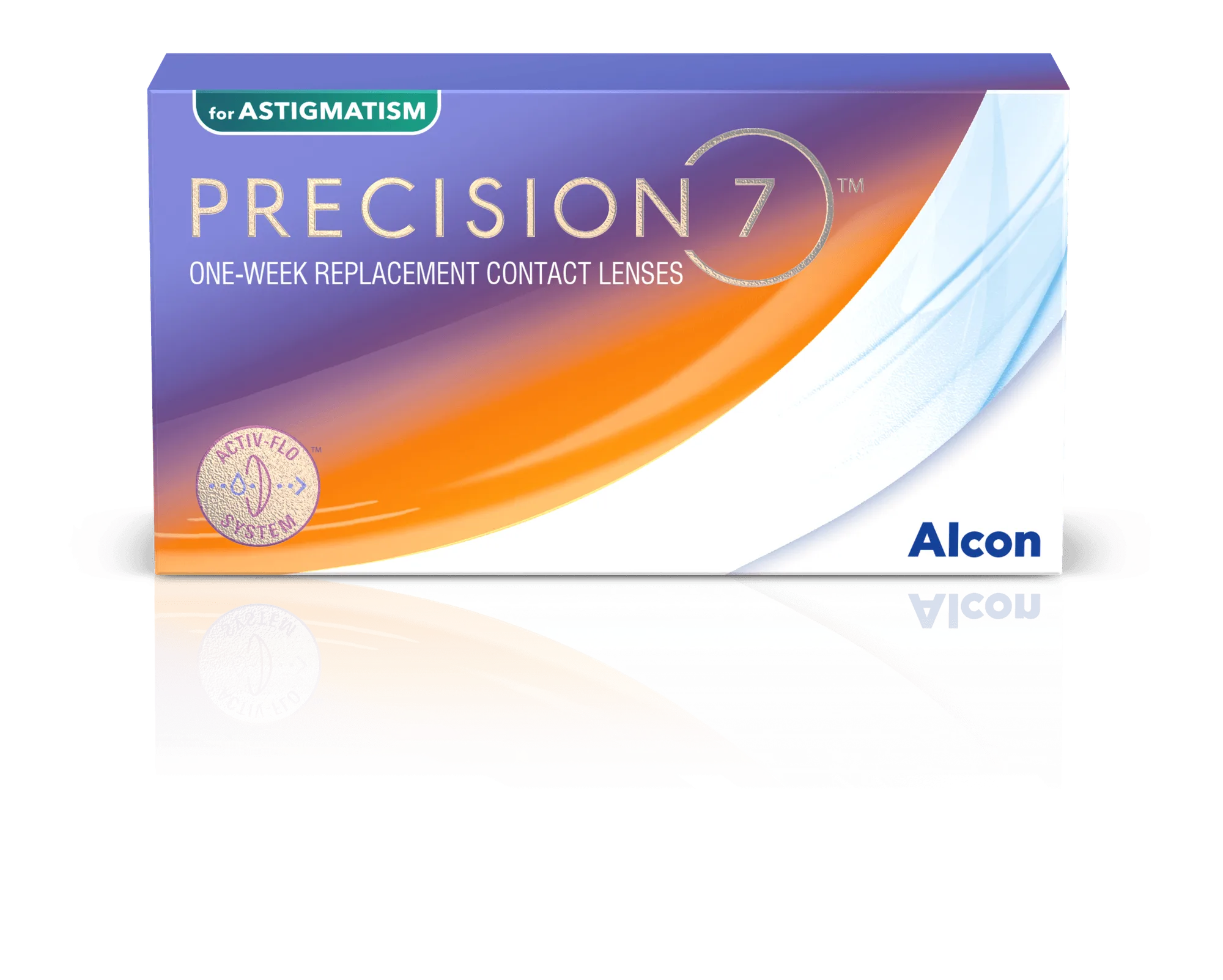
Precision7 For Astigmatism - 12 pack