Quick answer
Babies drop sippy cups for a few common reasons—grip, curiosity, or just testing gravity. The fastest fix is to switch to a durable, easy-to-hold silicone cup like the Duck Duck Juice Happy Sippy Cup and use the simple troubleshooting steps below.
Why dropping happens: grip, curiosity, and gravity
Dropping a cup is rarely a behavior problem. Around 6–12 months, babies are learning cause and effect. Letting go is a science experiment. They also may not have the hand strength or coordination to hold a slippery plastic cup for long.
Another common cause: the cup is too heavy or awkward to grip. If your baby’s hands are small, a wide or slick cup can slip easily. The solution isn’t punishment—it’s making the cup easier to hold and more interesting to keep.
Teething can also play a role. Sore gums make babies chew on the spout or lid, which can loosen their grip. Offering a safe silicone cup that’s gentle on gums can help.
When dropping is a phase vs. a problem
Most dropping is a normal phase that passes with practice. But if your baby consistently refuses the cup, seems frustrated, or you’re cleaning up more spills than sips, it may be time to rethink the cup design.
If your baby is older (12+ months) and still dropping constantly, check the cup’s weight and handle size. A cup that’s too heavy or has handles that are too big can be hard to manage. Silicone cups are lighter and easier to grip than many plastic alternatives.
Diagnose and fix the drop
- Symptom: Baby drops the cup right after you hand it over: Likely cause: the cup is too slippery or too heavy for their grip. Corrective action: switch to a lightweight silicone cup with handles, like the Happy Sippy, and let your baby practice holding it during play (empty) to build confidence. If the cup is still dropped after a week of practice, check the handle size—if handles are too wide, try a cup without handles and guide their hands.
- Symptom: Baby drops the cup during drinking, not before: Likely cause: they’re distracted or testing what happens when they let go. Corrective action: make drinking a focused activity—sit face-to-face, minimize distractions, and gently bring the cup back with a cheerful 'uh-oh, let’s try again.' If distraction isn’t the issue, try a cup with a weighted or angled spout to make drinking easier and reduce the urge to tilt and drop.
- Symptom: Baby throws the cup across the room: Likely cause: they’ve learned that dropping gets a reaction—it’s a game. Corrective action: stay neutral, pick the cup up without fuss, and offer it once more. If they throw again, calmly end the drinking session and try again later. If throwing becomes a pattern, consider a cup with a spill-proof lid and a strap or handle that clips to a high chair—so there’s less to throw.
Silicone sippy cups that help
-
Duck Duck Juice Happy Sippy Cup: The Duck Duck Juice Happy Sippy Cup is made entirely of food-safe silicone with a simple 3-piece design and handles for little learners. The soft, grippy silicone is easier for small hands to hold, and the unbreakable build means drops won’t cause cracks or leaks.
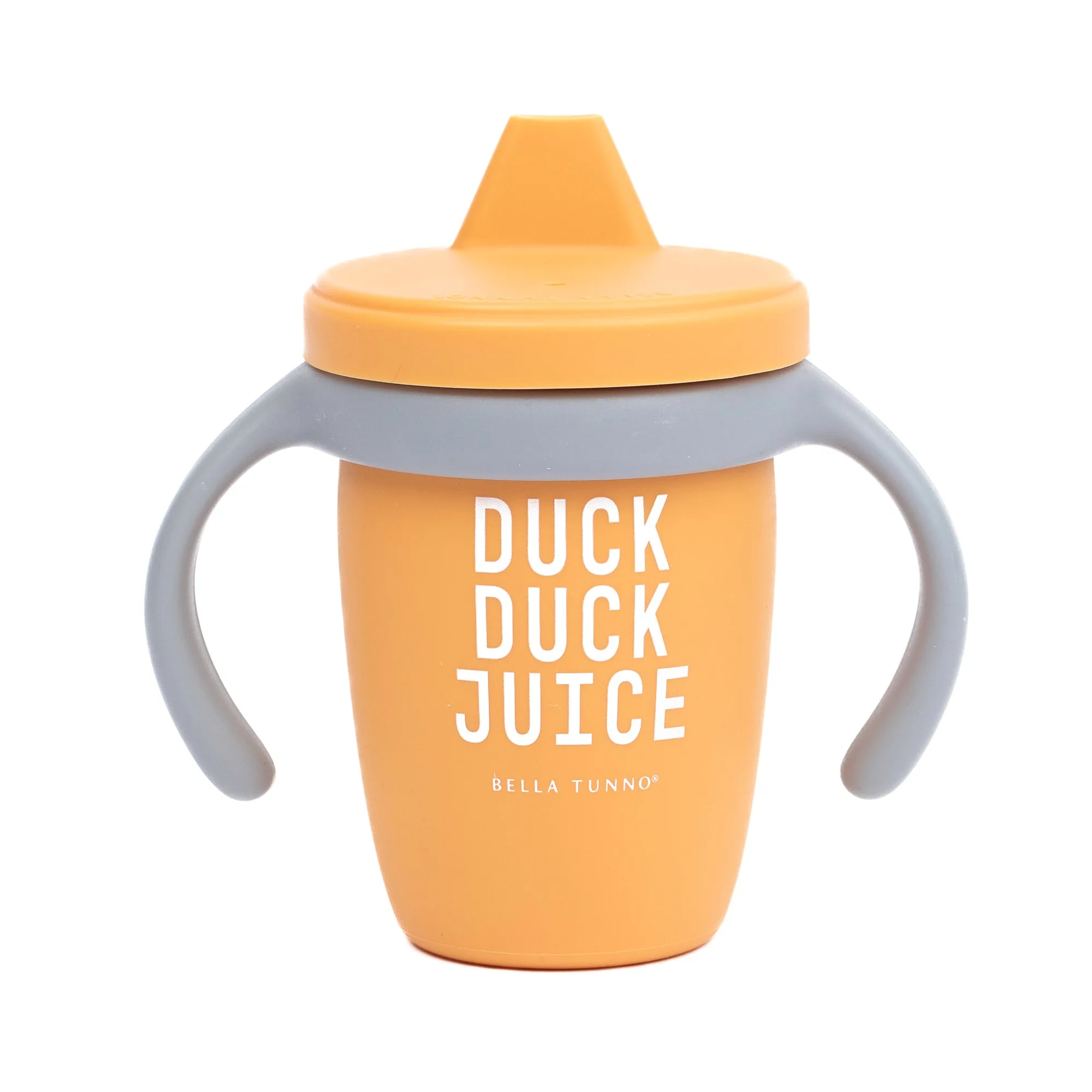
Duck Duck Juice Happy Sippy Cup
-
Dropped it Again Happy Sippy Cup: The Dropped it Again Happy Sippy Cup shares the same durable, mold-resistant silicone design with a cheerful message. If your baby is in the dropping phase, this cup’s sturdy silicone can take the tosses, and the fun phrase keeps mealtime lighthearted.
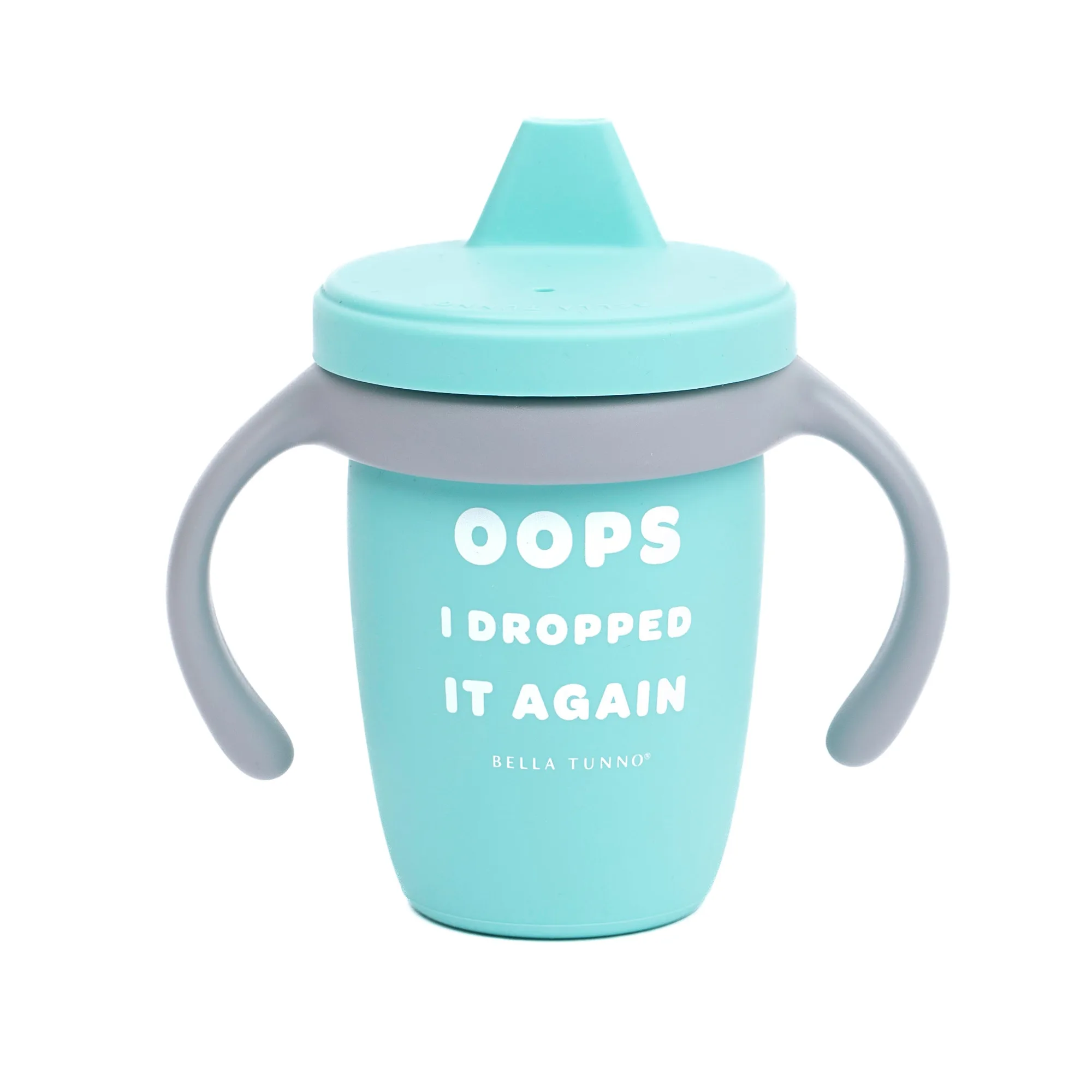
Dropped it Again Happy Sippy Cup