Quick answer
Most car seat crying comes down to one of four things: the harness is too tight or too loose, the recline angle is wrong for your baby's age, the seat is too hot or too upright for a newborn, or your baby simply needs motion and time to settle. Before you buy anything new, check the harness fit and recline first. If those are correct and your baby still screams, the seat may not match your child's body or your vehicle.
Check the harness before you blame the seat
A harness that's even slightly off can make a baby miserable. You should be able to slide no more than one finger between the harness and your baby's collarbone. If you can pinch slack at the shoulder, it's too loose. If the straps leave red marks or your baby arches away from the seat, it's too tight.
The chest clip matters too. It should sit at armpit level, not down on the belly. A clip that's too low lets the straps slide off the shoulders, which feels insecure and can trigger crying. Newborn inserts and head supports are another common culprit. Once your baby outgrows the insert, leaving it in can push the body forward and create a poor fit.
- One finger max under the harness at the collarbone
- Chest clip at armpit level, not on the belly
- Remove newborn inserts as soon as your baby outgrows them
- Straps should lie flat, not twisted
Match the recline to your baby's age
Newborns need a more reclined seat because they can't hold their heads up yet. A seat that's too upright lets the head flop forward, which is both unsafe and uncomfortable. Most infant seats and convertible seats have a recline indicator or angle guide. If yours doesn't, check your vehicle manual and the car seat manual together.
Older babies and toddlers often cry because they're bored or because the seat is too reclined for their preference. Once your child has good head control, a slightly more upright position can help them see out the window and feel less confined. Don't guess the angle. Use the built-in level or the manual's instructions for your child's weight and height.
- Newborns: use the reclined position shown on the seat's level indicator
- Babies with head control: a slightly more upright angle can reduce fussing
- Never adjust recline while the car is moving
Temperature and fabric make a difference
Car seats get hot. Dark fabrics, vinyl, and direct sun can make the seat uncomfortable before your baby even sits down. A shade on the window and a quick check of the buckle and fabric with your hand can prevent a lot of crying. Avoid bulky coats under the harness. They create slack that you can't see, and they also make your baby overheat.
If your baby runs warm, look for a seat with breathable fabric or a removable, washable cover. A clean cover also matters because spit-up and crumbs can irritate skin and make the seat smell, which some babies protest.
- Check the buckle and fabric temperature before buckling in
- Use a window shade on the sunny side
- Skip bulky coats; use a thin layer and a blanket over the harness instead
- Wash the cover according to the manual to keep it comfortable
Motion, timing, and soothing that actually works
Some babies cry because they're tired, hungry, or overstimulated, and the car seat just happens to be where they notice it. Try a feed and a diaper change before you leave. A pacifier, white noise, or a favorite song can help. If your baby cries only in the car, not in the stroller, the issue is likely the seat angle or the harness, not the motion.
If your baby cries in every seat and every vehicle, talk to your pediatrician. Reflux, ear pressure, or sensory sensitivity can make car rides hard, and no car seat will fix a medical issue. That's the point to stop adjusting and get advice.
- Feed and change before the ride
- Try a pacifier or white noise
- If crying happens only in the car seat, focus on fit and angle
- If crying happens everywhere, ask your pediatrician
Diagnose the crying: symptom, cause, and fix
- Symptom: baby arches back and screams as soon as you buckle: Likely cause: harness too tight or chest clip too low. Corrective action: loosen the harness to one-finger slack and move the chest clip to armpit level. If the arching stops, you've found it. If it continues, check the recline.
- Symptom: head slumps forward and baby fusses within minutes: Likely cause: seat too upright for a newborn or young baby. Corrective action: adjust to the recline angle shown on the seat's level indicator. If your seat has no recline adjustment for newborns, it may not be the right seat for this stage.
- Symptom: crying only on longer rides or in warm weather: Likely cause: heat, boredom, or a wet diaper. Corrective action: cool the seat before buckling, use a window shade, and take breaks when safe. If crying continues despite comfort fixes, consider a seat with breathable fabric or a rotating design that's easier to load.
- Symptom: crying in every car seat and every vehicle: Likely cause: reflux, ear pressure, or sensory sensitivity. Corrective action: talk to your pediatrician before buying another seat. Stop here. A new car seat won't solve a medical issue.
Seats that solve common fit and comfort problems
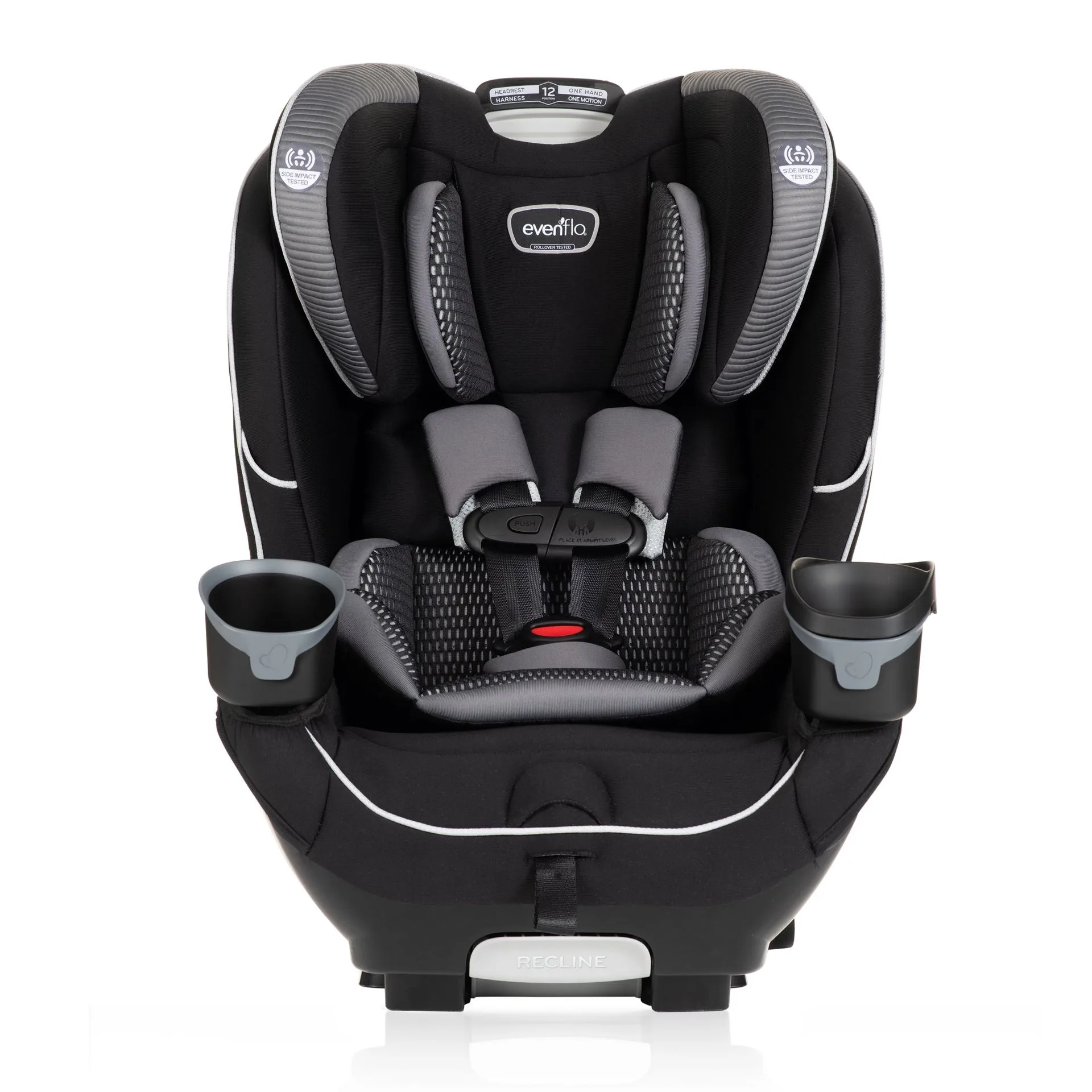
- EveryFit/All4One 3-in-1 Convertible Car Seat: The Evenflo EveryFit/All4One 3-in-1 Convertible Car Seat with Quick Clean Cover adjusts to multiple positions and allows kids to ride rear-facing beyond 2 years of age without extending the seat or cramping other passengers. If your baby is outgrowing a newborn seat or you're tired of a seat that forces the front passenger forward, this one gives you more rear-facing time and easier cleanup after spills.
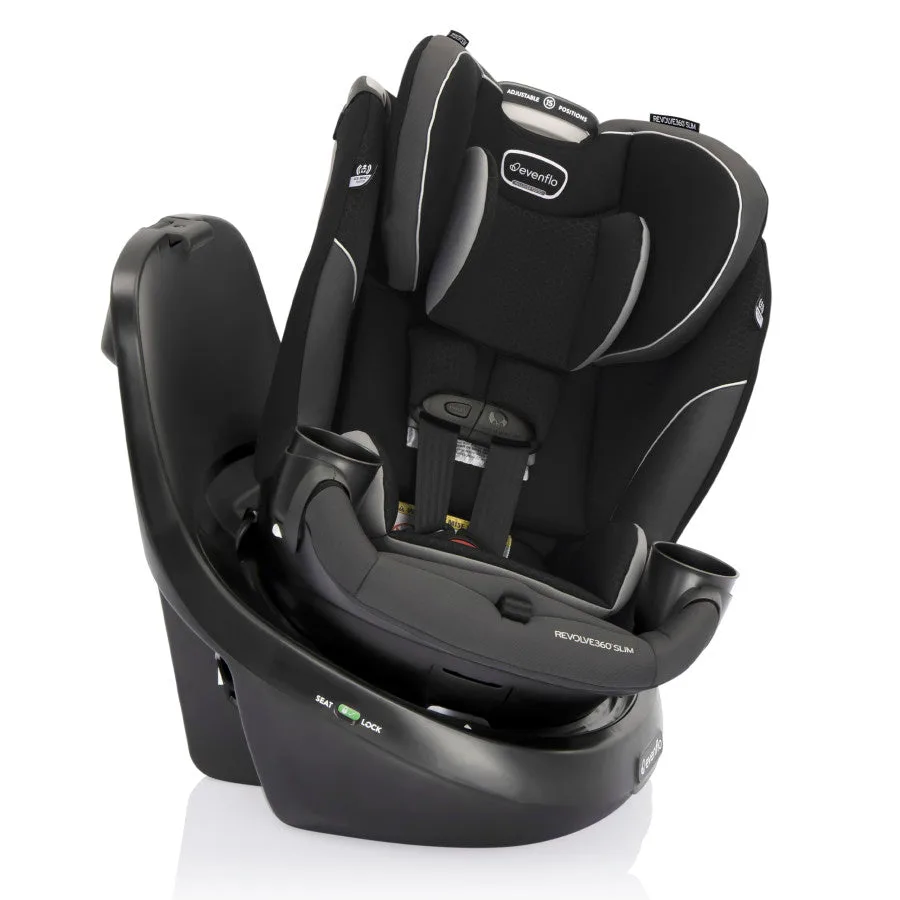
- Revolve360 Slim 2-in-1 Rotational Convertible Car Seat Support: The Evenflo Revolve360 Slim 2-in-1 Rotational Car Seat has a 16.7-inch footprint and is designed to fit more room for passengers and a growing family without sacrificing your child's seating space or safety. A rotating seat can reduce the struggle of loading a crying baby in a tight backseat, and the slim footprint helps if your vehicle is compact.