Quick answer
Most sippy cup refusal is a flow, comfort, or timing problem, not a permanent preference. Offer a small amount of water or milk in a soft-spout cup during a calm, seated moment, and give your baby several low-pressure tries across a week. If your baby still won't drink from a cup after consistent practice, or if you notice signs of pain, choking, or poor weight gain, stop troubleshooting on your own and talk with your pediatrician.
You offer the cup. Your baby turns away, bats it off the tray, or chews the spout and lets the liquid dribble out. It is frustrating, but it is also common. A baby who refuses a sippy cup is usually telling you something about how the cup feels, how fast the liquid comes, or whether they are ready for that skill yet.
The fix is rarely one magic cup. It is a short process: figure out what is actually blocking the sip, adjust one thing at a time, and know when to switch to a different style of cup or ask for help. This guide walks through the most common causes and the practical moves that tend to work.
Rule out the simple stuff first
Before you blame the cup, check the basics. A baby who is very hungry, very tired, or in the middle of a developmental leap often refuses anything new. Try the cup when your baby is alert and calm, not at the end of a long day. Also check the liquid itself: if you recently switched from breast milk or formula to water, or changed the temperature, that alone can cause a rejection.
Finally, look at the cup setup. A valve that is stuck, a spout that is cracked, or a lid that is not seated properly can make drinking feel like work with no reward. Take the cup apart, rinse the valve, and test the flow yourself by squeezing a drop onto your wrist. If nothing comes out, the cup is the problem, not your baby.
- Offer the cup at the same time each day so it becomes a predictable routine, not a surprise.
- Start with just an ounce or two of liquid. A full cup is heavy and can be discouraging for small hands.
- Let your baby see you drink from an open cup. Modeling is one of the strongest teaching tools you have.
The spout may be too hard, too fast, or too foreign
A sippy cup spout is a different shape and texture from a bottle nipple or a breast. Some babies need a softer, more familiar feel before they will accept the change. A soft silicone spout is gentler on sensitive gums and can make the transition from bottle to cup feel less abrupt. If your baby is actively teething, a hard plastic spout can be uncomfortable to bite down on.
Flow speed matters too. If liquid comes too fast, your baby may cough, pull away, and decide the cup is unpleasant. If it comes too slowly, they may lose interest and treat the spout as a chew toy. A cup with a soft spout and a controlled flow gives your baby a chance to practice without being overwhelmed.
- Try a cup with a soft silicone spout if your baby is used to a soft bottle nipple.
- Test the flow yourself before offering it. A slow, steady drip is usually easier for beginners than a fast stream.
- If your baby chews the spout, that is often a teething signal. Offer a teether before cup practice, then try again.
Timing and pressure change everything
Cup skills develop alongside sitting balance, hand-to-mouth coordination, and jaw strength. A baby who is not yet sitting steadily may not be ready to hold and tilt a cup. That does not mean you should wait months to introduce one. It means you should keep practice short, seated, and supervised, and expect more spills than sips at first.
Pressure is the quiet saboteur. If every cup attempt turns into a battle, your baby learns that the cup predicts stress. Instead, put a small amount of liquid in the cup, set it on the tray, and let your baby explore it. If they ignore it, that is fine. Try again tomorrow. The goal is familiarity, not volume.
- Practice when your baby is calm and alert, not when they are hungry enough to be frantic.
- Keep sessions to two or three minutes. End on a neutral note, not a fight.
- Do not replace all bottles at once. A gradual transition from bottle to cup is easier on everyone.
When to switch to a different cup or style
If you have tried a soft spout, adjusted the flow, and practiced for a week or two with no progress, change the cup rather than pushing harder. Some babies do better with a smaller cup they can grip independently. A mini size with an ergonomic shape can help small hands hold on, which reduces drops and builds confidence as dexterity develops.
You can also try a straw cup or a small open cup, especially if your baby is closer to a year old. Different babies prefer different drinking methods, and there is no rule that says a sippy cup must be the first step. What matters is that your baby gets safe, supervised practice with a cup.
- Try a smaller, lighter cup if your baby drops or rejects a full-size one.
- Offer the same liquid in a different cup style to see whether the issue is the cup or the drink.
- Give any new cup at least several tries before deciding it does not work.
Red flags: when to stop troubleshooting and call your pediatrician
Most cup refusal is a phase. But some signs mean you should stop experimenting and get medical advice. If your baby coughs, gags, or turns blue during drinking, stop immediately. If your baby is losing weight, having fewer wet diapers, or refusing all liquids, that is a medical concern, not a cup problem.
Also check in if your baby seems to be in pain while drinking, has a fever, or has trouble swallowing. These are not issues a different cup will solve. Your pediatrician can assess whether there is an underlying feeding or health issue that needs attention.
- Stop cup practice and call your pediatrician if your baby shows signs of choking or breathing trouble.
- Track wet diapers if you are worried about hydration. Fewer than usual is a reason to call.
- Trust your instincts. If something feels wrong beyond ordinary refusal, get it checked.
Sippy cup refusal diagnosis
- Symptom: Baby turns head away or pushes cup off tray: This often means the cup arrived at the wrong moment, such as when your baby is full, tired, or not yet hungry. It can also mean the cup feels unfamiliar or the flow is unpleasant. Try a calm, seated moment with a small amount of liquid. If refusal continues for more than a week of low-pressure practice, switch cup style.
- Symptom: Baby chews the spout but does not drink: Chewing is common when gums are sore or when the flow is too slow to be rewarding. A hard spout can make this worse. Offer a soft silicone spout and check the valve. If chewing continues and your baby is teething, give a chilled teether before cup practice.
- Symptom: Baby coughs, sputters, or pulls away mid-sip: This usually points to a flow that is too fast for your baby's current skill level, or to a position where the cup is tilted too high. Slow the flow and let your baby control the tilt. If coughing or gagging continues, stop and talk with your pediatrician.
- Symptom: No progress after two weeks of consistent, low-pressure practice: Some babies simply prefer a straw cup or an open cup, and that is a valid next step. Others may have an underlying feeding issue. Try a straw or open cup. If your baby also refuses those, or shows signs of pain or poor weight gain, call your pediatrician.
Cup features that can make a difference
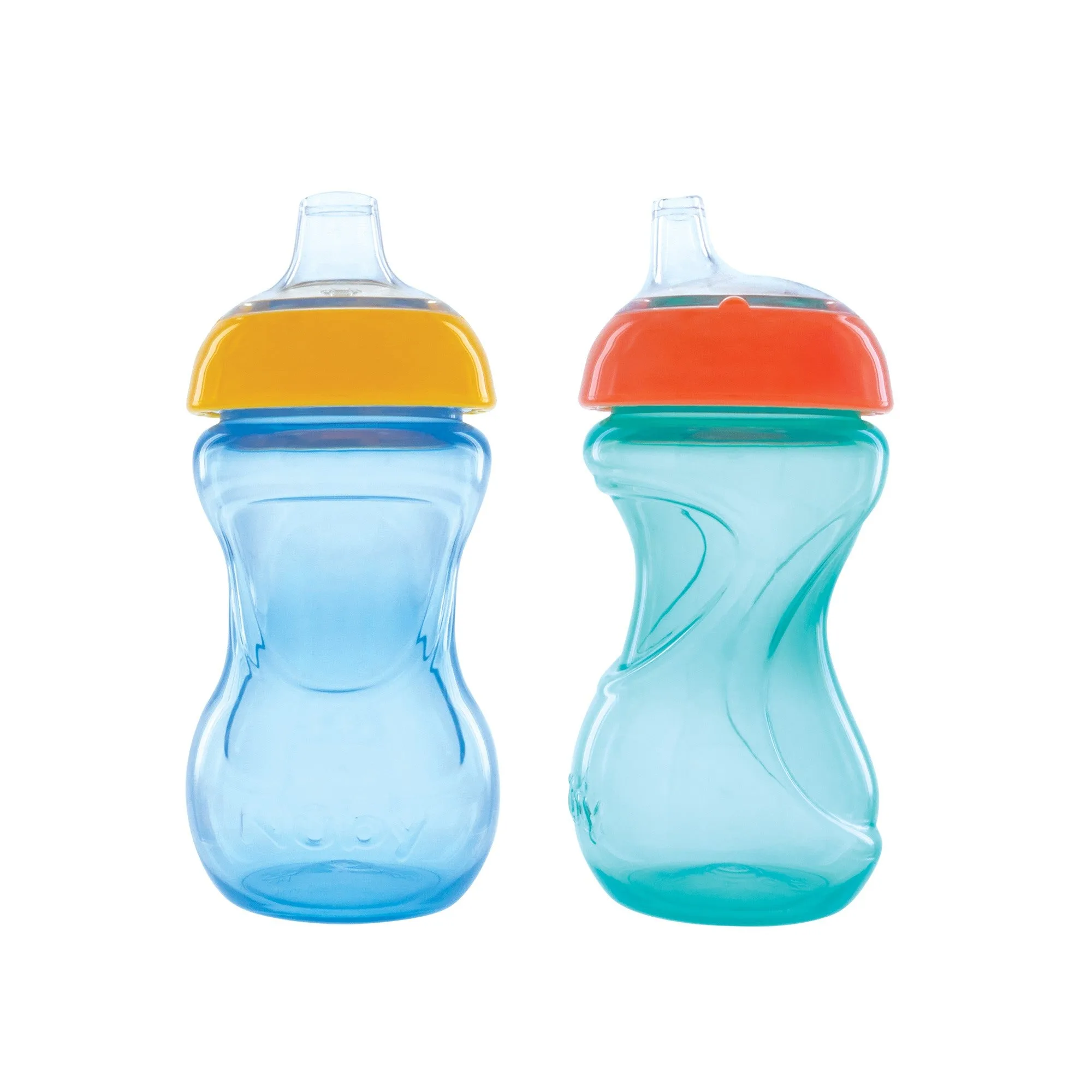
- Mini Gripper Soft Spout Sippy Cup (2 Pack): The Nuby Mini Gripper Soft Spout Sippy Cup is the ideal sipping sidekick for growing little ones. Its mini size and ergonomic shape ensure a comfortable, secure grasp for small hands, helping to avoid drops and increasing your little one's self-confidence as their dexterity develops. Each sippy cup features a soft silicone spout that helps prevent drips and spills while being gentle on sensitive gums and emerging teeth. A smaller, grippable cup is easier for a baby to hold and control, and the soft spout is gentler on gums during teething, which can reduce refusal tied to discomfort or dropping.
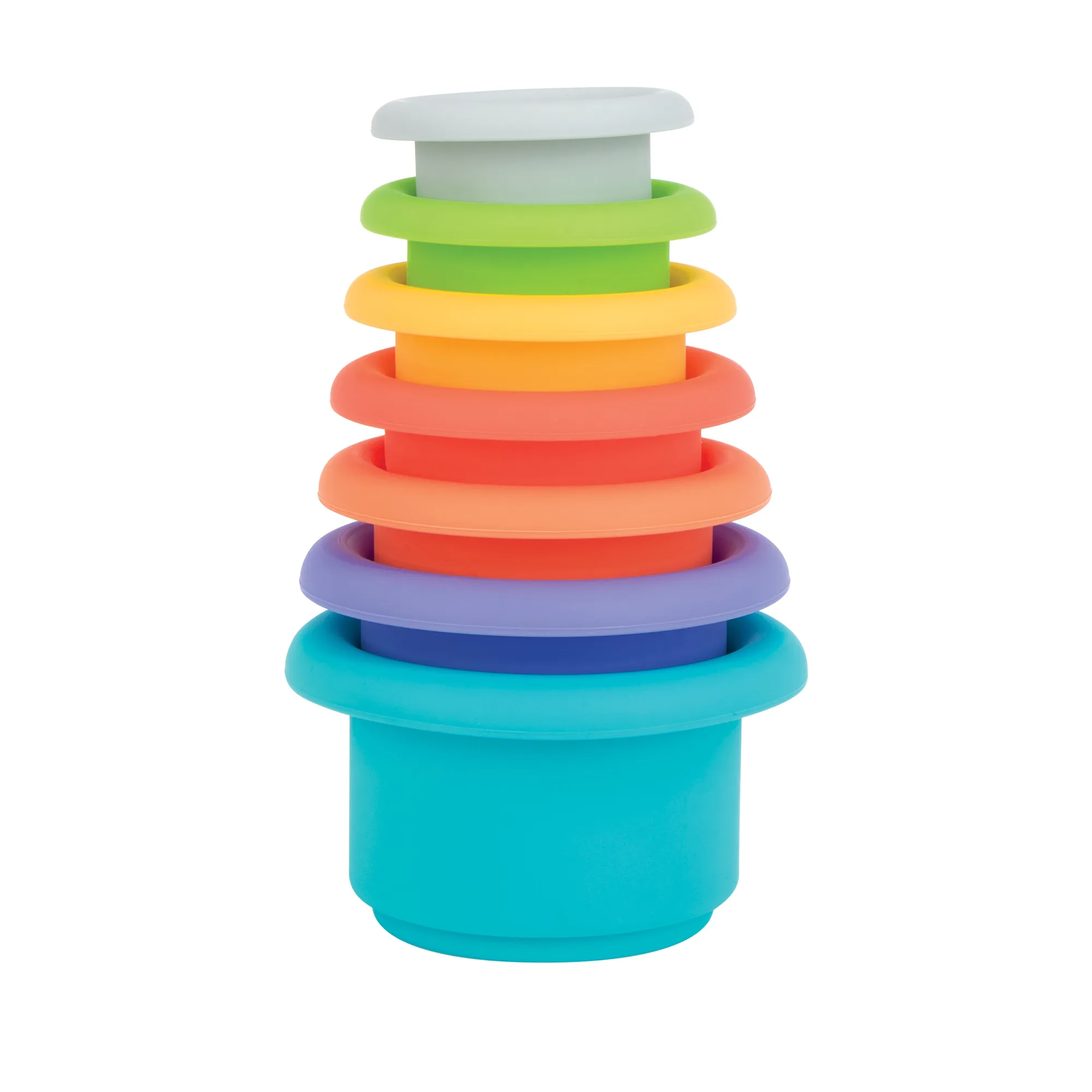
- Silicone Stacking Cups: Make the most of playtime with Nuby's Silicone Stacking Cups. Designed to help encourage cognitive development, the Silicone Stacking Cups help develop children's fine motor skills, including developing the hand-eye coordination that will eventually help with future tasks like self-feeding. With engaging colors and various sized pieces, baby will hone color recognition and size sequencing skills while exercising. Using stacking cups during play helps build the hand-eye coordination and hand strength your baby needs for self-feeding and cup drinking, so practice does not have to feel like a test.
Cup refusal is a skill-building phase, not a verdict on your parenting. Adjust one thing at a time, keep practice short and calm, and switch cups if the current one is not working. If red flags appear, stop troubleshooting and get medical advice.