Quick answer
Most babies start rolling or arching during nappy changes somewhere around four to eight months, when rolling becomes a new skill they want to practise constantly. The fix is rarely 'hold tighter' — it's giving them a surface that discourages the roll in the first place. A wedge-style anti roll changing mat, or a nest-style mat with raised padded sides, gives a wriggly baby a physical cue to stay put while you work. If your baby is actively fighting the change every single time and nothing settles them, that's your signal to change your setup or your timing, not to push through.
Symptom: what rolling off actually looks like
It rarely starts as a full roll. Usually it begins with a twist — your baby turns their hips to one side while you're reaching for a wipe, then arches their back, then plants a foot and pushes. By the time you look back, they're halfway to the edge. Other parents describe a stiff, straight-legged arch that makes it almost impossible to get a nappy under them, or a baby who suddenly finds their own toes fascinating and curls into a ball mid-change.
The tell-tale sign that this is developmental rather than discomfort: it happens at every change, not just some, and your baby seems pleased with themselves rather than distressed.
Likely cause: new mobility meets a flat surface
Once rolling becomes possible, a flat mat gives your baby nothing to roll against. There's no contour, no edge, no resistance — just open space in every direction. Add a cold wipe, a wet bottom, or a sudden nappy change in the middle of playtime, and you've got a baby with both the ability and the motivation to move.
This is why 'just be quicker' stops working around the six-month mark. Speed helps, but it doesn't change the physics of a flat surface.
Corrective action: change the surface before you change your technique
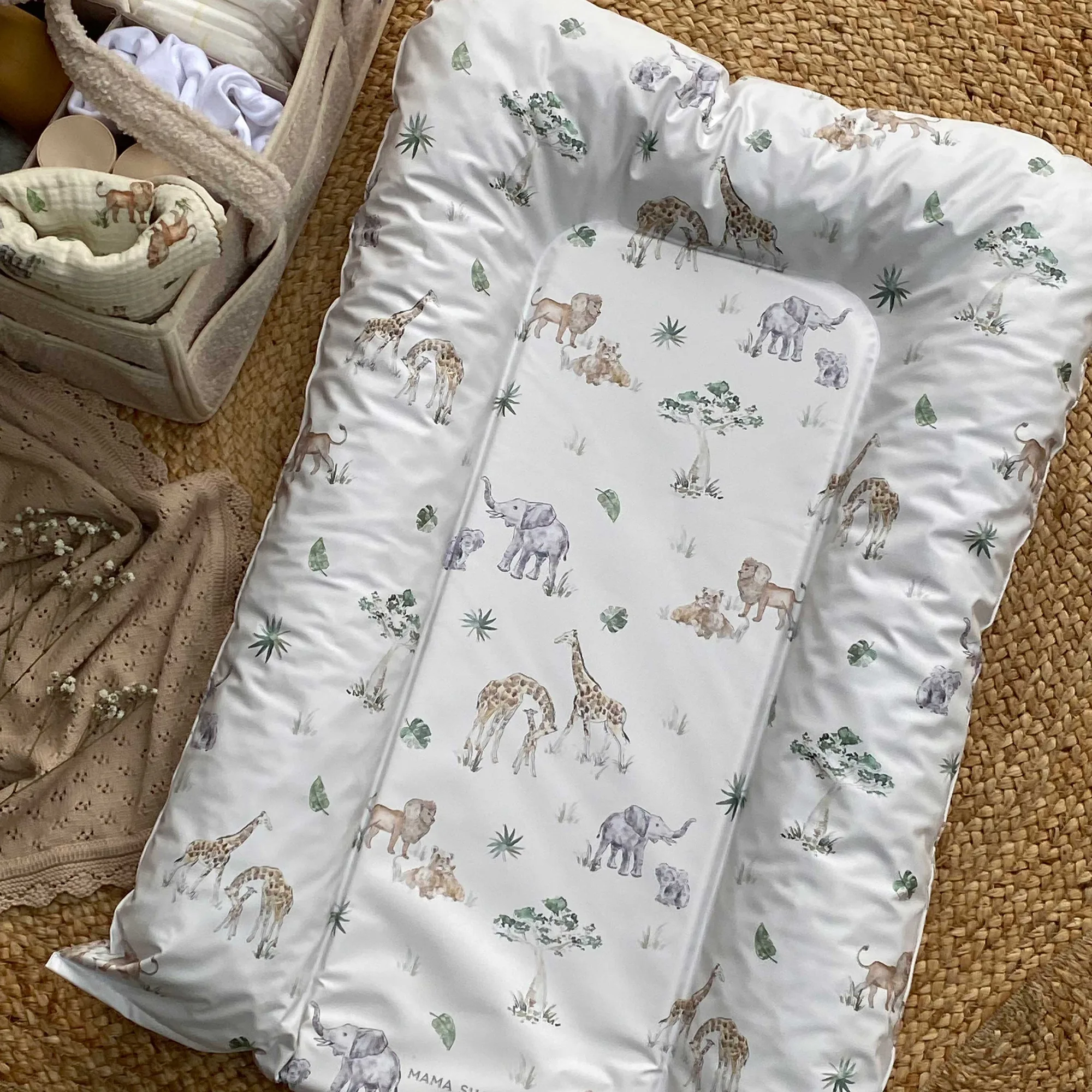
A wedge changing mat has a raised centre or contoured shape that cradles your baby's body, so rolling requires more effort than it does on a flat mat. A nest-style mat works on a different principle: raised, padded sides create a soft boundary that mimics the enclosed feel of a baby nest, which many babies find calming rather than restrictive.
Neither design is a restraint, and neither should be treated as one. The point is to reduce the number of times you have to intervene with your hands, which is what makes a wriggly baby nappy change feel like a wrestling match.
Two practical additions that help regardless of mat type: keep one hand on your baby's tummy or hip at all times, and give them something to hold — a clean nappy, a soft toy, or a wipe packet — so their hands have a job.
- Never leave a baby unattended on any changing surface, contoured or not.
- Keep supplies within arm's reach so you're not turning away mid-change.
- Change on the floor if your baby is strong enough to push against a raised surface.
When to stop and choose a different approach
If your baby is genuinely distressed — crying hard, going rigid, or fighting the change in a way that feels different from their usual wriggling — stop and check for causes like nappy rash, a too-cold wipe, or a room that's uncomfortably warm or cold. Rolling is normal; distress is information.
If your baby has outgrown the mat entirely, or if you've tried a contoured mat and they're still rolling, the honest answer is that some babies simply go through a phase where floor changes on a towel are easier than any mat. That's not a failure of the product — it's a stage. Reintroduce the mat when the novelty of rolling wears off.
Diagnose your baby's rolling pattern
- Rolls only at the start of the change: This usually means your baby was mid-play and resents the interruption. Try changing them before they get deep into play, or give them a toy to hold as a bridge between activities. Timing fix, not a mat fix.
- Rolls constantly, at every change, in both directions: This is the classic new-skill phase. A contoured or nest-style mat gives them a physical boundary to work against, which reduces how often you have to pin them with a hand. Switch to a contoured or nest-style surface.
- Arches and cries rather than rolls calmly: Check for rash, a cold wipe, or reflux discomfort after feeding. Arched crying during changes is a discomfort signal, not a mobility one. Address the discomfort first; revisit the mat question after.
- Rolls despite a contoured mat and seems distressed: Stop using the mat for now and change on a towel on the floor. Some babies need a break from the mat during peak rolling weeks. Step back, then reintroduce later.
Two mat styles that address rolling differently
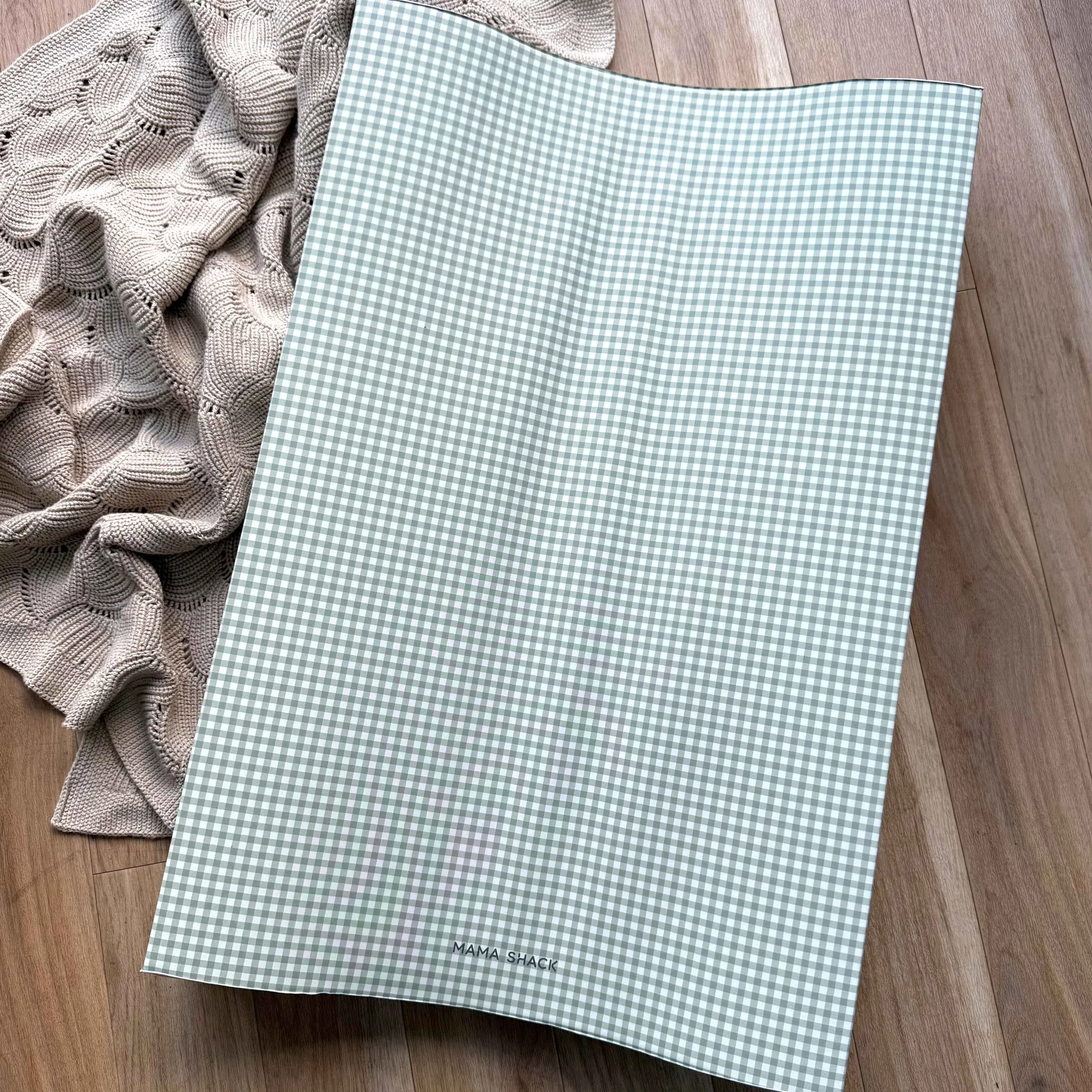
- Anti Roll Wedge Changing Mat - Sage Green Gingham: Anti Roll Wedge Changing Mat in Sage Green Gingham, with a wipe-clean, waterproof surface and a contoured wedge shape designed to keep a baby snug and secure. The contoured shape gives a rolling baby something to settle into, and the wipe-clean surface means you're not hesitating to use it during messy changes. The gingham finish means it doesn't look like clinical equipment sitting in your nursery.
- Nest Changing Mat - Sweet Safari: Nest Changing Mat in Sweet Safari, lightweight and wipe-clean with raised, padded sides that mimic the cosy feel of a baby nest. If your baby settles better in enclosed spaces, the raised sides offer a different kind of security than a wedge — less about blocking movement, more about creating a calm, familiar feel. It's also lighter, which matters if you move between rooms or floors for changes.