Quick answer
A bra band that rides up is almost always too loose, not too tight. Fasten the band on a tighter hook, shorten the straps slightly, and check that the band sits level all the way around. If it still climbs after that, the band size is wrong and you need a smaller one.
Why a loose band climbs your back
The band does most of the support work, so it needs to grip your ribcage. When it is too loose, the weight of your bust pulls the front of the bra down and the back of the band up. That is why a riding band often feels fine at the front but keeps creeping toward your shoulder blades. The fix is to restore tension, not to tighten the straps harder, which only makes the back ride up faster.
Fix it in three steps
Start with the band before you touch the straps. Most bras have three or four columns of hooks, and the loosest setting is for when the bra is new. If you are already on the loosest hook and the band still rides up, move to the middle hook and re-check in the mirror. Then adjust the straps so they sit flat without digging in. Finally, do the two-finger test: you should be able to slide two fingers under the back of the band, but not a whole hand.
- Fasten on a tighter hook and check the band sits level, not angled upward at the back.
- Shorten straps only enough to remove slack, never to lift the band.
- Scoop your bust into the cups so the band is not fighting the weight of unsupported tissue.
When to stop adjusting and change size
If you are on the tightest hook and the band still rides up, stop adjusting. A band that only stays put on the tightest setting is a sign the band size is too large. Sizing down in the band while going up a cup size keeps the cup volume the same, so you do not lose coverage. For example, if you wear a 34C, try a 32D. If the band feels painfully tight on the tightest hook but still climbs, the issue is likely the band's stretch or your bust weight, and a different bra style with a firmer band will serve you better.
Bra styles with a firmer band
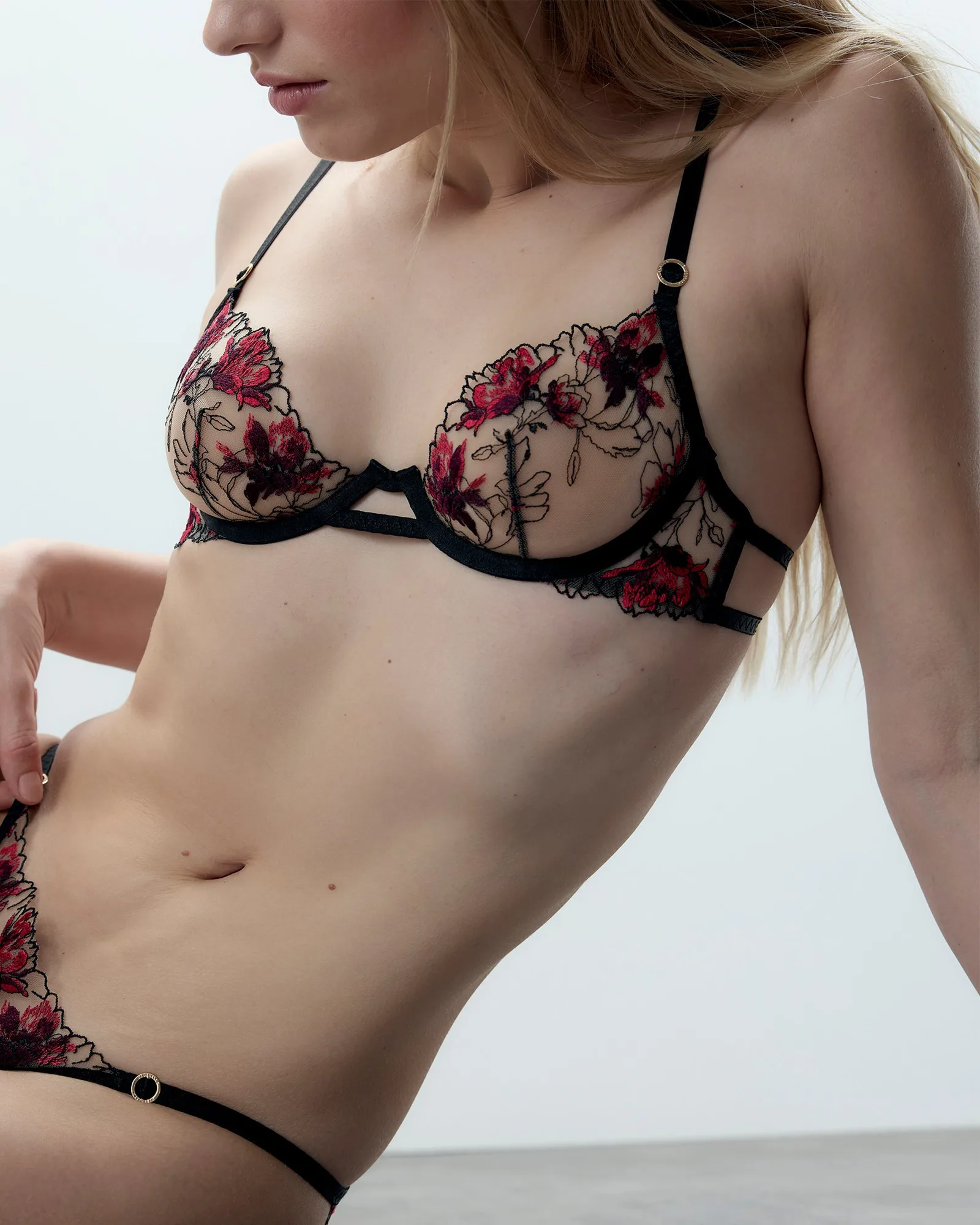
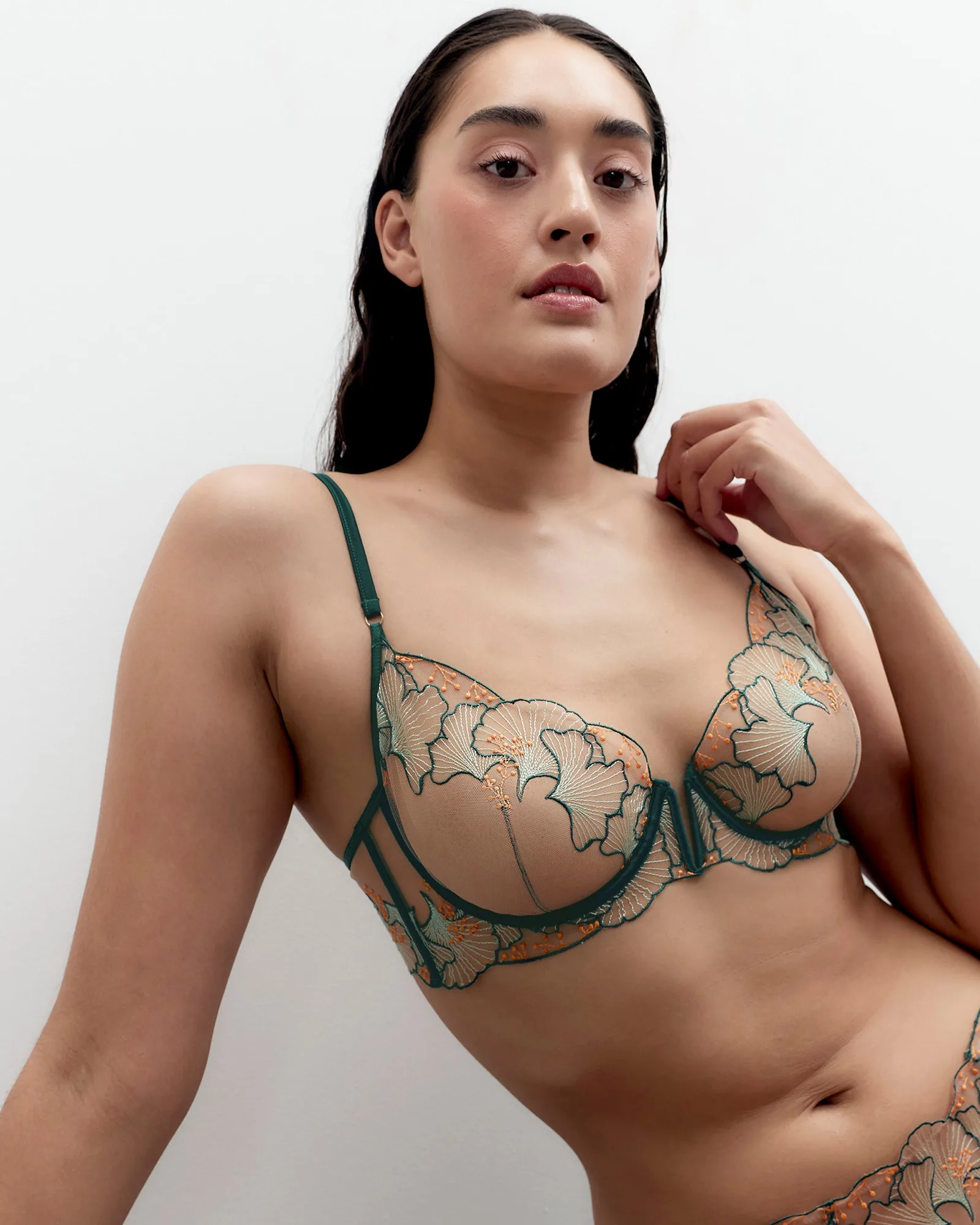
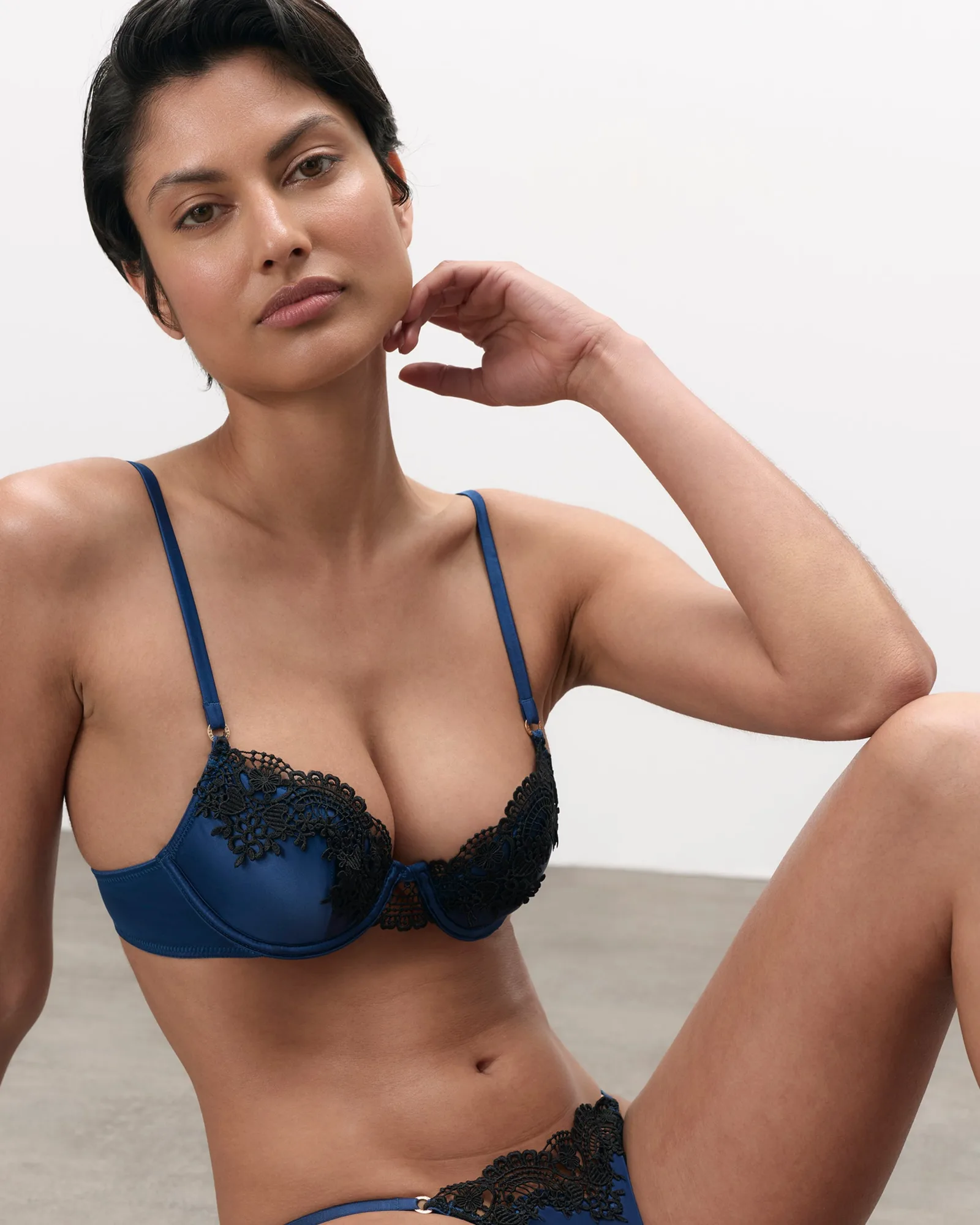
Longline and moulded styles often hold a band in place better because they spread tension over a wider area. The Gianna Sheer Longline Bra in green/orange has an extended underband that adds grip along the ribcage, which can reduce upward creep. If you prefer a smoother shape, the Ida Luxury Satin Moulded Bra in navy peony and black uses moulded foam cups and a wired plunge silhouette, and its sheer mesh wings keep the band light while still anchored. The Calista Sheer Floral Bra in black/cherry relies on underwiring and adjustable satin straps, so it rewards a correctly sized band rather than a loose one.
Diagnose your riding band
- Band rides up only on the loosest hook: The band has stretched with wear. Move to the middle or tightest hook and re-check. Fix: tighten the hook, not the straps.
- Band rides up on every hook: The band size is too large. Size down in the band and up in the cup to keep the same volume. Stop adjusting and change size.
- Band feels tight but still climbs: The band may be too stretchy for your bust weight. Try a longline or moulded style with a firmer underband. Choose a different bra style.
Styles that help a riding band
- Gianna Sheer Longline Bra Green/Orange: Extended underband detailing enhances the silhouette. A wider underband spreads tension and can stop the band from climbing your back.
- Ida Luxury Satin Moulded Bra Navy Peony/Black: Moulded foam cups and a wired plunge silhouette create shape and definition, with sheer mesh wings. A structured cup holds the bust forward so the band is not pulled upward by unsupported weight.
- Calista Sheer Floral Bra Black/Cherry: Underwiring provides shape and support, with adjustable satin straps and a rear hook-and-eye fastening. Adjustable straps and multiple hooks let you fine-tune tension to keep the band level.