Quick answer
A cat ignores a scratching post when the post is in the wrong place, moves under pressure, or offers the wrong texture and height. Move it next to the scratched furniture, anchor it so it does not wobble, and match the material to your cat's current habit. If the post still gets no attention after two weeks of consistent redirection, the post is the wrong shape or size for your cat, and replacing it is the faster fix.
Check placement before you blame the cat
Cats scratch where they spend time and where their scent already sits. A post tucked in a spare room or behind a door gets ignored because it is not part of your cat's daily route. Put the post within arm's reach of the spot your cat already scratches, even if that means it sits beside the sofa for a few weeks.
Once your cat uses the post reliably in that spot, you can shift it a few inches at a time toward where you would prefer it. Moving it more than about a foot at once often resets the habit and sends your cat back to the furniture.
- Place the post directly in front of or beside the scratched surface.
- Keep one post on each floor your cat uses regularly.
- Do not hide the post in a corner where your cat never relaxes.
Test stability with one hand
Push the post the way a cat would when stretching upward. If the base lifts, slides, or tips, most cats will avoid it and choose the rigid sofa instead. A post that needs to be pressed against a wall to stay upright is not stable enough.
Weighted bases and wider footprints help, but the surface underneath matters too. A post on thick carpet can rock even with a heavy base. A flat, firm floor or a thin rug gives the base something solid to grip.
- Press the top of the post firmly; it should not move more than a fraction of an inch.
- If the base is light, add weight or move the post to a hard floor.
- Replace a post that wobbles no matter where you put it.
Match the material to what your cat already scratches
The sisal vs carpet scratching post question matters less than what your cat currently claws. If your cat shreds the carpet, a carpet-covered post may work because the texture is familiar. If your cat attacks the sofa's woven fabric, sisal rope or sisal fabric often gets a faster response because it offers a similar resistance and a rougher grip.
Texture is not the only variable. Some cats prefer vertical scratching, others prefer horizontal surfaces, and some want a tall post they can stretch along from floor to full height. Watch which direction your cat pulls when scratching the furniture, then choose a post that lets them repeat that motion.
- Carpet scratcher: try a carpet-covered post first.
- Sofa or woven fabric scratcher: try sisal rope or sisal fabric.
- Floor scratcher: add a horizontal scratcher or a flat sisal pad.
Use training that does not rely on punishment
Cat scratching post training works best when you reward the behavior you want and make the unwanted surface less appealing. When your cat uses the post, offer a treat or a few seconds of play right away. That timing teaches the connection between the post and something good.
For the sofa, temporary barriers such as double-sided tape or a fitted throw can reduce the appeal while the new habit forms. Never punish scratching with a spray bottle or a loud noise. Cats often learn to scratch only when you are not watching, which makes the problem harder to solve.
- Reward within a second or two of your cat using the post.
- Cover the sofa edge temporarily while the post habit builds.
- Trim claws regularly to reduce damage during the transition.
Know when to stop and change the post
If you have placed the post correctly, stabilized it, matched the material, and rewarded use for two to three weeks with no improvement, stop trying to make that post work. The issue is likely height, shape, or surface area. A post that is too short for a full stretch, too narrow to grip, or too small overall will keep losing to your furniture.
At that point, choose a different design rather than adding more of the same. A taller post with a wider scratching section, or a structure that combines scratching with a perch, often succeeds where a small standalone post failed.
- Two to three weeks of consistent effort is a fair trial.
- If there is still no use, change height, width, or material.
- Do not buy a second identical post and expect a different result.
Diagnosis: why your cat ignores the post
- Symptom: cat scratches the sofa but never the post: The post is probably in the wrong location or does not match the texture your cat prefers. Move it beside the sofa and check whether the material feels similar to the scratched surface. If the post is in another room, placement is the first fix, not a new post.
- Symptom: cat approaches the post, then walks away: The post likely moves or feels unstable. Press the top firmly; if the base lifts or slides, stabilize it or move it to a firm floor. A post that wobbles will keep losing to a rigid sofa.
- Symptom: cat scratches the post base or the floor instead: Your cat may prefer horizontal scratching. Add a flat scratcher or choose a design with a horizontal sisal section. Match the direction your cat already scratches before buying another vertical post.
- Symptom: no interest after two to three weeks of correct placement and rewards: The post is the wrong height, width, or overall design for your cat. Stop adding more of the same and switch to a taller post or a cat tree with sisal sections and a perch. Change the design, not just the location, when a fair trial fails.
Products that fit these fixes
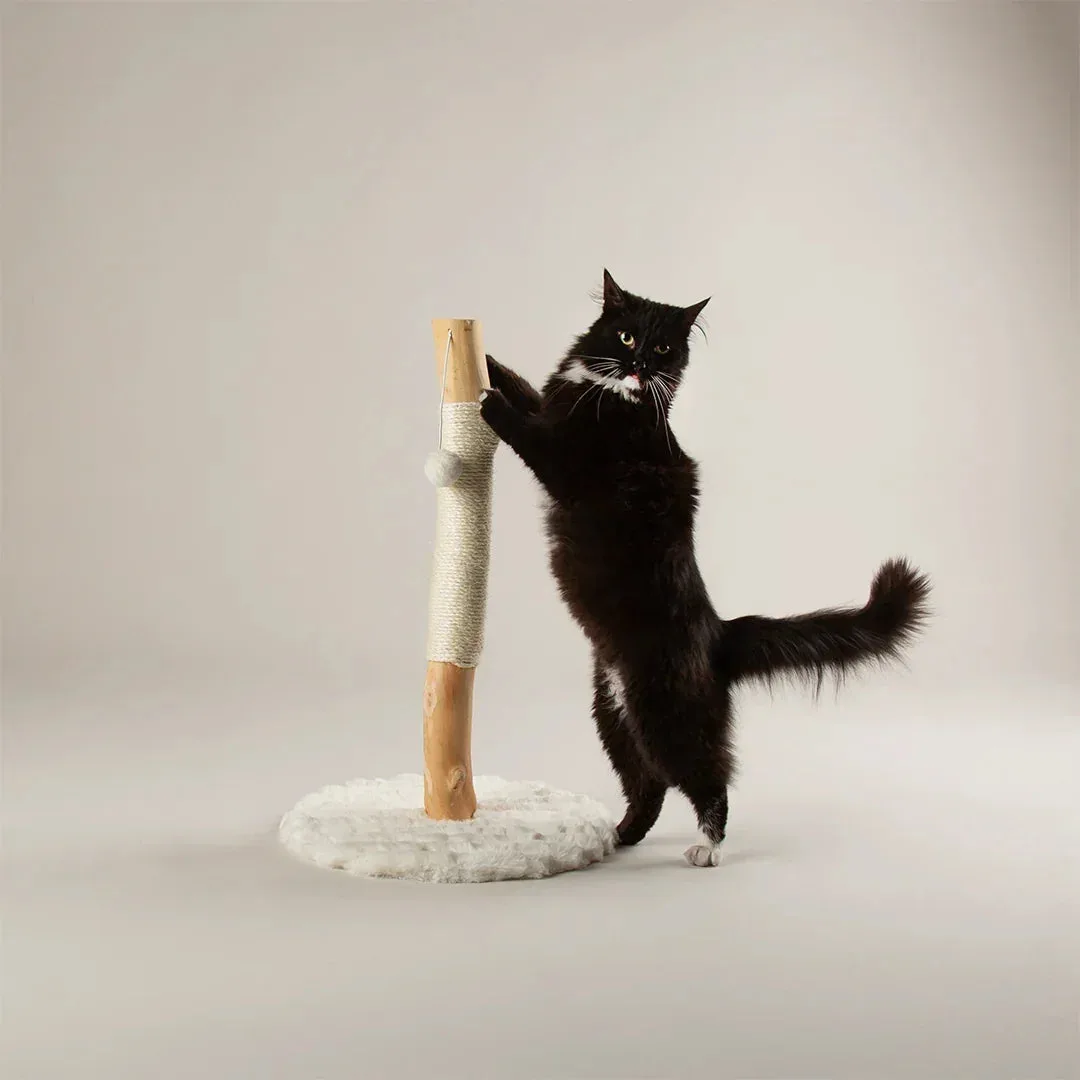
- Scruffs Alpine Rockies Cat Scratching Post: The Scruffs Alpine Rockies Cat Scratching Post combines a natural pear wood post with a sisal-wrapped scratching section, plush-covered square base and hanging pom-pom toy. Its 64cm height creates a dedicated vertical scratching and play structure without the beds, platforms or enclosed areas found on a cat tree. A good fit if your cat scratches vertically and you want a stable, sisal-focused post with a toy to draw attention, but it is not the right choice if your cat prefers horizontal scratching or needs a high perch.
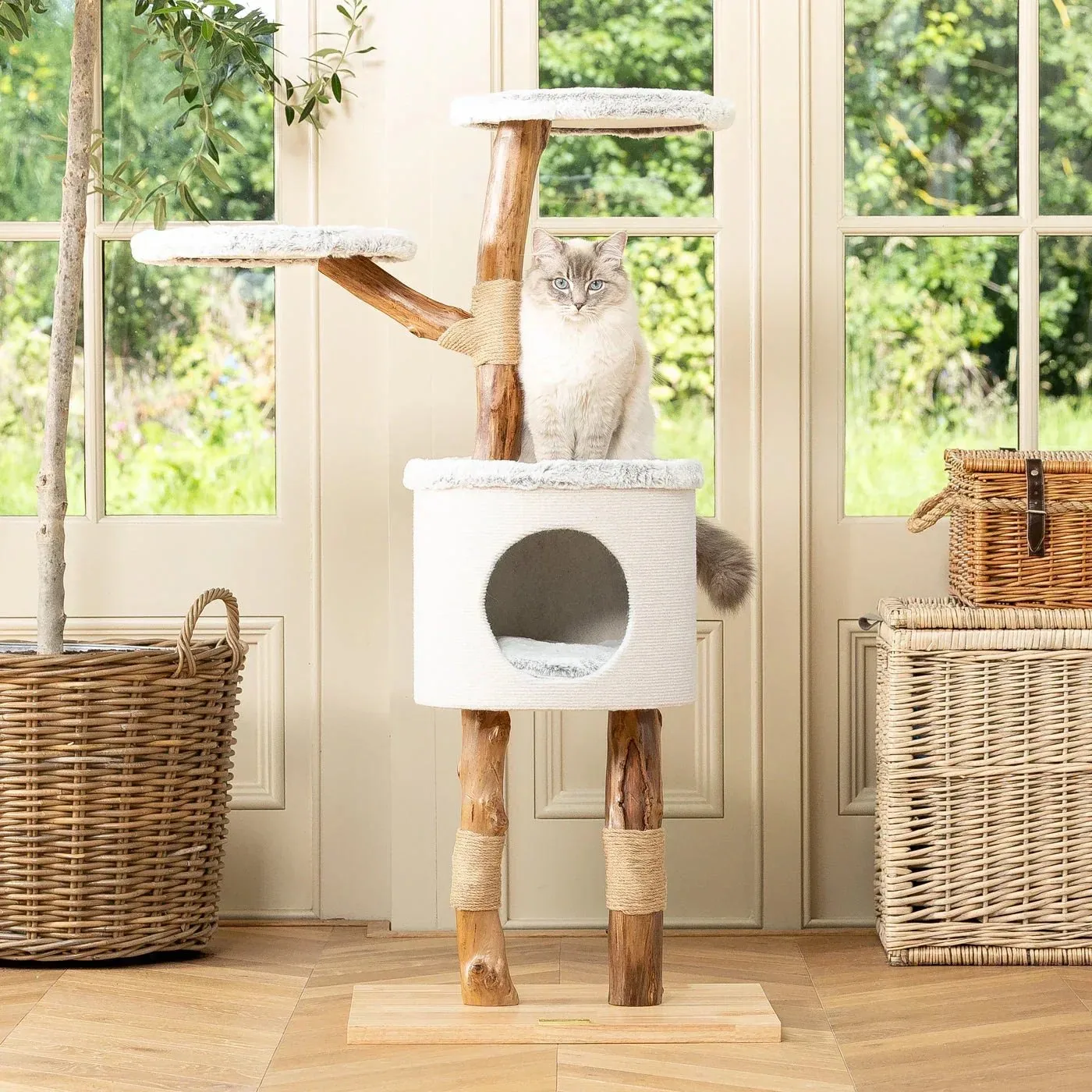
- Back To Nature High Rise Cat Tree by Lords & Labradors: The Back To Nature High Rise Cat Tree by Lords & Labradors combines three open resting surfaces with a covered cave, natural wood supports and sisal-wrapped scratching sections. Its staggered layout reaches 125cm high from a rectangular base, with two separate upper perches and a third cushioned surface above the cave. A better option when a small post keeps failing because your cat wants height, multiple scratching angles, and a place to rest. The taller structure gives more opportunities to redirect scratching away from furniture.
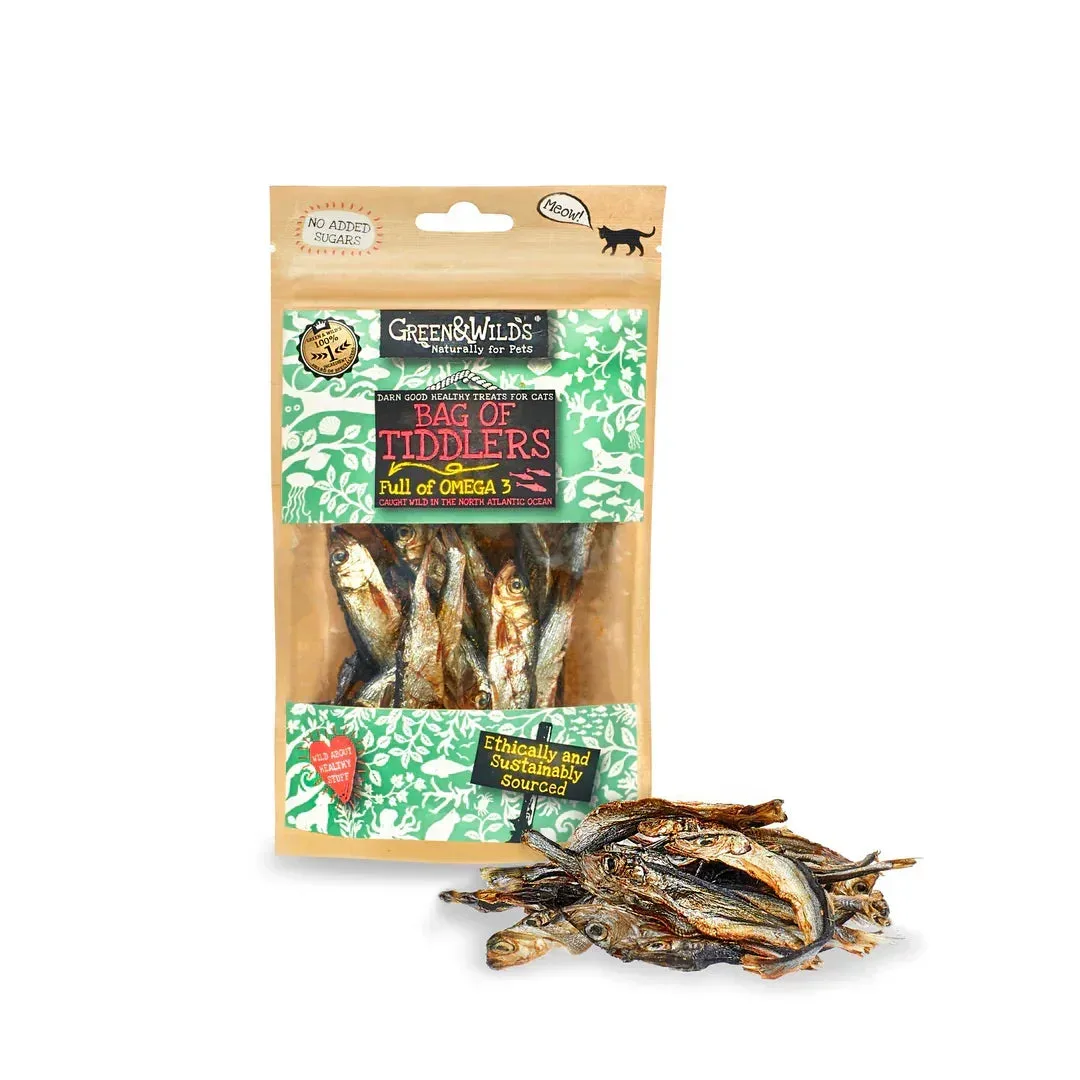
- Green & Wild's Bag of Tiddlers Fish Cat Treats: Green & Wild's Bag of Tiddlers Fish Cat Treats are natural treats made from whole air-dried fish. With just one ingredient and nothing unnecessary added, these simple rewards provide a protein-rich snack that fits naturally into your cat's daily routine. Useful for reward-based scratching post training because a strong-smelling, single-ingredient treat gets a fast, focused response when your cat uses the post.