Quick Answer
Brown eyes contain more melanin, which naturally darkens and mutes the color of any lens. The final look depends on the lens opacity, base design, and how much of your natural pigment shows through.
Why Melanin Matters
Melanin is the pigment that gives your iris its brown color. When you place a colored lens over a brown iris, the melanin absorbs some of the lens color and reflects a mix of the two. This is why the same lens can look completely different on someone with light blue eyes versus dark brown eyes.
Lenses with a higher opacity or a solid outer ring tend to show up more clearly on brown eyes, while translucent or gradient designs may blend into your natural shade and produce a softer effect.
Designer Lens Construction
The way a lens is printed also matters. Some lenses use a dot-matrix or starburst pattern that lets your natural eye color peek through, creating a layered look. Others have a solid color layer that covers your iris entirely.
For example, the New York N Hazel lens has a smaller pupil hole than normal, which can partially obstruct vision. This design also means more of the lens surface is colored, so the hazel tones may appear more opaque against brown eyes compared to a lens with a larger clear center.
Frequently Asked Questions
Will a hazel lens look the same on me as on a model with light eyes?
No. On brown eyes, hazel lenses often appear darker and more muted. The golden or green flecks may not be as visible because your natural melanin overpowers them. For a truer hazel effect, look for lenses with a higher opacity or a darker outer ring.
How can I make a colored lens show up brighter on my brown eyes?
Choose lenses labeled as 'opaque' or 'color-enhancing' rather than 'enhancement tints.' Opaque lenses have a solid color layer that covers your natural iris. Also, lenses with a smaller clear center (like New York N Hazel) tend to give more coverage and a bolder result. If you want a noticeable change, pick a lens with a solid color pattern and a diameter of at least 14.0mm.
Does the base curve or material affect how the color looks?
Not directly. The base curve (BC) affects fit and comfort, not color appearance. However, a lens that fits well will stay centered on your eye, so the color pattern aligns properly. Materials like silicone hydrogel (used in Monet Brown) are more breathable but don't change the visual effect.
Product Facts
-
New York N Hazel: The New York N Hazel has a smaller pupil hole than normal color lenses, which can obstruct vision when wearing it. On brown eyes, the smaller clear center means less of your natural iris shows through, so the hazel color appears more solid and the lens effect is more dramatic.
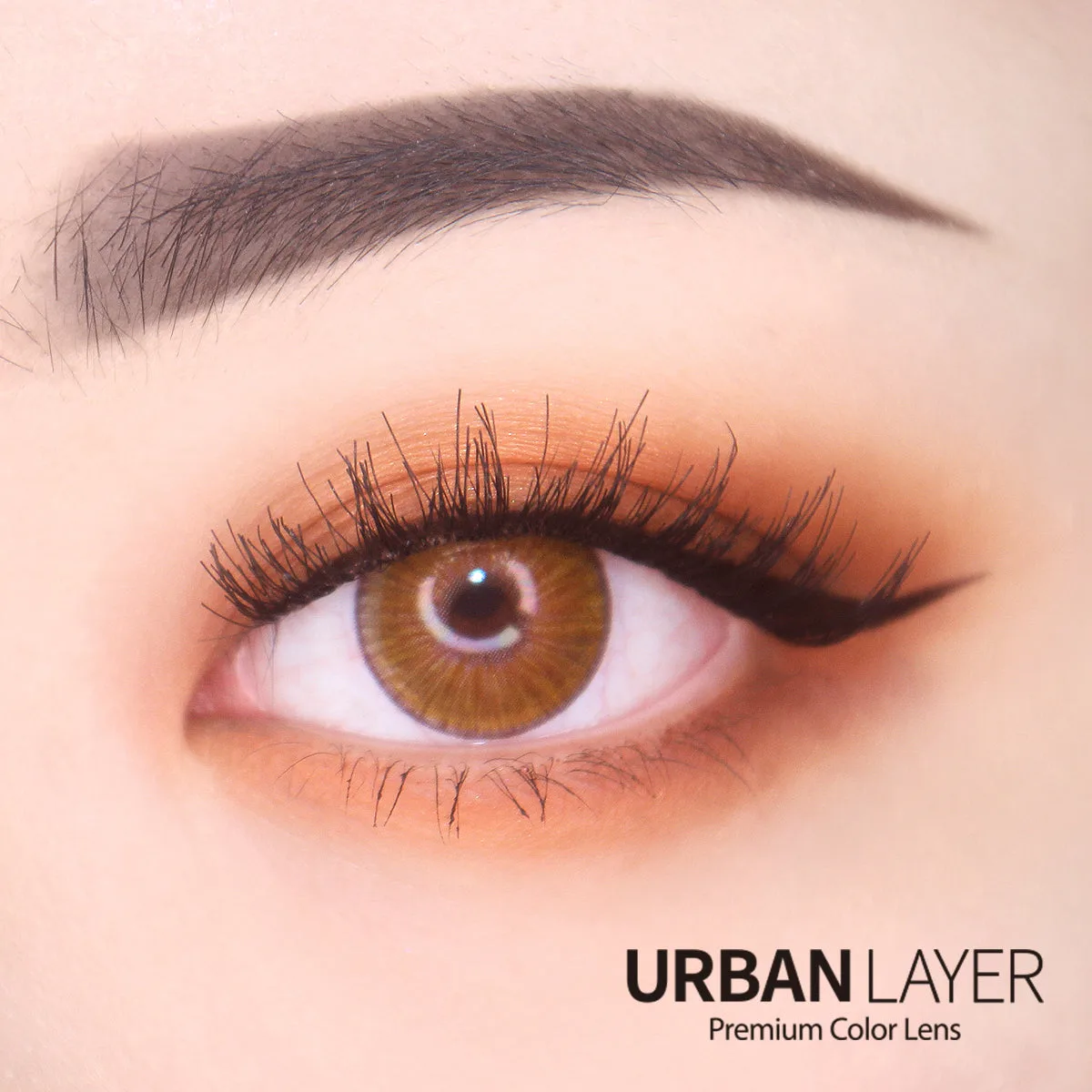
New York N Hazel
-
Monet Brown: Monet Brown has a 14.5mm diameter and is made from silicone hydrogel with 40% water content. The larger diameter covers more of your iris, which helps the brown tones stand out against dark eyes, while the silicone hydrogel material keeps the lens comfortable for longer wear.
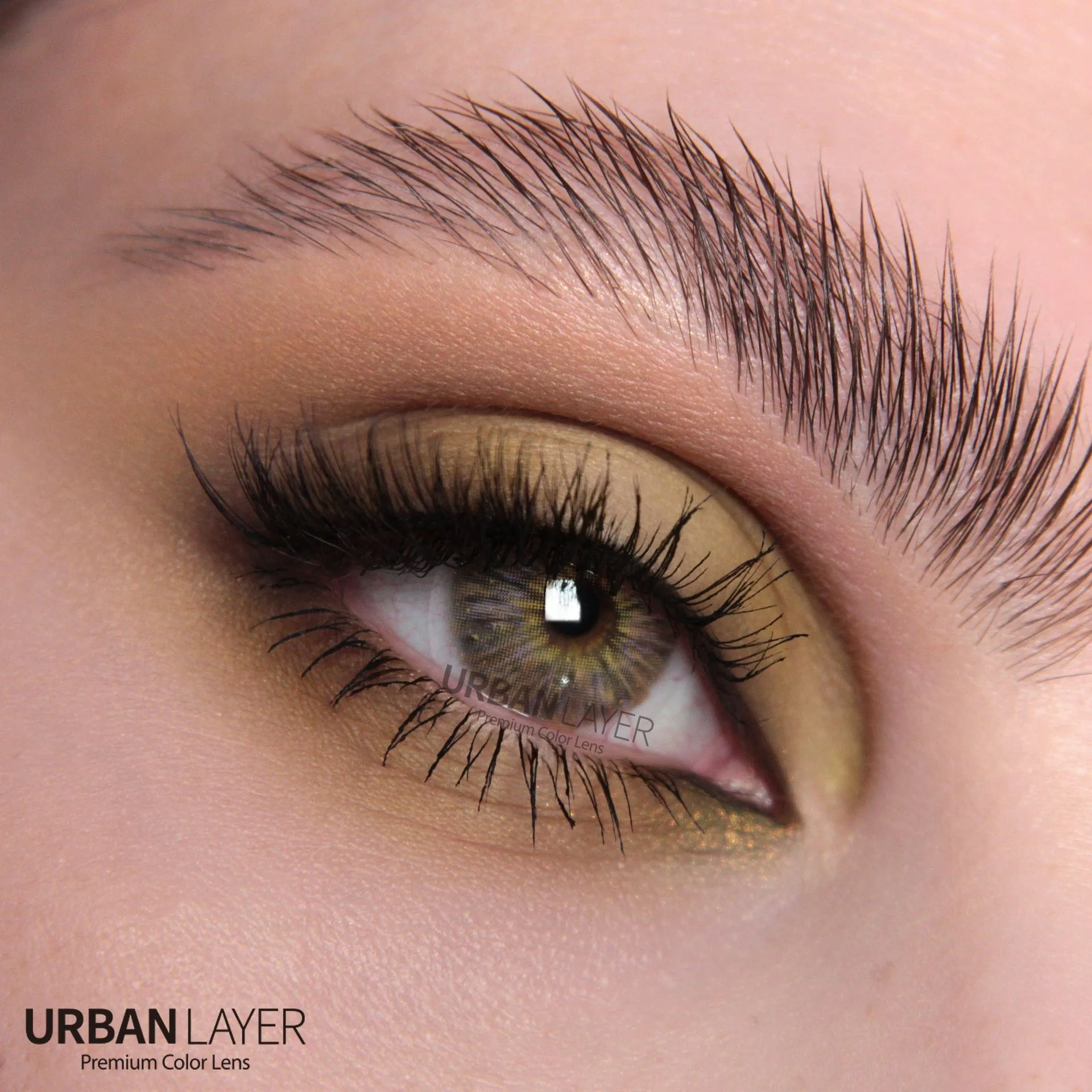
Monet Brown