Quick answer
A corkscrew usually breaks cork because the spiral enters off-center, the cork is dry or already crumbling, or the worm is too coarse for an old closure. Center the spiral, keep it vertical, and pull with steady pressure rather than a jerk. If the cork is brittle or the bottle is old, switch to a two-prong bilame corkscrew, which extracts the cork without piercing it.
Symptom: the cork crumbles instead of coming out
Crumbly cork removal is the clearest sign that the closure has lost elasticity. Dry cork wine bottles often have a cork that has shrunk slightly or become brittle, so a spiral tears through it rather than gripping. You see flakes on the spiral, a jagged hole in the top, and pieces left behind in the neck.
- Cause: the cork is dry, old, or was stored upright for years.
- Cause: the spiral is too thick or blunt for a fragile closure.
- Fix: stop turning, clear loose fragments, and switch to a two-prong tool that slides down the sides of the cork.
Symptom: the cork is stuck in the bottle and spins
When a cork stuck in bottle spins without rising, the spiral has lost its grip. This often happens when the spiral was inserted at an angle or not deep enough. A spinning cork also means the seal has failed and the wine may already be oxidized, so treat it gently.
- Cause: the spiral was not centered or did not pass through the full length of the cork.
- Fix: withdraw the spiral, re-center it, and drive it through the cork at a right angle to the bottle neck.
- Checkpoint: if the cork still spins after two attempts, stop and use a two-prong extractor.
Symptom: the cork breaks in half and drops into the wine
A broken cork that falls into the bottle is a handling problem, not a wine problem. It usually happens when you pull the corkscrew sideways instead of straight up, or when the cork was already split. Once a piece drops in, stop pulling and pour the wine through a fine filter or decant it.
- Cause: sideways leverage during extraction.
- Fix: keep the corkscrew aligned with the neck and pull upward, not outward.
- Next step: if fragments remain in the neck, use a bilame corkscrew to grip the remaining piece without pushing it further in.
When to stop and choose a different tool
If the cork is visibly dry, cracked, or already crumbling at the top, a standard waiter's corkscrew is the wrong choice. A bilame corkscrew old bottles rely on two flexible blades that slide between the cork and the glass, so the cork comes out whole without being pierced. This is the safer method for any bottle older than about ten years or any closure that feels spongy.
- Stop using a spiral corkscrew when the cork surface flakes or the spiral pulls out clean with cork dust.
- Stop pulling if you feel the cork give way unevenly; you are about to shear it.
- Choose a two-prong bilame when the cork is dry, brittle, or has already been damaged by a previous attempt.
Diagnosis: match the symptom to the fix
- Cork crumbles on the spiral: The cork is dry or brittle. Stop turning, clear debris, and switch to a two-prong bilame corkscrew that extracts without piercing. If the top of the cork flakes when you touch it, do not use a spiral.
- Cork spins but will not rise: The spiral missed the center or did not go deep enough. Withdraw, re-center, and drive straight through the full length of the cork. Two failed attempts means stop and use a bilame.
- Cork breaks in half: You pulled sideways or the cork was already split. Keep the corkscrew vertical and pull straight up. If a piece falls in, decant or filter the wine. Never push a broken cork deeper with a spiral; use a two-prong tool to grip the remainder.
Tools that prevent broken corks
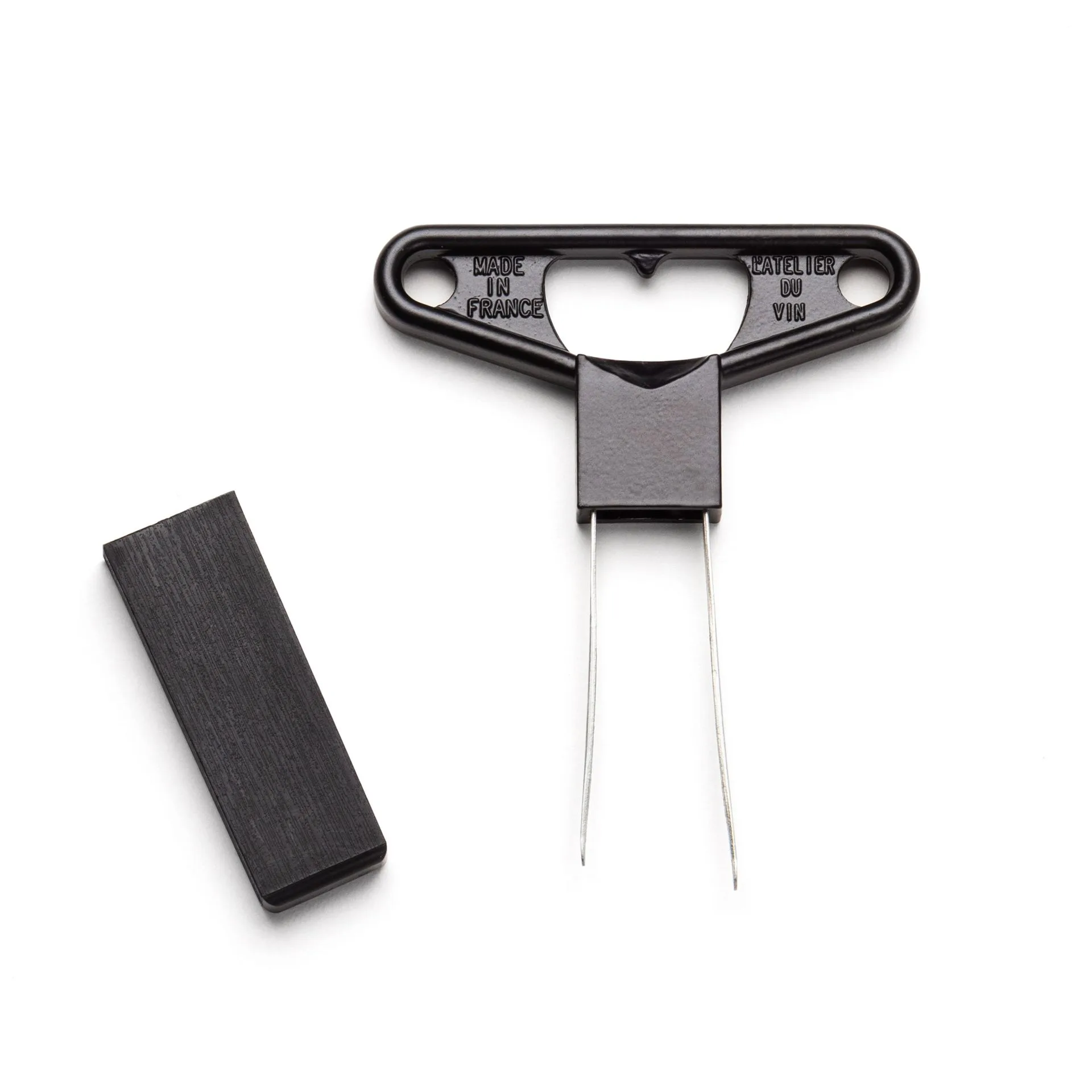
- Two-Prong Corkscrew Bilame Classic | L’Atelier du Vin: Two-prong corkscrew Bilame Classic in black metal, crafted in France, designed for delicate cork extraction without piercing. Because it never pierces the cork, it is the right tool for dry or fragile closures where a spiral would cause crumbling.
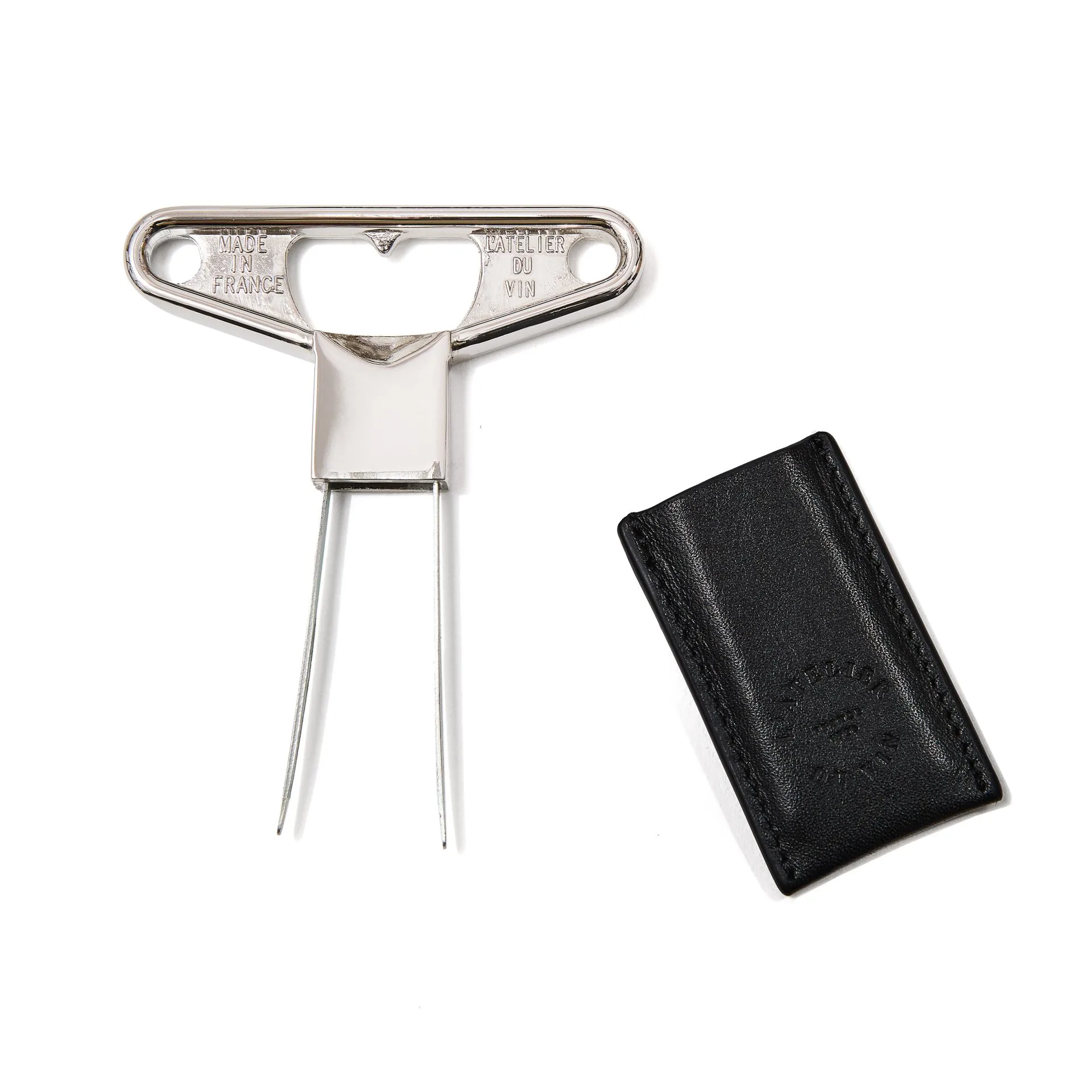
- Bilame Silver Signature – Blade Corkscrew Made in France | L’Atelier du Vin: Bilame Silver Signature combines precision, elegance, and leather, crafted in France, and comes in a refined presentation case. A durable, precise bilame for collectors who open older bottles regularly and want a tool that stays aligned over time.
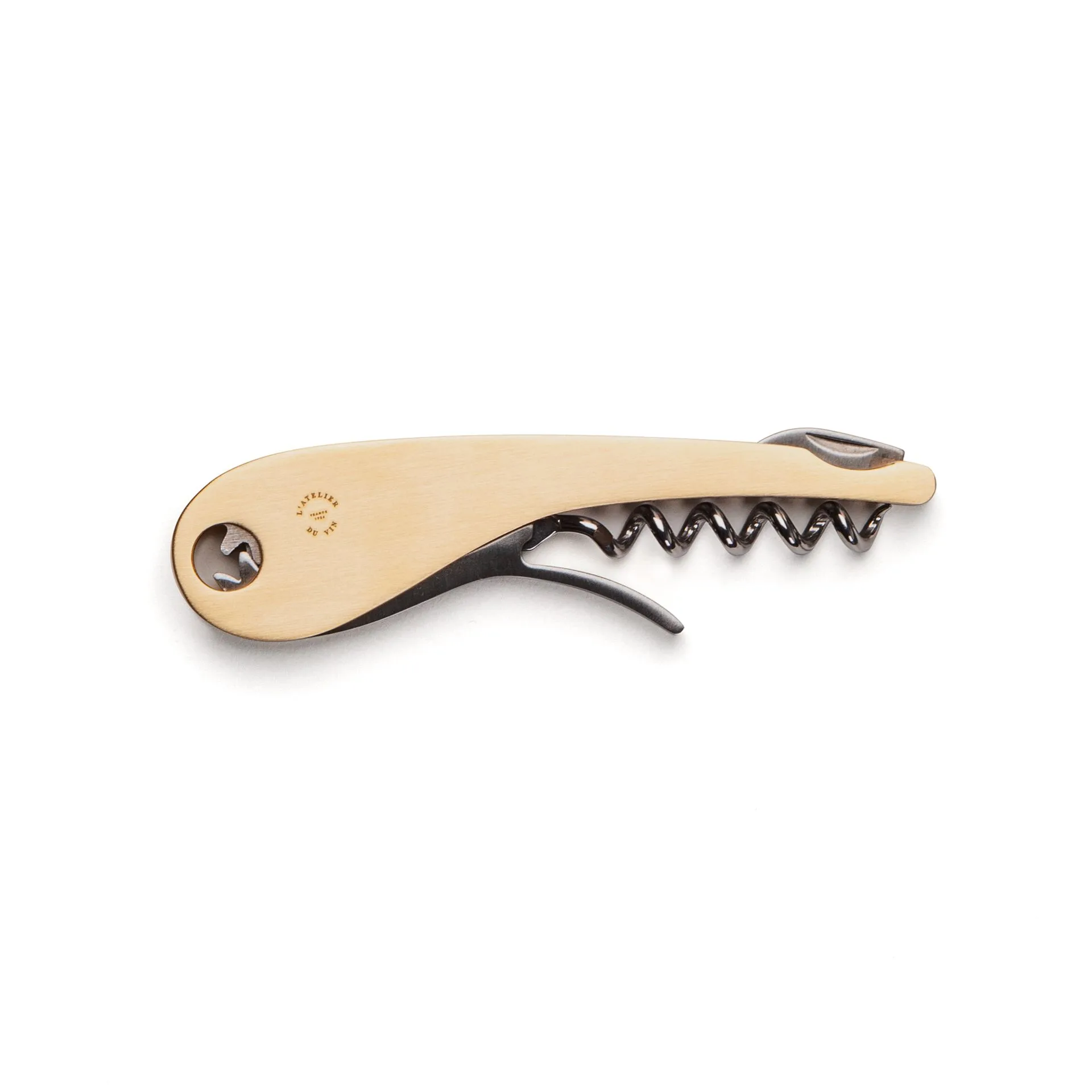
- Sommelier Corkscrew Brass – Soft Machine | L’Atelier du Vin: Sommelier corkscrew in brass with a patented rack-and-pinion system for smooth, effortless one-motion cork extraction. The rack-and-pinion mechanism reduces the jerking motion that often breaks corks, making it a reliable choice for sound, younger bottles.