Quick answer
Baby bibs leave marks because of tight closures, stiff fabric, or trapped moisture. Switching to a soft, adjustable organic cotton bib and checking fit can prevent most irritation.
Why marks happen even with well-made bibs
A bib that fits perfectly at breakfast can feel tight after a meal when your baby moves or leans forward. The pressure from a snap or button closure, especially if it sits directly against the neck, can leave temporary red lines.
Moisture is another hidden cause. Even a breathable bib can trap drool or spilled liquid against the skin if it isn't changed promptly. That dampness softens the skin and makes it more prone to irritation from friction.
When a bib is not the real problem
Sometimes the marks come from something under the bib, like a rough clothing tag or a wet onesie. Before changing bibs, check that your baby's outfit is smooth and dry where the bib sits.
If the redness lasts longer than 30 minutes after removing the bib or is accompanied by a rash, it could be a sensitivity to detergent, fabric softener, or the dye in the bib itself. In that case, switch to a fragrance-free wash and observe if the irritation stops.
When to choose a different style
Bandana-style or snap-front bibs distribute pressure differently than pull-over styles. If your baby has a short neck or is very active, a bib with two adjustment levels lets you fine-tune the fit without overtightening.
Waterproof bibs are great for messy meals but often use a plastic backing that traps heat. Reserve them for mealtime only and switch to a soft cotton bib for drooling or play.
Diagnose and fix bib marks
- Symptom: Red line or indentation around the neck after removing the bib. The mark fades within 10–20 minutes.
- Likely cause: The bib closure is too tight or the fabric is too stiff. Moisture trapped under the bib can also make skin more sensitive to pressure. Check the fit when your baby is sitting upright, not lying down. If you can fit two fingers between the bib and the neck, the fit is correct.
- Corrective action: Switch to a soft organic cotton bib with adjustable closure, like the BASIC 2 PACK BIBS. Loosen one adjustment level. Remove the bib during naps and change it as soon as it feels damp. If marks persist after 3 days of adjusted fit and frequent changes, the bib may not be the cause.
- Stop or choose another option: If the skin is broken, blistered, or the redness spreads beyond the bib area, stop using all bibs and consult a pediatrician. For persistent irritation without broken skin, try a bib-free feeding session using a long-sleeve smock or a towel tuck. A rash that does not improve with bib changes may be contact dermatitis from detergent or fabric dye.
Bibs that help prevent marks
-
BASIC 2 PACK BIBS - coeur golden/coeur lint: Soft bibs with easy push button closure. Designed with two adjustment levels for a comfy fit. Made from soft organic cotton with a hint of stretch. The two adjustment levels let you loosen the fit as needed, and the organic cotton with stretch reduces pressure against delicate neck skin.
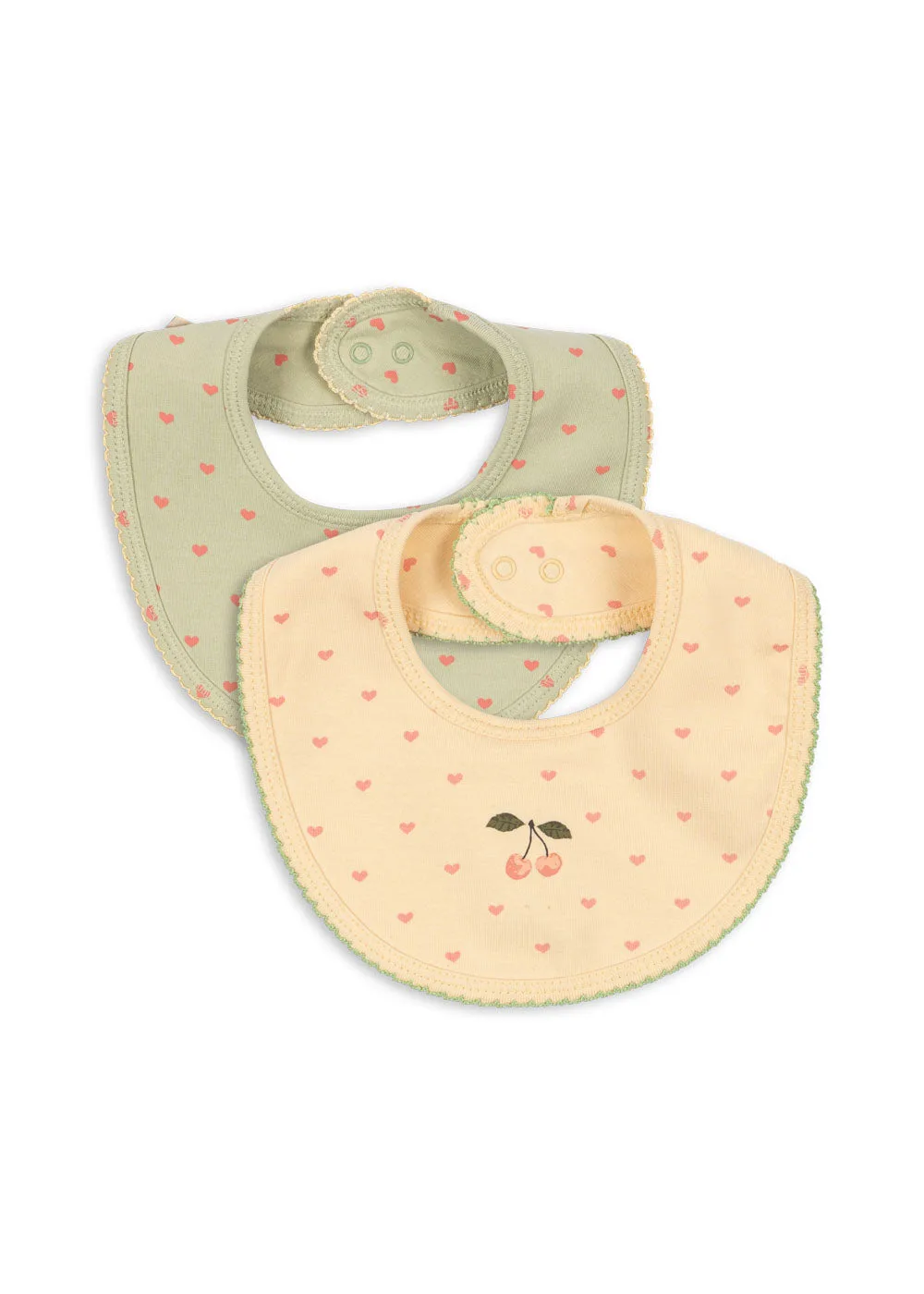
BASIC 2 PACK BIBS - coeur golden/coeur lint