Quick Answer
A squeaky baby gate is usually caused by friction between moving parts or between the gate and the wall. Lubricating the hinges or pressure points and tightening loose hardware often solves the problem.
Common Causes of a Squeaky Baby Gate
Most baby gate squeaks come from metal-on-metal friction at hinges or pressure mounts, especially on pressure-mounted gates that shift slightly over time. Dirt, dust, or dried-out lubricant can also create noise. In some cases, the gate may be rubbing against the wall or floor if it isn't perfectly level.
A less common but important cause is overtightening. If a pressure-mounted gate is cranked too tight, the frame can warp slightly and create stress points that squeak when the gate is opened or closed.
When to Replace Instead of Fix
If the gate is damaged—cracked plastic, bent metal, or broken locking mechanism—fixing the squeak won't address the safety risk. In that case, replace the gate. Also, if the gate is several years old and the squeak returns frequently after lubrication, it may be time for a new one.
Diagnosis and Fix Steps
- Symptom: A high-pitched squeak when opening or closing the gate, or a rubbing sound when the gate is in use.
- Likely Cause: Friction at hinges, pressure points, or between the gate and wall. Could also be caused by loose screws or overtightening.
- Corrective Action 1: Lubricate Moving Parts: Apply a dry lubricant (like silicone spray or graphite powder) to hinges, locking mechanism, and pressure mount points. Avoid oil-based lubricants that attract dust. Open and close the gate several times to work it in. If the squeak stops, you're done. If it returns quickly, move to step 2.
- Corrective Action 2: Tighten Hardware: Check all screws and bolts on the gate and mounting hardware. Tighten any that are loose. For pressure-mounted gates, ensure the gate is level and not twisted. If the squeak persists, move to step 3.
- Corrective Action 3: Adjust Gate Position: Loosen the pressure mounts slightly, reposition the gate so it sits evenly, and retighten. Ensure there's a small gap (about 1/8 inch) between the gate and wall to prevent rubbing. If the squeak still persists, consider replacing the gate, especially if it's old or damaged.
- Stop or Choose Another Option: If the gate shows signs of damage (cracks, bent parts, broken lock) or the squeak returns frequently after all fixes, replace the gate. Safety should never be compromised for silence. A new gate like the Regalo Easy Step Safety Gate offers a fresh start with proper installation and maintenance.
Product Mention
-
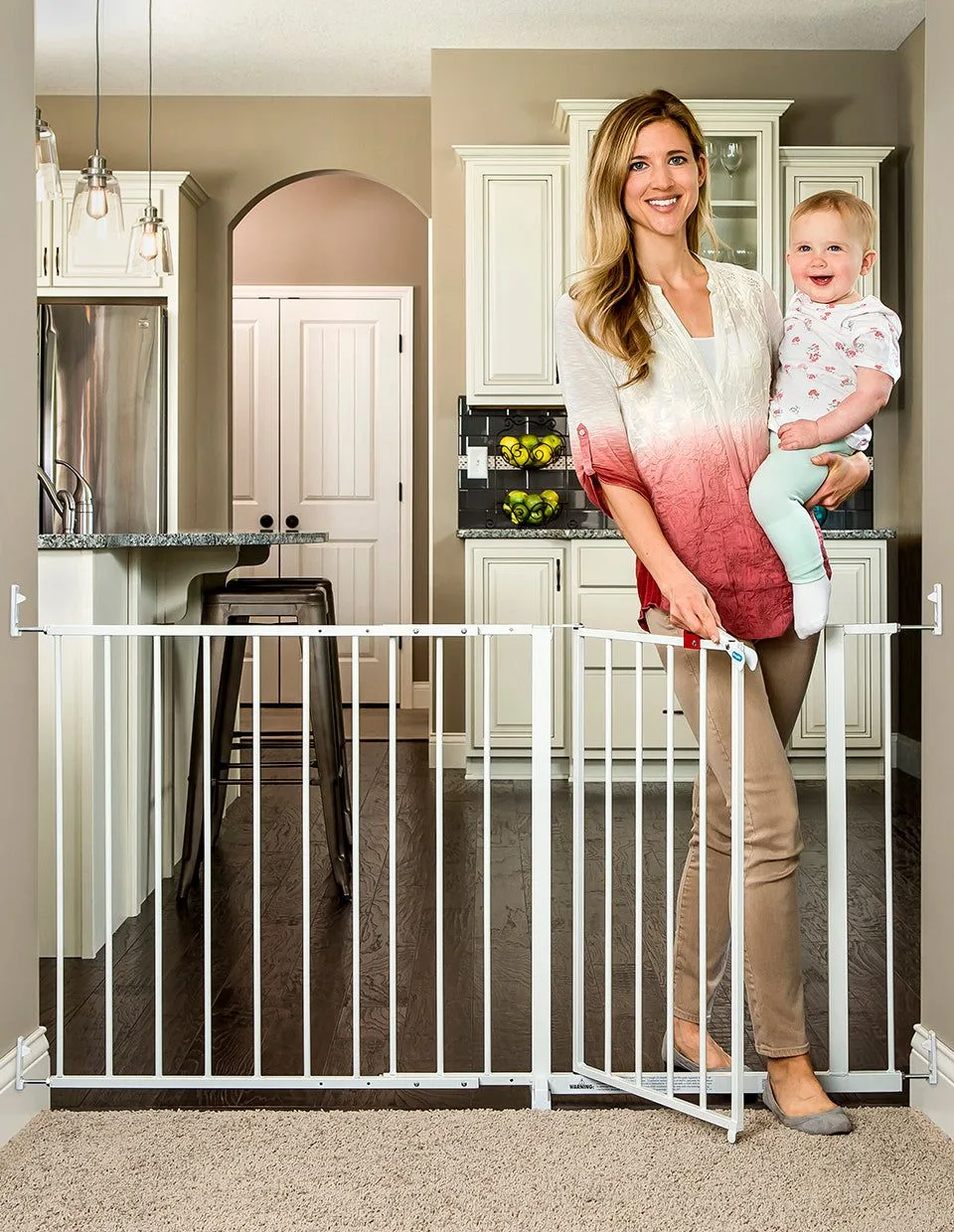
Easy Step® Black Safety Gate: The Regalo Easy Step Safety Gate features a pressure mount design and a one-touch release safety lock. Pressure mount designs are common sources of squeaks if not properly maintained; the one-touch lock mechanism can also develop noise over time if not lubricated.

Easy Step® Black Safety Gate