Quick Answer
If your baby rejects the soother, check the fit, timing, and cleanliness first—then try a gentle introduction with a Dr Brown's silicone soother, which is soft and easy to accept.
Why babies refuse soothers: common reasons
Babies can reject a soother for many reasons, and it's rarely a sign that something is wrong. The most common culprits are timing, fit, and texture. Newborns may simply be too sleepy or too hungry to take an interest, while older babies might be teething or prefer a different shape.
Some babies are sensitive to the feel of silicone or the shape of the bulb. A soother that is too large or too small can also cause discomfort. It's worth checking that the soother is the right stage for your baby's age and that it's clean and free of any residue that might affect the taste.
The role of the right stage and fit
Using the correct stage for your baby's age is important. A Stage 1 soother is designed for newborns and younger infants, with a smaller, softer bulb that is easier for little mouths to hold. If your baby is older, they may need a larger size for a comfortable fit.
A soother that is too big can cause gagging or discomfort, while one that is too small may not stay in place. Always follow the age recommendations on the packaging and replace the soother if it shows signs of wear.
When to keep trying and when to stop
Pacifier acceptance is not always immediate. Some babies need several attempts over a few days before they take to a soother. However, if your baby consistently refuses after a week of trying, or if they seem distressed, it may be best to respect their preference and try a different soothing method.
Also, remember that soothers are not recommended for babies who are breastfeeding exclusively in the first few weeks, as they can interfere with latch. If you have concerns, talk to your pediatrician or lactation consultant.
Diagnosis: Why Your Baby Rejects the Soother
- Symptom: Baby spits out the soother immediately, cries when you offer it, or refuses to suck on it. Notice when the rejection happens: at feeding time, during sleep, or all the time.
- Likely Cause: Possible reasons include: wrong stage or size, too sleepy or too hungry, texture or taste sensitivity, or a preference for another soothing method. Check the soother's age recommendation and condition.
- Corrective Action: Try offering the soother when baby is calm but alert, dip it in a little expressed milk (if not breastfeeding), or gently guide it into the mouth with a slight downward tilt. Ensure it is clean and dry. Give it a few tries over several days before deciding it's not working.
- Stop or Choose Another Option: If your baby still refuses after a week of gentle attempts, or if they seem distressed, stop forcing it. Try a different soothing method like rocking, a pacifier of a different shape, or consult your pediatrician if you have concerns. Respect your baby's preference—soothers are not essential for every baby.
Product Spotlight
-
Advantage One-Piece Silicone Soother, Stage 1, Blue/Cream, 2-Pack: The Dr. Brown’s Advantage One-Piece Silicone Soother is designed to be extra soft and easy to accept, with a fully symmetrical and reversible shape. Because it's symmetrical and reversible, you don't have to worry about positioning it correctly, which can help when you're trying to introduce a soother to a fussy baby.
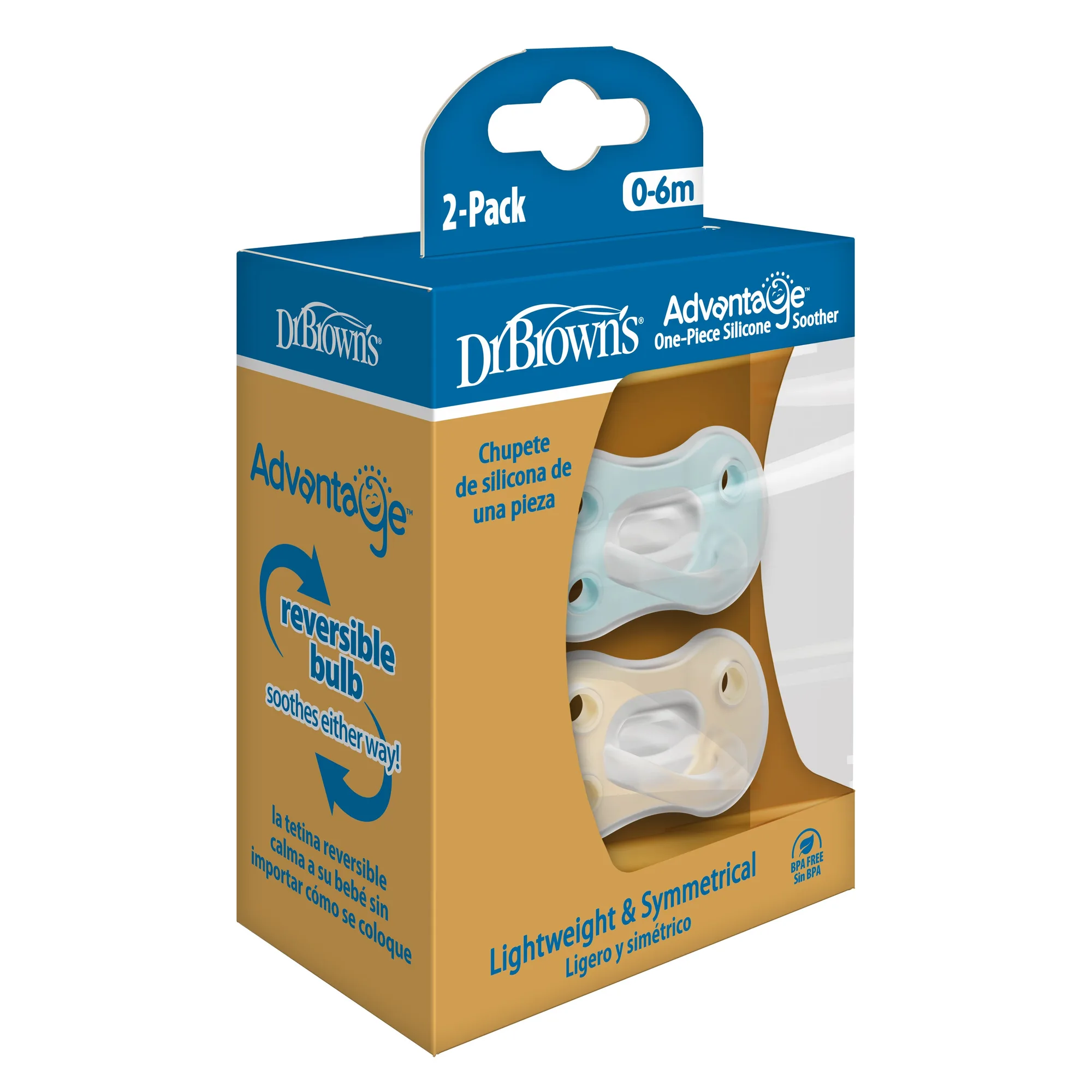
Advantage One-Piece Silicone Soother, Stage 1, Blue/Cream, 2-Pack