Quick answer
Sweater romper pilling is caused by friction and washing, not a defect. You can remove fuzz with a fabric shaver and prevent future pills by washing inside out on gentle, air-drying flat, and storing folded.
Why pilling happens
Pilling occurs when loose fibers on the surface of knitwear tangle into tiny balls. For baby rompers, the main culprits are friction from car seats, high chairs, and crawling, plus the agitation of the washing machine. Even high-quality organic cotton can pill because it's a natural fiber with short staples that work loose over time.
The construction of the fabric matters too. A double jacquard sweater romper, with its intricate woven pattern, has more surface texture and can show pills more visibly than a smooth seersucker bubble romper. That doesn't mean it's lower quality—it's just the nature of the knit.
When pilling is a real problem
Occasional fuzz is cosmetic and easy to fix. But if the fabric develops holes, thinning, or excessive shedding after only a few washes, the issue may be more than normal wear. Check the care label and your washing routine first. If you're using hot water, a high-heat dryer, or harsh detergents, those can accelerate fiber breakdown.
If the romper is pilling heavily despite gentle care, it might be a quality issue. At that point, consider whether the romper is worth repairing or if it's better to replace it with a more durable option like a seersucker bubble romper that resists pilling better.
Diagnose and fix pilling step by step
- Symptom: You see small fuzz balls on the surface of the romper, often on the chest, sleeves, or bottom where friction occurs. Pilling is cosmetic and doesn't affect the romper's function or safety.
- Likely cause: Friction from car seats, high chairs, or crawling, combined with machine washing and tumble drying, loosens natural cotton fibers and tangles them into pills. Check your washing routine: hot water and high-heat drying worsen pilling.
- Corrective action: Remove existing pills with a fabric shaver or a sweater comb, working gently over the affected areas. Then wash the romper inside out on a gentle cycle with cold water and a mild detergent, and lay it flat to dry. Always air-dry knit rompers flat to minimize fiber stress and prevent new pills.
- Stop or choose another option: If the romper develops holes, thinning fabric, or excessive shedding despite gentle care, stop trying to fix it. Consider replacing it with a smoother, more durable fabric like seersucker, which resists pilling better. Regular pilling is normal; structural damage is not. Know when to retire the romper.
Rompers that handle wear differently
-
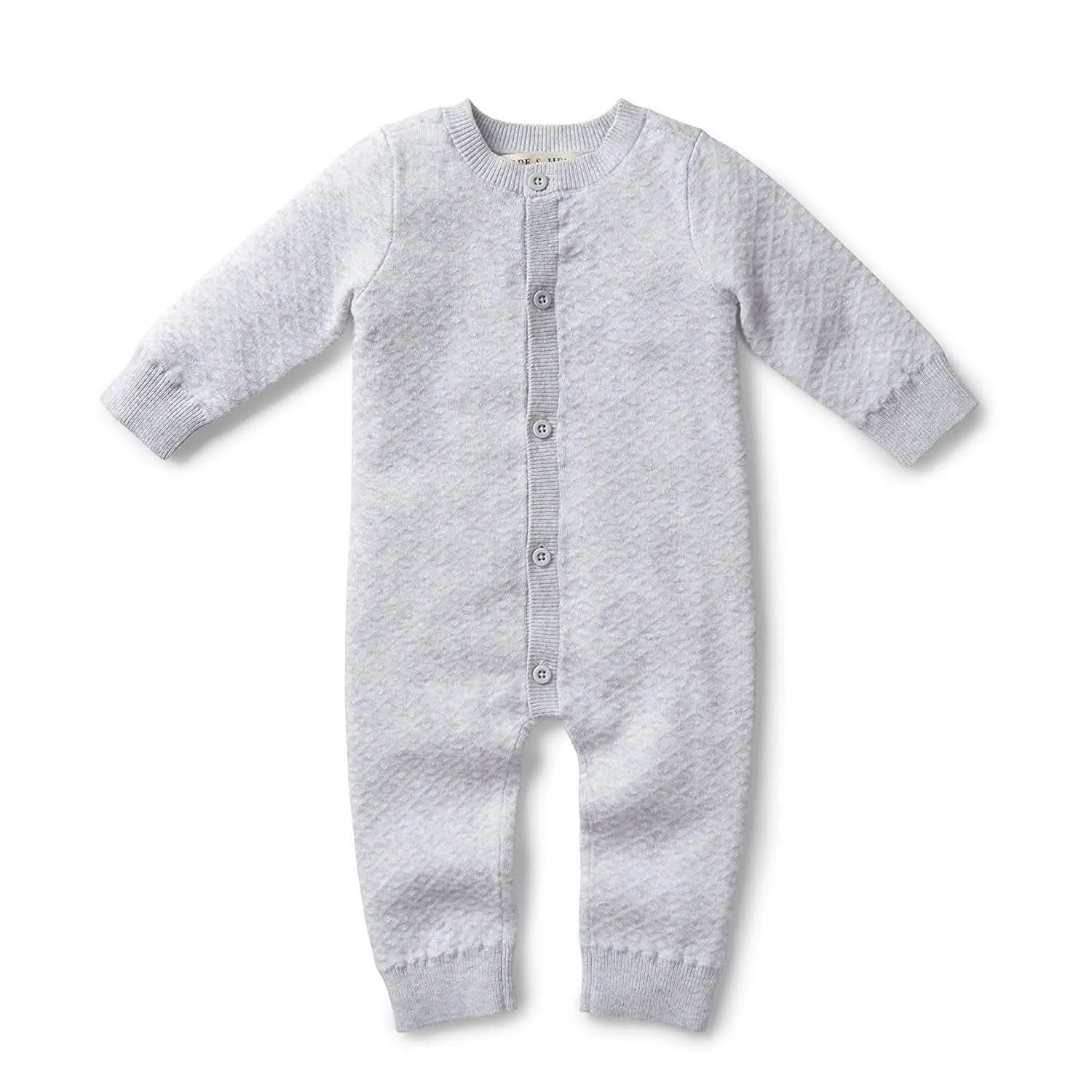
Jacquard Sweater Romper: This sweater romper features a double jacquard construction with an allover pattern in reverse colors, adding interest to both the inside and outside of the garment. The textured, double-sided knit is beautiful but can show pilling more readily, so it benefits from gentle washing and occasional de-fuzzing.
Jacquard Sweater Romper
-
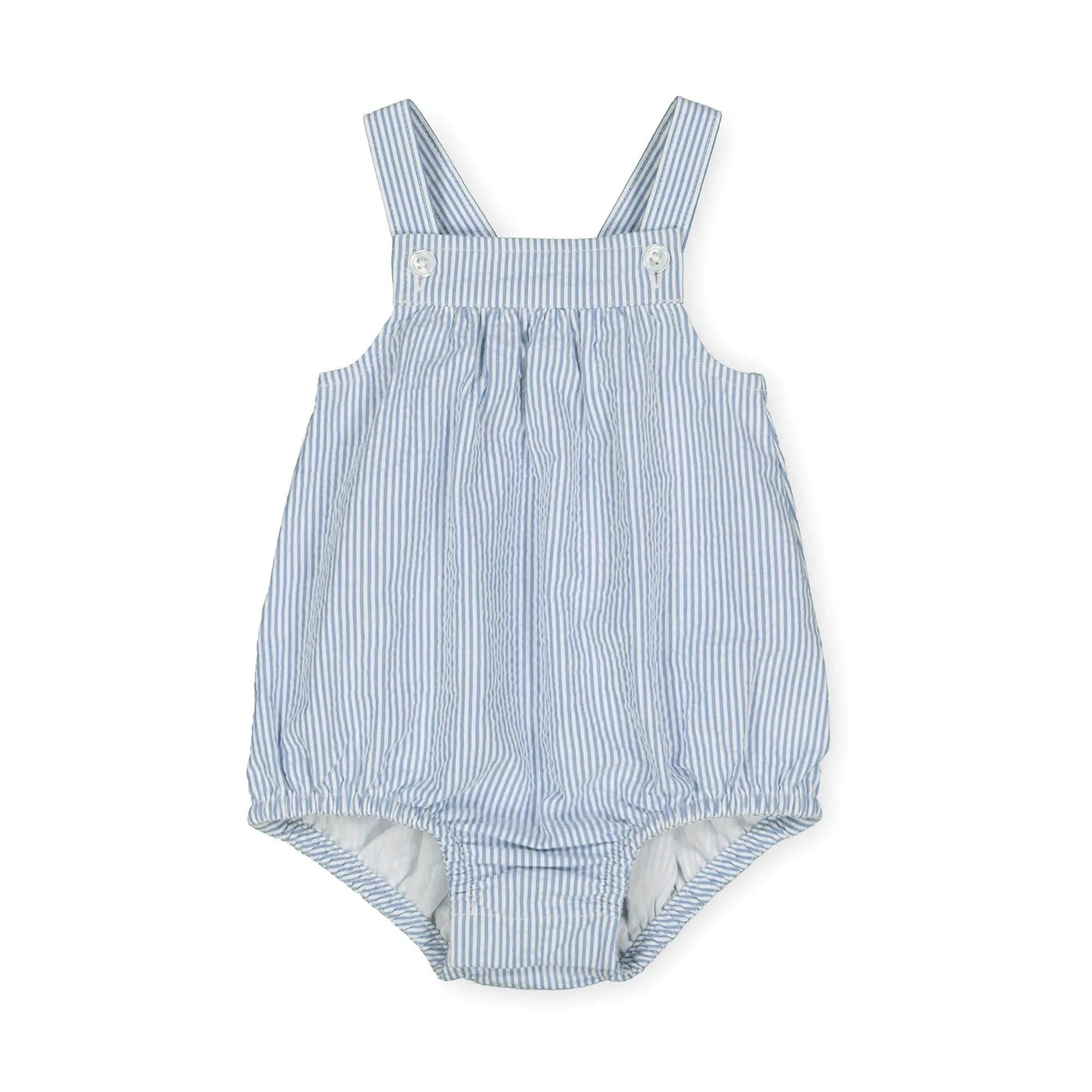
Organic Bubble Romper: Cut in breezy organic cotton seersucker, this romper features a bubble silhouette with adjustable straps and gusset snaps for easy diaper changes. Seersucker's puckered texture naturally hides small pills and resists friction, making it a low-maintenance choice for everyday wear.
Organic Bubble Romper