Quick answer
Sweating is condensation: warm, humid air meets the cold surface of your butter dish and releases water. Move the dish away from temperature swings, keep the lid on, and dry the butter and dish before storing.
Why the water appears on the dish, not the butter
Condensation forms on the coldest surface in the container. In most refrigerators the dish itself, especially a stainless steel one, cools faster than the butter. Water vapor in the trapped air then settles on the dish walls and lid, and later drips onto the butter. That is why you often see beads on the lid or a ring of moisture under the stick rather than a wet butter surface.
When sweating is normal and when it signals a storage problem
A little moisture after you move butter from a warm grocery bag into the fridge is normal and harmless. Persistent sweating, pooling water, or butter that turns soft and greasy within a day points to a storage problem: the dish sits too close to the fridge door, near a vent, or in a spot that warms and cools repeatedly. If the butter itself looks watery or smells off, discard it and clean the dish before reuse.
Why stainless steel behaves differently from glass or ceramic
Stainless steel conducts heat quickly, so it reacts fast to temperature changes. That can make condensation appear sooner than on a thick ceramic dish, but it also equalizes quickly once the fridge temperature is stable. The trade-off is weight and breakage resistance: stainless steel is lighter and less likely to chip, but it will show water droplets clearly. If you prefer a material that hides moisture, a ceramic dish may suit you better, though it is heavier and can crack if dropped.
Diagnose and fix butter dish sweating
- Symptom: beads of water on the lid or dish walls: Wipe the lid and dish dry with a clean cloth. Leave the lid off for 10 minutes so trapped humid air escapes, then put the lid back on and return the dish to the fridge. If beads return within a day, move to the next step.
- Likely cause: temperature swings from door storage or a nearby vent: Move the dish to a middle shelf, away from the door and at least 5 cm from the back wall or air vent. Keep it there consistently rather than moving it in and out. A stable spot is more effective than any wipe-down.
- Corrective action: wet butter or a pool of water under the stick: Remove the butter, pat it dry with a paper towel, and wash the dish in warm soapy water. Dry both completely before reassembling. If the butter is soft and greasy, use it for cooking rather than spreading. Never store butter on a wet dish; moisture speeds spoilage.
- Stop point: sweating continues after two days of stable storage: Check your fridge temperature with a thermometer. If it is above 4°C (40°F) or fluctuates often, the issue is the appliance, not the dish. If the butter still spoils quickly, switch to a smaller dish or store butter in a sealed container instead. If the fridge is stable and the dish still sweats, the dish size or material is the limiting factor.
Product facts
-
Butter dish stainless steel: Made of stainless steel for a clean, modern look. Stainless steel cools quickly and shows condensation clearly, so you can spot sweating early and wipe it before the butter sits in water.
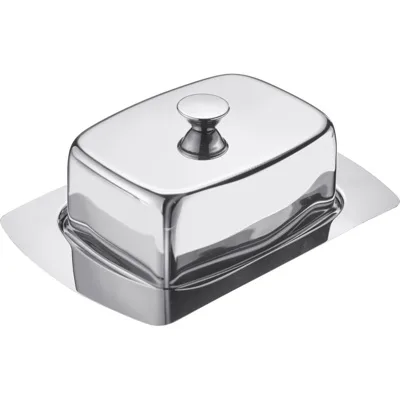
Butter dish stainless steel
-
Butter dish stainless steel: Simple, functional design that fits most refrigerators. A low-profile dish is easier to place away from door shelves and vents, which are common sources of temperature swings that cause sweating.