Quick answer
Your dog probably doesn't hate brushing itself—they dislike the tools, technique, or pace you're using. Most brushing resistance comes from pulling on tangles, using a brush that scratches, or rushing the session. Switching to a gentle detangling brush with smooth pins and brushing in short, calm sessions can turn grooming from a battle into a bonding routine.
Myth: If my dog runs away, they'll never tolerate brushing
Dogs often bolt because the brush pulls or feels uncomfortable, not because they're stubborn. A brush with smooth-end stainless steel pins glides through fur without scratching the skin, which removes one major reason dogs dislike grooming brushes. Start with just a minute of brushing on a calm, tired dog, then reward and stop before they pull away. Over a few weeks, most dogs learn that the brush predicts treats and attention, not discomfort.
Myth: You should brush hard to get through tangles
Pulling harder doesn't remove tangles faster—it teaches your dog that brushing hurts. Instead, work through mats in small sections, holding the fur above the tangle to reduce pull on the skin. A small brush with fine pins gives you more control around sensitive areas like the belly and behind the ears. If a mat is tight against the skin, stop and consult a professional groomer rather than forcing it out.
Myth: Brushing is only about removing loose hair
Brushing is also a chance to check your dog's skin, ears, and paws for irritation, lumps, or parasites. Daily sessions with a gentle brush help you notice small changes early. The Mini Gentle Detangling Brush is designed for daily maintenance and works on puppies through adulthood, so it doubles as a health-check habit. Keep sessions short—under five minutes—and focus on one area at a time.
Myth: Dental care has nothing to do with grooming
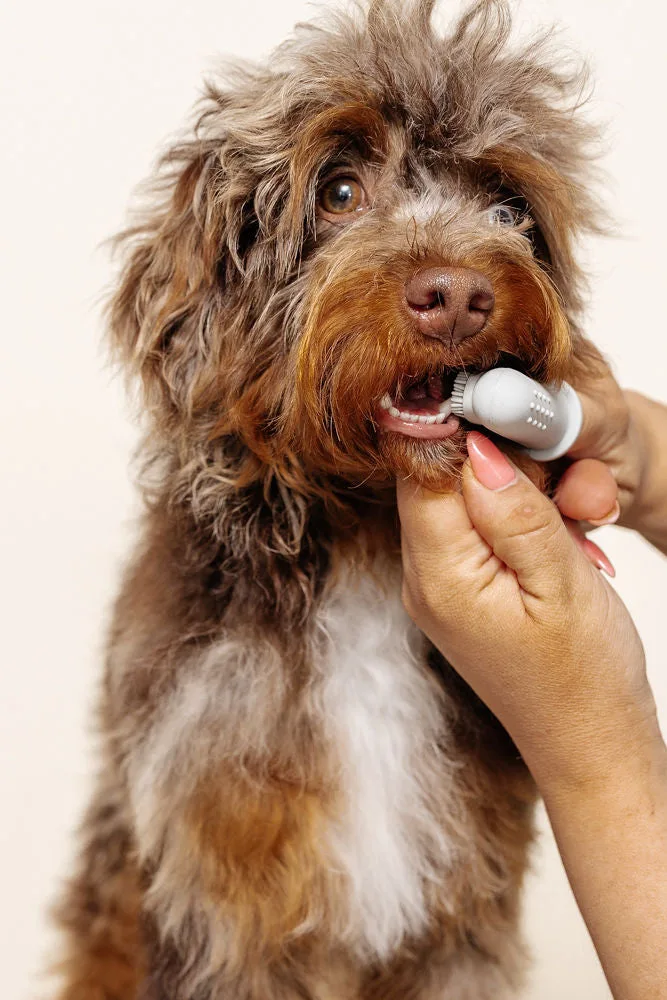
Grooming is a full-body routine, and that includes the mouth. Many dogs resist having their muzzle handled because they're not used to it. A finger toothbrush made from food-grade silicone lets you gently rub the teeth for one minute a day, with or without toothpaste. Pair it with brushing so your dog learns that handling their face and mouth is normal and safe.
Myth-busting verdicts
- Dogs hate being brushed: Most resistance comes from pulling, scratching pins, or rushed sessions—not the act of brushing itself. Switch to a gentle brush and keep sessions under five minutes.
- You need to brush hard to remove tangles: Force damages the coat and teaches dogs to fear the brush. Work slowly through small sections and hold fur above the tangle. Stop if a mat is tight against the skin; see a groomer.
- Brushing is just for looks: Daily brushing is a skin check and a bonding routine, not just a beauty task. Use it to spot lumps, irritation, or parasites early.
Tools that make brushing easier
- Mini Gentle Detangling Brush: Mini Gentle Detangling Brush features smooth-end stainless steel pins and is designed to brush sensitive pups in under five minutes. Smooth pins reduce scratching and pulling, so your dog is less likely to associate brushing with discomfort.
- Puppy Breath Toothbrush: Puppy Breath Toothbrush is made from food-grade silicone and free from BPAs, BPSs, PVCs, and phthalates. A soft, flexible finger brush makes daily dental handling less stressful for dogs who dislike having their mouth touched.