Quick answer
Your dog pulls on the leash because walking faster or in a different direction is naturally rewarding. A no-pull harness with a front D-ring can redirect that energy without causing discomfort.
Why pulling is normal (and what it isn't)
Pulling is not a sign of stubbornness or poor training. Dogs have a natural opposition reflex: when they feel pressure on their neck or chest, they instinctively pull harder. Traditional collars and back-clip harnesses can actually encourage this reflex.
A front D-ring harness changes the physics. When your dog pulls, the harness gently turns their shoulders toward you, breaking their forward momentum. This makes pulling less effective and less rewarding over time.
When a harness alone isn't enough
A no-pull harness is a tool, not a cure. If your dog is highly aroused by other dogs, squirrels, or moving cars, the harness helps you manage the pull, but you still need to address the underlying excitement through training or desensitization.
Also, fit matters. A harness that is too loose will ride up and allow your dog to slip out or pull more effectively. A harness that is too tight can chafe or restrict movement, causing your dog to resist even more.
Diagnosis: Is your dog pulling because of instinct, equipment, or excitement?
- Symptom: Your dog strains forward, often with a stiff front leg posture, and does not respond to leash pressure by turning or slowing down.
- Likely cause: The opposition reflex: your dog is reacting to pressure on their neck or chest by pulling harder. A traditional collar or back-clip harness may be reinforcing this behavior.
- Corrective action: Switch to a no-pull harness with a front D-ring, such as the Cocoa SofterWalk Harness. Ensure the harness is snug but not tight: you should be able to slide two fingers under the straps. Use the front clip for training walks and the back clip for relaxed strolls. If pulling continues after 2 weeks of consistent use, consider adding a short training session before walks to reduce arousal levels.
- When to choose another option: If your dog is small (under 10 lb / 4.5 kg) or has a very deep chest, a front D-ring harness may not redirect them effectively. In that case, a front-clip harness specifically sized for small breeds or a head halter may work better.
Product facts
-
Cocoa | SofterWalk Harness: The Cocoa SofterWalk Harness includes a front D-ring that helps guide your dog toward you when they pull, and a back D-ring for traditional use. This dual-ring design lets you switch between no-pull training and everyday walking without buying a second harness.
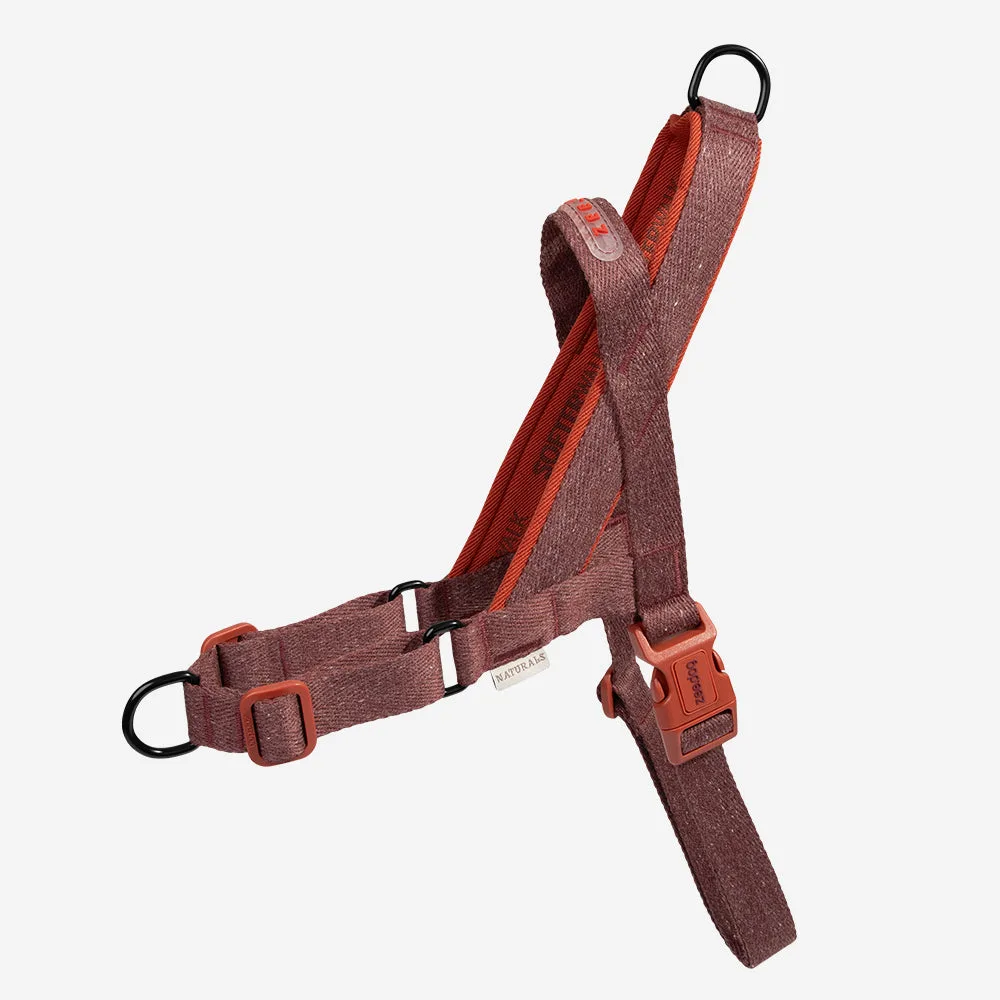
Cocoa | SofterWalk Harness