Quick answer
Most anime figures lean because PVC softens when warm and slowly bends under its own weight, especially on a single thin leg or a heavy hair piece. Fix it by cooling the figure, gently supporting the bent part, and moving it away from heat and direct sun. If the plastic feels soft, sticky, or cracked, stop and leave it alone.
Why PVC figures bend in the first place
PVC is a thermoplastic. It stays slightly flexible at room temperature, and it gets softer as the room warms up. A figure standing on one leg, holding a large weapon, or wearing a heavy cape puts constant pressure on a small contact point. Over months, that pressure wins and the leg or base tilts.
Heat speeds this up. A shelf near a window, above a radiator, or under a hot display light can push the plastic past the point where it holds its shape. Gravity does the rest.
How to check whether the lean is fixable
Look at the base first. If the pegs still sit flush and the figure only tilts, the plastic has warped and you can often correct it. If the peg is cracked, snapped, or the base is split, the problem is structural and straightening will not help.
Then touch the leg or support gently. A healthy PVC figure feels firm and cool. If it feels tacky, soft, or leaves a mark, the plastic is degrading and heat treatment will make it worse.
A safe straightening method
Work slowly and in small steps. You are nudging the plastic back, not melting it.
1. Remove the figure from the base and any heavy accessories. 2. Warm the bent area with a hair dryer on the lowest setting, held at least 20 cm away, moving constantly for 10 to 20 seconds. 3. Gently bend the part a little past straight, then hold it in place. 4. Run cool water over the area or press it against a cool surface for 30 seconds. 5. Let it rest for an hour before putting it back on the base.
If the figure does not move after two gentle attempts, stop. Forcing cold or stubborn PVC snaps the leg, and that is not repairable.
Support stands and shelf setup
A clear acrylic support stand under a raised leg or a leaning torso takes the load off the plastic. Place the support so it touches the figure without pressing hard, and check it every few weeks.
Keep shelves out of direct sun and away from heat vents. Rotate heavy figures occasionally so the same leg does not carry the weight year after year. If you use display lights, choose LED bulbs that stay cool and keep them at least 15 cm from the figure.
When to stop and choose another option
Stop if the plastic is cracked, if a peg has snapped, or if the surface is sticky. Those are signs of chemical breakdown, and heat will only spread the damage. In that case, use a support stand to hold the figure in place and display it as-is rather than trying to reshape it.
If the figure is still new and leaning out of the box, check the return or replacement window before you attempt any fix. A fresh warp may be a manufacturing issue, and a replacement is safer than a repair.
Lean diagnosis: symptom, cause, action
- Slight tilt, base pegs still flush: PVC has softened and warped under steady weight, often after warm weather or a hot shelf. Try the low-heat straightening method, then add a support stand.
- Leg feels soft or tacky: The plastic is breaking down chemically, not just bending. Do not heat it. Support the figure and keep it out of light and heat.
- Cracked peg or split base: The lean is structural, and reshaping will not restore the joint. Stop straightening. Display with a support or replace the figure.
Figure facts that affect stability
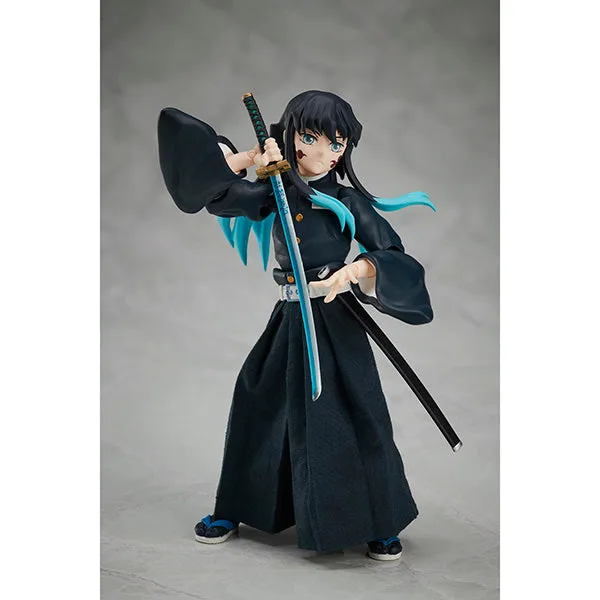
- Ichiban Kuji Demon Slayer B Prize Kanae Kocho Figure: BANDAI SPIRITS Ichiban Kuji Demon Slayer B Prize Kanae Kocho figure, approximately 4.29 inches (110mm), unopened in box. Smaller figures carry less weight on their legs, so they lean more slowly, but a narrow stance still needs a flat, cool shelf.
- Ichiban Kuji Hololive Chokonokko Collection 2026 ver. Inugami Korone Chokonokko Figure: BANDAI Ichiban Kuji Hololive Chokonokko Collection 2026 ver. Inugami Korone figure, approximately 1.76 inches (4.5 cm). At this size the figure is light enough that a small acrylic stand or a stable base is usually enough to prevent warping.