Quick answer
Knife blade rust is caused by moisture and oxygen reacting with unprotected steel. To stop it, keep your blade dry, apply a thin oil layer after use, and store it in a low-humidity environment. For existing rust, use a mild abrasive like a pencil eraser or fine steel wool to remove surface spots before they deepen.
Why Rust Forms on Your Knife Blade
Rust is iron oxide — it forms when the iron in steel reacts with oxygen in the presence of water or humidity. Every knife blade made from carbon steel or non-stainless alloys is susceptible, but even stainless steels like CPM S45VN can develop surface rust if neglected. The key factor is exposure: a blade left wet, stored in a leather sheath that traps moisture, or handled with sweaty fingers will corrode faster than one that's wiped clean and stored dry.
How to Remove Rust from a Knife Blade
For light surface rust, start with the least abrasive method. Rub the affected area with a pencil eraser — the rubber can lift loose oxidation without scratching the blade. If that doesn't work, use a fine abrasive like 0000 steel wool or a polishing compound applied with a soft cloth. Always work in the direction of the blade's grind lines to avoid visible scratches. For deeper pitting, you may need wet/dry sandpaper (1000-2000 grit) with light oil, but this will remove material and alter the blade's finish. Stop if the rust has eaten into the edge or created visible pits — at that point, professional sharpening or blade replacement is the safer option.
Preventing Rust Before It Starts
The most effective rust prevention is a consistent drying routine. After each use, wipe the blade clean with a dry cloth. For long-term storage, apply a thin coat of mineral oil, food-safe oil, or a dedicated knife protectant. Avoid storing knives in leather sheaths for extended periods — leather absorbs moisture and can accelerate rust. Instead, use a nylon or Kydex sheath, or store the knife loose in a dry drawer. Silica gel packs in your storage area also help reduce ambient humidity.
How Coatings Like Cerakote Help
Cerakote is a ceramic-based coating that creates a barrier between the steel and the environment. It significantly reduces the risk of rust by sealing the blade surface. However, it is not a permanent solution — chips, scratches, or wear at the edge can expose bare steel. A coated blade still needs basic care: rinse after cutting acidic materials, dry thoroughly, and avoid abrasive cleaning that could damage the coating. Cerakote rust protection is excellent for everyday carry, but it doesn't replace routine maintenance.
Rust Diagnosis: Symptom, Cause, Action, and Stop Point
- Symptom: Orange or brown spots on the blade surface, often near the edge or pivot. The blade may feel rough to the touch. Check the blade after every use, especially if it was exposed to moisture.
- Likely Cause: Moisture left on the blade after cutting wet materials, storage in a humid environment, or contact with acidic residues (fruit, sweat, saltwater). Identify the source to prevent recurrence.
- Corrective Action: For light rust: rub with a pencil eraser or 0000 steel wool. For heavier rust: use fine sandpaper (1000-2000 grit) with oil, working in the grind direction. Always dry and oil the blade afterward. Start with the least abrasive method and stop if the blade finish is being damaged.
- Stop or Choose Another Option: If rust has created visible pitting, if the edge is compromised, or if the blade has lost significant material, stop home removal. At this point, send the knife to a professional sharpener or consider replacing the blade. Deep pitting cannot be safely removed at home without ruining the blade's geometry.
Products That Support Better Blade Care
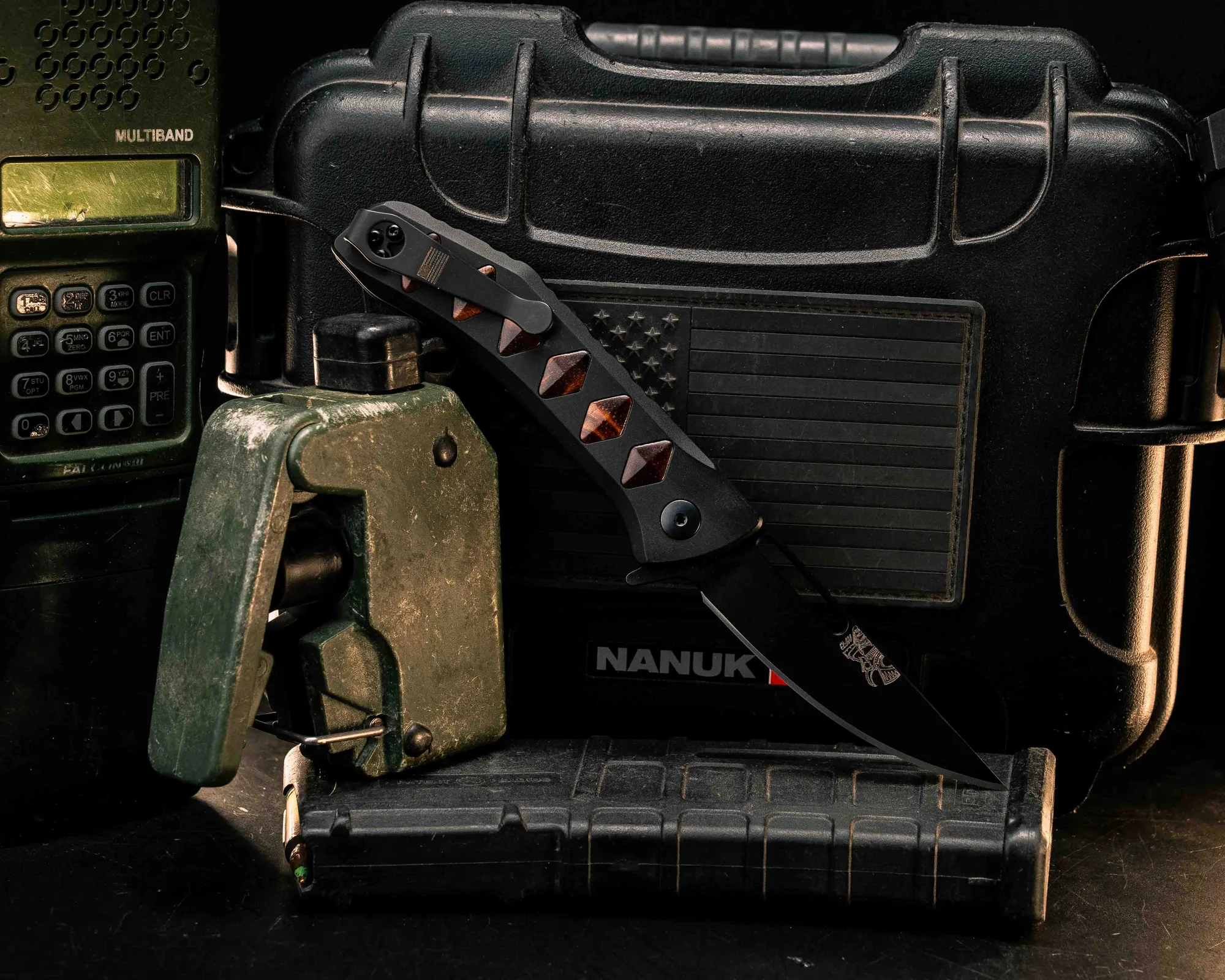
- Kwaiken Folder inlay- Hawaiian Curly Koa, Anodized Black Handle, Black Nitride Blade, Textured Grip, Deep Carry Pocket Clip: Blade Steel: CPM S45VN, Heat Treat: 58-60 HRC, Blade Coating: Nitride CPM S45VN is a high-end stainless steel with excellent corrosion resistance, and the nitride coating adds an extra layer of protection. This combination reduces the frequency of rust removal while still requiring basic care.
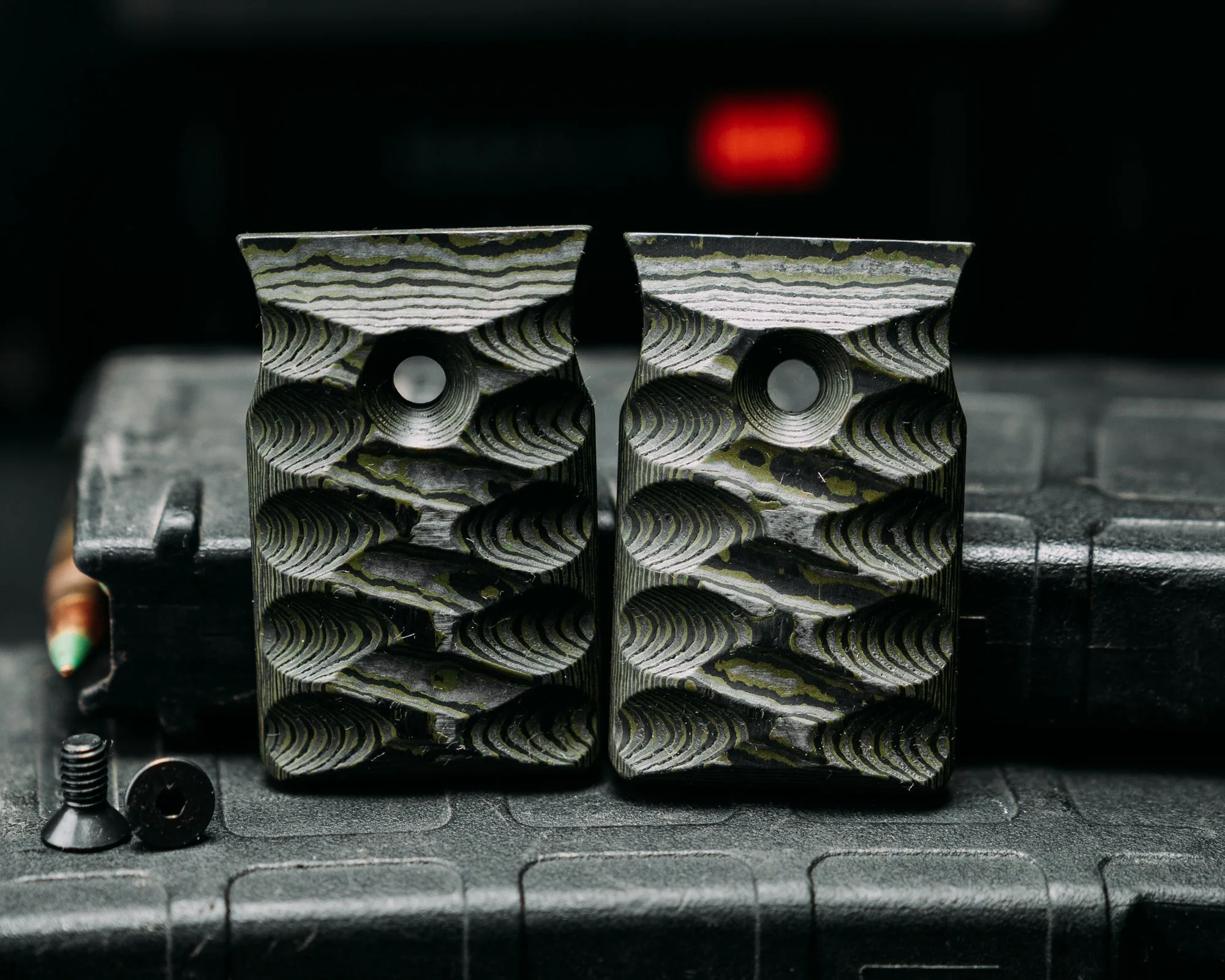
- HFB x Kinetic M-LOK FORE GRIP Scales ONLY - Junglewear Carbon Fiber: M-LOK BASED FORE GRIP SYSTEM. COMPATIBLE WITH ALL M-LOK RAILS & SYSTEMS. While not a blade care product, this fore grip system is made from materials that won't trap moisture against your gear, helping you avoid rust issues on mounting hardware and rails.